Automated Grinding for Sharper Nail Clippers and Cleaner Grooming
Sharpness is one of the first things a buyer notices in a nail clipper. A well-finished edge cuts cleanly with less pressure, while an uneven or dull edge can crush the nail, leave ragged corners, or make trimming uncomfortable. Automated grinding plays an important role in producing a consistent cutting edge, especially when nail clippers are made in volume and every piece needs to perform in a predictable way.
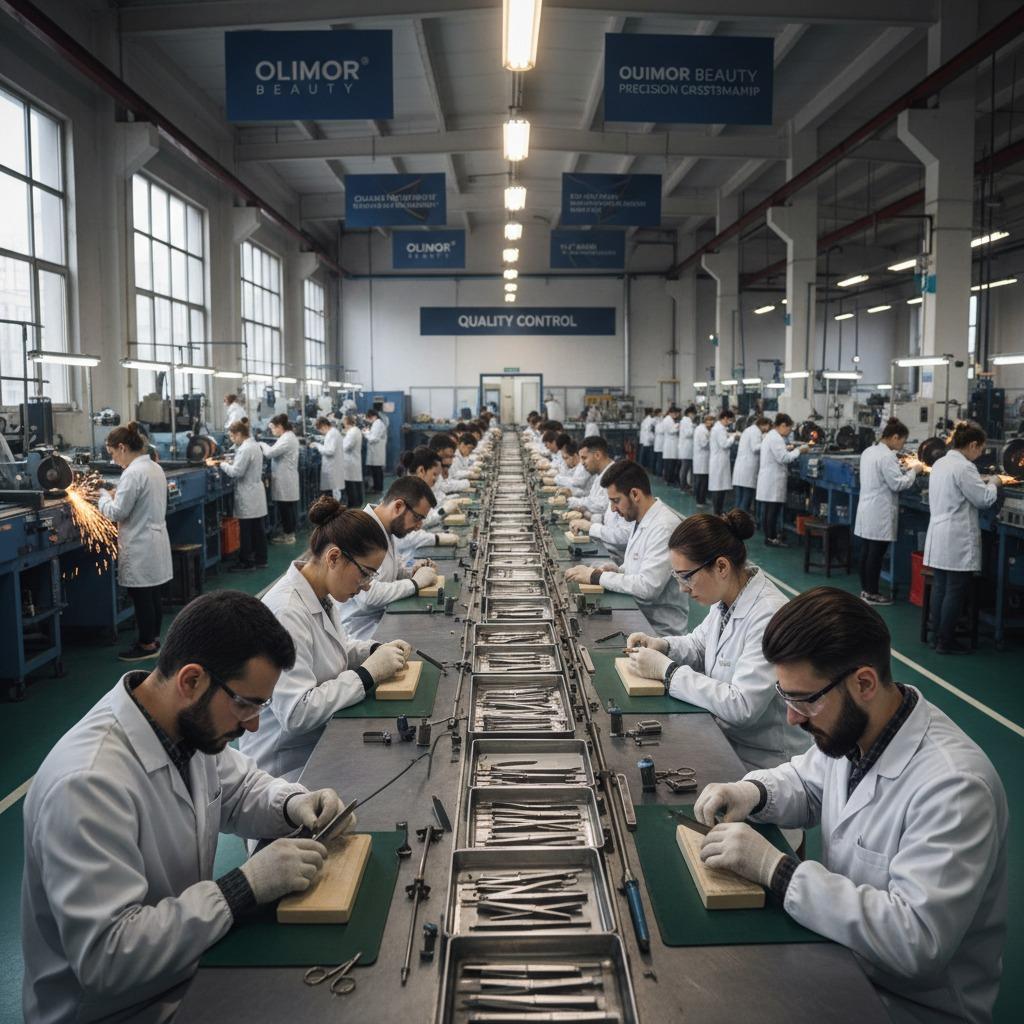
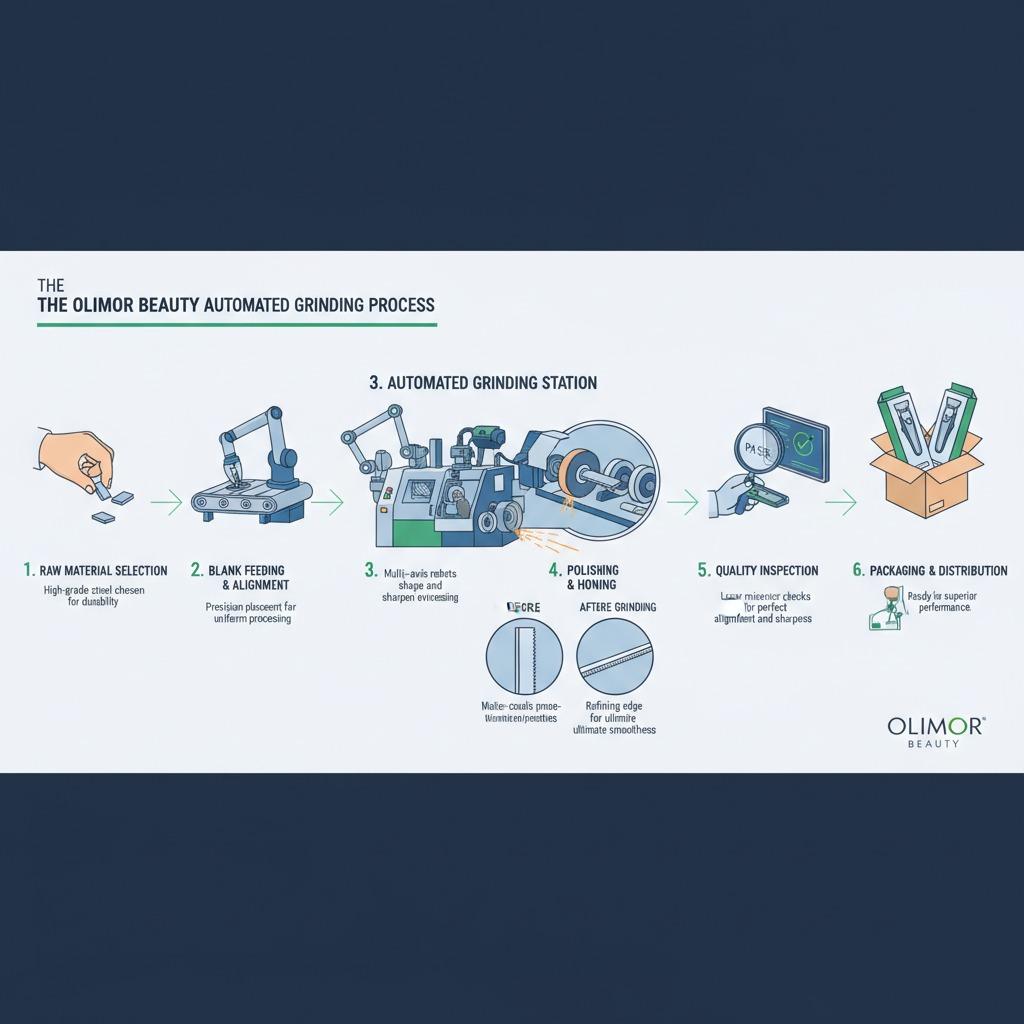
For Olimor Beauty, automated grinding is best understood as part of a larger manufacturing and quality-control approach. Grinding is not only about making a blade feel sharp on day one. It also affects edge alignment, cutting feel, durability, and the user’s confidence in the tool. Whether you are sourcing for retail, private-label grooming kits, salons, travel sets, or household care ranges, understanding the grinding process helps you evaluate nail clippers more accurately.
Why Grinding Quality Matters in Nail Clippers
A nail clipper works through the meeting of two shaped cutting edges. When the user presses the lever, the upper and lower edges must come together evenly across the nail. If the edges are not ground consistently, the clipper may cut well in one section and poorly in another. This is why grinding quality has a direct impact on practical grooming performance.
Good grinding helps create a cleaner edge profile. It supports smoother cutting, reduces the need for repeated pressure, and can help prevent the nail from bending or splitting during trimming. It also contributes to user comfort because a clipper that cuts efficiently usually requires less force from the hand. For compact grooming tools, this can be especially important because the user has limited leverage compared with larger salon implements.
Grinding also affects how a clipper feels over time. If an edge begins with uneven contact points, those areas may wear faster. If the edge is too rough, it can feel harsh or catch the nail. If it is too blunt, it may not cut through thicker nails cleanly. Automated grinding is valuable because it can help reduce variation from piece to piece and create a more controlled edge finish.
What Automated Grinding Adds to the Manufacturing Process
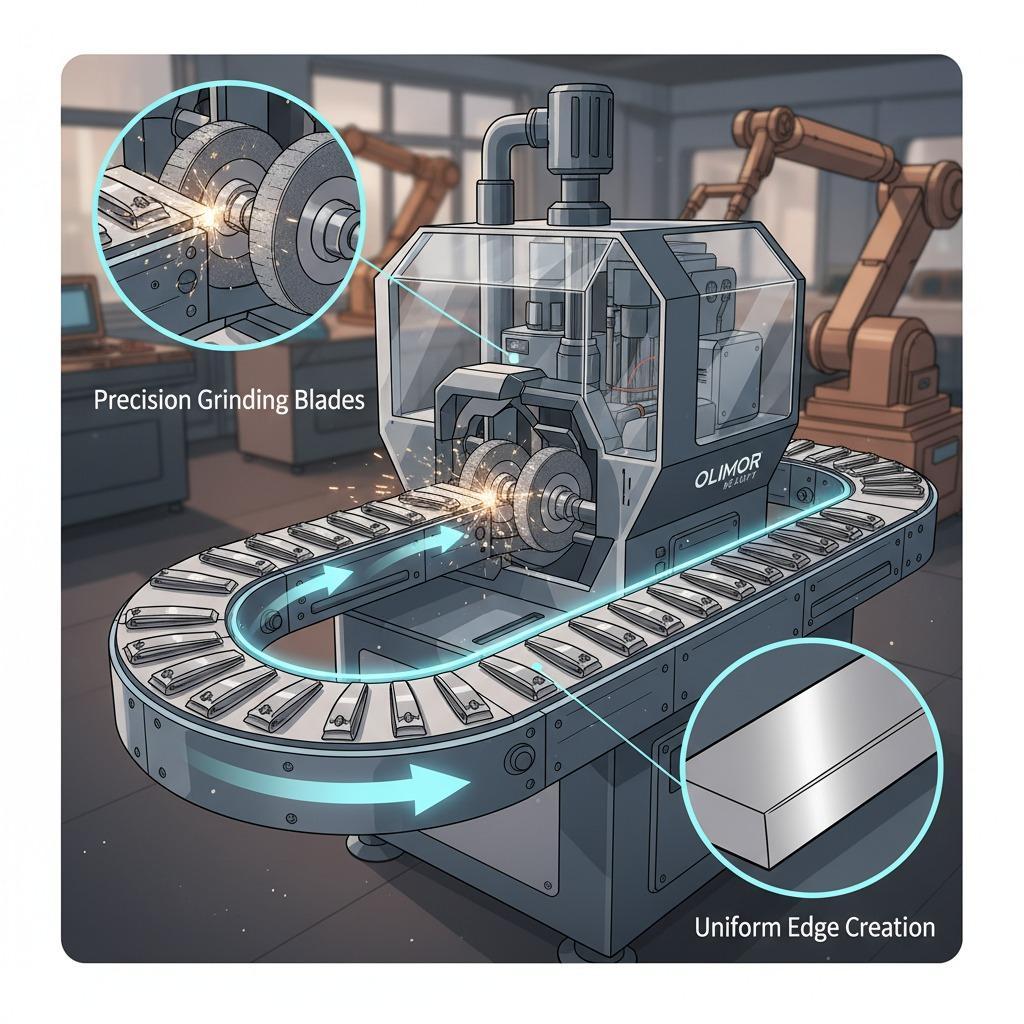
Manual finishing has a place in many tool categories, but it depends heavily on operator technique. Automated grinding is designed to control repeated movements, pressure, angle, and timing more consistently. In nail clipper production, that consistency can improve the reliability of the finished edge and reduce the chance of visibly uneven grinding marks.
The main benefit is repeatability. When a grinding process is automated and properly monitored, each clipper can be processed according to the same target geometry. This does not remove the need for inspection, but it gives the quality team a more stable process to evaluate. For buyers comparing suppliers, this matters because inconsistent sharpness often becomes a customer-service problem after the product reaches store shelves.
Automated grinding also helps support efficient production. A controlled process can reduce avoidable rework, improve edge uniformity, and make inspection results easier to interpret. It can be especially useful when a product line includes stainless steel nail clippers, where the edge must be finished carefully to deliver a clean cut without leaving burrs or rough contact points.
How Grinding Affects Sharpness, Alignment, and Cutting Feel
Sharpness is not a single feature. A nail clipper can look sharp but still perform poorly if the two cutting edges do not meet correctly. The most useful evaluation looks at three connected factors: edge sharpness, edge alignment, and cutting feel.
- Edge sharpness: The cutting surface should trim the nail cleanly without crushing or tearing. A good edge reduces the amount of pressure needed for normal nail trimming.
- Edge alignment: The upper and lower jaws should close evenly. Gaps, offset edges, or uneven contact can cause partial cuts and repeated clipping.
- Surface smoothness: After grinding, the edge should not have rough burrs that scratch the nail or skin. A clean finish improves user comfort.
- Lever response: The clipper should feel stable when pressed. Grinding alone does not determine this, but a poor cutting edge can make the lever feel harder to use.
- Consistency across pieces: For retail and wholesale orders, samples and bulk goods should perform similarly. Automated grinding can help support this consistency when combined with inspection.
These factors are especially important for a product such as a nail clipper, because customers usually judge it within seconds of first use. A clean first cut gives the impression of quality, while snagging or pressure marks can make even a good-looking tool feel unreliable.
Buyer Checklist for Evaluating Ground Clipper Edges
When selecting grooming tools for a product range, do not rely only on appearance. A polished surface or attractive packaging cannot compensate for poor cutting performance. The following checklist can help purchasing teams, brand owners, and distributors evaluate nail clippers with more confidence.
- Test several samples, not just one. Consistency matters. Try multiple pieces from the same batch to see whether sharpness and lever feel are stable.
- Check the cut on different nail thicknesses. A clipper should handle normal fingernails cleanly and should not require excessive force for typical use.
- Look for uneven contact. Close the jaws slowly and observe whether both edges meet evenly from side to side.
- Inspect for burrs or roughness. Burrs near the cutting edge can scratch or create an unpleasant feel during trimming.
- Review the hinge and lever action. Even a well-ground edge needs proper mechanical assembly to cut smoothly.
- Consider the target user. Travel kits, salon resale, men’s grooming sets, and family care products may require different sizes, finishes, or packaging priorities.
If you are comparing options across broader beauty tool products, use the same functional testing method for every supplier. A structured comparison makes it easier to separate genuine cutting performance from cosmetic differences.
Maintenance Tips to Keep a Sharp Edge Performing Well
Even a precisely ground clipper needs basic care. Nail residue, moisture, and improper storage can reduce performance over time. For end users, simple maintenance helps preserve the cutting feel and keeps the tool more hygienic between uses.
After trimming, wipe the cutting edges with a dry cloth to remove nail dust. If the clipper has been exposed to water, dry it thoroughly before storage. Avoid using a nail clipper on materials it was not designed to cut, such as wire, plastic tags, or thick non-nail items, because this can damage the edge alignment. Store the clipper in a dry place, especially when it is part of a travel pouch or bathroom kit.
For retailers and kit assemblers, maintenance guidance can be a useful addition to packaging inserts or product pages. Clear care instructions reduce misuse and help customers understand why grooming tools should be kept clean and dry. This is particularly relevant for stainless steel clippers, which are often chosen for personal care use but still benefit from sensible handling and storage.
Sourcing Questions for Brands and Distributors
Automated grinding is a valuable process, but buyers should evaluate it alongside the complete product. A nail clipper’s performance depends on material selection, stamping or forming accuracy, heat treatment where applicable, grinding, assembly, inspection, and packaging. Instead of asking only whether grinding is automated, consider what quality checks are used after grinding and how edge consistency is confirmed before shipment.
Useful sourcing questions include: How are sharpness and jaw alignment inspected? Are samples from bulk production tested, or only pre-production samples? What cosmetic standards apply to grinding marks and surface finish? How is the product protected during packing so the cutting edge is not damaged in transit? These questions help establish practical expectations without relying on vague claims.
Buyers planning a complete grooming assortment can also compare nail clippers with related product collections to ensure the finish, packaging style, and user positioning are consistent across the range. If you need help reviewing available options or preparing a sourcing brief, you can contact Olimor or send an inquiry with your target market, intended use, and packaging requirements.
Choosing Clippers Based on Real Use, Not Just Sharpness Claims
The best nail clipper for a product line is not always the one described with the strongest sharpness claim. It is the one that cuts cleanly, feels comfortable, remains consistent across production, and matches the needs of the intended customer. Automated grinding supports these goals by helping create a more uniform edge, but final selection should still be based on hands-on evaluation and clear quality criteria.
For everyday grooming, a properly ground clipper makes nail care easier and more predictable. For brands and distributors, it reduces the risk of inconsistent user feedback. By focusing on edge geometry, jaw alignment, surface finish, and practical maintenance, you can choose nail clippers that serve customers well beyond the first impression.
Tag: