

Wholesale Beauty Products: A Salon Sourcing Checklist
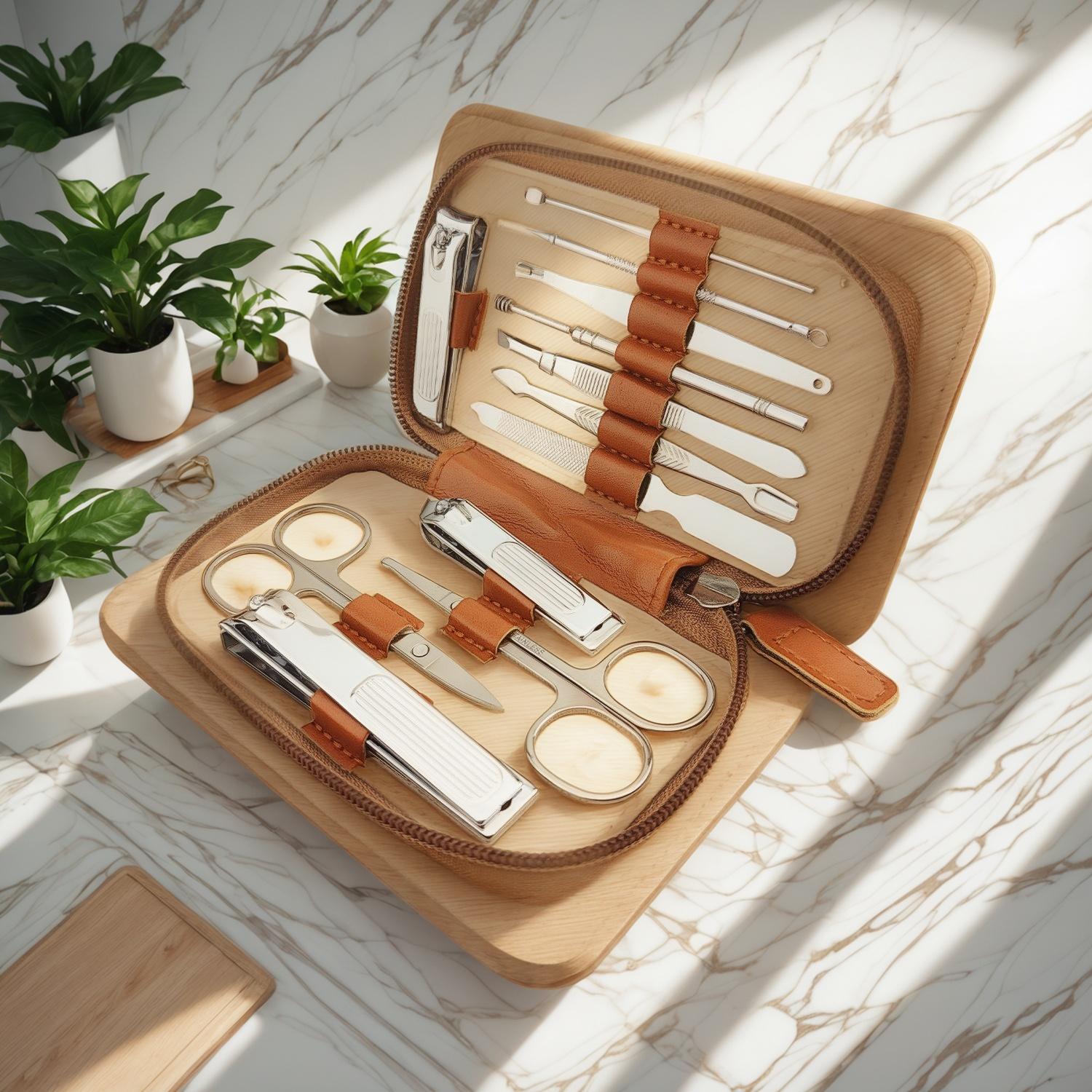
Wholesale beauty products for salons should be selected by service task, working-end function and packaging protection, not by a generic material claim or supplier guarantee. Define the job of every tool, approve samples against testable points and confirm that each component stays secured in its case or retail pack.
A salon set is only as useful as its least suitable component. Remove duplicate tools, document each retained tool's purpose and inspect the assembled package before approving volume.
Plan Wholesale Beauty Products From Salon Services
List the services or retail needs the assortment must support. Then assign a specific tool to each task. This avoids ordering a visually complete set that contains overlapping components or leaves a frequent salon task uncovered.
For each tool, record:
- service or grooming task;
- intended professional or retail user;
- working-end type and reference size;
- handling or grip requirement;
- material and finish to be confirmed;
- cleaning and care information required for the market;
- pack position and retention method;
- replacement or reorder priority.
Do not claim that a tool is suitable for a regulated or medical use unless the product, evidence and market requirements support that statement. Keep the brief within the actual beauty and grooming application.
Give Every Kit Component One Defined Job
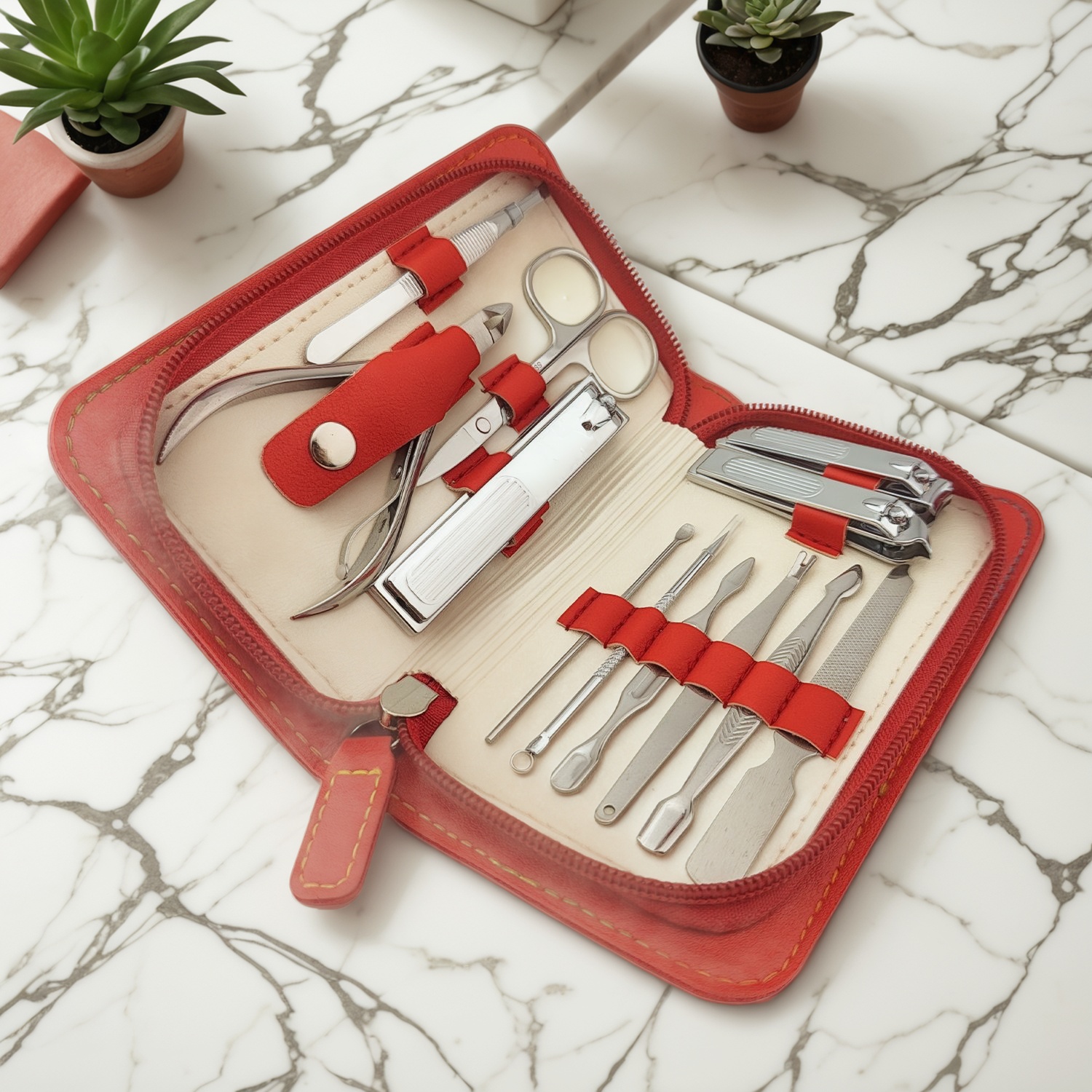
A multi-tool manicure or grooming kit should not be approved only as a complete-looking arrangement. Inspect each component separately and then check how the components interact inside the package.
| Component type | Job to define | Working-end check | Packaging risk |
|---|---|---|---|
| Nail clipper | Nail type and trimming role | Cutting contact and lever action | Lever or edge contacts another tool |
| Cuticle nipper | Intended precision trimming task | Jaw meeting pattern, spring and movement | Tips are exposed or pressed sideways |
| Tweezer | Hair or grooming use case | Tip contact, symmetry and tension | Tips strike the case or adjacent tool |
| Nail file | Nail finishing task and surface type | Surface consistency and edge condition | Abrasive surface scratches metal tools |
| Scissors | Intended grooming task | Blade meeting, movement and tip condition | Points are not retained or protected |
The exact checks depend on the selected models. This table is a starting structure, not a substitute for the supplier's confirmed specification and the buyer's approved samples.
Replace General Claims With Testable Acceptance Points
Terms such as "premium material," "salon quality" and "durable" are too broad for inspection. Convert them into product-specific questions and observable conditions.
Instead of approving "high-quality tweezers," define the intended tip geometry, contact pattern, tension comparison and finish reference. Instead of approving a "professional nail clipper," record the selected model, blade-contact expectation, lever action and visible finish limits. Instead of accepting "secure packaging," identify how each tool is retained and what movement is unacceptable.
Material information remains important, but it should be exact and linked to the selected component. Ask for the grade or construction, finish and available supporting documents. Do not use a material name alone as proof of corrosion behavior, service life or suitability for a cleaning process.
Review Samples in Two Stages
First inspect each loose tool. Then inspect the complete packed set. A component can pass its individual check and still fail in the assembled package because it moves, rubs another surface or is difficult to remove safely.
Stage 1: individual tool approval
- verify model, dimensions and visible construction;
- inspect the working end against the intended task;
- operate the mechanism where applicable;
- check for burrs, residue or unintended sharp edges;
- compare finish and logo with the reference;
- record approved exceptions with photographs.
Stage 2: assembled pack approval
- confirm every component and its orientation;
- test insert or case retention through normal handling;
- check that precise or sharp working ends are protected;
- make sure abrasive parts do not rub finished surfaces;
- verify artwork, labels, instructions and barcode area;
- close and reopen the pack to identify interference;
- confirm the packed dimensions used for carton planning.
Keep an identified approved sample or reference set for both stages. The written file should show which product and package revision was accepted.
Check Technician Handling Without Inventing Performance Claims
Salon teams may use tools repeatedly, so grip, movement and task fit deserve attention during sampling. Ask representative users to compare samples under the intended workflow and record specific observations: where the tool is held, whether the mechanism moves consistently, whether visibility is adequate and whether the pack supports organized storage.
Avoid turning subjective feedback into an unsupported universal claim. "Two sample users preferred handle A for the defined task" is an internal evaluation result. "Handle A prevents fatigue" would require a different level of evidence. Use the evaluation to choose a design, not to create an unverified marketing statement.
Confirm Cleaning and Care Requirements by Product
Cleaning instructions must match the selected material, finish, construction and target market. A method suitable for one solid metal tool may not suit a plated surface, bonded component, spring or packaged accessory. Ask the supplier for product-specific care information and validate it before publishing instructions.
For salon operations, follow current local hygiene requirements and the salon's validated procedure. Keep used and prepared tools separated in the workflow. Replace damaged tools or components when the working end, finish or mechanism no longer meets the approved condition.
Secure Every Component in the Package
Packaging is a functional part of a salon tool set. The insert or case should retain components without bending working ends or forcing mechanisms. Test the assembled sample in the orientation and handling conditions expected during distribution.
Look for:
- loose tools that can collide during transport;
- precise tips positioned against hard case walls;
- abrasive files touching polished surfaces;
- elastic loops or molded slots that distort components;
- sharp points exposed when the pack opens;
- instructions or inserts that interfere with closure;
- incorrect tool names or mismatched artwork.
If the case or component list changes, repeat the fit review. A small dimensional change can affect the complete pack.
Build the Salon Order and Reorder Record
The order file should identify every SKU and component, the approved sample, package revision, artwork and inspection checklist. Confirm MOQ, timing and feasibility for the actual combination. A custom case, logo or printed insert may affect the commercial plan, so do not rely on a general quantity promise.
For reorders, compare the proposed product and pack with the last approved version. Review any material, finish, component, artwork or process change before production. Keep a clear owner for approving substitutions; an unreviewed replacement can change tool function or package fit.
Bulk Inspection Checklist for Salon Tools
A final checklist should be tailored to the order, but it should address:
- correct product and component count;
- working-end or mechanism checks by tool type;
- dimensions and visible construction;
- burrs, edge condition and finish appearance;
- logo and artwork accuracy;
- insert or case retention;
- label, instruction and barcode content;
- unit, inner and master carton quantities;
- documented acceptance rules and defect handling.
Inspection should report facts against the specification. A supplier promise, material label or attractive photograph does not replace a recorded result.
FAQ
How should a salon choose tools for a manicure kit?
Map every component to a service task, then remove overlap. Approve each working end separately and test the complete kit for retention, access and protection.
Is stainless steel enough to prove salon quality?
No. Confirm the exact material for the selected component, but also inspect geometry, movement, finish, packaging and care requirements. Material alone does not establish total product performance.
Should loose tools and packed sets use the same approval?
They should be linked but reviewed in two stages. A tool can function correctly by itself and still be damaged, distorted or difficult to remove in the final package.
What should a salon buyer request before a bulk order?
Request identified samples, component specifications, packaging files, current commercial terms, inspection criteria and a clear change-control process for the proposed configuration.
How should buyers handle sustainability or vegan claims?
Treat each claim as a separate evidence question for the exact product, packaging and market. Do not publish the claim until current supporting documents and scope have been reviewed.
Send a Component-Level Salon Brief
Review the available beauty and grooming tool products and Olimor product collections to assign one job to each proposed component. Then send a salon tool sourcing request with the service list, selected tools, working-end checks, branding, package layout, quantity plan and inspection expectations.
Tag:
Related articles
- Professional Beauty Tools
- Beauty Tools Manufacturing
Professional Nail Tools Manufacturer: Reorder Guide
- Professional Beauty Tools
- Beauty Tools Buying Guide
Manual Blackhead Extractor Tools: Spa Buyer Checklist
- Professional Beauty Tools
- Beauty Tools Buying Guide