Round vs Pointed Beauty Scissors: How to Choose the Right Grooming Tool
Beauty scissors look simple, but the tip shape changes how safely and precisely they perform. Round-tip scissors are designed to reduce the chance of scratching or nicking the skin, especially when trimming close to the nose, ears, brows, or other delicate areas. Pointed scissors, by contrast, give the user more access and visibility for detail work, but they require steadier handling and more care.
For individual buyers, salon professionals, and beauty tool sourcing teams, the question is not which style is universally better. The better question is: where will the scissors be used, who will use them, and how much control does the task require? Olimor Beauty offers beauty scissors made with stainless steel construction and ergonomic handling in mind, so the selection process should focus on matching tip design to the intended grooming job. You can also compare related beauty tool products when planning a complete grooming set.
What Actually Changes Between Round and Pointed Scissors?
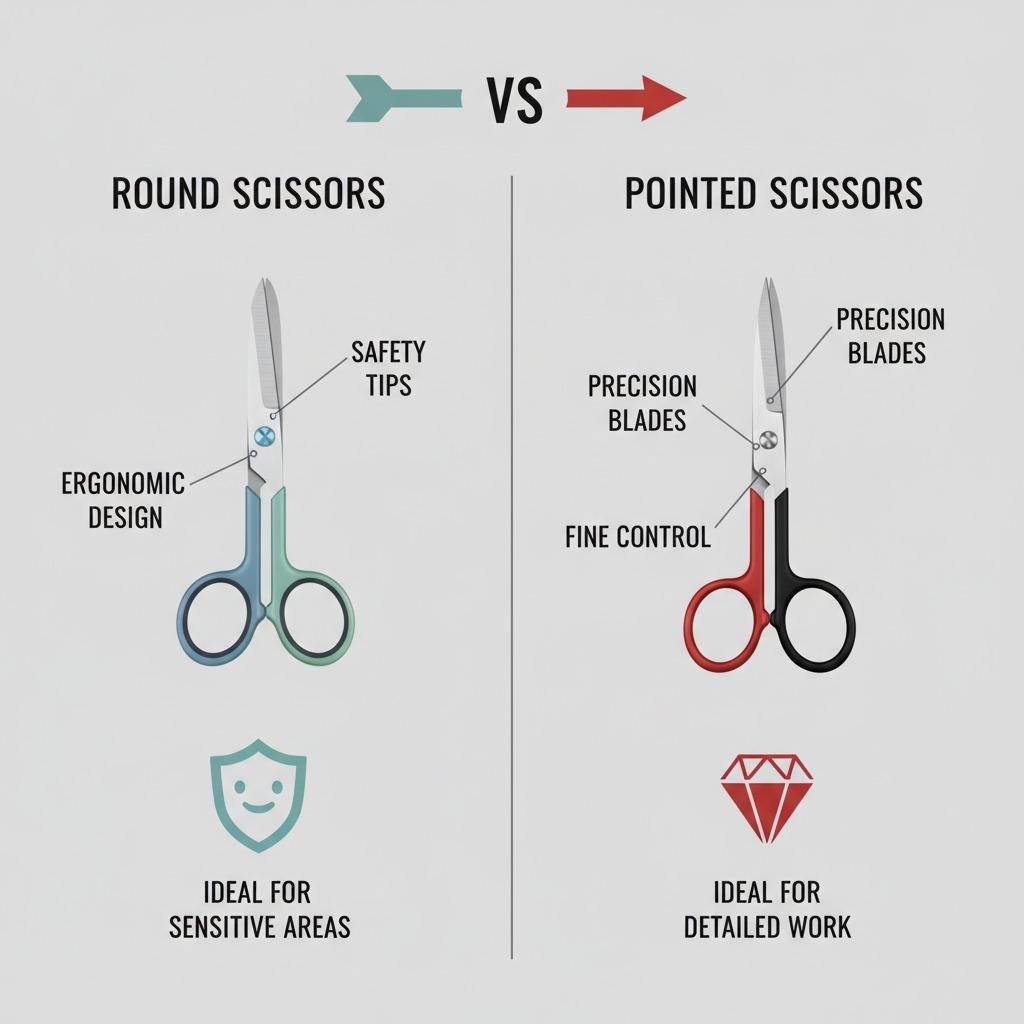
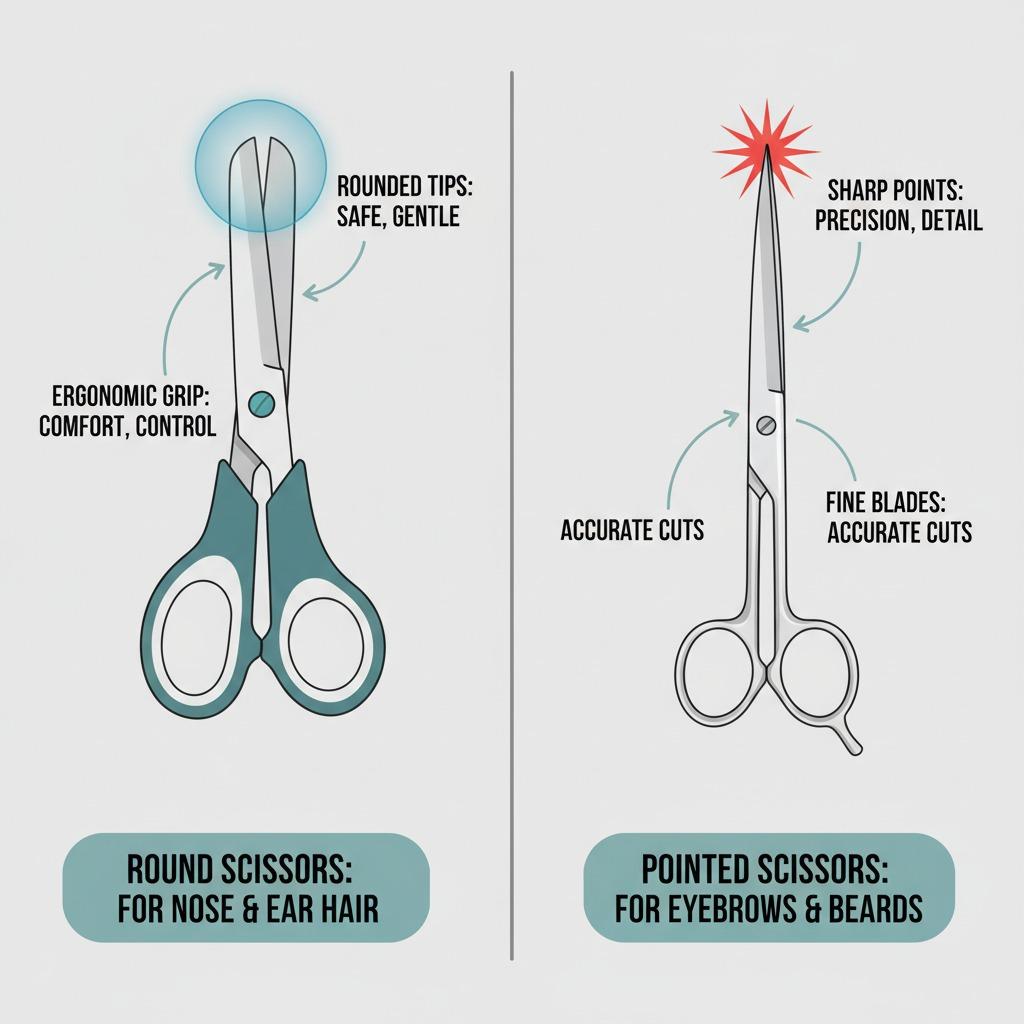
The main difference is the blade tip. Round scissors have blunt, rounded ends that are less likely to puncture or scrape skin during close trimming. They are often chosen for nose hair scissors because the user may be trimming in a confined area with limited visibility. The rounded tip gives an added safety margin when the tool is close to sensitive tissue.
Pointed scissors have sharper, narrower tips. This shape allows the blades to reach individual hairs, small lines, or tight areas more accurately. Pointed tips are useful when shaping facial hair, cleaning up eyebrow edges, or making small cosmetic adjustments where the user needs to see exactly where the blades meet.
Both styles can be effective when the steel, blade alignment, handle comfort, and finishing quality are appropriate. A rounded tip does not compensate for dull blades, and a pointed tip does not automatically mean professional-level precision. The best scissors combine the right tip shape with a clean cutting edge, comfortable control, and dependable construction.
When Round-Tip Scissors Are the Better Choice
Round-tip scissors are best for grooming tasks where skin contact is likely or where the user cannot easily see the cutting area. Nose hair trimming is the clearest example. Because the inside edge of the nostril is sensitive, the blunt tip helps reduce the risk of a painful slip. The same logic applies to trimming around the ears, working near the lash line with caution, or helping a beginner maintain small grooming details.
Round tips are also useful for retail beauty kits intended for a broad audience. If the end user may not have professional training, a safer tip profile can make the tool more approachable. This is especially relevant for travel grooming kits, basic personal care sets, and beauty accessories positioned for home use.
Choose round-tip scissors when your priority is:
- Reducing accidental pokes during close-contact trimming
- Grooming sensitive areas such as nose or ear hair
- Creating a beginner-friendly tool for personal care
- Adding safer scissors to a compact grooming kit
- Maintaining simple trims rather than highly detailed shaping
Round-tip scissors still need to cut cleanly. If the blades tug hair instead of cutting it, users may press harder or repeat the cut several times, which can reduce comfort and control. A well-made rounded scissor should feel stable in the hand and cut without forcing the blades together.
When Pointed Scissors Make More Sense
Pointed scissors are preferred for precision work. The slim tips make it easier to isolate a hair or trim a narrow edge. This matters for eyebrow shaping, moustache detailing, beard line touch-ups, and fine beauty work where a rounded end may block visibility or feel too broad.
Pointed scissors are often chosen by experienced users because they allow more deliberate cutting. The tradeoff is that the tool must be handled with attention. The user should work in good lighting, avoid sudden movements, and cut only where the tip position is visible. For professional or advanced grooming tasks, that extra control can be valuable.
Choose pointed scissors when your priority is:
- Trimming individual hairs with high visibility
- Defining eyebrow edges or facial hair lines
- Working on small details where blade access matters
- Using the scissors in a controlled, well-lit setting
- Serving users who already understand safe scissor handling
Pointed scissors should not be treated as general-purpose safety scissors. They are more suitable when precision is more important than extra protection at the tip. For many buyers, the practical solution is to carry both types: round-tip scissors for sensitive-area grooming and pointed scissors for detail finishing.
Quick Comparison: Round vs Pointed Beauty Scissors
| Selection factor | Round-tip scissors | Pointed scissors |
|---|---|---|
| Primary advantage | Added safety near skin | Better access for fine detail |
| Common uses | Nose hair, ear hair, basic close trimming | Eyebrows, facial hair edges, detail shaping |
| User skill level | Suitable for beginners and home grooming | Better for careful or experienced users |
| Visibility needs | Helpful when visibility is limited | Best when the cutting point is clearly visible |
| Main caution | Must still be sharp enough to avoid pulling | Sharp tip requires careful handling |
This comparison is useful for both personal shoppers and sourcing teams. If the product will be sold as nose hair scissors, rounded tips are usually the more logical fit. If the product is positioned for eyebrow or beard detail work, pointed tips may better match the expected use.
How to Evaluate Quality Before Buying or Sourcing
Tip shape is only one part of the decision. Beauty scissors should also be assessed for blade performance, hand comfort, and consistency. Olimor Beauty emphasizes stainless steel construction, ergonomic handles, and quality control, but buyers should still define the features that matter for their target market or retail channel.
Use this checklist when comparing beauty scissors:
- Blade alignment: The two blades should meet cleanly from base to tip without crossing unevenly or leaving gaps.
- Cutting feel: A proper pair should cut hair cleanly rather than bend, pull, or crush it.
- Tip finishing: Rounded tips should feel smooth, while pointed tips should be precise without rough edges or burrs.
- Handle comfort: Finger holes and handle shape should allow control without pinching or forcing the hand into an awkward position.
- Surface finish: The scissors should be easy to wipe clean, with no obvious rough areas that trap residue.
- Packaging suitability: For retail, the packaging should protect the tips and communicate the intended use clearly.
- Use-case match: The product name, instructions, and tip shape should all support the same grooming purpose.
If you are building a broader beauty assortment, review Olimor product collections to consider whether scissors should be paired with tweezers, nail tools, mirrors, or other grooming accessories. A consistent product set can make the buying decision easier for end users.
Safe Use Tips for Close Grooming Areas
Even safer scissors require careful use. For nose hair trimming, cut only the visible hairs that extend beyond the nostril. Do not insert scissors deeply, and do not trim in a moving vehicle or while walking. Work slowly in front of a mirror, and clean the blades before and after use.
For eyebrow trimming, comb the brow hair upward and trim small amounts at a time. It is better to make several light cuts than one aggressive cut. With pointed scissors, keep the tips angled away from the eye and stop if lighting or visibility is poor. For facial hair detail work, stretch the skin gently only when needed and avoid cutting too close to irritated skin.
Scissors should be personal care tools, not shared casually. If tools are used in a professional setting, cleaning and sanitation procedures should match the workplace’s hygiene requirements. For home use, wiping away hair and residue after each session helps maintain comfort and reduces buildup.
Care, Storage, and Long-Term Performance
Good scissors last longer when they are handled as precision tools rather than tossed into a drawer with hard accessories. After use, remove loose hair, wipe the blades with a clean dry cloth, and make sure the pivot area is free of debris. If the scissors are washed, dry them thoroughly before storage.
Store scissors with the blades closed. A protective sleeve or dedicated compartment helps prevent damage to the tips and cutting edges. This matters for both round and pointed designs: rounded tips can become rough if dented, while pointed tips can lose accuracy if bent or chipped.
Do not use beauty scissors to cut paper, packaging, thread, or synthetic materials unless they are specifically intended for that purpose. Cutting the wrong material can dull the blades and reduce grooming performance. If the scissors start pulling hair, feel loose at the pivot, or show visible damage, replace them rather than forcing continued use.
Choosing the Right Scissors for Your Audience
The best choice depends on the user and the grooming context. For a personal nose hair tool, round-tip scissors are usually the safer and more comfortable option. For eyebrow cleanup or detailed facial hair shaping, pointed scissors provide better visibility and control. For retail or wholesale assortments, offering both styles can help cover different grooming needs without confusing the customer.
When sourcing, align the tip type with the product message. A package labeled for sensitive-area trimming should not leave buyers guessing about safety. A detail grooming scissor should make its precision purpose clear. If you need help comparing options for a project, you can contact Olimor or send an inquiry with your intended use, target market, and packaging goals.
Round and pointed scissors each solve a different grooming problem. Round tips support safer close trimming; pointed tips support controlled detail work. By matching the design to the task, buyers can choose beauty scissors that feel practical, comfortable, and appropriate for everyday grooming.
Tag: