

Private Label Beauty Tools: What Buyers Need to Decide Before They Order
Private label beauty tools sit at an awkward but profitable intersection of branding, retail presentation, and everyday utility. On the surface, the category looks simple: buy a tool set, put your name on it, and sell it through salons, schools, e-commerce, or gift channels. In practice, the decisions that matter are less cosmetic than commercial. Buyers have to think about tool mix, finish quality, packaging format, customer segment, and whether the product will survive repeated use without coming across as disposable. That is the real issue behind private label beauty tools: not just how they look in a box, but whether they support a brand promise once they reach a nail station, a vanity drawer, or a shipping carton.
For sourcing managers and product teams, the question is usually not whether private label makes sense. It is which version makes sense for the market you are trying to serve. A manicure set for retail gifting is judged differently from a salon kit, and both are different again from a white label beauty tools program built for marketplace sales. The wrong spec can make a line feel cheap even when the packaging is polished. The right spec can create a stable, repeatable SKU that is easy to merchandise and simple to replenish.
What the Product Category Usually Includes
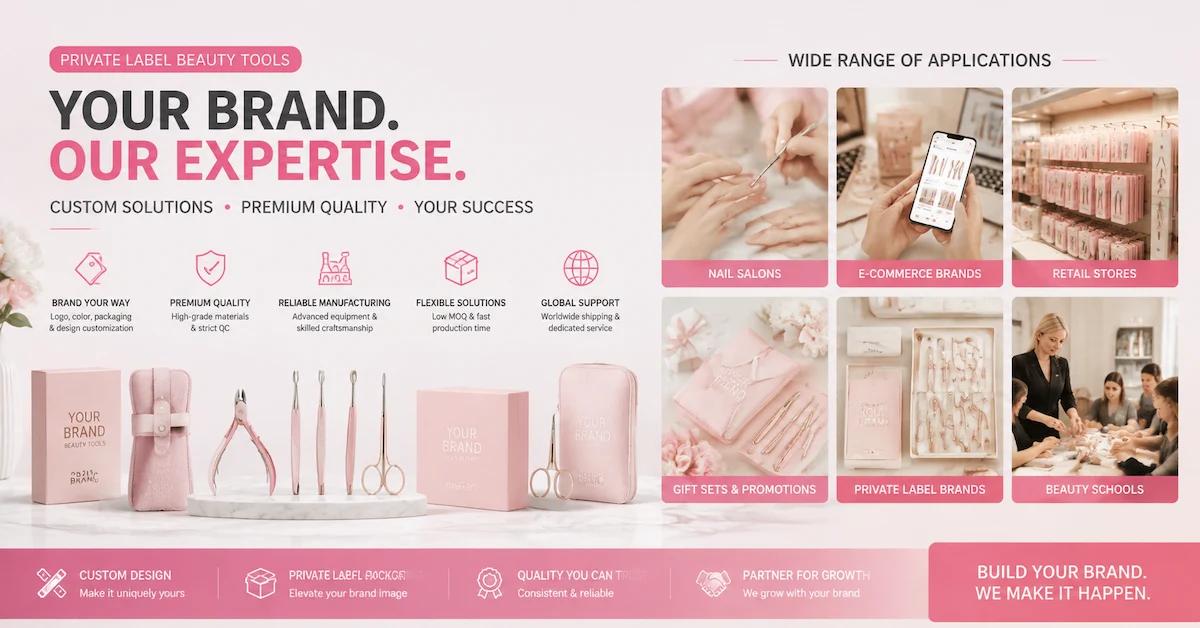
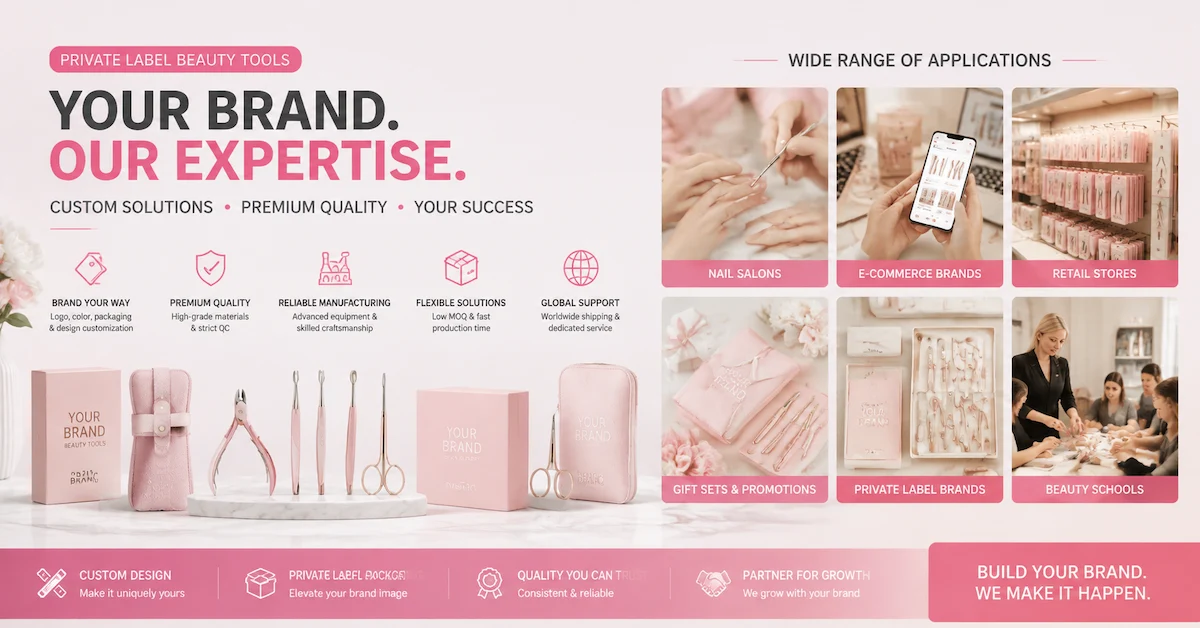
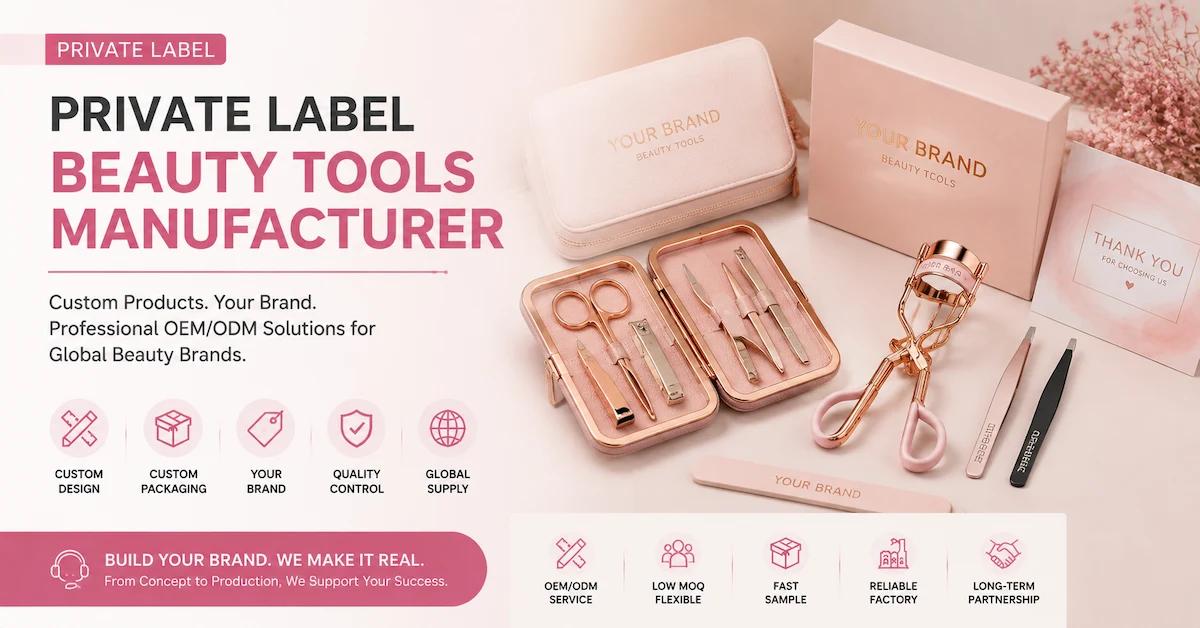
The supplied product information points to a branded manicure or nail-care style kit, with metal hand tools shown alongside a soft pink pouch and retail-style box. The visible items appear to include precision grooming tools such as clippers or nippers, cuticle or detail tools, tweezers, and scissors, though the exact identities are not fully confirmed. That uncertainty matters. In this category, buyers should avoid assuming that a set shown in a mockup automatically contains the same parts in every production run.
A typical private label beauty tools assortment often centers on compact, handheld metal instruments designed for personal grooming, nail care, or general beauty maintenance. The practical value comes from the combination of function and presentation. A tool that performs well but arrives in poor packaging is hard to position as a premium gift or retail item. A beautiful box with mediocre tools creates the opposite problem: it may sell once, but it will not build repeat demand.
The packaging details supplied here are useful because they reflect how many buyers actually sell these products. The box, pouch, and coordinated color system give the line a branded shelf presence. That is not a minor detail. In consumer beauty, packaging often carries as much weight as the tool itself, especially for first-time buyers, school kits, and promotional sets.
Why Private Label Changes the Buying Decision
Private label beauty tools are not bought the same way commodity tools are bought. A generic tweezer can be sourced on price alone. A private-label line has to support a wider commercial job: branding, consistency, packaging, and downstream merchandising. That means the buyer is not just selecting a product, but a small system.
The supplied graphic mentions custom design, logo placement, color, packaging, quality control, low MOQ, fast production time, worldwide shipping, and dedicated service. Those are common selling points in this segment, and they point to the main buyer tradeoff. A private label program can reduce the burden of product development, but it also raises the importance of supplier communication. If the logo placement, pouch color, or box insert is not locked down early, small mismatches can erode the value of the brand story very quickly.
This is where white label beauty tools and private label beauty tools overlap, but not completely. White label programs are often faster to launch because the core product is already fixed. Private label programs usually allow more control over branding and packaging, sometimes a better route when the customer cares about visual coherence or giftability. The right choice depends on whether your priority is speed to market or distinctiveness on the shelf.
Quick Buyer Reference
If the product is meant for retail resale, prioritize presentation, tool finish, and shelf impact.
If the product is meant for beauty schools or training kits, prioritize completeness, consistency, and easy repurchase.
If the product is meant for e-commerce, prioritize clear photography, durable packaging, and shipping protection.
If the product is meant for promotions or gifting, prioritize visual appeal and a compact set that feels intentional rather than random.
That short framework sounds obvious, but it prevents one of the most common sourcing mistakes: buying a tool set that looks good in a sample image and then trying to force it into the wrong channel.
Selection Criteria That Actually Matter
The first thing to inspect is tool quality. In this category, the visible metal finish tells only part of the story. Buyers should ask how the tools are made, how the edges are finished, and whether the moving parts feel aligned and repeatable across units. There is no need to invent technical claims that are not supplied. Still, a private label tool line should feel tight, clean, and dependable in the hand. Any looseness will be noticed.
Second, look at the packaging structure. A boxed set with a pouch can serve multiple channels, but only if the insert, sizing, and closure method protect the tools during transport. If the box is attractive but not secure, the set may arrive scuffed or misaligned. For e-commerce especially, that is an expensive problem because the damage is visible immediately and tends to trigger returns.
Third, decide whether the line is positioned as a manicure set, a broader beauty accessory, or a mixed grooming kit. The distinction shapes the way buyers read the product. A narrow manicure focus is easier to explain. A broader grooming offer can reach more customers, but it also risks feeling unfocused if the contents are not clearly organized.
Fourth, confirm what level of customization is actually available. Logo, color, packaging, and design are useful levers, but they are not all equally flexible across suppliers. Some vendors can change the outer box quickly while keeping the tool geometry fixed. Others can support deeper customization but need more time and tighter minimum order planning. That detail matters more than flashy promises of fast production time.
Common Mistakes Buyers Make
One mistake is treating the set as a decorative product first and a working tool second. That usually leads to poor repeat sales. The customer may enjoy the first impression, but if the tool tips are dull, the handles feel awkward, or the parts are hard to clean, the product will not earn trust.
Another mistake is choosing a packaging style that looks premium but is difficult to ship. Soft pouches and compact boxes are useful, but only if they hold the set securely. A brand can lose more margin to damage and returns than it ever saved on the unit cost.
A third mistake is over-customizing too early. Many buyers want to change the logo, pouch, box art, color story, and component mix all at once. That can work, but it also makes sampling slower and weakens quality control. A better first order is often a disciplined one: finalize the tool set, approve the packaging, then decide whether a later revision is worth the extra cycle.
How to Evaluate a Supplier
For private label beauty tools, supplier evaluation should center on repeatability. Ask for samples, compare them side by side, and look for consistency in finish, alignment, and packaging presentation. If the supplier shows multiple sample types, make sure you know which version is the intended production standard.
The mention of quality control in the supplied graphic is relevant, but buyers should still verify what that means in practice. Does the supplier inspect the tools before packing? Are logos checked for placement? Are packaging components matched by batch? These are not glamorous questions, but they are the ones that separate a workable program from a frustrating one.
You should also review the seller's support model. Dedicated service sounds generic until a shipment is delayed or an artwork file needs correction. At that point, responsiveness matters more than marketing language. For buyers building a recurring line, service is part of the product.
Practical Advice for Brand Teams
A private label program is strongest when it is linked to a clear buyer use case. Salons want reliability and easy replenishment. Beauty schools want standardized kits that can be taught around. Retail and e-commerce need strong visual identity and low damage rates. Promotional gift sets need enough perceived value to feel special without becoming expensive to assemble.
That means the launch brief should be simple and specific. Define the user, define the channel, define the packaging role, and define which details are fixed. A line that is overdesigned at the outset often becomes expensive to maintain. A line that is too generic disappears into the market.
There is also a quiet but important merchandising point: the best private label beauty tools are easy for a customer to understand in three seconds. If the box, pouch, and tool layout communicate purpose immediately, the product has a better chance of moving off shelf or converting online.
FAQ
Are private label beauty tools the same as white label beauty tools?
Not exactly. White label products are often more standardized, while private label programs usually allow more branding and packaging control. The line between them can blur depending on the supplier.
Can these tools work for salon resale and e-commerce?
Yes, but the packaging and shipping protection should match the channel. What works in a display case may not survive a parcel network without adjustment.
What should buyers confirm before ordering?
Confirm the actual contents, the customization scope, the packaging format, and the supplier's quality control process. Do not rely on a marketing image alone.
Next Step
If you are building a private-label line, start by pinning down the intended use case and the exact set configuration. Then request samples, check packaging durability, and verify which brand elements are truly customizable. The category rewards disciplined buying. A well-planned private label beauty tools program can support retail, salon, school, and promotional channels, but only when the product, packaging, and brand message are designed as one unit rather than three unrelated parts.
Tag:
Related articles
- OEM & Custom Solutions
- Beauty Tools Buying Guide
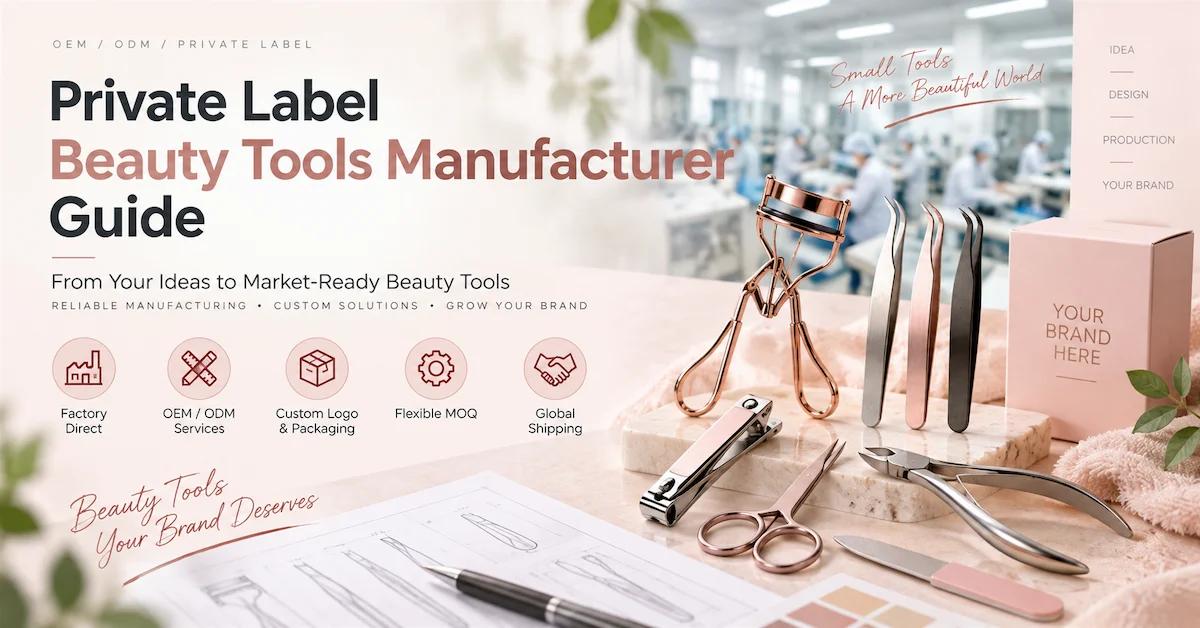
Private Label Beauty Tools Manufacturer: OEM, ODM and Custom Packaging Guide
- OEM & Custom Solutions
- Beauty Tools Buying Guide
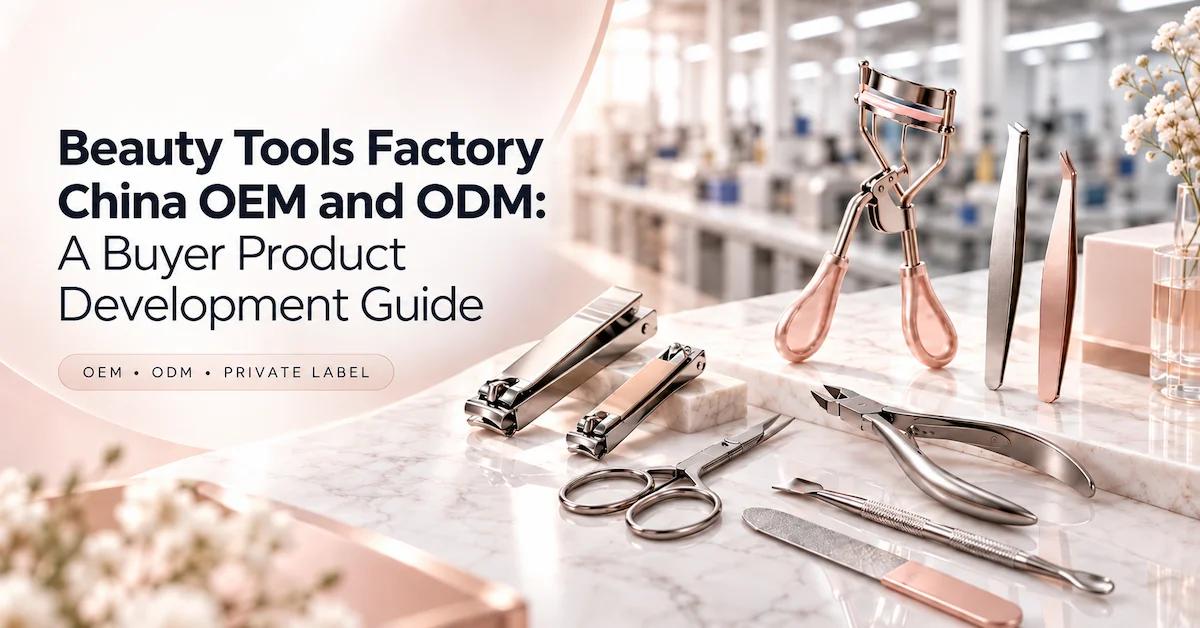
Beauty Tools Factory China OEM and ODM: A Buyer Product Development Guide
- OEM & Custom Solutions
- Beauty Tools Buying Guide