What Is a Private Label Beauty Tools Manufacturer?
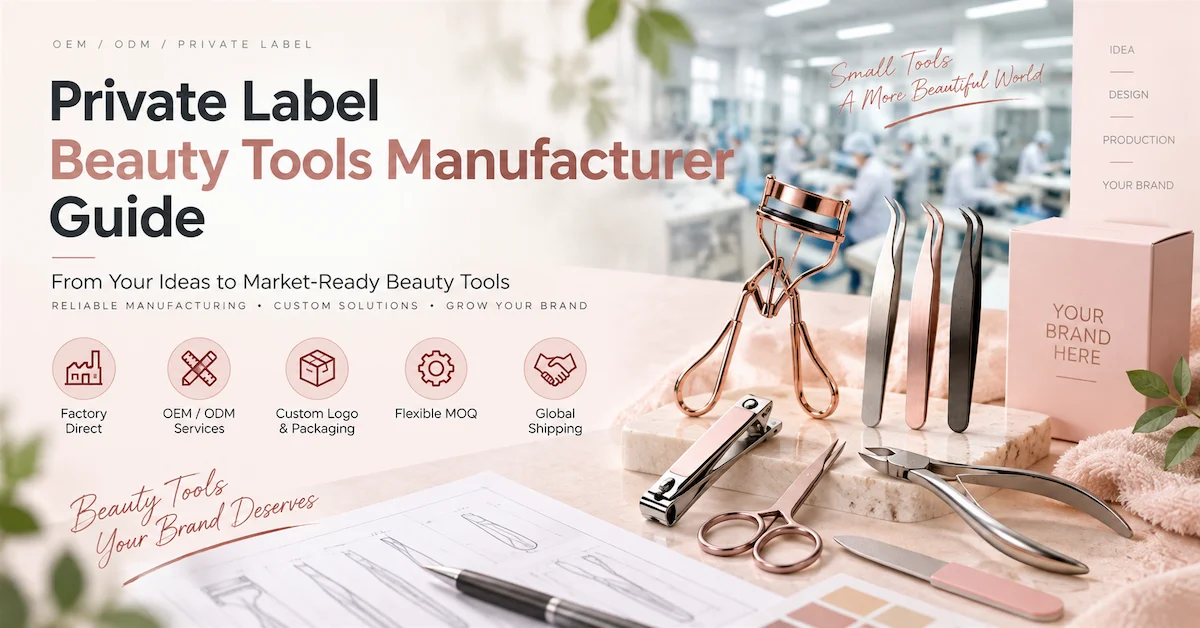
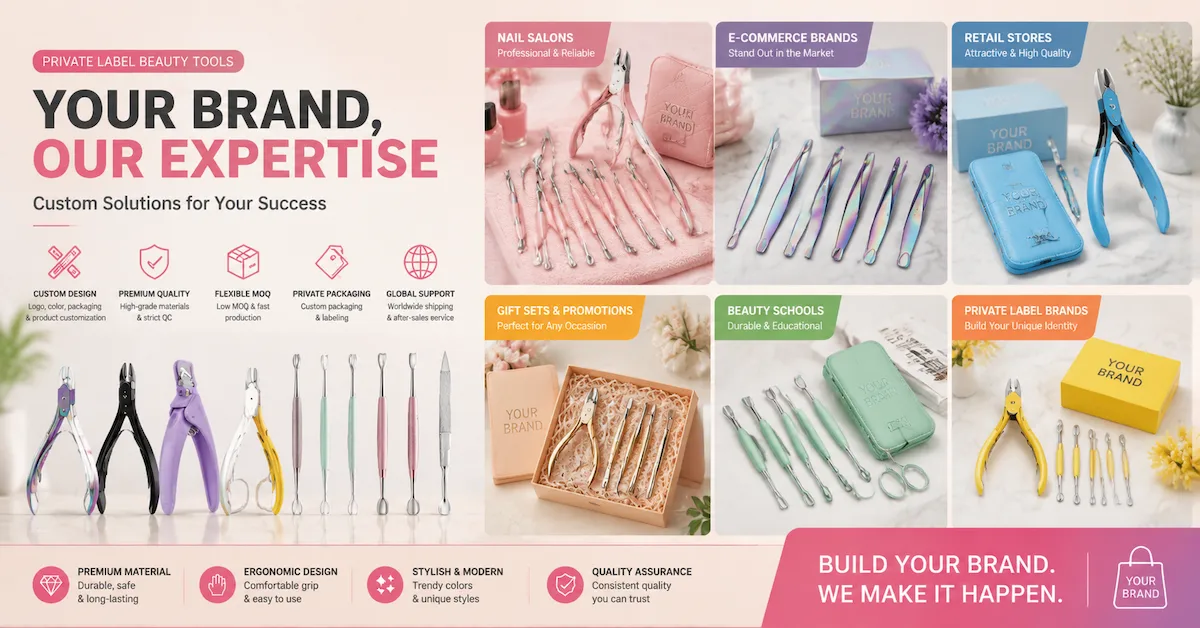
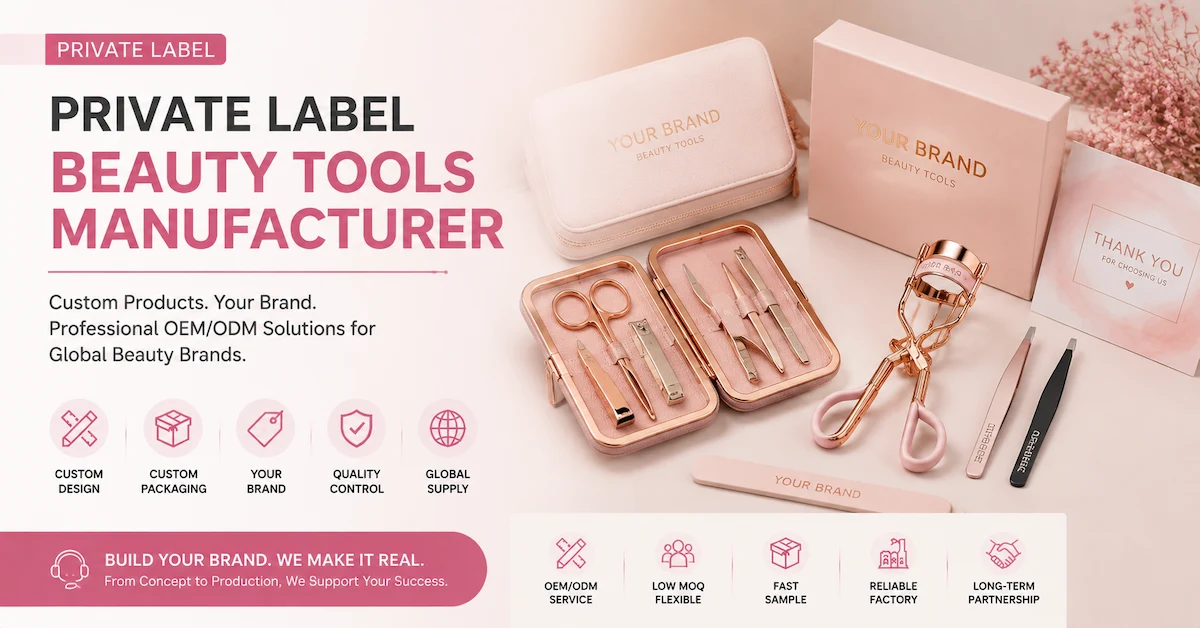
A private label beauty tools manufacturer develops and produces beauty products that businesses sell under their own brand name. Unlike standard wholesale purchasing, private label cooperation allows brands to control more aspects of the product, including appearance, packaging, product combination, and market positioning.
For beauty brands, private label manufacturing is not simply adding a logo to an existing product.
A complete private label project usually involves:
- Product selection
- Product specifications
- Branding
- Packaging development
- Sample approval
- Quality inspection
- Bulk production
- Long-term supply management
Beauty tools may look simple, but their performance depends on detailed manufacturing control.
For example:
- Nail clippers require accurate blade alignment.
- Tweezers require proper tip contact and tension.
- Eyelash curlers require stable frame geometry and smooth movement.
- Manicure tools require consistent finishing and assembly.
A capable private label supplier should understand both manufacturing details and the commercial needs of global beauty brands.
OLIMOR BEAUTY provides customized beauty tool solutions for international brands, retailers, and distributors. Buyers can explore the OLIMOR beauty tools portfolio for available product categories.
Why Beauty Brands Choose Private Label Beauty Tools
More beauty companies are developing their own branded tool collections because private label products provide more control over customer experience.
Build Brand Differentiation
Standard products are easier for competitors to copy.
Private label development allows brands to create a more recognizable product identity through:
- Product selection
- Visual design
- Packaging
- Brand messaging
- Product combinations
For makeup and personal care brands, beauty tools can become an extension of the overall brand experience.
Expand Product Lines
Many beauty brands begin with one category and later expand.
For example:
A makeup brand may start with:
- Eyelash curlers
- Tweezers
Then develop:
- Manicure tools
- Grooming kits
- Beauty accessories
Working with a supplier that understands multiple beauty tool categories makes future expansion easier.
Control Packaging and Retail Presentation
For beauty products, packaging strongly influences customer perception.
Private label projects allow brands to coordinate:
- Product appearance
- Packaging style
- Retail presentation
- Gift packaging
- Product inserts
This is especially important for:
- Retail brands
- Ecommerce sellers
- Premium beauty companies
Develop Long-Term Supply Relationships
A reliable private label manufacturer can support:
- New product launches
- Repeat orders
- Product improvements
- Collection expansion
Instead of sourcing individual products from different suppliers, brands can build a more stable supply system.
What Beauty Tools Can Be Private Labeled?
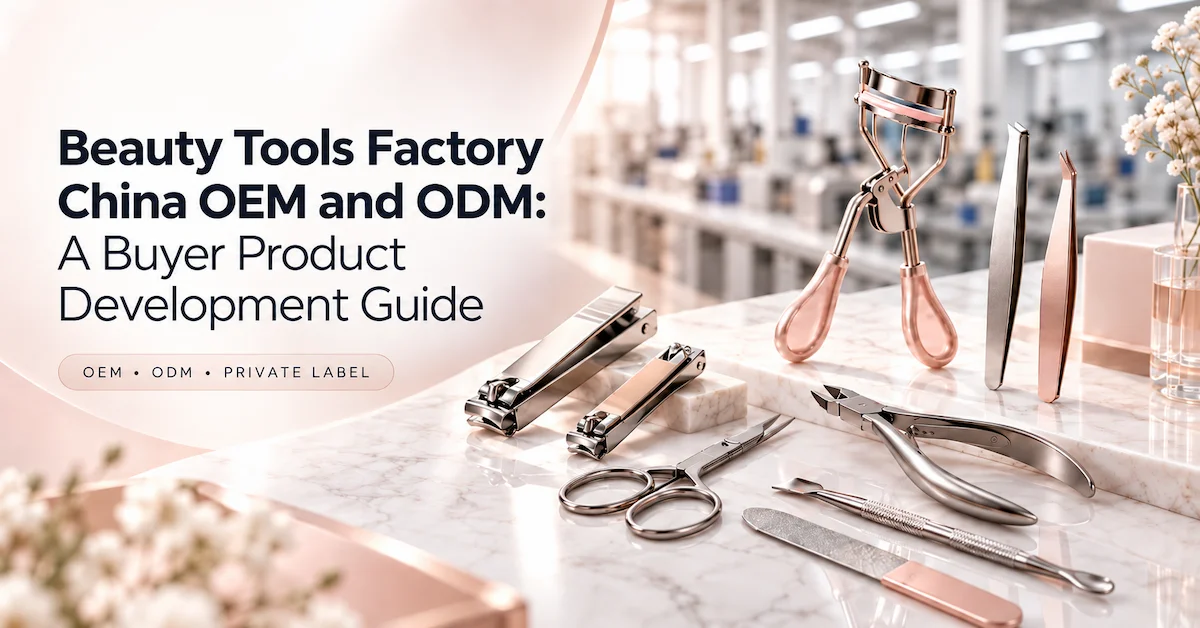
A professional private label beauty tools manufacturer may support several product categories.
The exact product range depends on manufacturing capability.
Nail Care Tools
Nail tools are a common starting point for private label beauty brands.
Products may include:
- Nail clippers
- Nail files
- Cuticle nippers
- Nail scissors
- Manicure sets
Key quality points include:
- Cutting performance
- Blade alignment
- Surface finish
- Handle comfort
- Set completeness
Brands developing manicure collections can review the OLIMOR Manicure Sets.
Lash and Brow Tools
Lash and brow tools are popular among makeup brands.
Common products include:
- Eyelash curlers
- Tweezers
- Eyebrow razors
- Beauty scissors
Important manufacturing considerations:
Eyelash Curlers
Check:
- Frame symmetry
- Curvature
- Closing movement
- Pad positioning
- Hinge stability
Tweezers
Check:
- Tip alignment
- Grip performance
- Tension
- Surface finishing
These details directly affect customer experience.
Makeup Accessories
Depending on supplier capability, beauty brands may also develop:
- Makeup tools
- Precision beauty accessories
- Beauty gift sets
The focus should remain on creating a useful product collection rather than adding products without a clear customer purpose.
Grooming and Personal Care Tools
Private label projects may also include:
- Grooming kits
- Travel sets
- Personal care accessories
- Gift collections
These projects require additional attention because several products must work together as one finished package.
How to Build a Private Label Beauty Tool Collection
A successful collection should be designed around customer needs.
More products do not always create more value.
Starter Beauty Tool Collection
Suitable for new brands:
- Nail clipper
- Tweezers
- Eyelash curler
Advantages:
- Easier product management
- Lower development complexity
- Clear customer positioning
Professional Beauty Tool Collection
A more advanced range may include:
- Cuticle nippers
- Beauty scissors
- Precision tweezers
- Professional manicure tools
This type of collection usually requires stronger functional quality control.
Premium Gift Collection
Premium collections may include:
- Multiple beauty tools
- Custom case
- Gift packaging
- Brand inserts
The goal is to create a complete customer experience.
Private Label Customization Options
Private label manufacturing provides different levels of customization.
The available options depend on the selected product and production process.
Product Selection
Brands can decide:
- Which tools to include
- Product combinations
- Target customer
- Market positioning
A focused product strategy is usually more effective than creating a large collection without a clear purpose.
Logo Branding
Branding options may include:
- Product logo
- Handle marking
- Packaging logo
- Product cards
- Inserts
The exact branding method depends on:
- Material
- Surface area
- Product structure
- Manufacturing process
A physical sample should be reviewed before final production approval.
Surface Finish and Appearance
Depending on the product, brands may discuss:
- Matte finish
- Polished finish
- Metallic appearance
- Color options where available
The objective is to create consistency with the overall brand identity.
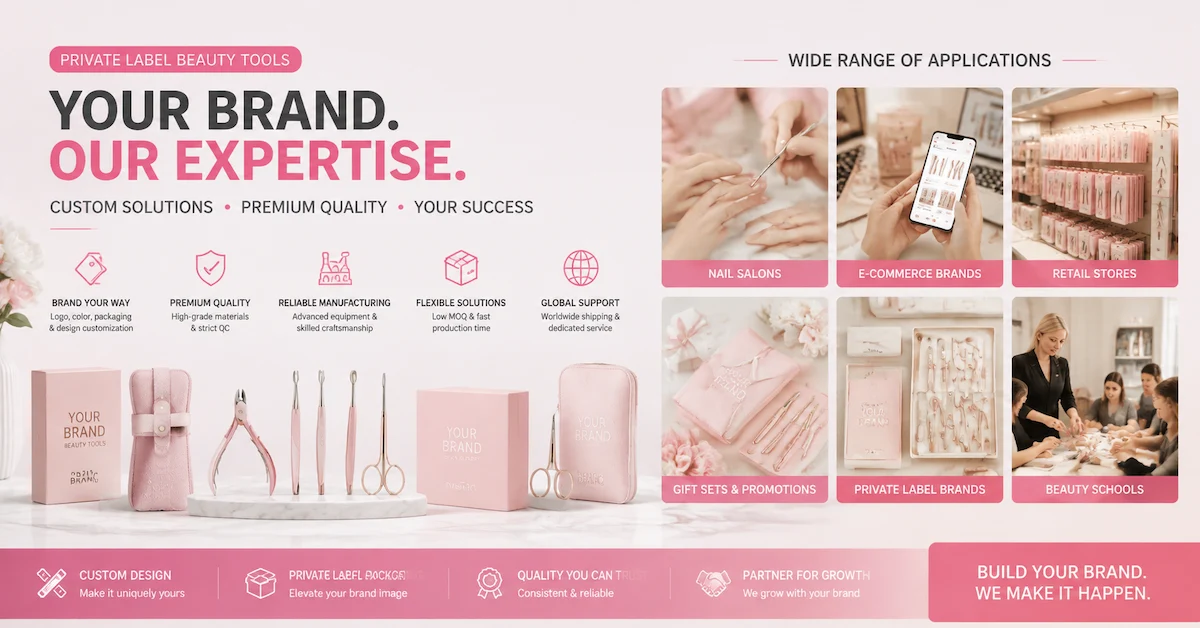
Packaging Customization
Packaging is an important part of private label beauty tools.
Possible solutions include:
- Retail boxes
- Pouches
- Cases
- Gift packaging
- Product inserts
Packaging should provide:
- Product protection
- Brand recognition
- Retail suitability
OEM Private Label Beauty Tools Manufacturing Process
A professional development process helps reduce mistakes.
Step 1: Requirement Discussion
The brand provides:
- Product category
- Target market
- Quantity
- Branding requirements
- Packaging expectations
Step 2: Product Selection
The supplier helps confirm:
- Suitable products
- Available options
- Customization possibilities
Step 3: Sample Development
Samples allow brands to evaluate:
- Function
- Appearance
- Branding
- Packaging
Step 4: Sample Approval
The brand confirms:
- Product specifications
- Finish
- Logo
- Packaging
- Quality requirements
Step 5: Bulk Production
Production follows the approved sample and specifications.
Step 6: Quality Inspection and Shipment
Before shipment, buyers should confirm:
- Product quantity
- Product consistency
- Packaging accuracy
- Final appearance
How to Evaluate a Private Label Beauty Tools Manufacturer
Choosing the right supplier requires more than checking product photos.
Product Experience
A suitable supplier should understand different beauty tool categories.
Ask:
- Which products do you manufacture?
- What are your strongest categories?
- Can you support multi-product collections?
Manufacturing Capability
Evaluate:
- Production experience
- Process control
- Assembly ability
- Export experience
Customization Capability
Confirm support for:
- Logo branding
- Packaging
- Product combinations
- Retail-ready solutions
Sample Process
A reliable supplier should have a clear process:
Sample → Feedback → Revision → Approval
Quality Control System
Quality control should match each product.
| Product | Important QC Points |
|---|---|
| Nail Clippers | Blade alignment and cutting action |
| Tweezers | Tip alignment and grip |
| Eyelash Curlers | Frame symmetry and movement |
| Nail Files | Filing surface consistency |
| Manicure Sets | Tool completeness and packaging |
Repeat Order Management
Long-term brands should confirm whether suppliers can maintain:
- Approved samples
- Product specifications
- Packaging files
- Quality requirements
Consistency is important because customers expect the same experience every time.
Private Label Beauty Tools vs Wholesale Products
| Factor | Private Label Beauty Tools | Wholesale Products |
|---|---|---|
| Branding | Customized | Limited |
| Packaging | Custom options | Standard |
| Product identity | Stronger | Lower |
| Development | More involved | Faster |
| Differentiation | Higher | Lower |
| Best for | Brand building | Market testing |
Wholesale can be suitable for companies that need quick market entry.
Private label is usually better for brands building long-term product identity.
What Affects Private Label Beauty Tools Cost?
The cost of private label beauty tools depends on several factors.
Main factors include:
- Product type
- Quantity
- Material
- Surface finish
- Branding method
- Packaging
- Customization level
- Inspection requirements
Product Complexity
Different tools require different manufacturing processes.
For example:
A nail file and an eyelash curler may have very different production requirements.
Branding Requirements
Additional customization may involve:
- Logo processing
- Artwork preparation
- Packaging development
Packaging Choice
A basic package and premium gift packaging create different cost structures.
Order Quantity
Quantity affects production efficiency, but brands should balance order volume with actual market demand.
Common Mistakes When Developing Private Label Beauty Tools
Choosing Only Based on Price
A lower quotation may not include:
- Better quality control
- Better packaging
- Better consistency
Skipping Physical Samples
Photos cannot confirm:
- Movement
- Cutting performance
- Grip
- Finish quality
Sample approval remains important.
Developing Too Many SKUs Initially
Too many products increase:
- Inventory pressure
- Development complexity
- Packaging requirements
- Quality management difficulty
Using Unclear Requirements
Statements like:
- Premium quality
- Professional product
are difficult to measure.
Better specifications include:
- Functional requirements
- Finish expectations
- Packaging details
- Inspection points
Ignoring Future Production Consistency
A successful first order should become a reference for future production.
How to Prepare an RFQ for a Private Label Beauty Tools Manufacturer
A detailed inquiry helps suppliers understand the project.
Include:
- Product category
- Required tools
- Quantity
- Target market
- Sales channel
- Logo requirements
- Packaging needs
- Sample requirements
- Quality expectations
- Delivery destination
Example RFQ
Product: Eyelash curlers, tweezers and manicure tools
Market: Global beauty retail
Branding: Custom logo and packaging required
Quantity: Please quote based on planned order volume
Sample: Required before bulk production
QC Focus: Product function, finish consistency,branding accuracy and packaging quality
A complete inquiry creates a better foundation for supplier communication.
How OLIMOR Supports Private Label Beauty Brands
OLIMOR BEAUTY provides customized beauty tool solutions for international brands, retailers, and distributors.
The product portfolio includes:
- Nail clippers
- Nail files
- Cuticle nippers
- Manicure sets
- Tweezers
- Eyelash curlers
- Eyebrow tools
- Beauty scissors
- Grooming accessories
For private label projects,buyers can discuss:
- Product selection
- OEM development
- Branding
- Packaging
- Sampling
- Quality requirements
- Multi-product collections
Explore the OLIMOR beauty tools portfolio, browse OLIMOR Nail Care Tools, or review OLIMOR Eyelash Curlers.
Brands planning a custom project can contact OLIMOR through the contact page.
FAQ About Private Label Beauty Tools Manufacturers
What is a private label beauty tools manufacturer?
A private label beauty tools manufacturer produces beauty tools that brands can sell under their own name with customized branding, packaging, and product requirements.
Can I customize beauty tools with my own logo?
Yes, depending on the selected product, material, surface area, and suitable branding process.
What beauty tools can be private labeled?
Common categories include nail care tools, eyelash curlers, tweezers, eyebrow tools, manicure sets, grooming tools, and beauty accessories.
What is the difference between OEM and private label beauty tools?
Private label focuses on selling products under a brand's identity, while OEM may involve more detailed product requirements and development support.
Can packaging be customized?
Yes. Brands may customize retail boxes, pouches, cases, inserts, and other packaging elements depending on project requirements.
How long does private label development take?
The timeline depends on product selection, customization level, sample approval, packaging requirements, and production planning.
How do I choose a private label beauty tools supplier?
Evaluate product experience, manufacturing capability, customization support, sample process, QC system, communication, and repeat-order consistency.
What quality checks should beauty brands request?
Quality checks should match each product, including function, alignment, appearance, finish, branding, and packaging.
What affects private label beauty tool cost?
Cost depends on product type, quantity, materials, customization, branding, packaging, and inspection requirements.
What information should I provide for quotation?
Provide product requirements, quantities, target market, branding details, packaging expectations, sample needs, and quality standards.
Conclusion
The right private label beauty tools manufacturer should help brands create products that are consistent, recognizable, and ready for their target market.
A successful private label project requires more than adding a logo. It requires:
- Suitable product selection
- Clear specifications
- Reliable samples
- Product-specific quality control
- Consistent production
- Brand-focused packaging
For beauty brands, retailers, and distributors, working with an experienced private label manufacturer can simplify product development and create stronger opportunities for long-term growth.
Planning a private label beauty tool collection? Contact OLIMOR BEAUTY with your target products, quantities, branding requirements, packaging ideas, and market information to discuss a suitable manufacturing solution.