

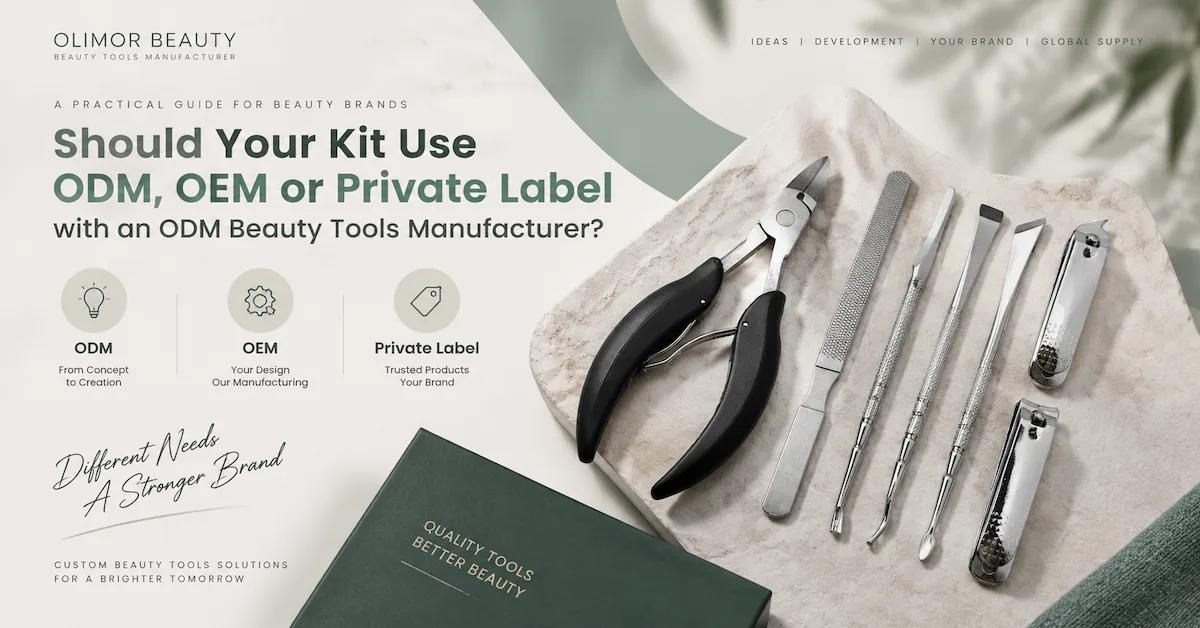
This comparison is written for buyers selecting a manicure or pedicure assortment for a brand, retailer, importer, salon distributor or ecommerce program. It uses OLIMOR's public pedicure-kit product page as a real product reference and asks a practical procurement question: which development route gives the buyer enough differentiation without creating avoidable cost, delay or approval risk?
The answer is rarely the route with the shortest label. A private-label project can become an ODM project when the buyer changes the case, tool count, handle, finish and working geometry. An OEM brief can still require supplier design feedback when a drawing contains unresolved production questions. The purpose of the framework is to expose those boundary changes early so the RFQ describes a real project.
| Route | Best starting condition | Typical change depth | Main buyer risk |
|---|---|---|---|
| ODM | Buyer has a user need or range concept | Supplier contributes design and development | Unclear ownership or open scope |
| OEM | Buyer controls drawing, sample or requirements | Factory executes a defined product | Hidden feasibility or tooling assumptions |
| Private label | Existing model is acceptable | Brand, finish, logo, set or packaging | Assuming decoration is the only cost driver |
| Hybrid | Existing platform plus meaningful component change | Configuration and development together | Quotation compares unlike options |
1. Search intent: compare routes before asking for price
The phrase ODM beauty tools manufacturer signals supplier comparison and RFQ intent. The buyer is not only asking what ODM means; the buyer wants to know which route will protect margin, differentiation and launch control. A useful article must therefore explain the definitions, show how a kit changes under each route, identify evidence to request and end with a brief that a supplier can answer.
Start with the business decision. Is the kit intended to be a distinctive hero product, a reliable replenishment item, a fast private-label test or a wholesale assortment? Each answer changes the value of tooling and development. A brand seeking a unique case may accept more sampling. A distributor testing a standard assortment may value a proven platform and faster artwork approval. A retailer requiring a specific pack may need packaging development even when the tools stay standard.
The buyer should tell the supplier which part of the decision is fixed. A target retail price is not the same as a confirmed cost. A launch month is not the same as a production date. A colour mood is not the same as an approved finish. By separating these statements, the purchasing team gets a clearer comparison between an ODM, OEM and private-label quotation.
2. What is an ODM beauty tools manufacturer in a kit project?
An ODM beauty tools manufacturer in a kit project contributes more than production capacity. The supplier may suggest a tool combination, case architecture, handle direction, surface finish, pack layout or manufacturing route. The buyer still owns the commercial problem: target user, market, channel, brand and quantity plan. A successful project records the supplier's development input and turns the selected option into a controlled specification.
A professional ODM beauty tools manufacturer should be able to discuss the kit as a system. The nipper, file, pushers, tweezers and clippers each have their own functions, but the retail unit also needs a case, retention, insert, surface family, logo hierarchy and carton. The supplier should identify which elements are standard, which are configurable and which require development.
This system view matters because a kit can fail commercially while every individual tool appears acceptable. The case may not close comfortably. A tool may rub against a decorated surface. A component may be difficult to remove from its pocket. The logo may be hidden when the pack is displayed. An ODM review should test the complete unit, not only the most attractive product photograph.
3. What is OEM for a manicure or pedicure kit?
OEM usually starts with more buyer-controlled product input. The buyer may provide a drawing, physical sample, set list, component dimensions, handle concept or a written specification. The factory then develops a practical route to make the defined item. OEM does not mean that the buyer must already know every production detail. It means the buyer brings a stronger product definition and expects the manufacturer to execute, challenge and document the route.
An OEM beauty tools manufacturer should ask which dimensions and functions are critical. For a kit, the list may include the number of tools, case size, pocket arrangement, closure, mark location, package orientation, edge condition, grip shape and component finish. If a buyer supplies only a mood board, the project may actually be ODM or hybrid, even if the first email calls it OEM.
The commercial benefit of OEM is control over the product definition. The risk is that an incomplete drawing creates late revisions. Solve that risk with a feasibility review, a model-specific sample and a clear list of open fields. The supplier should return questions before the quotation is treated as final.
4. What is private label for a tool kit?
Private label usually starts with an established model that already has a known component structure. The buyer adds brand assets, colour, finish, logo, set composition or packaging. This can be an efficient route when the buyer accepts the platform and wants a controlled retail identity. It becomes less simple when the buyer changes the tool geometry, case construction or working end.
A private label beauty tools manufacturer should state exactly what is included in the base model and which changes are optional. Ask whether the quoted item includes logo application, insert, pouch, outer carton, barcode, language copy and inspection. Ask whether a new colour or handle requires injection work, tooling or a different minimum quantity. These questions keep a private-label quote honest.
Private label is not a lower-quality route by definition. It is a scope description. The quality of the outcome depends on product identity, approved sample, material and finish record, packaging, inspection and change control. A buyer should compare evidence, not labels.
5. Compare ownership of design, tooling and files
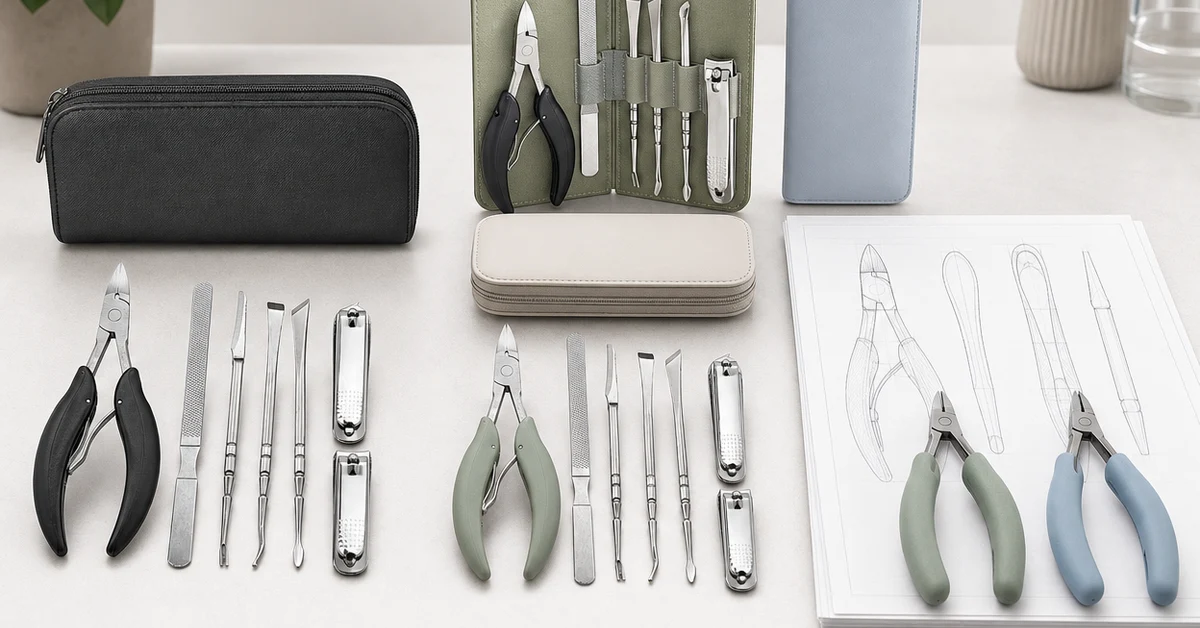
The clearest difference between routes often appears in ownership, not in the product photograph. An existing private-label platform may belong to the supplier's catalogue. A buyer's logo, packaging artwork and market copy may belong to the buyer. An ODM adaptation may create new drawings or tooling that need a written treatment. An OEM project may begin with buyer-owned drawings but still require supplier process know-how.
Ask the supplier to list the assets in the quotation or development agreement. Include the base model, buyer files, new drawings, molds or tools, samples, decoration plates, package artwork and inspection references. State who may use each asset, who pays for it, how it is stored and what happens when the project ends. Legal counsel should review the final terms; the sourcing team should still make the assets visible.
| Asset | ODM question | OEM question | Private-label question |
|---|---|---|---|
| Base geometry | Is it a supplier platform or a new concept? | Which buyer requirements define it? | Which model code identifies it? |
| New drawing | Who approves and stores the development version? | Which drawing controls production? | Is any drawing change actually required? |
| Tooling | What triggers a new tool and who owns it? | Does the buyer supply or fund the tool? | Does the standard model avoid new tooling? |
| Artwork | Which surfaces and files are included? | Does the drawing reserve a logo zone? | Is logo and package artwork included? |
| Sample | What does the development sample prove? | Does it match the buyer's controlled spec? | Does the decorated set match the base model? |
| Reorder file | Which revision is the repeat reference? | Which deviations were approved? | Which finish and pack are repeatable? |
6. Use the OLIMOR pedicure kit page as a concrete comparison
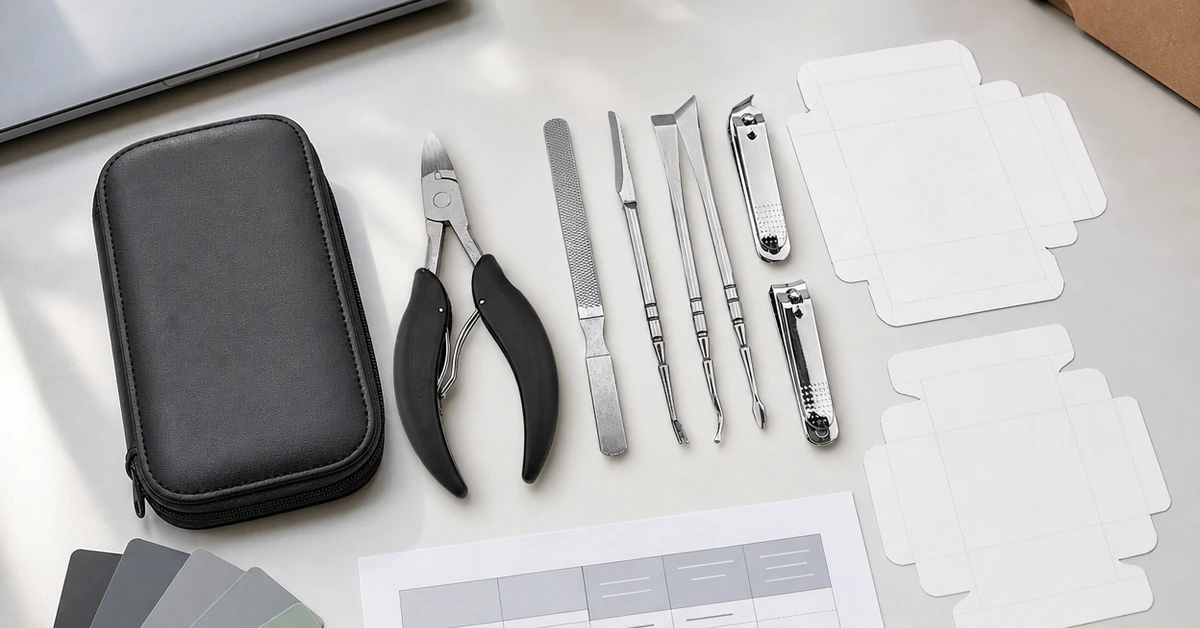
The linked OLIMOR pedicure kit page provides a concrete reference for the route comparison. The visible assortment includes a nipper with black grips, a file, slim manicure tools and nail clippers. A buyer can use the image to discuss set composition, tool roles, case or pouch requirements, finish consistency and the preferred retail unit. The image does not by itself establish material grades, MOQ, test outcomes or certification scope.
Under a private-label route, the buyer might keep the tool selection and request a logo, pouch, colour or carton. Under OEM, the buyer might define the number of tools, grip form, case dimensions and package structure. Under ODM, the buyer might start with a target user and ask the supplier to propose a travel kit, salon replenishment kit or giftable assortment. These are different conversations even when the starting photograph is the same.
The kit also makes a useful stainless steel beauty tools supplier question. Which components are metal, which are coated or plastic, and which material and surface descriptions apply to each model? Ask for a component list instead of using one material word for the complete set. This protects product copy and helps the inspection plan match the actual assortment.
7. Compare customization depth by the commercial result
Customization should be measured by what changes for the buyer, not by how many options appear in a presentation. A logo alone may create brand recognition. A new pouch may change the unit of sale. A different case may improve organization and presentation. A new nipper grip may require injection or tooling. A new file texture may change the functional specification. Each change has a different approval and cost implication.
A custom beauty tools manufacturer should classify requests as decoration, configuration, component change or new development. This classification lets the buyer compare quotes fairly. It also makes it easier to choose a hybrid route: keep a proven file and clipper, develop a distinct case, and apply a controlled mark across the set.
| Customization level | Example in a kit | Likely approval focus | Commercial question |
|---|---|---|---|
| Decoration | Logo on tool, pouch or carton | Artwork, method, location and finish | Is the mark included in unit cost? |
| Configuration | Change tool count or arrangement | Function, pocket fit and pack copy | Does set composition change MOQ? |
| Component | New grip, case or insert | Geometry, assembly and material record | Is tooling required? |
| New development | New working end or full kit concept | Feasibility, samples and release package | Who owns new design output? |
| Market pack | Language, barcode and retail format | Copy, traceability and carton data | Which market documents apply? |
8. Compare process and quality evidence model by model
OLIMOR's company-provided information lists metal stamping, heat treatment, plastic injection, polishing, deburring, assembly, inspection and packaging, together with production-process and finished-goods inspection. The buyer should map those listed capabilities to the selected kit components. A black-grip nipper may involve a different route from a slim metal pusher, and the case may require a separate packing review.
Request a process-and-evidence matrix. Put each component in one row, then name the applicable process, critical characteristic, inspection point, sample evidence and final record. The matrix should identify what is known, what is proposed and what still needs confirmation. This makes the comparison useful even when the buyer is evaluating an ODM, an OEM and a private-label quotation at the same time.
| Kit component | Possible process focus | Buyer review | Evidence to request |
|---|---|---|---|
| Nipper | Forming, heat treatment, grip assembly and finish | Cutting-edge meeting, movement, grip and surface | Model-specific sample and inspection plan |
| File | Forming, surface texture, polishing and deburring | Working texture, edge condition and handle | Reference sample and finish comparison |
| Pusher or scraper | Forming, polishing, tip geometry and assembly | Tip shape, surface, grip and pack position | Annotated drawing and sample |
| Nail clipper | Forming, edge work, assembly and finish | Edge meeting, lever movement and surface | Functional check and approved reference |
| Case or pouch | Cutting, sewing or forming and insert fit | Retention, closure, logo and protection | Packed master and drop/handling requirement if applicable |
| Carton or insert | Printing, folding, barcode and language | Copy, barcode, unit of sale and carton marks | Current artwork and pack proof |
9. Decide whether ODM is worth the development work
ODM adds value when the buyer needs a differentiated product but lacks a complete manufacturing definition. It can be worth the effort when the user problem is clear, the range needs a distinctive system, the package must fit a specific channel or a standard catalogue item cannot support the intended price and positioning. It may be unnecessary when the buyer wants a small test of an existing tool with only a logo and pack change.
Ask what the development work will change for the customer. If the answer is only a new colour, the project may be private label. If the answer is a new grip that improves handling, a new case that makes the kit travel-ready, or a different tool mix that solves a range gap, ODM may be justified. State the intended value in the brief so the supplier can protect it through design and QC.
A wholesale beauty tools supplier may be the correct partner for a replenishment assortment, but wholesale does not automatically mean that the supplier can develop a new system. Evaluate the selected partner against the work actually required: product input, manufacturing route, evidence, packaging and repeat-order control.
10. Compare packaging and retail readiness
Packaging is where many route comparisons become misleading. A standard kit may arrive in a basic pouch, while the buyer's channel requires a rigid case, hanging card, insert, barcode and multilingual copy. If the packaging is part of the product promise, include it in the route decision from the beginning. The package can affect tool protection, logo visibility, carton quantity, shipping assumptions and launch timing.
For custom logo beauty tools, review the complete unit in the orientation in which a shopper will see it. Check that the mark is not hidden by a pocket or insert, that sharp or delicate working ends are protected, and that the case closes without pressing on components. If a brand wants a premium feel, define the observable cues rather than relying on the adjective premium.
11. Compare MOQ, schedule and cash exposure
ODM, OEM and private label can carry different cash exposures. A new mold or component can add one-time cost. Printed packaging may have its own minimum. A standard platform may reduce development work but still require a decorated sample. A buyer should not rank routes using unit cost alone. Compare the full launch exposure: sample, tooling, artwork, packaging, inspection, freight and the quantity needed to make the program viable.
MOQ and schedule must be model-specific. Ask the supplier to explain what controls each minimum and milestone. A new injection handle may control a minimum differently from a standard metal tool. A new pouch or carton may create a print run. A buyer revision after sample approval can move the calendar. Record these dependencies rather than promising a fixed lead time before the scope is stable.
| Commercial comparison | ODM | OEM | Private label |
|---|---|---|---|
| Development spend | May include feasibility, design and tooling | May include engineering and tooling | Usually narrower, but decoration and pack still apply |
| MOQ driver | New parts, materials, finish and packaging | Specified geometry and production route | Decoration, colour, pack and standard run size |
| Schedule dependency | Design, sample rounds and approval | Drawing clarity, tooling and sample approval | Artwork, decorated sample and packing |
| Repeat-order control | New design files and master sample | Controlled drawing and approved deviation | Model, finish and pack revision |
| RFQ evidence | Concept response, feasibility and proposal | Model-specific execution plan | Base model and change list |
12. Use a route-selection scorecard
A scorecard turns a subjective supplier discussion into a documented decision. Give each route a score for differentiation, product control, launch speed, development cost, MOQ fit, packaging fit, quality evidence, IP clarity and repeatability. The numbers are the buyer's decision tool, not a claim about the supplier. Add a note for the evidence behind every score.
| Criterion | Question | Evidence | Weight guidance |
|---|---|---|---|
| Differentiation | Does the route create a meaningful range difference? | Concept, sample or configuration record | High for a hero product |
| Control | Can the buyer define the key product and pack decisions? | Drawing, brief and approval package | High for regulated or premium programs |
| Speed | Can the route meet the launch window? | Milestone plan and open-item list | High for seasonal tests |
| Cost exposure | What is one-time versus recurring? | Itemized quotation | High for new brands |
| MOQ fit | Does the quantity fit the first order? | Model-specific MOQ explanation | High for pilots |
| Evidence | Can function and finish be checked? | Sample, inspection plan and report format | High for repeat orders |
| IP clarity | Are files and tooling terms explicit? | Written terms | High for unique designs |
| Repeatability | Can the same result be reordered? | Master sample and revision system | High for distribution |
13. Write the RFQ so suppliers quote the same project
A route comparison only works when the RFQ is comparable. Send the same product task, target market, quantity range, package, branding request and evidence expectations to each supplier. Ask each one to state whether its proposal is ODM, OEM, private label or hybrid. Ask them to list what is included and excluded. This prevents a low quote from being built on a smaller scope.
- Project name and temporary SKU code
- Target customer, market, channel and launch window
- Reference product URL or physical sample
- Tool count, case or pouch and unit of sale
- Material preferences and finish direction
- Logo artwork, placement and package requirements
- First order and repeat-order quantity ranges
- Required sample stages and inspection evidence
- MOQ, tooling, quotation validity and milestone questions
- IP, file ownership and deviation-control questions
For a custom beauty tools manufacturer, a marked photograph can be more useful than a long paragraph. Circle the desired grip, case pocket or logo zone. Number each note and repeat those numbers in the RFQ. When the supplier replies, the buyer can see which points were accepted, proposed, excluded or left open.
14. Plan the approval gate before the first sample
Approval is not one yes or no event. Set gates that match the route. An ODM project may need concept selection, feasibility, drawing, sample, decoration proof, pack proof and packed master. OEM may begin at drawing review and sample. Private label may begin at model selection and decoration. A hybrid kit should show which components use which gate.
Name the approval owner for product, brand, packaging, quality and commercial scope. A sample can be visually accepted by a designer while the quality owner still needs a functional check. A package can be approved by marketing while the importer still needs destination information. The release package is complete only when the right owners have reviewed the fields relevant to them.
15. Handle materials and claims with discipline
A product image can show a metal appearance, but it cannot prove a material grade. A catalogue badge can show a quality system, but it cannot prove product certification for every SKU. Buyers should ask the stainless steel beauty tools supplier for model-specific material information and documentation, then make market claims only after review. The same discipline applies to safety, durability, sterilization or professional-use wording.
The knowledge base confirms that OLIMOR has client-provided ISO and BSCI information but says the standard, legal entity, certificate number, scope and validity must be verified. It also warns against extending catalogue-only badges such as FDA, CE or Sedex into public claims. This is not a barrier to sourcing. It is a reminder to make the product file as precise as the marketing copy.
16. Build the repeat-order file
The route decision is only successful if the second order can match the first. Keep the product code, drawing, material record, finish reference, logo proof, package artwork, packed master, inspection plan, carton data, approved deviations and quotation assumptions together. Put the revision and date on the release package. When the buyer changes a colour, tool count or pack, issue a new revision instead of overwriting the old one.
For a wholesale beauty tools supplier, repeatability may be more valuable than an elaborate first concept. Distributors need a stable assortment and clear replenishment data. For an ODM program, repeatability protects the development investment. For private label, it prevents a standard model from drifting when the decoration vendor or package format changes.
17. Frequently asked questions
Which route is best for a new beauty brand?
ODM can be useful when the brand has a clear user problem but needs supplier-side product development. Private label may be more practical for a fast market test. OEM fits a brand that already controls a drawing, sample or detailed requirement. Compare scope, evidence, MOQ and timing rather than choosing by label alone.
Can an ODM project use an existing OLIMOR kit?
An existing product page can be a starting reference. The buyer should state which parts remain, which parts change and which package is required. OLIMOR should confirm the model, material, MOQ, schedule and customization scope for the exact configuration.
What does an OEM beauty tools manufacturer need from the buyer?
Usually a drawing, physical sample, appearance concept or structural requirement, plus the intended function, market, quantity and pack. The manufacturer should return feasibility questions and a model-specific production and inspection route.
Is private label only a logo?
No. It can include finish, colour, set composition, pouch, case, carton, insert and barcode. If geometry or a component changes, classify the work separately because tooling, samples and MOQ may change.
How should I compare three quotations?
Normalize the model, material, finish, logo, package, quantity, trade term, inspection and delivery assumptions. Ask every supplier to identify one-time charges, recurring cost, exclusions, MOQ driver and milestone dependencies.
What is MOQ for an ODM kit?
MOQ must be confirmed for the selected kit, components, finish and package. A generic number is not reliable. Ask what process or printed element controls the minimum.
How long does kit development take?
Sampling and production schedules depend on the development scope and order details. Request a dated milestone plan and ask how buyer revisions, tooling and packaging affect it.
What should be in a kit quality file?
Include the current set list, model codes, component materials description, approved sample, logo and pack proof, inspection plan, accepted deviations and shipment records. Add test or certificate documents only when they are applicable and verified.
Can I request custom logo beauty tools from OLIMOR?
Yes, logo and packaging can be discussed in the project brief. Share artwork, placement, surface, finish, quantity and channel. Ask for a decorated sample and a model-specific quotation.
Are the article images evidence?
The pedicure-kit image is a real OLIMOR product-page image. The two wide images are editorial visualizations made for explanation. They are not factory photographs, test reports or customer evidence.
18. Sources and trust notes
- OLIMOR BEAUTY About Us and company-provided knowledge-base facts: OEM/ODM support, listed processes, inspection and export context.
- OLIMOR pedicure kit product page: current public product reference image and page context.
- ISO 9001 official overview: quality-management context; not a product certificate.
- European Commission product safety guidance: destination-market responsibility context.
- U.S. CPSC importer resources: importer and consumer-product compliance context.
19. A route-selection worksheet for procurement and product teams
Run the comparison with the people who will own the consequences. Procurement can normalize quotes, product can judge the user task, design can review the visual system, quality can define evidence, packaging can confirm the retail unit, and logistics can check carton and shipping assumptions. A route chosen by one department alone often leaves another department to discover the missing work after the purchase order.
For every route, write one sentence describing the buyer's responsibility and one sentence describing the supplier's responsibility. In an ODM project, the buyer may own the target user, market and brand while the supplier proposes geometry and process. In OEM, the buyer may own the controlled design while the supplier turns it into a production route. In private label, both parties may share packaging and decoration decisions while the base platform stays with the supplier.
Then write the failure mode beside the route. ODM can fail when the concept is attractive but the ownership and approval gates are vague. OEM can fail when the drawing is incomplete or ignores process limits. Private label can fail when the buyer assumes a logo is the only change and discovers later that case, colour or carton requirements control the MOQ. Naming the failure mode gives the team a chance to add a check before money is committed.
Use the same vocabulary in the internal purchase order, the supplier quotation and the product page. A temporary SKU should not become three different names in three different files. Keep the set list in the same order, and state whether a pouch, insert and outer carton are included. Small naming differences create large reconciliation problems when a kit has several similar metal tools.
Finally, agree the point at which the route can change. A project may begin as private label and become hybrid when the buyer asks for a new case. It may begin as ODM and move to OEM after the drawing is frozen. A route change is not a failure; hiding it is. Reissue the quotation, approval plan and timeline when the scope changes so the final commercial decision remains traceable.
The worksheet should end with a buyer action: send the current brief, request the sample plan, confirm the model-specific MOQ, obtain the itemized quotation, or schedule a technical review. A comparison article is only useful when it makes that next step easier for the person responsible for the inquiry.
Keep a short decision diary alongside the worksheet. Record why a route was accepted, which alternative was rejected and which evidence supported the choice. This is especially useful when a buyer revisits the project after a seasonal launch or when a new team member inherits the range. The diary does not need confidential pricing; it needs the reasoning that connects the user task to the selected product route.
Ask the manufacturer to restate the selected scope in its own words before the purchase order. A useful restatement names the kit components, finish, decoration, package, quantity assumption and approval reference. If the supplier describes a different unit of sale or leaves out a component, the mismatch can be corrected before production rather than during receiving inspection.
Separate a product change from a copy change. A new phrase on an insert may require market review without changing the tool. A new grip or case changes the product file and may require a new sample. Keeping the two change types separate helps the brand move quickly on language while protecting the physical release package.
When the first shipment arrives, compare the packed unit with the approved master, not with memory. Check component count, pocket order, logo visibility, package copy, carton marks and the condition of the tool surfaces. Photograph the received unit with its temporary SKU and revision. That record gives the team a factual starting point for the next quotation and reorder.
This level of discipline is what makes an ODM, OEM or private-label program scalable. It allows a buyer to add a second kit without losing the first kit's evidence, and it gives the manufacturer a clearer brief when a buyer asks for a new combination. The result is a sourcing system that supports inquiry conversion and long-term supply rather than a one-off catalogue transaction.
A useful route comparison can also include a stop rule. If the proposed change does not improve the user task, the retail story, the pack experience or the repeat-order economics, keep the standard option. This protects the buyer from adding decoration or tooling simply because an option appears in a sample meeting. Development should earn its place in the product file.
For the pedicure kit reference, the stop rule might preserve the existing tool mix while changing only the case and insert. Or it might preserve the case while developing a new grip for one tool. The point is to make the decision explicit. The supplier can then price a base route and an alternative route without blending them into one ambiguous number.
Ask the supplier to identify the first irreversible decision. It may be a new mold, a printed packaging run, a special surface finish or a committed component purchase. That decision should receive an approval gate before the project passes it. A buyer can accept a fast standard sample while still delaying an irreversible tooling decision until the route is fully understood.
Keep the comparison helpful to the sales team as well as the factory. The final product page should use the same model name, component count, package description and material wording as the approved release. That alignment gives customers a clearer offer and gives the manufacturer a cleaner reference when a wholesale beauty tools supplier or retailer asks for a replenishment quote.
Once the route is selected, move the comparison into the inquiry. Tell OLIMOR which option you prefer, which alternative you want priced, and which evidence you need before approval. A direct request for an ODM, OEM, private-label or hybrid proposal is easier to answer than a general request for the best price on a kit.
Tag: