How to Select Tweezers for Lash Extensions
Tweezers for lash extensions are small tools, but they have a direct effect on application control, working speed, and the consistency of a lash technician’s technique. The right pair must match the task: isolating a natural lash, picking up an individual extension, forming or handling a fan, or making a fine adjustment near the eyelid. For salons, lash studios, training academies, and buyers sourcing professional tools, the decision is less about appearance and more about tip geometry, alignment, handling, and dependable production quality.
This guide explains the visible design differences, the likely manufacturing considerations, and the questions a buyer should ask before placing an order. Because the exact alloy, dimensions, tolerances, and sterilization properties of a pictured tool cannot be confirmed from appearance alone, those details should be verified with the supplier rather than assumed.
Why Tool Selection Matters in Lash Application
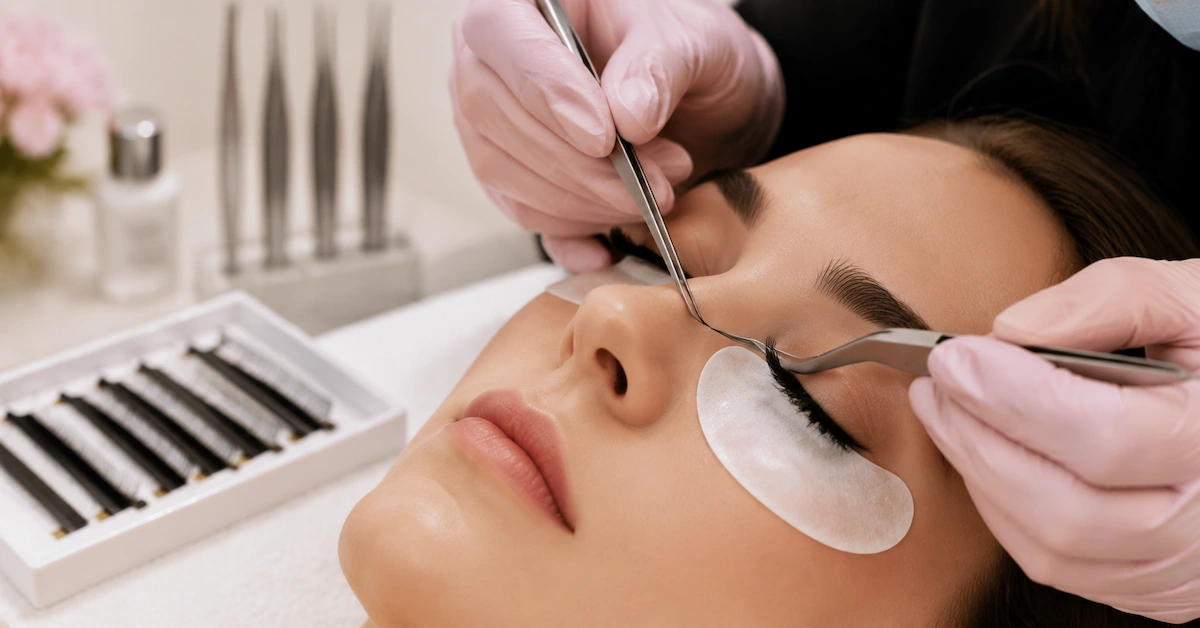
Lash application is a precision task performed in a confined working area. A technician may need to separate one natural lash from neighboring lashes, pick up a lightweight synthetic extension, position it accurately, and release it without disturbing adjacent work. The tool must therefore provide controlled movement without requiring excessive hand pressure.
A poor match between tool geometry and application technique can create practical problems. Tips that are too broad may interfere with isolation. Tips that do not meet evenly can make it difficult to hold a fine extension. Excessive spring resistance may contribute to hand fatigue over a long appointment, while a tip that is too sharp or poorly finished can be uncomfortable or difficult to control. These are not merely cosmetic concerns. They influence the technician’s workflow and the repeatability of the service.
Buyers should also distinguish between a tool that looks precise and one that has been manufactured and inspected consistently. Polished metal and a fine point are useful visible indicators, but they do not prove the alloy, closing force, tip alignment, corrosion performance, or expected service life.
Quick Comparison: Common Tip Functions
| Tool configuration | Typical task | What to evaluate |
|---|---|---|
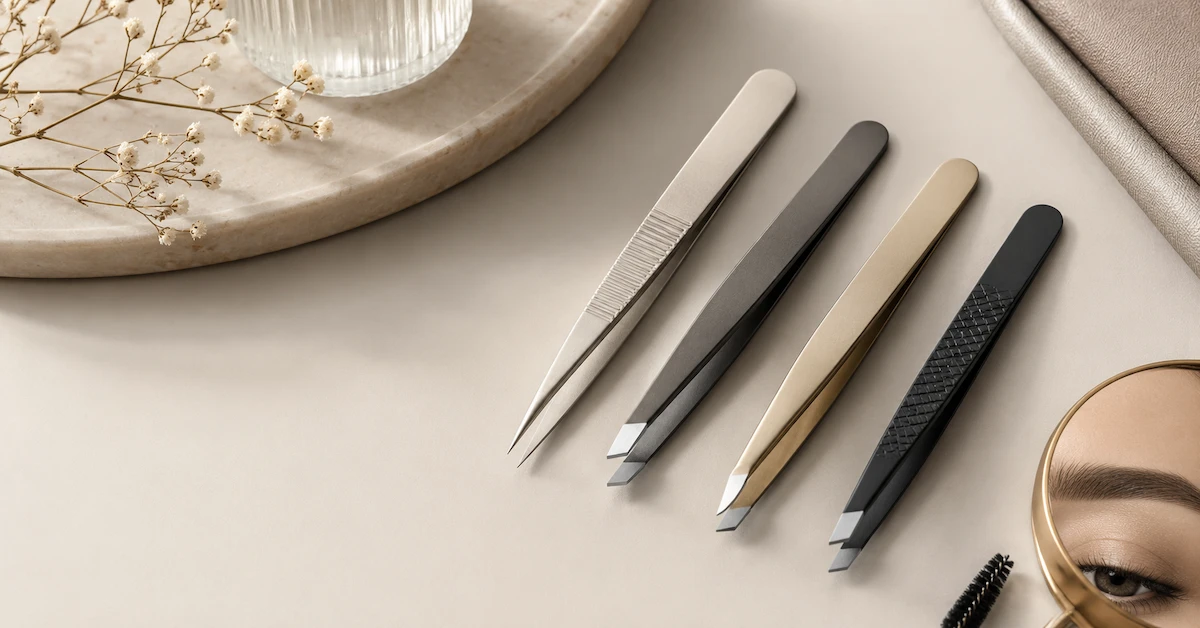
| Straight, narrow, pointed tips | Isolation, separation, and precise placement | Tip alignment, visibility, point finish, and controlled closing action |
| Curved or angled tips | Picking up, positioning, or adjusting extensions and lash fans | Grip at the working area, access around the lash line, and release control |
| Slim elongated body | Working in a confined area around the eyelid | Balance, hand comfort, reach, and resistance during repeated use |
The configurations above are general functional descriptions, not a substitute for a supplier’s technical drawing. The same visual style can perform differently depending on the tip thickness, angle, metal forming method, and final adjustment.
Understanding Eyelash Extension Tweezers by Function
Isolation tools
Isolation tools are generally selected for separation and visibility. A narrow, straight profile with fine pointed tips can help a technician access an individual natural lash without unnecessarily contacting neighboring lashes. For this use, the tips should meet cleanly and remain stable when lightly closed.
Buyers should ask whether the tip is finished by grinding, polishing, or another process, and how alignment is checked. A very sharp-looking point is not automatically better. The working end needs to be precise, but it must also be controllable in the technician’s hand.
Placement and pickup tools
Curved or angled tools are commonly associated with picking up and positioning extensions or lash fans. The bend can improve access and allow the technician to approach the material from a more useful angle. It may also help keep the hand and tool body away from the working line of sight.
Grip behavior is important here. The supplier should be able to explain how the tool is adjusted so that the tips hold the intended material without excessive force. The exact best geometry depends on the extensions being handled and the technician’s method, so a sample evaluation is often more informative than a product photograph.
Hybrid use
Classic, volume, and hybrid services may require more than one tool configuration. A salon purchasing a single general-purpose pair should be cautious about expecting it to perform every task equally well. In practice, a small selection of straight and curved or angled tools may provide better workflow coverage than one compromise design.
Materials, Finish, and Manufacturing Considerations
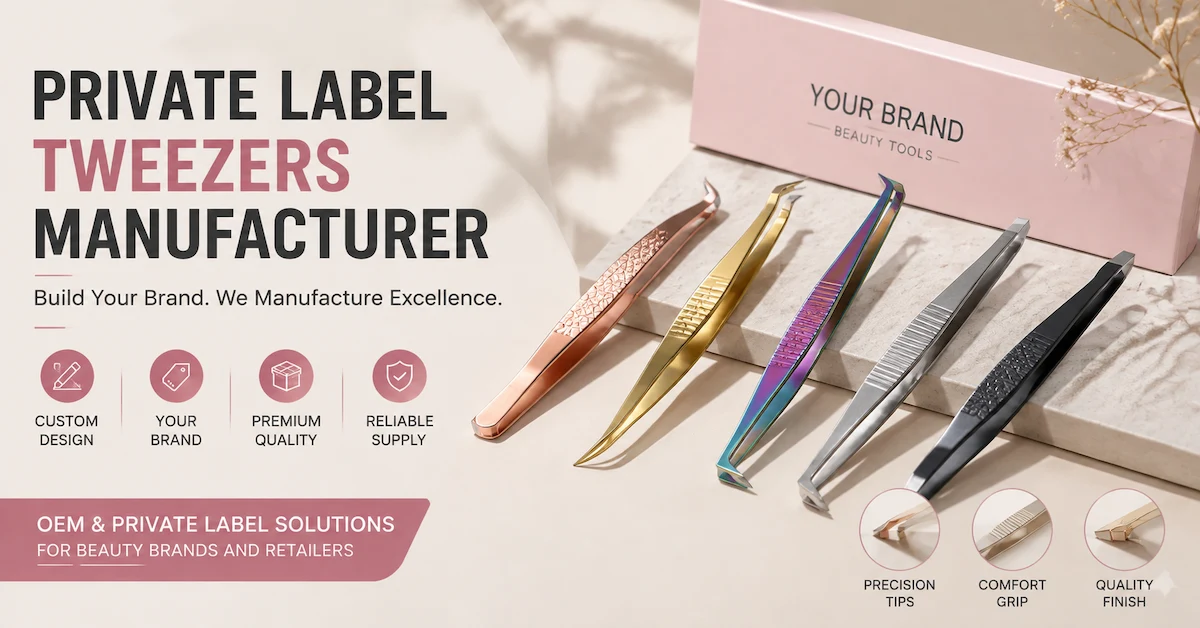
The pictured tools appear to have polished metallic surfaces and may be made from stainless steel or another metal suitable for precision hand tools. The exact alloy is not identifiable from an image, however. A buyer should request the material specification, surface-finish description, and any available information about corrosion performance before treating the tool as suitable for a particular cleaning or disinfection routine.
Manufacturing may involve several stages: forming the metal body, shaping or grinding the tips, polishing the surface, aligning the working ends, adjusting the closing action, and carrying out final inspection. The exact process cannot be confirmed from the product image, and different suppliers may use different combinations of sheet forming, wire forming, machining, grinding, and hand adjustment.
Tip alignment deserves particular attention. The two working ends should meet as intended across the usable contact area, without an obvious sideways offset or gap. A polished finish can improve handling and cleanability, but it should not conceal defects such as uneven edges, scratches near the tips, or inconsistent contact.
Do not assume that a metal tool is automatically autoclavable, sterilizable, or corrosion-resistant. Those properties depend on material, construction, finish, and the manufacturer’s validated instructions. If a professional user requires a specific cleaning process, the requirement should be stated during sourcing and confirmed in writing.
What Buyers Should Check Before Ordering
1. Define the application
State whether the tool is intended primarily for isolation, classic extension placement, volume work, fan handling, or a mixed workflow. “Professional lash tweezers” is too broad to guide a reliable specification.
2. Request dimensional information
Ask for overall length, working-tip dimensions, tip angle, body profile, approximate weight, and any available information about closing force. These details are not visible reliably in a product photograph, yet they can affect control and user preference.
3. Confirm the material and finish
Request the exact metal designation rather than accepting a general description such as “premium steel.” Also ask how the surface is finished and whether the finish is consistent around the tip and gripping area.
4. Evaluate samples
A sample should be checked with the actual lash materials and technique used by the customer. Inspect whether the tips meet evenly, whether they hold material at the intended point, and whether the tool opens and closes comfortably over repeated cycles. A buyer-facing warning: do not approve a production order based only on a studio image showing the tool in use.
5. Clarify inspection and packaging
Ask how tip alignment, surface defects, closing behavior, and overall appearance are inspected. Confirm whether individual protection or packaging is available if the tools will be distributed to salons, included in kits, or handled through a training program. Packaging requirements should be specified before quotation because they can affect the final configuration.
Common Sourcing Mistakes
- Choosing by color or polish alone: A reflective surface does not establish alloy, precision, or durability.
- Using one geometry for every service: Isolation and fan placement are different tasks and may benefit from different tip designs.
- Ignoring hand feel: Length, balance, spring resistance, and grip location affect repeated use, even when the working tips are accurate.
- Assuming hygiene compatibility: Cleaning, disinfection, and sterilization claims must come from the supplier and match the intended process.
- Skipping a sample approval: Small differences in tip contact can be immediately noticeable during actual application.
- Failing to define the reference sample: If a photograph is illustrative rather than a confirmed product image, the buyer should request a drawing or physical sample before production.
Practical Advice for Salon and Distribution Buyers
For a salon or lash studio, start with the most frequent treatment tasks and build a small, deliberate tool set. A straight fine-tip model may support isolation, while a curved or angled model may support pickup and placement. Training academies may want multiple configurations so students can compare working angles and develop consistent handling habits.
For a distributor or private-label buyer, the priority is specification control. Record the approved material, finish, geometry, packaging, inspection points, and reference sample. If a supplier proposes a change in alloy, polishing method, tip shape, or body profile, require approval before the change enters production. Small changes can alter the feel of the tool even when the overall appearance remains similar.
It is also sensible to separate confirmed facts from requested features. For example, a slim metallic body and fine tips may be visible, while exact dimensions, sterilization suitability, tip tolerances, and service life remain to be confirmed. Keeping that distinction in the purchase specification prevents misunderstandings later.
Frequently Asked Questions
Are straight tools better than curved tools?
Neither is universally better. Straight, narrow tips are commonly suited to isolation and precise access, while curved or angled tips may be more convenient for picking up and positioning extensions or fans. The correct choice depends on the task and the technician’s working method.
Can the pictured tools be assumed to be stainless steel?
No. The polished appearance is consistent with stainless steel or another polished metal, but the exact alloy cannot be identified from the image. Request the material specification from the supplier.
Are all lash extension tweezers suitable for sterilization?
No such assumption should be made. Confirm the manufacturer’s cleaning, disinfection, and sterilization guidance, along with the material and finish details relevant to that process.
What is the most important inspection point?
Tip alignment and controlled contact are among the most important checks because they directly affect isolation and grip. Also inspect the finish, edge quality, body balance, and closing action using the intended lash materials.
Next Step: Build a Clear Tool Specification
Before requesting a quotation, prepare a short specification covering the intended application, preferred straight or curved geometry, approximate dimensions, material, finish, packaging, inspection requirements, and any hygiene-related operating conditions. Ask for a technical drawing and sample, and treat image-based features as provisional until they are confirmed.
A disciplined evaluation helps buyers compare lash extension tweezers on useful criteria rather than on appearance alone. It also gives the manufacturer a clearer target for forming, tip grinding, polishing, alignment, and final inspection. For a professional tool used repeatedly at close range, that clarity is usually worth more than a vague promise of premium quality.