
Heated vs Traditional Eyelash Curlers: Buyer Guide
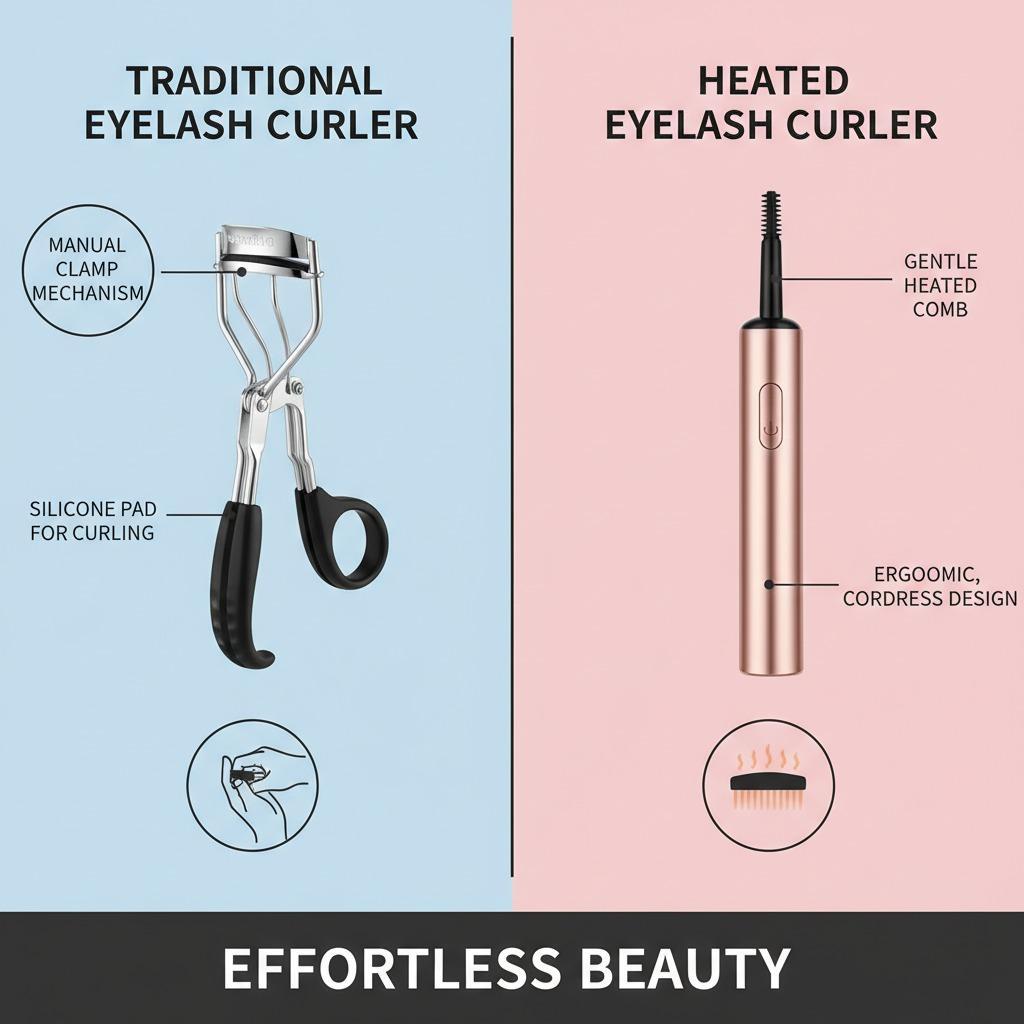
Heated vs traditional eyelash curlers is not a simple better-or-worse choice. Traditional curlers use a frame and pad to apply controlled mechanical pressure, while heated formats use a powered warming element and may use a comb or clamp-style structure; the right retail choice depends on user routine, product controls, claims and support requirements.
B2B buyers should compare complete samples, instructions and test evidence. A curl result shown in one demonstration does not establish repeatability, safe use or suitability for a target market.

Define the User Routine First
Start with when and how the customer is expected to use the tool. A traditional curler is a mechanical product that must fit the eye-area geometry and use a compatible pad. A heated curler introduces power, warm-up behavior, temperature control, cleaning limits and storage needs.
The product brief should state:
- intended user experience and application sequence;
- clamp-style, comb-style or other defined format;
- home, travel, salon retail or gift use;
- power or battery expectations for a heated model;
- replacement-pad or other consumable plan;
- destination markets, instructions and claim boundaries.
Do not promise a specific curl duration or universal result without an agreed test and evidence. Lash characteristics, technique and product format can all affect the outcome.
Compare the Two Product Systems
| Buyer criterion | Traditional curler | Heated curler |
|---|---|---|
| Main mechanism | Frame and pad apply mechanical pressure | Powered element warms a comb or clamp-style working area |
| Key fit questions | Frame curvature, opening, handle control and pad fit | Working shape, temperature behavior, controls and access |
| Components to inspect | Frame, hinge, handles, pad seat and pad | Housing, working head, controls, power system and protective parts |
| Care planning | Pad condition, residue removal, drying and storage | Cleaning limits, powered-component protection, charging or battery care |
| Pack information | Use method, pad compatibility and care | Use sequence, warnings, power details, care and market-required information |
| Range complexity | Main tool plus replacement-pad plan | Device, power accessories or batteries, instructions and support plan |
The heated category can contain materially different designs. Do not compare a heated comb and a heated clamp as though they are the same product merely because both use warmth.
Inspect a Traditional Curler
Review the frame as a system. The upper bar should meet the pad in the intended position without lateral offset, roughness or unintended metal-to-metal contact. Open and close several samples and compare hinge movement, handle control and pad seating.
Check these points:
- frame curve and working width for the target user group;
- alignment when the handles close;
- pad fit, retention and visible surface condition;
- hinge play or inconsistent movement;
- rough edges, residue and finish around handled areas;
- access for cleaning and complete drying.
Pad compatibility must be specified by dimension and fit, not by color alone. Record the approved pad profile, density or other relevant specification for the selected SKU. A fixed replacement interval should not be invented; user instructions should explain condition-based replacement signs supported by the product design.
Inspect a Heated Curler
A heated curler needs product-specific controls and evidence. Ask the supplier to identify the heating element, working temperature range, warm-up indication, control logic, power source and protective features for the exact model. Before approval, obtain Olimor's documented specifications for the selected heated SKU and confirm which destination-market compliance records apply and are available.
During sample review, check:
- control labels and the sequence required to operate the product;
- warm-up indication and behavior across several cycles;
- temperature consistency using the agreed measurement method;
- grip and access around the lashes without touching unintended areas;
- exposed edges, seams and working surfaces;
- shutoff behavior, storage state and power isolation;
- cleaning instructions that protect powered components.
Do not set a temperature limit or claim a protective feature until it is documented for the product and reviewed against the destination market's requirements.
Compare Results With a Controlled Test
Use the same evaluation plan for every shortlisted sample. Define the participant group, pre-test lash condition, application steps, any mascara timing, number of repetitions, observation times and scoring method. Record adverse observations as well as appearance results.
Separate product performance from user preference. One format may be easier for an experienced tester while another suits a simpler retail routine. The decision should match the stated audience and instructions, not the most dramatic result from a single user.
Claims such as "long-lasting," "damage-free" or "suitable for all eye shapes" require evidence and market review. If the evidence is not available, remove or narrow the claim.
Review Instructions and Risk Controls
Instructions should match the physical sample and use clear diagrams or steps where needed. They should cover positioning, operation, cleaning, storage, pad or component inspection, and when to stop using a damaged product.
For heated models, confirm required warnings, power information, charging or battery directions and disposal information for each destination. For traditional models, explain correct frame positioning and pad inspection without implying that excessive pressure improves the result.
Regulatory and labeling requirements vary by product design and destination. Ask the responsible compliance team to approve the final device, claims, language and pack before release.
Plan Replacement Parts and Support
Traditional curlers may need a compatible replacement-pad strategy. A heated curler may need support for charging components, batteries or model-specific accessories. Decide whether parts will be included, sold separately or handled through customer service.
Keep part numbers and compatibility controlled. A pad or accessory that looks similar may not fit the approved model. Link the retail instructions, spare-part listing and production specification to the same product revision.
Approve Packaging With All Components
Check the complete packed sample. The tray or pouch should hold the tool without loading the frame, pad, working head or controls. Heated products need space and protection for every included power component and instruction leaflet.
Review pack claims separately from visual design. Confirm language versions, product identity, use sequence, warnings, included components and destination-market information. Packaging changes should trigger a fit review and, where relevant, a repeat of transport or device checks.
Questions for Supplier Evaluation
- Which exact mechanism and use sequence define this model?
- What frame, pad or heated-head specifications are controlled?
- Which functional, temperature and cycle tests are used for sample approval?
- Which destination-market documents are available for the powered configuration?
- How are replacement pads or accessories identified and supplied?
- What product or component changes require buyer notification?
- Which claims can be supported by the current evidence?
FAQ
Are heated eyelash curlers always more effective?
No. Results depend on product format, temperature behavior, lash characteristics and technique. Compare controlled samples and substantiate any performance claim used on the pack.
Are traditional eyelash curlers simpler to source?
They avoid powered-device requirements, but frame curvature, hinge movement, pad fit, finish and instructions still need controlled approval. Simpler does not mean inspection-free.
Can one replacement pad fit every traditional curler?
Do not assume so. Pad dimensions, profile, material and seat geometry can differ. Approve and label replacement pads for the exact curler model.
Select the Right Curler Program
Review the Olimor eyelash curler range, compare a custom eyelash curler reference, and request eyelash curler samples. Include the intended user, preferred mechanism, destination markets, claims, packaging and test expectations in the brief.
Tag: