A reliable facial extraction tools manufacturer should be able to explain the working-end geometry, grip design, surface finish, cleaning information, packaging protection, and inspection method for each item offered. For skincare brands, salon suppliers, beauty distributors, pharmacies, and ecommerce sellers, the important question is not whether a tool looks professional in a photograph. It is whether the selected design can be specified clearly, reproduced consistently, packaged responsibly, and described without unsupported treatment or hygiene claims.
Direct buyer answer: select facial extraction tools by intended professional or consumer channel, tip shape, loop dimensions, edge smoothness, handle texture, material, finish, package format, and target-market instructions. Review physical samples under magnification, compare several pieces, and document the approved working ends. Never describe a tool as sterile, medical grade, or suitable for a specific treatment unless the final product, process, evidence, and market authorization support that claim.
Scope: This Is a Sourcing and Quality-Control Guide
Facial extraction tools sit close to skincare and professional beauty services, so product copy requires restraint. This article discusses B2B product selection, manufacturing communication, sample approval, packaging, and bulk inspection. It does not teach treatment, diagnose a skin condition, or replace the cleaning, hygiene, training, and safety procedures required by a qualified professional or applicable local rules.
A metal instrument can be easy to manufacture badly and difficult to describe responsibly. A sharp point that is slightly bent, a loop with a rough inner edge, or a handle that becomes slippery can turn a low-cost accessory into a returns problem. At the same time, an attractive polished surface does not prove material grade, cleanability, sterility, or professional suitability. Each of those statements needs its own evidence.
Buyers should decide at the beginning whether the product is intended for trained salon professionals, beauty retail, a home-use skincare accessory range, or a multi-tool grooming kit. That decision affects the tool configuration, instruction language, warning review, package access, photography, and claims. Do not take a generic tool and decide its market only after the production sample is finished.
Give the facial extraction tools manufacturer a written channel and user profile before requesting a quotation. The same metal platform may need different tip protection, instruction language, package access, and claim review for a salon distributor than for a general beauty retailer.
What a Facial Extraction Tools Manufacturer Must Control
The product is small, but the control plan is not. The working ends must be formed and finished consistently. The handle must give the intended grip. The body should remain straight unless the design specifies a curve. The surface should be clean and uniform. The package must prevent the tips from rubbing through inserts or contacting neighboring tools. Finally, labels and descriptions must match the exact tool supplied.
| Control area | Specification questions | Sample checks |
|---|---|---|
| Working ends | Loop, spoon, pointed, lancet-like, angled, or other confirmed geometry? | Symmetry, opening size, edge smoothness, straightness, finish, protective cap |
| Handle | Diameter, length, knurling, flat grip, balance, branding area? | Comfort, grip consistency, rough peaks, sharp transition, logo clarity |
| Body | One-piece or assembled construction, straight or angled design? | Bending, twist, joint quality, dimensional consistency |
| Material and finish | Confirmed material statement, surface direction, cleaning limitations? | Scratch, stain, residue, corrosion sign, finish variation |
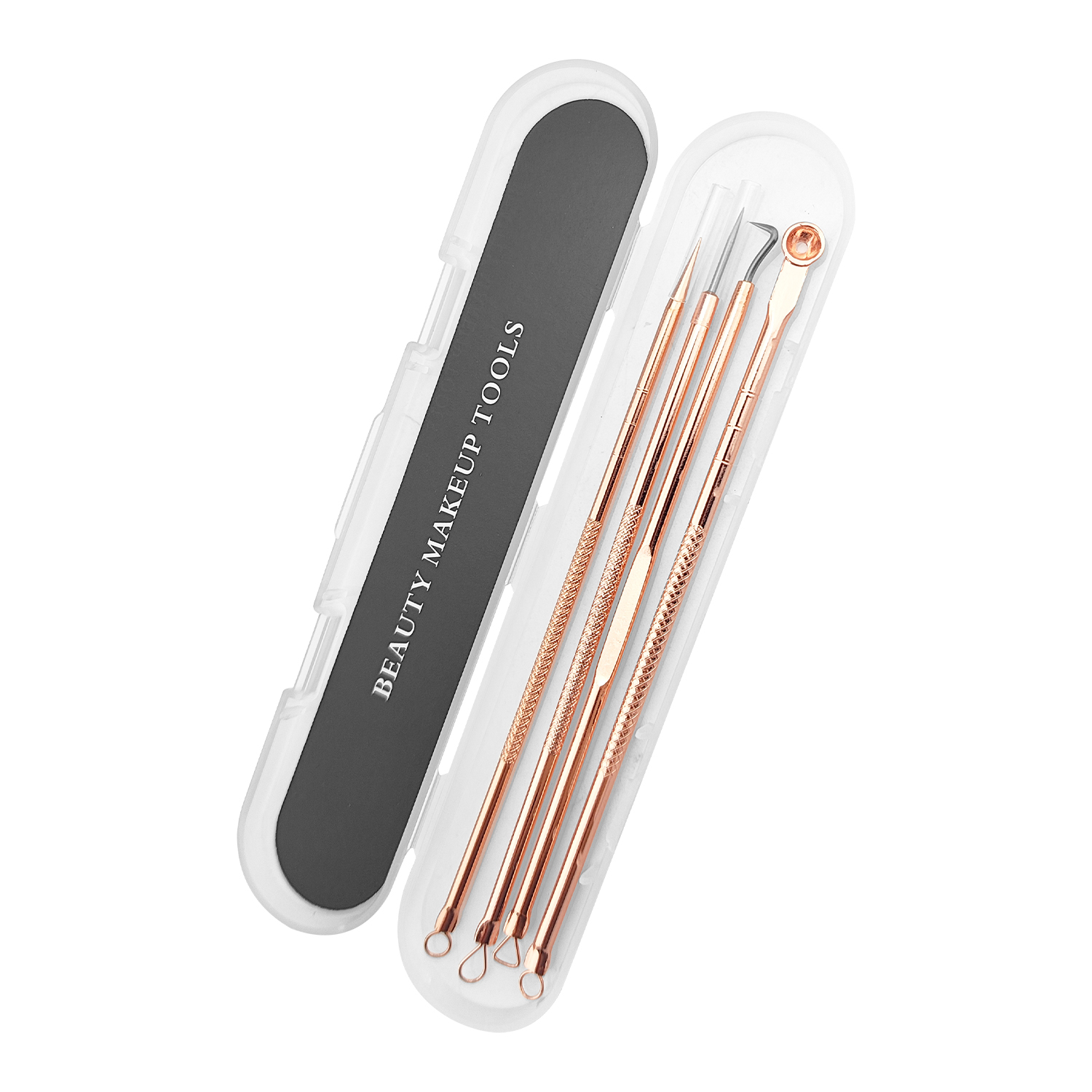
| Packaging | Single tool, set, cap, sleeve, tray, pouch, carton, instruction insert? | Tip restraint, movement, puncture risk, contamination from packaging debris, label accuracy |
Tip Geometry Is a Product Function, Not a Decorative Choice
The working end should be named and drawn, not described only as “professional.” A circular or oval loop can vary in wire thickness, opening size, angle, and edge profile. A spoon-shaped end can vary in cup depth and rim finish. A pointed end can vary in length, taper, straightness, and protective treatment. Two tools that appear similar in a catalog can behave differently because a few millimeters change the contact area and visibility.
For loop ends, inspect the inside and outside edge. The loop should not have a burr, flattened section, unintended sharp corner, or obvious asymmetry unless the design calls for a directional shape. Check whether the loop lies in the same plane as the handle or is angled. The specification should show this relationship. An angled loop may improve visibility for a particular workflow, but it should not be introduced as a universal advantage without user evaluation.
Pointed configurations require tighter handling and packaging control. The point should match the approved geometry, and a protective feature may be needed for distribution and storage. Do not use marketing language that invites untrained or unsafe use. Product naming, images, instructions, and warnings should be reviewed together. A technically accurate photograph can still create a misleading message if the copy promises an outcome the product has not been validated to deliver.
Grip Texture: Enough Control Without Rough, Unfinished Peaks
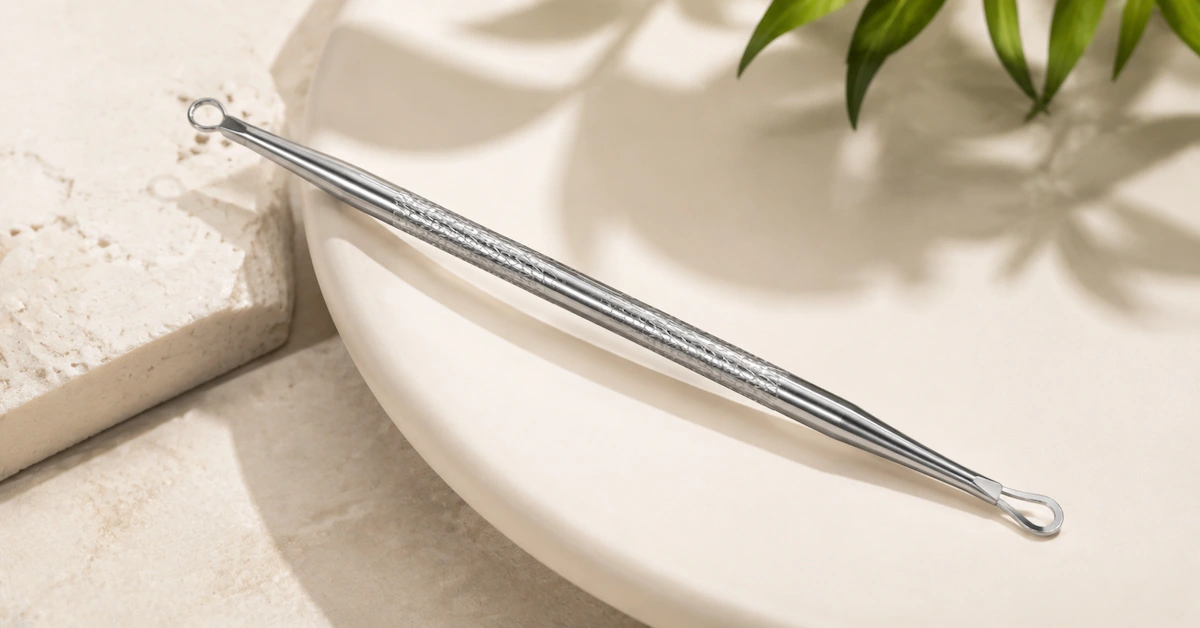
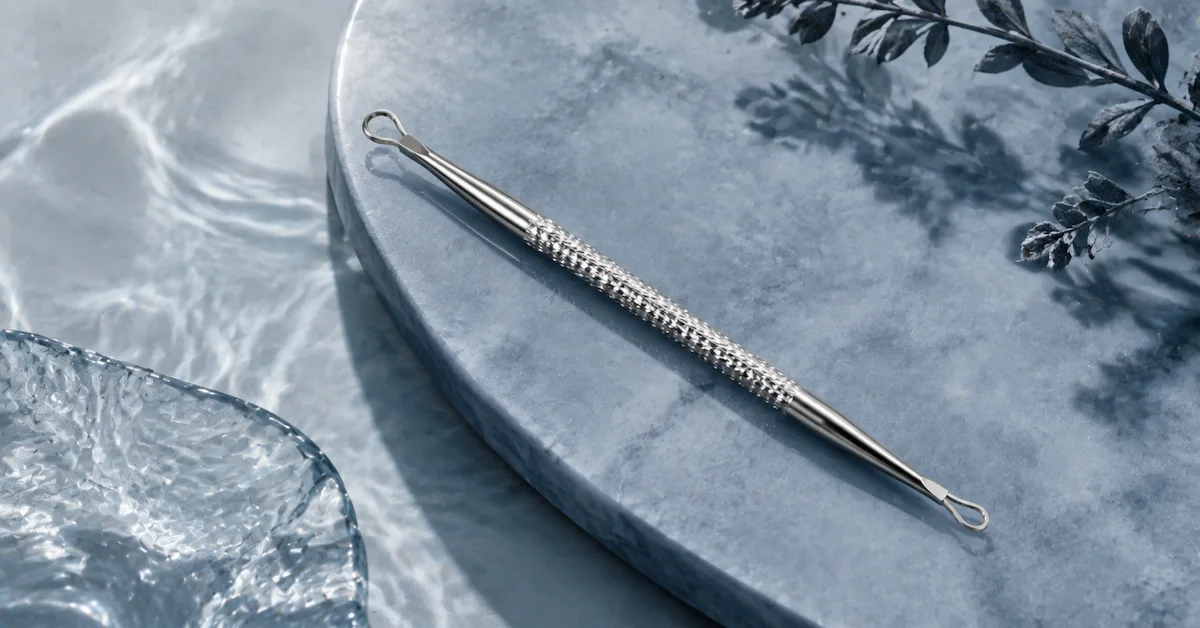
Many stainless steel facial tools use knurling, crosshatching, grooves, or a flattened area to improve finger control. The texture should be deliberate and repeatable. A shallow pattern may become slippery in use; an overly aggressive pattern may feel unfinished, collect residue, or damage packaging. The acceptable texture is best established with samples from normal production.
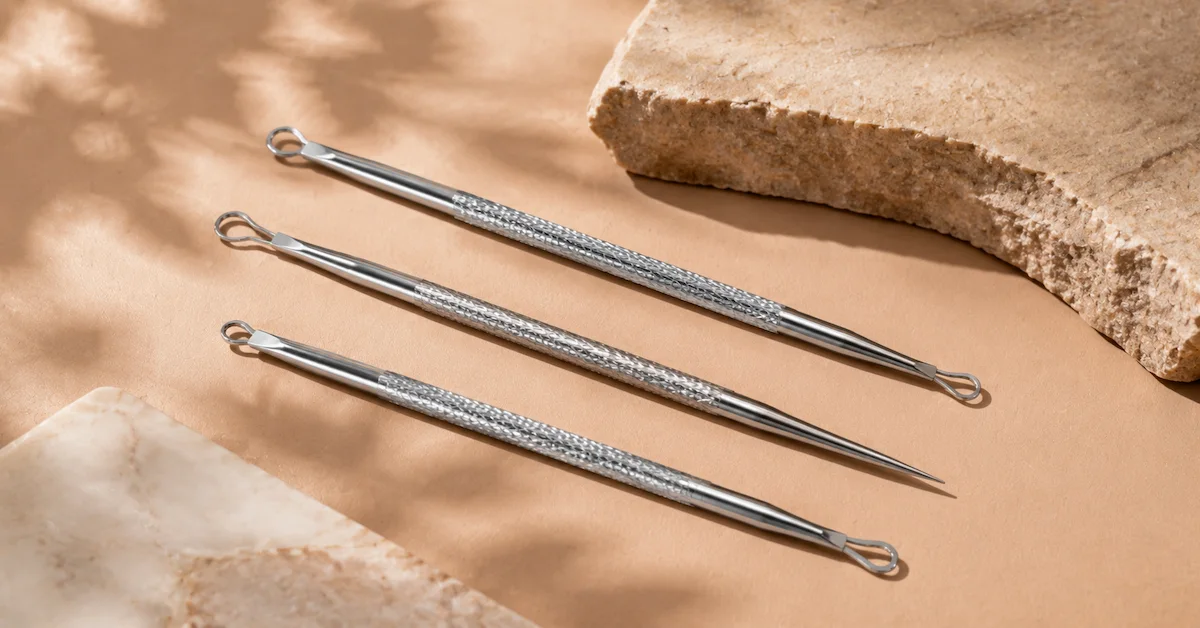
Inspect the beginning and end of the textured zone. The transition should not leave a sharp ridge. Compare the pattern around the circumference, if applicable, and check for double impressions or incomplete areas. If a logo is placed on the handle, make sure the texture does not distort it. If the tool is part of a set, line up all tools and compare finish, pattern scale, logo position, and overall visual weight.
Handle length and balance also matter. A longer tool can create reach, yet it may feel less controlled to some users or require larger packaging. A compact tool can reduce package size but leave less branding space. The correct answer depends on the target channel and accepted sample, not on a generic claim that longer or heavier is more professional.
Material Statements and Surface Finish Need Evidence
OLIMOR's public facial-tool pages identify the listed models as stainless steel. For a buyer, that statement begins the material discussion; it does not end it. If the project depends on a particular alloy, hardness, corrosion performance, chemical compatibility, or professional reprocessing method, request confirmation and appropriate supporting documents for the exact item. Never assume that a general website description proves a specification for every production lot.
Surface finish affects appearance and inspection. A mirror-like surface makes stains and fine scratches easier to see. A satin finish can reduce glare but may hide directional variation until tools are placed side by side. Colored coatings add branding options and also add adhesion, color-tolerance, and masking checks. The buyer should define an approved visual range using physical samples or controlled references.
Cleanliness claims require careful language. A tool can look clean without being sterile. A package can be sealed without being a sterile barrier system. If the product is supplied non-sterile, the copy and instructions should not imply otherwise. If a buyer requires a validated sterilization process, medical-device classification, or specific reprocessing compatibility, that becomes a separate regulatory and technical project requiring qualified review.
Published OLIMOR Facial Tool Models for Initial Comparison
These public details can help a buyer choose samples. Confirm the latest specification, unit format, and production version before using the information in purchase documents or retail copy.
| Item | Published material | Published size | Published weight | Buyer comparison point |
|---|---|---|---|---|
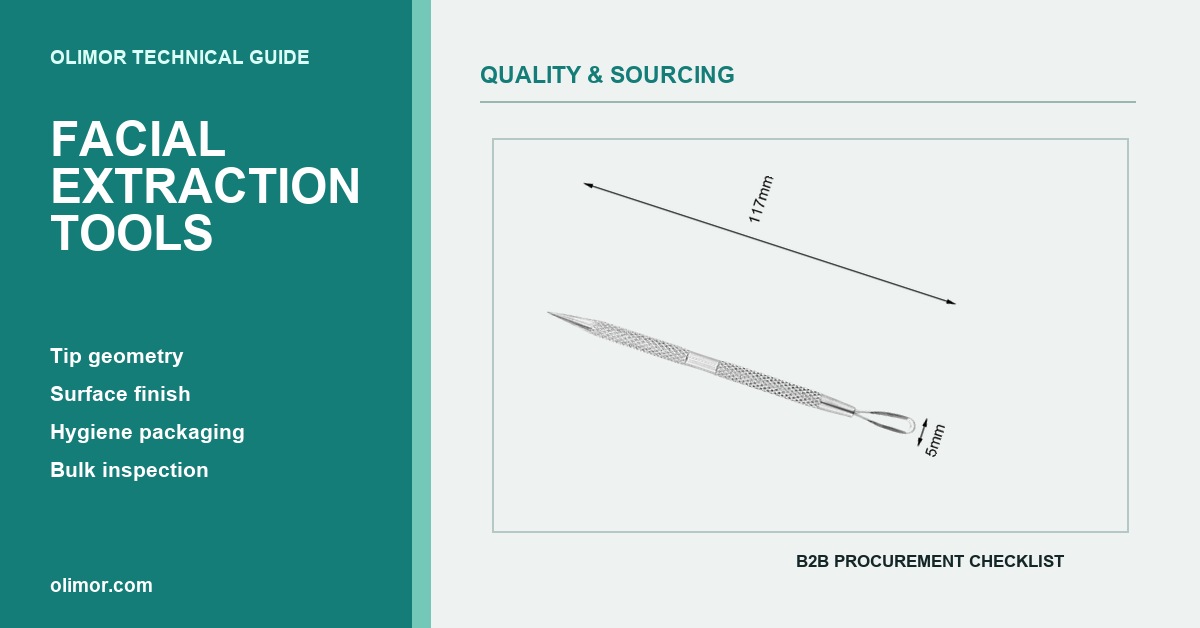
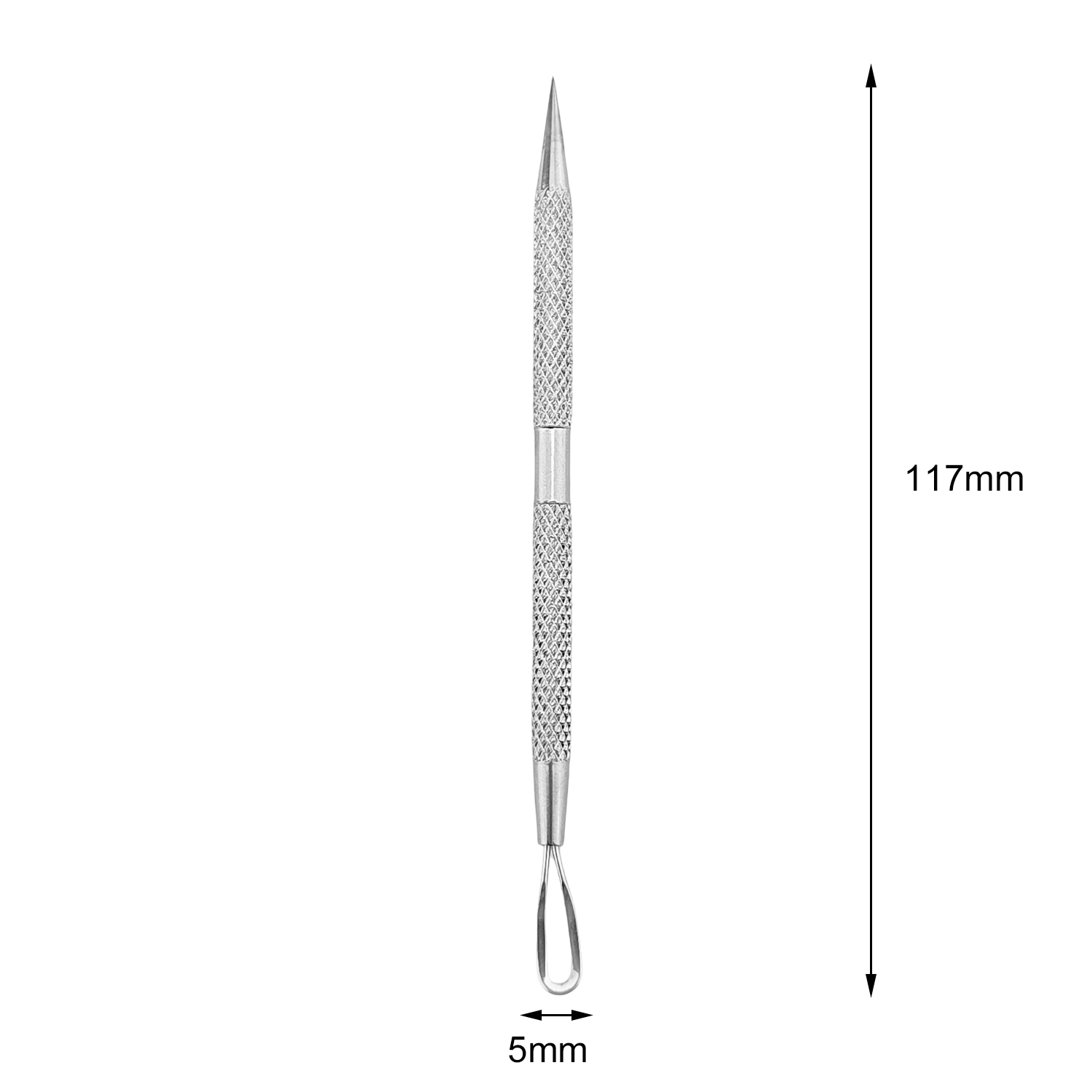
| FER1001 | Stainless steel | 117 mm | 12 g | Compact dual-ended configuration and textured handle |
| FER1002 | Stainless steel | 113 mm | 9.8 g | Lighter format for sample comparison |
| FEB2012 | Stainless steel | 31 × 146 mm | 26 g | Larger handle format and different working-end arrangement |
| FEB2013 | Stainless steel | 31 × 146 mm | 31 g | Heavier platform for balance and grip comparison |
Do not use the table as a substitute for sample inspection. The published size may describe the main body or a bounding dimension, and weight can change with the final configuration or packaging. The working-end close-up, straightness, texture, and hand feel are more useful for model selection than a product name alone.
Buyer Groups and Their Different Quality Priorities
Professional salon and spa suppliers
Professional channels may require detailed information about intended use, material, cleaning limitations, storage, and compatibility with their established procedures. The buyer should determine whether the selected tool and documentation fit the destination market and professional protocol. High-frequency handling increases the importance of grip, straightness, tip protection, and repeat-order consistency.
Beauty and skincare brands
Brands often want a coordinated family of tools with shared finish, logo, typography, and packaging. The challenge is making visual consistency without pretending that every tool has the same function or handling requirement. A pointed instrument, a loop tool, tweezers, and a facial roller need different warnings and restraint, even when packed in one branded collection.
Pharmacy and general retail
Retail buyers need a package that communicates the product clearly, prevents casual tip contact, survives hanging or shelf display, and includes the necessary consumer information. Barcodes, labels, language, product identity, and visual match between tool and image should be checked at final artwork approval.
Ecommerce sellers
Online listings must avoid exaggerated before-and-after promises. Dimensions, number of tools, configuration, material statement, package contents, and intended use should match the shipped item. Close-up photographs should show the actual working ends. A listing that uses a different tip configuration can generate returns even if the base material is correct.
Private Label and OEM Facial Tools
An OEM facial tools project may use an existing platform with selected branding and packaging, or it may involve a different handle, working-end combination, finish, case, or multi-tool assortment. The further the project moves from an existing model, the more engineering review, tooling, sampling, verification, and time may be required.
For OEM facial tools, approve the working ends first and the complete branded package second. Combining both decisions in one rushed review can hide whether a problem comes from the metal tool, the protective component, or the insert.
- Working-end combination: choose from confirmed configurations rather than combining shapes from unrelated photographs.
- Handle: review length, diameter, texture, flat zones, balance, and logo space.
- Surface: agree appearance, color direction, masking, and allowable visual variation.
- Branding: confirm method, size, contrast, location, and resistance to normal handling.
- Packaging: select caps, sleeves, trays, pouches, boxes, inserts, or cases suitable for the final ends.
- Set composition: define every tool, cavity, orientation, label, and replacement rule.
Approve a complete production-intent sample. A logo on a flat computer rendering does not prove that it will remain readable on a textured cylindrical handle. A case drawing does not prove the tip will stay in its cavity after transport. Physical validation catches those conflicts.
Sample Approval: Use Magnification and a Written Defect Library
Small working ends need close inspection. Set up consistent light, a clean background, and appropriate magnification. Photograph the front, side, and angled views of the approved ends. Record dimensions with an agreed method. A buyer does not need a laboratory for every basic visual check, but the review should be more disciplined than holding one piece at arm's length.
- Confirm item number, revision, tool count, material statement, dimensions, weight range, and package format.
- Check straightness and whether each end lies in the specified plane.
- Inspect loop symmetry, opening, rim smoothness, point shape, edge transition, and protective features.
- Examine the grip pattern for incomplete, doubled, rough, or inconsistent areas.
- Review surface appearance for stain, scratch, residue, pitting, discoloration, and finish mismatch.
- Verify logo, artwork, instruction, warnings, barcode, origin text, and set composition.
- Test the packed sample for movement and contact between working ends.
- Retain an approved sample and photo record linked to the final purchase specification.
Create a small defect library with acceptable and unacceptable examples. It is especially useful for loop shape, point straightness, knurling, polish, and package movement. Written phrases such as “minor scratch” can be interpreted differently; images and measured limits reduce debate.
Production and Pre-Shipment Quality Control
The quality plan should cover incoming material or component identity, forming, handle texturing, working-end finishing, cleaning, logo application, packaging, and final inspection as relevant to the actual manufacturing route. Buyers should ask which processes are completed in-house and which are performed by approved partners. The answer affects traceability and corrective-action planning.
During final inspection, draw samples from more than one carton and production position. Check assortment accuracy before spending time on detailed measurements. Mixed tip configurations, missing protective caps, wrong labels, or incorrect packaging language can affect an entire order. Then inspect workmanship and dimensions against the specification.
| Inspection group | Typical checks |
|---|---|
| Identity | SKU, item number, revision, tool count, configuration, packaging, label language |
| Dimensions | Overall length, handle diameter, loop opening, working-end position, package size |
| Workmanship | Straightness, burr, point condition, loop symmetry, texture, finish, cleanliness |
| Branding | Logo location, legibility, color, orientation, resistance to normal handling |
| Packaging | Tip restraint, cap, tray fit, debris, artwork, barcode, carton quantity and markings |
The sampling plan, defect classification, and acceptance criteria should be agreed for the purchase order. No generic online checklist can select those numbers for every brand, market, and risk level.
Packaging, Hygiene Language, and Claim Control
Packaging needs to protect the working ends, keep the set complete, and provide accurate information. A pointed end can puncture a thin insert or scratch another tool. Loose instruments may arrive crossed, reversed, or outside their cavity. Use caps or restraints where required by the design, then inspect them after transport testing.
Separate physical cleanliness from regulatory claims. “Clean appearance” is an inspection observation. “Sterile” is a validated state tied to a controlled process and barrier system. “Medical grade” is not a decorative synonym for stainless steel. “Professional” can also be misleading if the product, instructions, and market positioning do not support the implication. Have qualified personnel review claims for the destination market.
Instructions should be specific to the product and intended user. They should not be copied from an unrelated tool. Cleaning and storage language must match the confirmed material, finish, and packaging. If the buyer expects compatibility with a particular disinfectant or reprocessing method, verify it rather than assuming all stainless products respond identically.
Cost, MOQ, and Timeline: Why the Tool Is Only Part of the Quote
The unit tool cost depends on the model, working-end geometry, dimensions, material requirement, handle process, finish, branding, protective parts, package, quantity, inspection, and development scope. A single existing tool in a standard sleeve is a different quotation from a five-piece set with custom ends, color treatment, molded tray, printed case, and market-specific documentation.
MOQ can be driven by metal processing, finish batch, logo method, cap color, tray tooling, printed packaging, or carton production. Ask which component sets the minimum. If the project's first order is smaller than the preferred package minimum, the buyer may choose a standard component, a simpler package, or a shared packaging format, subject to supplier confirmation.
Timeline is similarly layered. It includes requirement review, sample selection, custom sample work, buyer feedback, artwork, package sampling, approval, material preparation, production, inspection, and shipment readiness. If a working end or package changes after approval, affected steps must be repeated. A clear decision log prevents an old drawing from returning during production.
How to Audit a Blackhead Extractor Supplier
A strong blackhead extractor supplier should answer precise questions about the selected product rather than repeating broad claims about quality. Ask for the product drawing or controlled specification, the working-end checkpoints, the handling of burrs and bent pieces, the method for protecting tips during production, and the final inspection record. If the supplier offers several similar tools, ask how item identity is maintained through packaging.
Send every shortlisted blackhead extractor supplier the same close-up references and acceptance questions. If one quotation assumes a basic loop tool and another assumes a protected multi-end set, the unit prices are not directly comparable.
Look at production samples, not only showroom samples. Compare pieces from different cartons when possible. Ask how nonconforming tools are separated and how a repeated defect triggers corrective action. Review whether the supplier can retain an approved sample and artwork revision for repeat orders.
A blackhead extractor supplier should also explain how pointed or narrow working ends are protected before final packaging. Damage can occur during in-process handling even when the finished retail box looks secure.
A facial extraction tools manufacturer should also be comfortable saying when a requested claim requires additional evidence or regulatory review. A supplier that promises “medical,” “sterile,” “painless,” and “safe for everyone” without asking about the product or market creates risk for the brand.
RFQ Information That Produces a More Useful Quotation
- Target market, channel, intended user, and product positioning.
- Standalone tool or set, with exact quantity and configuration.
- Reference item numbers, working-end photographs, or controlled drawing.
- Material and finish requirements, including any evidence needed.
- Overall length, handle diameter, grip preference, and balance concerns.
- Logo artwork, location, color, and durability expectation.
- Cap, sleeve, tray, pouch, box, case, or retail hanging requirement.
- Instructions, warnings, label language, barcode, and destination-market review.
- Estimated order quantity, repeat plan, sample quantity, and target date.
- Inspection method, third-party inspection plan, and required documents.
Attach one marked-up image showing which end, handle, and package feature each note describes. A good visual brief can prevent several rounds of email. Still, the final approved specification should carry dimensions and revision control; photographs alone are not enough.
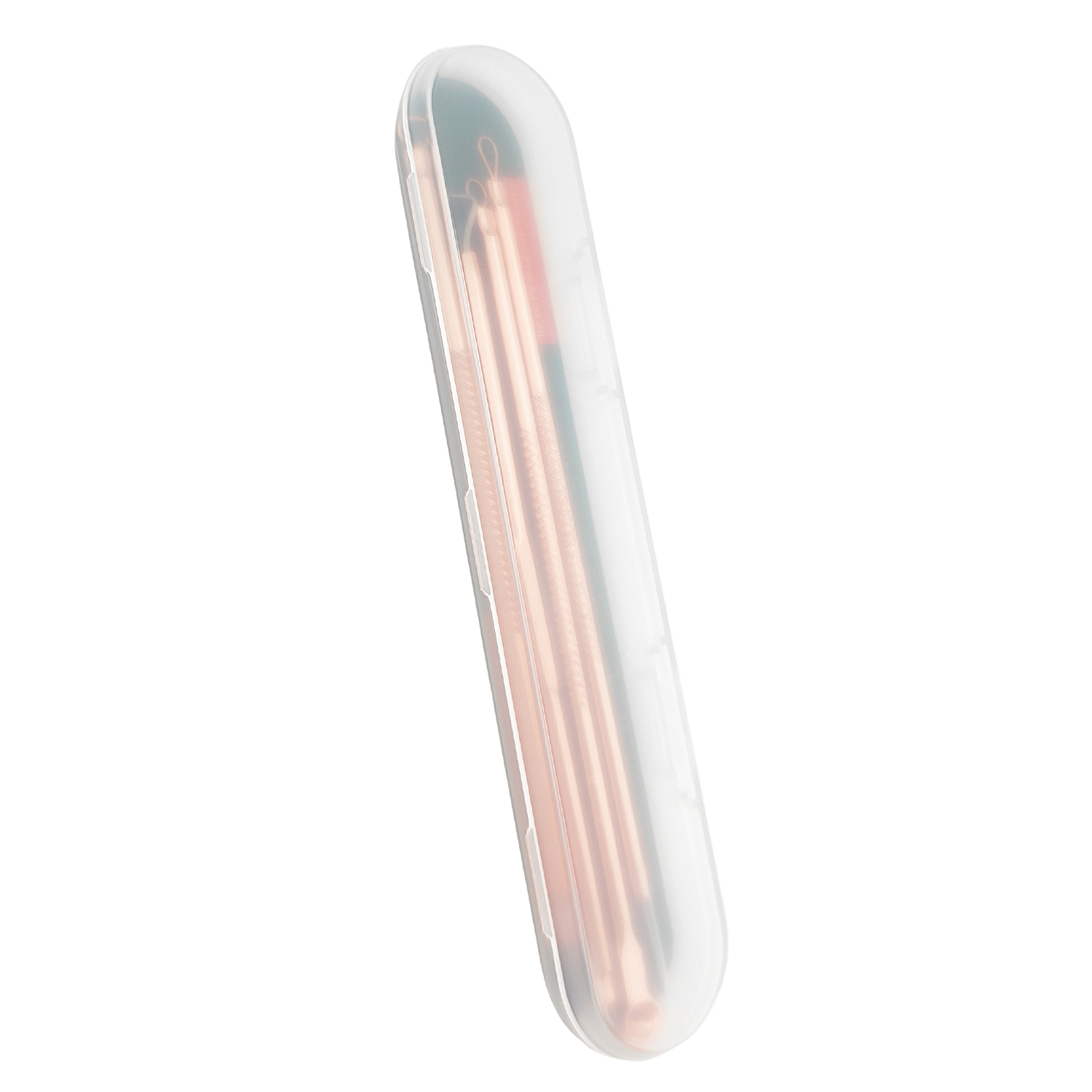
For a coordinated OEM facial tools range, align the logo, finish direction, package typography, and visual weight while keeping a separate functional specification for every instrument. A family appearance should not erase product-specific inspection points.
How OLIMOR Can Support a Facial Tool Project
OLIMOR's Facial Tools collection includes multiple stainless steel extractor configurations that buyers can use for initial comparison. The public product pages provide item numbers and basic dimensions for shortlisting. Physical samples and order-specific confirmation remain necessary for working-end geometry, material details, finish, packaging, and any special testing or claim.
Depending on the chosen product and confirmed scope, project discussions may include model selection, logo, surface direction, protective components, retail packaging, set composition, sample approval, and quality inspection. Brands developing a wider line can also review OLIMOR's other beauty and personal-care tool categories.
Learn more about OLIMOR's manufacturing and customization positioning. For an active project, use the contact page and include the intended market, channel, working-end reference, quantity, finish, branding, packaging, and review requirements.
Frequently Asked Questions
What is the most important detail when sourcing facial extraction tools?
The working-end geometry is the first critical detail, but it must be reviewed together with edge smoothness, straightness, handle grip, material, finish, protective packaging, and intended-use documentation. Approve close-up photographs and several physical samples, then retain the accepted ends as controlled references.
Is every stainless steel facial tool suitable for professional reprocessing?
No universal assumption should be made. Stainless steel covers many grades and finishes, while professional protocols use different equipment and chemicals. If compatibility with a specific method matters, request confirmation and evidence for the final product. The buyer should obtain qualified review for its market and use environment.
Can facial extraction tools be sold as sterile?
Only if a validated sterilization process, appropriate packaging system, records, and applicable regulatory requirements support that claim for the final product. A sealed retail pouch or visually clean tool is not automatically sterile. Do not add the word to packaging without a qualified evidence review.
Can the handle or working ends be customized?
Customization may be possible depending on the selected platform, production method, tooling, quantity, and project scope. Logo and packaging changes are generally different projects from new working-end geometry or handle construction. Provide a drawing or reference and request a feasibility review.
How many samples should a buyer inspect?
There is no single number for every project. The buyer should inspect enough samples to observe variation and confirm that they represent normal production. A higher-risk configuration or multi-tool set may justify broader sampling. Agree the production and pre-shipment sampling plan separately.
What causes quotation differences between similar facial tools?
Differences may come from size, working-end complexity, handle process, material requirement, finish, branding, protective caps, packaging, set composition, quantity, inspection, documentation, and development work. Compare quotations against one shared specification before comparing unit prices.
Final Procurement Checklist
- Define the intended channel and user before choosing a tool configuration.
- Name and draw each working end; do not accept “standard professional tip” as a specification.
- Inspect loops, points, edges, straightness, texture, finish, and cleanliness under controlled light.
- Confirm the exact material statement and any required compatibility or corrosion evidence.
- Protect pointed and loop ends during production, packaging, transport, and storage.
- Review instructions, warnings, product claims, translations, and package images for the target market.
- Approve the final branded and packed sample and retain a revision-controlled reference.
- Use an agreed production inspection plan and sample more than one carton.
- Reject unsupported sterile, medical-grade, treatment, or guaranteed-result language.
Choosing a facial extraction tools manufacturer is less about finding the shiniest sample and more about making the tiny working ends visible in the specification. Tip shape, edge finish, handle control, material evidence, protective packaging, and claim discipline all need to agree. When the buyer documents those details before ordering, supplier comparisons become clearer and repeat orders become easier to control.
A blackhead extractor supplier can respond more precisely when close-up references, package protection, and claim limits are included in the first request. For OEM facial tools, carry those accepted details into the final artwork and retained production sample.
Developing a facial-tool line or private-label skincare accessory? Explore the OLIMOR Facial Tools range, shortlist the closest item numbers, and send your configuration, market, quantity, finish, branding, packaging, and sample requirements for a product-specific discussion.