What a blackhead extractor for spa use is really meant to do
A blackhead extractor for spa use is a simple tool on paper and a surprisingly sensitive decision in practice. In a facial room, the difference between a clean extraction and an irritated client is often not the concept of the tool itself, but how well its shape, surface, and handling match the way estheticians work. For buyers, that makes the tool less of a commodity than it first appears. A manual comedone extractor has to be controllable, easy to clean, comfortable in the hand, and appropriate for repeated professional use without creating friction in the treatment flow.
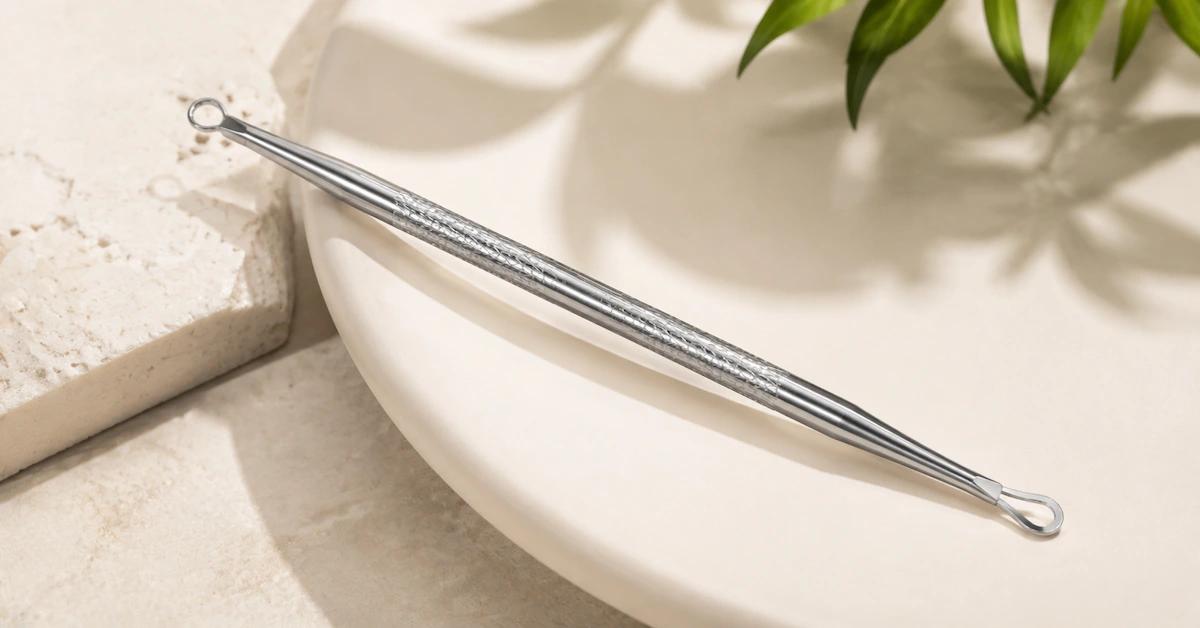
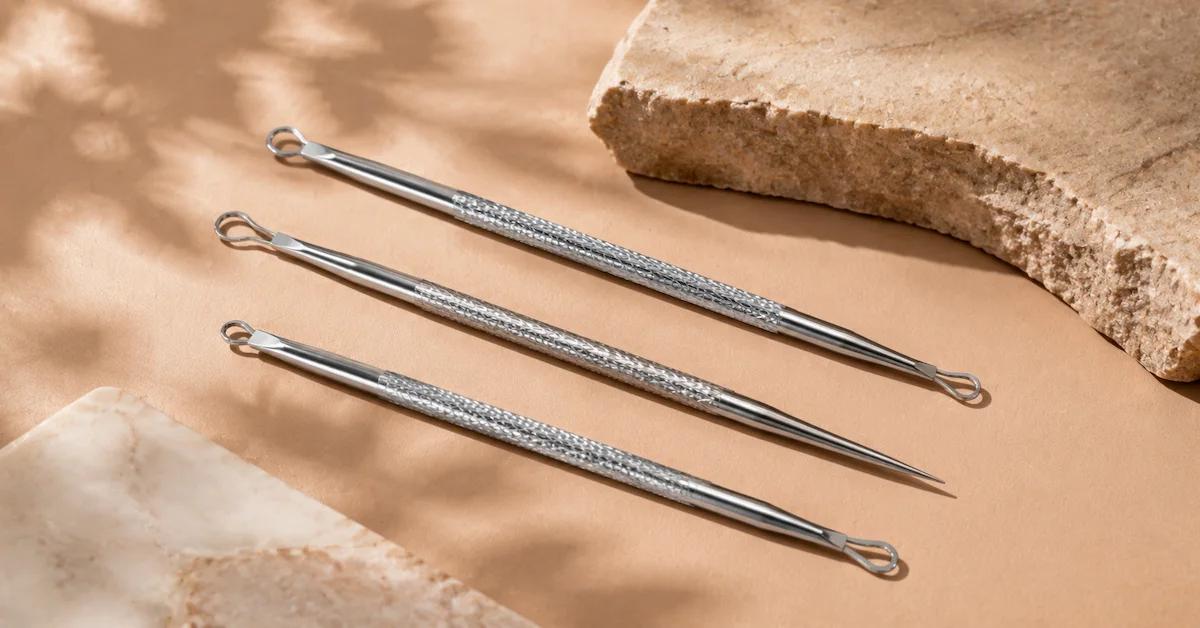
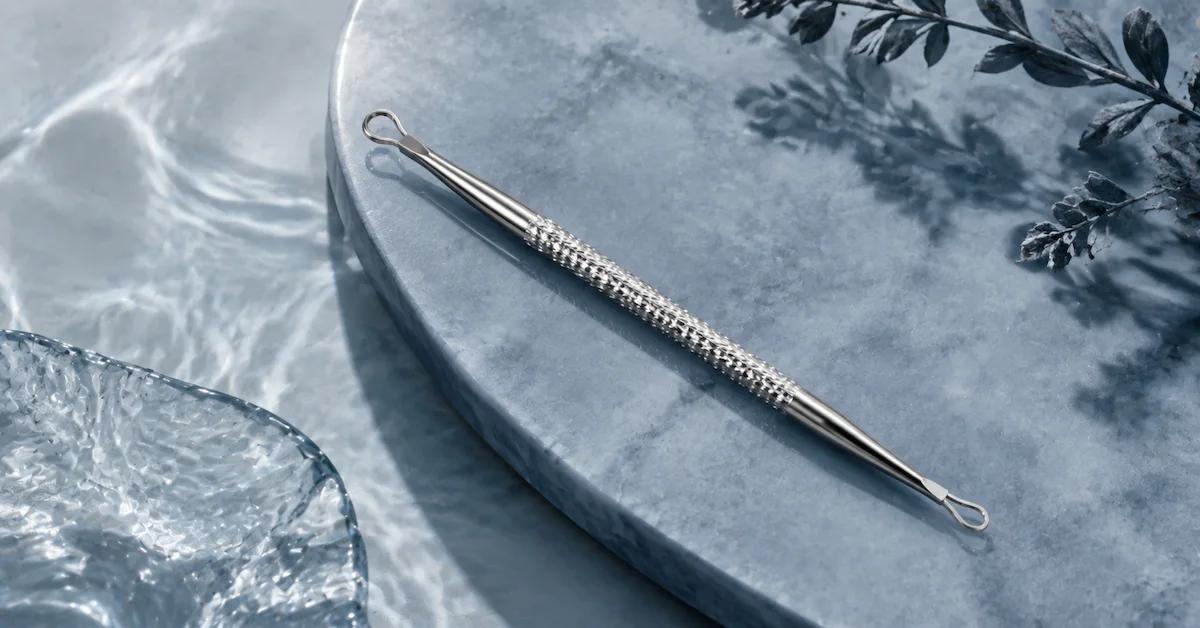
The basic function is straightforward: help remove comedones and blackheads during facial cleansing or esthetic services. The tool described here is a double-ended metal design with two loop sizes, a slim shaft, and a knurled grip section in the middle. That combination is familiar to spa teams because it gives the operator a choice between a smaller loop for tighter areas and a larger loop for broader spots. It is not a cure-all, and it should not be treated like one. Extraction is only one part of a facial routine, and good rooms know when to use the tool and when to leave the skin alone.
Why spas choose a manual tool instead of chasing a one-size-fits-all solution
Manual extraction tools remain common in facial treatment rooms because they give the practitioner control. That matters when skin conditions vary from client to client, especially across pore size, oiliness, and the location of the congestion. A professional blackhead extractor is not trying to automate judgment; it is trying to support it. In a spa setting, that is often the better approach.
The practical appeal is also easy to understand from a sourcing perspective. A manual loop extractor is reusable, compact, and relatively easy to store and distribute across stations. Compared with disposable alternatives, it can be a cleaner long-term fit for businesses that already have established hygiene workflows. Still, the buyer should be careful not to assume that reusable automatically means maintenance-free. The cleaning protocol, the storage tray, and the training behind the hand tool all matter as much as the metal itself.
There is another reason these tools stay in circulation: they are flexible. A spa grade blackhead remover may be used around the nose, chin, and forehead where access and precision are more important than force. The loop design is meant to press around the blemish and help express the contents with more control than fingernails or improvised pressure. That is a small point, but an important one. Poor technique with the wrong implement can make the treatment look rough, even if the tool itself is well made.
Key design features to evaluate before buying
When comparing a professional blackhead extractor, the most useful review starts with the geometry. The dual-ended layout is not just a convenience feature. It allows one tool to cover more than one extraction situation, which is useful in a busy facial room. A smaller loop is generally better suited to tighter areas or more localized congestion, while a slightly larger loop can be more efficient on broader areas. The real value is not in claiming one end is better than the other, but in giving the operator a choice.
The grip deserves close attention as well. The knurled midsection on this style of tool is a practical detail, not a decorative one. A textured grip can help reduce slip when hands are moving quickly, especially in a treatment environment where products, steam, and gloves can make smooth metal harder to control. Buyers often overlook this and focus only on loop shape. That is understandable, but in daily use, the grip can make the difference between a confident stroke and a fussy one.
Surface finish matters for both appearance and maintenance. The visible polished or satin metallic finish suggests a tool designed to be wiped clean and kept in circulation. For spa equipment, that is valuable because the tool needs to look professional after repeated handling. A reflective finish can also reveal wear, residue, or scratches more quickly, which is not necessarily bad. In many cases, it simply makes inspection easier. The caution is obvious: if a finish is too slick or poorly executed, it can become less secure in the hand. In this category, aesthetics should never outrun function.
Material and manufacturing cues that matter to sourcing teams
The product appears to be made from metal, likely stainless steel based on its silvery appearance and the way the body is formed. That is a reasonable inference, but the exact grade is not confirmed, so it should not be assumed in a purchase spec. Buyers should ask for the actual material designation if that matters to their cleaning standards or internal procurement rules. For some businesses, knowing whether a tool is 304, 316, or another grade will affect how it fits into a sterilization or disinfection workflow. If that information is not supplied, it is better to request documentation than to guess.
From a manufacturing point of view, this kind of tool is usually associated with precision metal hand-tool production. The likely operations include forming, machining or wire shaping, polishing, and knurling. Exact process details are not visible from the image and should not be invented. Still, those general cues tell a buyer what to inspect. The loop ends should be smooth and consistent. The shaft should feel balanced. The transition between the working ends and the grip should not have sharp edges, burrs, or weak spots. These are ordinary quality signals, but they matter when the tool will be held repeatedly by professionals and used close to the skin.
One practical aside: a tool can look excellent in a product photo and still feel awkward in the hand. If possible, request samples or at least dimensional data before placing volume orders. Loop diameter, shaft thickness, and overall length all affect usability. Those dimensions are not provided here, and they should be treated as unknowns until confirmed by the supplier. For a spa program, small differences can change whether staff adopt the tool quickly or leave it in a drawer.
Hygiene and use considerations in a spa environment
Any tool that touches facial skin needs a hygiene plan behind it. That is especially true for a reusable comedone extractor, because the business case often depends on repeat use across appointments. A buyer should ask how the tool is cleaned, stored, and assigned between treatment rooms. If the spa uses sterilization or disinfection protocols, the tool must be compatible with those procedures. If that compatibility is not verified, it should not be assumed.
It is also worth distinguishing between professional and consumer use. A spa-grade blackhead remover is not just a branding phrase. In a treatment room, the staff member is expected to understand pressure, angle, skin condition, and client comfort. The tool supports technique; it does not replace it. That is why training matters. A well-designed loop can still produce poor results in unskilled hands, and a less elegant tool can still perform adequately in experienced hands. Buyers should be realistic about this. Tool quality helps, but staff competency decides outcomes.
There is a subtle but important buyer-facing warning here: extraction should not be forced on inflamed, broken, or highly reactive skin. That may sound obvious to experienced teams, but product managers and procurement staff sometimes focus so hard on the device that they forget the clinical workflow around it. A tool is part of a treatment system, not a standalone solution.
What to compare when sourcing for spas, salons, or kits
If you are evaluating options for facial rooms, beauty salons, or retail skincare kits, use a practical comparison rather than a superficial one. First, check whether the loops are sized for controlled access. Second, confirm that the grip offers enough purchase for gloved hands. Third, look at the finish and inspect for seams or rough spots. Fourth, ask about cleaning compatibility and packaging. Those four areas usually tell you more than a glossy product title.
For branded retail kits, appearance may matter more than in a back-of-house spa program, but the basics do not change. The tool should still be durable, hygienic, and easy to explain to the end user. For treatment-room procurement, the emphasis shifts toward repeat handling, ease of cleaning, and staff comfort. That is why the same manual comedone extractor can be judged differently by two buyers. One is buying for presentation; the other is buying for workflow.
When comparing a spa grade blackhead remover to lower-cost alternatives, resist the temptation to look only at unit price. A poorly finished tool that slips in the hand or wears quickly can become more expensive in practice because it needs replacing sooner and creates more friction in service delivery. On the other hand, over-specifying a simple tool is equally unhelpful. This is a product where sensible engineering often beats overstatement.
Common mistakes buyers make
The first mistake is assuming all loop extractors are interchangeable. They are not. The loop shape, size, grip texture, and finish all influence how the tool behaves in real use. The second mistake is ignoring hygiene compatibility until after purchase. That is too late if the spa has strict cleaning protocols. The third mistake is buying without asking for the actual material grade or any available product data. If a supplier cannot verify the basics, the purchasing team should slow down.
Another common issue is forgetting the people who will actually hold the tool. A sourcing manager may focus on cost and appearance, while estheticians care about balance and control. Both viewpoints are valid. The right purchase decision usually sits somewhere between them. If the tool feels awkward in use, the entire program suffers, even if the item looks polished in a catalog.
FAQ for buyers
Is this tool meant for medical procedures?
Not necessarily. Based on the information available here, it is a manual facial extraction tool for esthetics, spa routines, and skincare use. It should not be presented as medical-grade unless the supplier can verify that status.
Why does the dual-ended design matter?
It gives the user two loop sizes in one tool, which is practical for different areas of the face and different extraction needs.
Can the tool be cleaned and reused?
Its metal construction suggests reuse and cleaning are part of the design intent, but the exact cleaning method and sterilization compatibility should be confirmed with the supplier before procurement.
What should a buyer request before ordering?
Ask for material specification, dimensions, cleaning guidance, packaging details, and sample confirmation if the order will go into a professional spa workflow.
A sensible next step for sourcing teams
If you are choosing a blackhead extractor for spa use, treat it like a working instrument rather than a small accessory. Ask the supplier for the material details, confirm the cleaning path, review the grip and loop geometry, and check whether the tool fits the routines your staff actually follow. The best procurement decision is usually the one that keeps the tool simple, controlled, and reliable in daily hands-on use.
For spas and salons, that usually means prioritizing function over novelty. For product teams, it means specifying the features that matter most: dual-ended access, controlled grip, smooth metal finishing, and a design that supports careful extraction rather than aggressive pressure. If those basics are in place, the tool has a good chance of becoming a quiet but useful part of the treatment room.
Tag: