

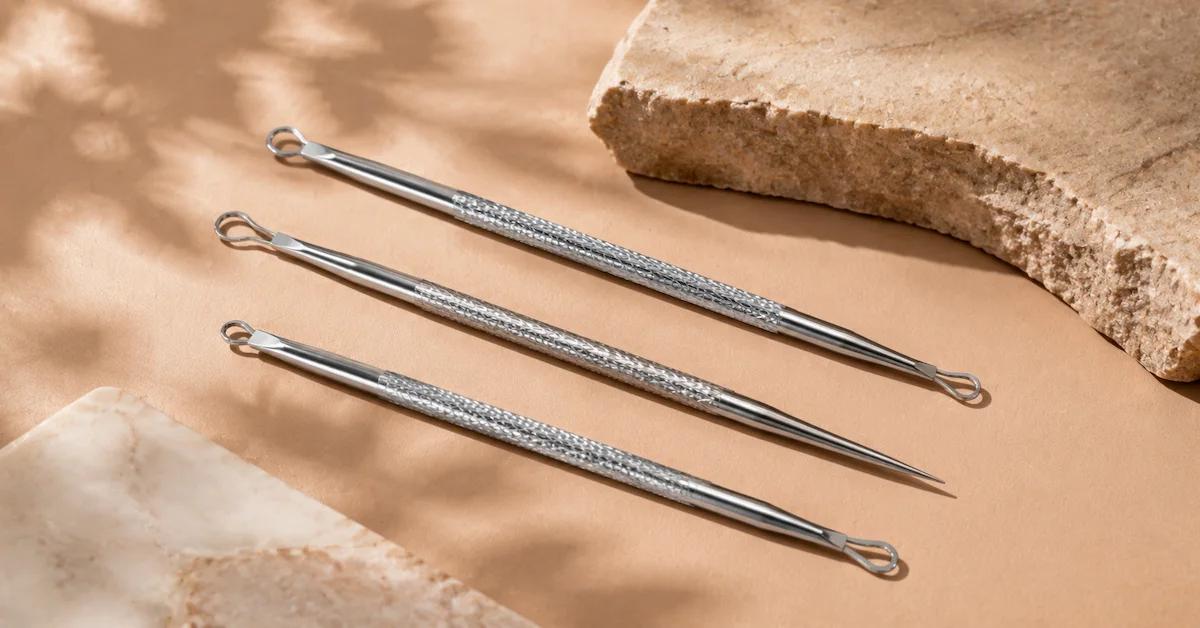
A blackhead extractor for spa use looks simple at first glance: three slim metal tools, a polished finish, a knurled grip, and tip shapes that seem obvious only after you have held them in your hand. In practice, this kind of tool set sits at the intersection of technique, hygiene, and client comfort. For estheticians, salon buyers, and product teams, the real question is not whether a tool can remove debris from a pore. It is whether the design gives the operator enough control to work cleanly, with minimal skin stress, and enough flexibility to handle different blemishes without reaching for a new instrument every time.
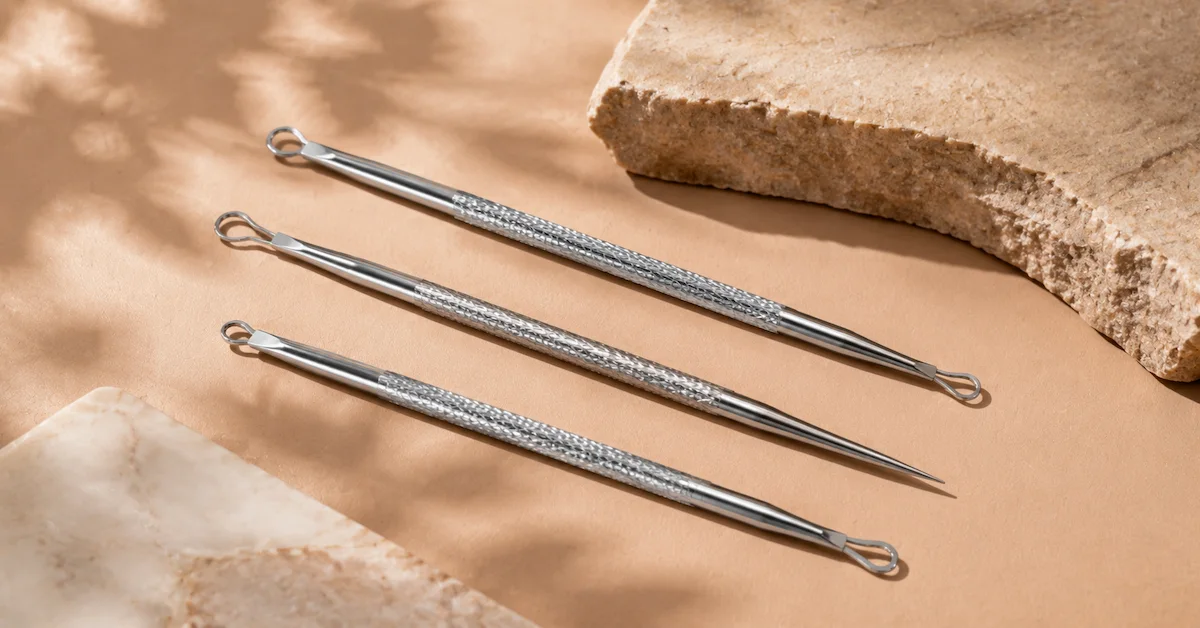
That is why manual extraction tools still have a place in treatment rooms, even with the rise of the blackhead vacuum extractor. Suction devices can be useful in some settings, but a well-made metal extractor set remains the more familiar, more tactile choice for spot work and targeted comedone extraction. Buyers evaluating this category usually want the same thing: a compact tool that is easy to wipe down, comfortable to hold, and versatile enough for spa, facial, and personal skincare use.
What this type of tool set is meant to do
The product described here is a manual blackhead / acne extraction tool set with three slim metal hand tools. The visible construction suggests stainless-steel-like material, a polished reflective surface, and center grip sections with knurling or machining for better hand control. Tip styles appear to include small loop ends and at least one fine pointed tip, with tapered shafts that narrow toward the working end.
In practical terms, these tools are used to support comedone extraction, spot cleaning, and the opening or lifting of clogged pores. That makes them useful in facial treatments where the operator wants precision rather than broad coverage. A loop extractor can help apply controlled pressure around a blocked pore, while a fine tip may support careful work in tighter areas. The point here is not force; it is control. When a tool allows the user to place pressure accurately, the treatment is usually cleaner and less awkward.
Quick view: why spas still keep manual extractors on hand
For a treatment room, the appeal is straightforward. Manual extractors are compact, inexpensive to store, and easy to organize in sets. They do not rely on a motor, battery, or charging routine. They also give the practitioner direct feedback through the hand, which matters when working on sensitive skin or on blemishes that do not respond well to suction.
Another practical advantage is adaptability. A three-piece set can cover more than one use case without crowding the tray. One tip may suit a larger blackhead area, another may be better for fine work, and the pointed end can be reserved for very specific tasks where extra precision is needed. That does not mean every tip should be used aggressively. In this category, restraint is usually the better skill.
Material and build: what buyers should notice
The visible silver finish suggests a corrosion-resistant metal, most likely stainless steel or a similar alloy, although the exact grade is not supplied. For buyers, that uncertainty matters. It is fine to describe the tools as metal and likely stainless-steel-like, but not as a specific surgical or medical grade unless the supplier documents it.
The finish appears smooth and polished, which is useful for two reasons. First, it makes the tools easier to wipe clean after use. Second, it reduces the roughness that can sometimes catch on gloved hands or cosmetic wipes. The knurled grip sections are a small detail, but they are often the difference between a tool that feels secure and one that slips when the hand becomes damp during a treatment. In a spa environment, that grip is not cosmetic; it is part of the working design.
The set shown is compact and handheld, which is exactly what most esthetic workflows need. There is no unnecessary bulk. That is not a glamorous feature, but it is the kind that matters once the tool enters daily rotation.
Manual extractor versus suction device
Some buyers compare a blackhead extraction tool directly with a blackhead vacuum extractor and assume the decision is purely about convenience. It is not that simple. Suction tools can be appealing for their speed, but they are not always the best answer for every pore type, skin condition, or treatment preference. Manual tools remain popular because they let the practitioner decide exactly where and how pressure is applied.
A manual tool also fits better into services where the operator wants to inspect the skin closely between steps. If a facial protocol includes cleansing, softening, and then selective extraction, a metal tool can be the more disciplined option. On the other hand, suction devices may suit buyers who want a quicker, less hands-on approach for certain applications. The safer buying position is not to treat one as a universal replacement for the other.
Selection criteria that matter in real purchasing
When sourcing this kind of tool set for spa use, the obvious questions are only the starting point. Yes, the tools should feel sturdy. Yes, the surface should be smooth. But there are a few other points worth checking before placing an order.
Tip variety
A mixed set is usually more useful than a single-purpose tool. Multiple tip styles allow staff to choose the shape that fits the area being treated. That matters when one room handles different facial types or when the same kit is used for retail resale and professional service.
Grip control
Knurled or textured center sections are worth paying attention to. They help the tool stay stable during use, especially if the hand is gloved or the room conditions are humid. A grip that looks attractive in a catalog but feels slippery in the hand is a poor trade.
Cleanability
For spa and facial work, the surface should be easy to clean between uses. A polished metal body is generally preferable to porous or coated materials that can wear unevenly. Buyers should still confirm the supplier’s cleaning guidance and compatibility with their own sanitation process.
Packaging and presentation
Even when a storage case is not shown, buyers in beauty supply and salon resale often care about how the set is presented. Sets that arrive organized and protected tend to be easier to merchandise and easier for staff to keep track of. If packaging is important to your business model, ask for it rather than assuming it is included.
Common mistakes with extraction tools
The biggest mistake is treating a pointed tip like a general-purpose solution. A fine point has its uses, but it can become the wrong tool in the wrong hands very quickly. Another common issue is using too much pressure, especially on skin that is not ready for extraction. That leads to redness, irritation, and a treatment experience that feels more mechanical than professional.
There is also the cleanliness problem, which sounds obvious until a busy treatment schedule makes everyone cut corners. A metal tool is easy to wipe down, but easy is not the same as automatic. If a spa team is rotating instruments through the day, the handling routine should be clear and consistent. Buyers sometimes focus on the tool itself and forget the workflow around it. That is usually where problems start.
For at-home users, the caution is similar. A blackhead extractor for spa use may be sold in beauty channels, but skin is still skin. If a blemish is inflamed, painful, or deep, manual extraction is not the place to improvise. That is a practical warning, not a disclaimer for the sake of it. A neat-looking tool can still do the wrong job if used without judgment.
How spas and product teams can position this set
For professional buyers, this product category sits nicely between treatment-room utility and retail-friendly presentation. A three-piece set gives enough variety to justify a place in a facial kit, while still being simple enough for store shelves or online beauty assortments. The metal body and textured grip support the story of durability and control, which are both useful selling points in the spa market.
If you are building a line for estheticians, skin-care retailers, or personal grooming buyers, it helps to keep the message grounded. Do not oversell the set as a miracle answer. Position it as a practical blackhead extraction tool for controlled comedone work, spot cleaning, and everyday pore maintenance. That framing is believable because it matches the product’s visible design.
FAQ
Is this tool set only for professional spas?
No. It is described for spa, facial, and personal skincare use. That said, the skill level of the user still matters. Professional settings may use it more consistently because technique and hygiene are easier to control.
Does a metal extractor last longer than plastic tools?
In general, a well-made metal tool is more durable and easier to maintain than a plastic one. The exact service life still depends on build quality and cleaning practices.
Should buyers expect medical-grade certification?
Not from the information provided. If that matters for your channel or market, ask the supplier directly and verify the documentation before making claims.
Is the pointed end meant for lancing?
That is not confirmed. The fine tip may be intended for precision support, but its exact purpose should be clarified with the supplier before use or resale.
What to ask before you buy
Before ordering in volume, ask for the material specification, surface finish details, cleaning guidance, and packaging information. If you are buying for resale, confirm whether the set ships with a case or protective sleeve. If you are buying for a spa, check whether your team prefers more than one loop size or would rather have a tighter selection of tip types.
One final practical note: the best extractor is not the one with the sharpest-looking tip. It is the one that lets the user work carefully, repeatably, and without unnecessary friction in the hand. That is a modest standard, but in skincare tools it is often the right one.
Next step for buyers
If you are sourcing a blackhead extractor for spa use, start by matching the tool set to your treatment style: precision facial work, retail resale, or general skincare support. Then verify the material and packaging details rather than assuming them from appearance alone. A simple three-piece metal set can be a sensible addition to a professional lineup, provided the design suits the hand, the workflow, and the level of care your users expect.
Tag: