

Eyelash Curler Factory Audit: A B2B OEM Buyer Guide
An eyelash curler factory audit should verify who makes or coordinates the SKU, how the approved frame and pad are controlled, and whether production, packing and changes leave a usable record. For an OEM buyer, a polished sample is only the starting point; repeatable evidence matters before a bulk order is released.
The available product brief for the selected Olimor reference describes a compact curler with curved handles, a stainless-steel construction and a replaceable red silicone pad. Those details are product-specific, not a specification for every Olimor model. Confirm the selected SKU, material, pad and finish in the technical file before making a public claim.
Eyelash Curler Factory Audit: Define Responsibility
"Factory direct" does not automatically mean that every component is made at one site. A manufacturer may coordinate pads, coatings, tooling or cartons through qualified partners, while a trading company may arrange production and inspection through named factories. The buyer's job is to make responsibility visible for the exact eyelash-curler SKU.
Ask for the following before an audit or quotation review:
- legal contracting entity and the actual production or assembly address;
- the operations performed in-house and those assigned to external partners;
- the person who approves materials, tooling, samples and substitutions;
- the drawing, bill of materials (BOM), artwork and revision that define the SKU;
- the records supplied at first-piece, in-process, final and packing stages.
| Sourcing arrangement | Evidence to request | Risk to control |
|---|---|---|
| Named manufacturing site | Site identity, process map and inspection ownership | Assuming every component is made on-site |
| Manufacturer with specialist partners | Subcontractor list, incoming checks and change notice | Unapproved pad, finish or carton substitution |
| Trading or coordinated supply network | Contracting entity, responsible factory and release record | Confusing a catalog relationship with production control |
The audit should follow the product a buyer will actually order. Experience making scissors or nail tools may be relevant background, but it does not by itself prove control of an eyelash-curler frame, pad and hinge assembly.
Lock the Product Brief Before Sampling
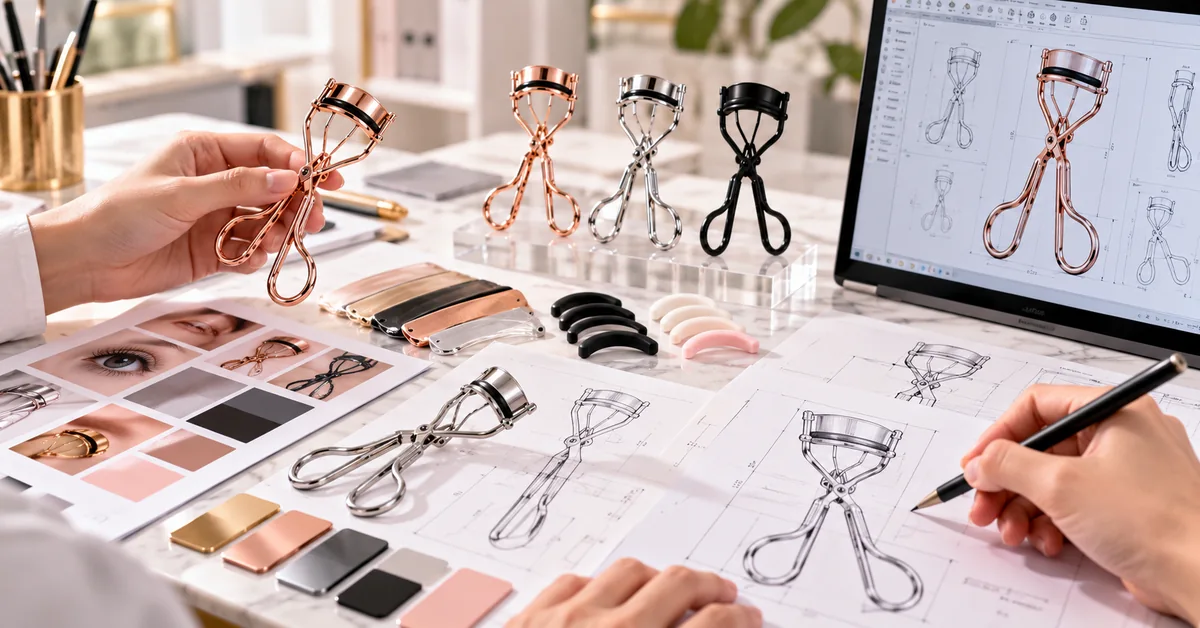
The same curler can be sold as a value retail item, a professional kit component, a travel accessory or a private-label gift set. Set the commercial use case before comparing samples so that comfort, appearance and packaging are judged against one brief.
Include these fields in the request for quotation (RFQ):
- target customer and channel, such as mass retail, salon, e-commerce or a beauty kit;
- reference model, dimensions, frame curvature and intended eye-shape coverage;
- pad material, profile, color, replacement requirement and compatibility expectation;
- handle feel, finish, color, logo method and any accessory;
- unit pack, insert, carton, language and destination-market label requirements;
- sample quantity, approval stages and the inspection evidence required for release.
Do not use a generic promise such as "fits all eyes" as a specification. The arc, opening and contact line need evaluation against the intended customer group. Different curler listings may use different material descriptions, so a material name or grade must be tied to the selected SKU rather than copied from another product.
Evaluate the Frame, Pad and Hinge Together
An eyelash curler is a small mechanical system. A frame can look attractive and still feel unstable if the pad sits off-center or the upper bar closes unevenly. Compare several samples under the same lighting and handling conditions, and record observations against the approved reference.
| Area | Sample check | Evidence to retain |
|---|---|---|
| Frame and arc | Compare curvature, symmetry, opening and smooth accessible edges | Drawing or boundary sample with measurement points |
| Upper bar and pad | Check even contact across the working width and pad retention | Front and side photographs plus pad reference |
| Hinge and handles | Open and close repeatedly; note side play, binding and control | Defined functional method and sample record |
| Material and finish | Match the agreed designation, color and finish; inspect burrs or gaps | Supplier material statement and approved finish sample |
| Replacement pad | Confirm the proposed replacement seats and remains secure | Compatibility check linked to the SKU |
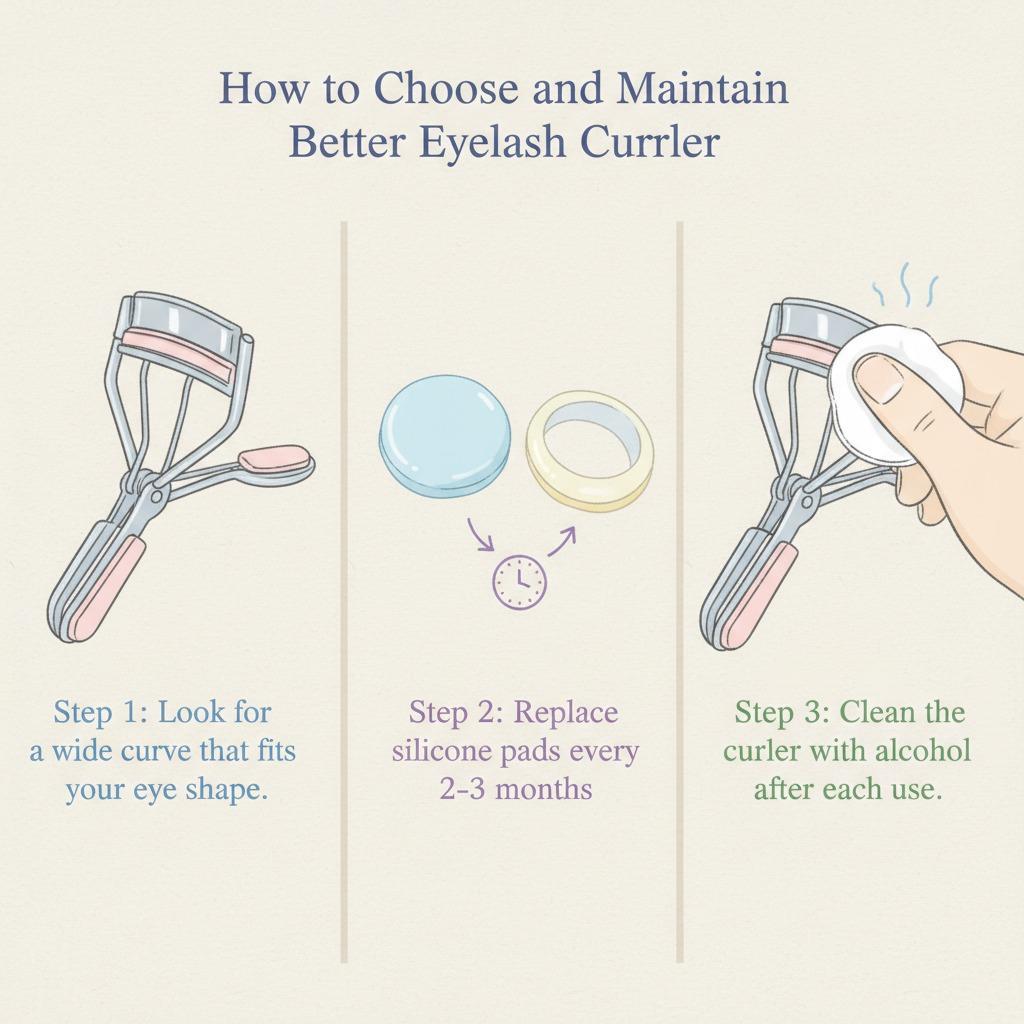
The target description identifies a replaceable red silicone pad, but replacement compatibility should still be checked with the chosen frame. A similar-looking pad can differ in profile or retention. Do not publish a hardness, cycle count or universal replacement claim until the supplier provides current evidence.
Audit the Manufacturing Route, Not Just the Showroom
Walk through the physical route from incoming components to packed unit. The exact steps vary by design, but a practical audit normally asks about forming or trimming, deburring, finish treatment, pad sourcing, assembly, movement checks and packing.
| Production stage | Useful evidence | Buyer question |
|---|---|---|
| Incoming metal, pad and hardware | Purchase specification, lot identity and receiving result | Can each component be tied to the approved revision? |
| Frame forming and finishing | Tool or fixture identifier, first-piece check and finish sample | How is curvature or appearance variation detected? |
| Pad receiving or molding | Pad drawing/sample and incoming inspection | What happens when profile or surface condition is out of range? |
| Assembly and function | Work instruction and completed movement check | What does acceptable opening, return and contact mean for this SKU? |
| Final and packing release | Inspection report, accessory count and packed reference | Can the released unit be matched to the order and carton? |
During a remote review, request a live walkthrough, a completed (appropriately redacted) record and a comparison with the sample in front of the operator. A promotional video is not equivalent to evidence from the product revision being quoted.
Approve Samples and Control Changes
Use a sample ladder so that functional decisions are not hidden by decoration:
- Reference sample: confirms the use case, size and general format.
- Functional sample: confirms frame contact, pad seating, hinge movement and edges.
- Appearance sample: confirms finish, color, logo position and visible workmanship.
- Packaging sample: confirms restraint, protection, labels and insert fit.
- Production sample: confirms that the released specification can be repeated.
Label the approved sample and keep it with the drawing, BOM, artwork and inspection sheet. If the supplier proposes a material, pad, finish, tooling or packaging change, require written notice and decide which checks must be repeated. A change log with an owner and disposition is more useful than a verbal assurance that the replacement is equivalent.
Compare Quotes on the Same Scope
Unit price cannot be compared fairly when one quote excludes packaging, decoration, inspection or development work. Ask every supplier to state assumptions for the same model, quantity, finish, logo, unit pack and delivery basis. Separate confirmed terms from project questions.
Confirm the current MOQ, sample lead time, production lead time, tooling ownership, carton data and applicable destination-market documents for the selected Olimor configuration in the current project quotation. Do not copy these values from a different article or model.
Use a Release Checklist
Before approving a bulk order, record the answer to each point below:
- Is the contracting entity connected to the named manufacturing or assembly site?
- Does the BOM identify the frame, bar, hinge, pad, replacement component and pack?
- Does the approved sample show the required arc, contact pattern, finish and logo?
- Are incoming, first-piece, in-process, final and packing checks defined?
- Are nonconforming units separated, recorded and dispositioned?
- Are the package, labels, warnings and carton identifiers approved for the market?
- Is there a written route for substitutions, corrective action and re-approval?
This checklist does not certify a factory or assign an external score. It gives the purchasing team a traceable basis for deciding what is approved, what remains open and who must provide the missing evidence.
FAQ
What should an eyelash curler factory audit prove?
It should show responsibility for the exact SKU, control of the frame and pad, a repeatable inspection route, approved packaging and a documented change process. It is not proof that every future batch will be identical.
Does stainless steel prove that a curler is suitable for my market?
No. The selected material designation, finish, dimensions and applicable checks still need confirmation. A material name alone does not establish comfort, fit, corrosion performance or regulatory suitability.
How many samples should a buyer inspect?
There is no universal number. Inspect enough pieces to see variation at the development stage, then agree a separate production sampling plan and acceptance limits for the SKU and order.
Can a factory quote a standard MOQ and lead time?
MOQ and timing depend on the model, pad, finish, logo, packaging, quantity and development work. Request current project-specific terms and keep them separate from general marketing language.
Request a Product-Specific Review
Start with the Olimor eyelash curler collection, review the Olimor company and quality background, and send an eyelash curler OEM brief. Include the target channel, reference model, frame and pad requirements, branding, packaging, quantity and inspection evidence so the feasibility review addresses the product you intend to buy.
Tag: