

G10 Handle Nail File: A Selection Guide for B2B Buyers
For a nail file described as having a G10 handle, buyers should verify the exact laminate before approving the material claim. Approval must also cover the abrasive surface, edge finish, pointed-tip geometry, cleanability and packaging protection.
A G10 handle nail file should be evaluated as a complete tool, including the laminate grip, abrasive surface, edge finish and tip geometry.
Why Nail File Selection Matters for Clean Nail Edges
A poor-quality file can leave a rough edge, encourage over-filing or make it difficult to keep both hands symmetrical. For natural nails, the goal is usually controlled shaping rather than aggressive removal. For professional use, consistency matters even more because the same tool may be used for repeated services and must feel predictable from one client to the next.
Good nail filing depends on three elements working together: the abrasive surface, the handle or grip, and the shape of the tool. The abrasive surface affects how smoothly the file contacts the nail. The handle affects pressure control and comfort. The tip and body shape determine whether the file can reach corners, sidewalls and shorter nail lengths without feeling awkward.
When choosing a nail file for retail, salon use or inclusion in a manicure set, consider the complete user experience. A file that feels stable can help reduce unnecessary wrist movement. A slim, pointed end can be useful for detail work. A durable handle can support repeated handling, travel and storage in a kit. These details are especially important for buyers comparing options across beauty tool products rather than selecting only by appearance.
Common Nail File Types and Their Best Uses
Different nail file materials suit different habits and settings. The original choice often comes down to durability, comfort, cost and the type of nail care being performed. Metal nail files, glass files and emery boards are common choices, and each has a clear role.
Metal nail files: Often chosen for durability. They can be useful for users who want a long-lasting tool, but the filing feel may be firmer than softer disposable boards.
Glass nail files: Known for gentler, precise filing. They are popular for natural nail shaping when the user wants a smooth finish and controlled contact.
Emery boards: Lightweight and convenient for quick touch-ups. They are easy to keep in travel bags, retail manicure kits or promotional grooming sets.
Handled nail files: Useful when grip and control are a priority. A stable handle can make shaping easier, especially for longer filing sessions or detail work.
The best option depends on the intended user. A professional nail technician may value repeatable control and easy handling. A consumer buying a home manicure tool may prioritize comfort, durability and simple maintenance. A brand buyer may need a file that photographs well, packs neatly and meets the functional expectations of the target customer.
What Makes the G10 Handle Nail File Practical
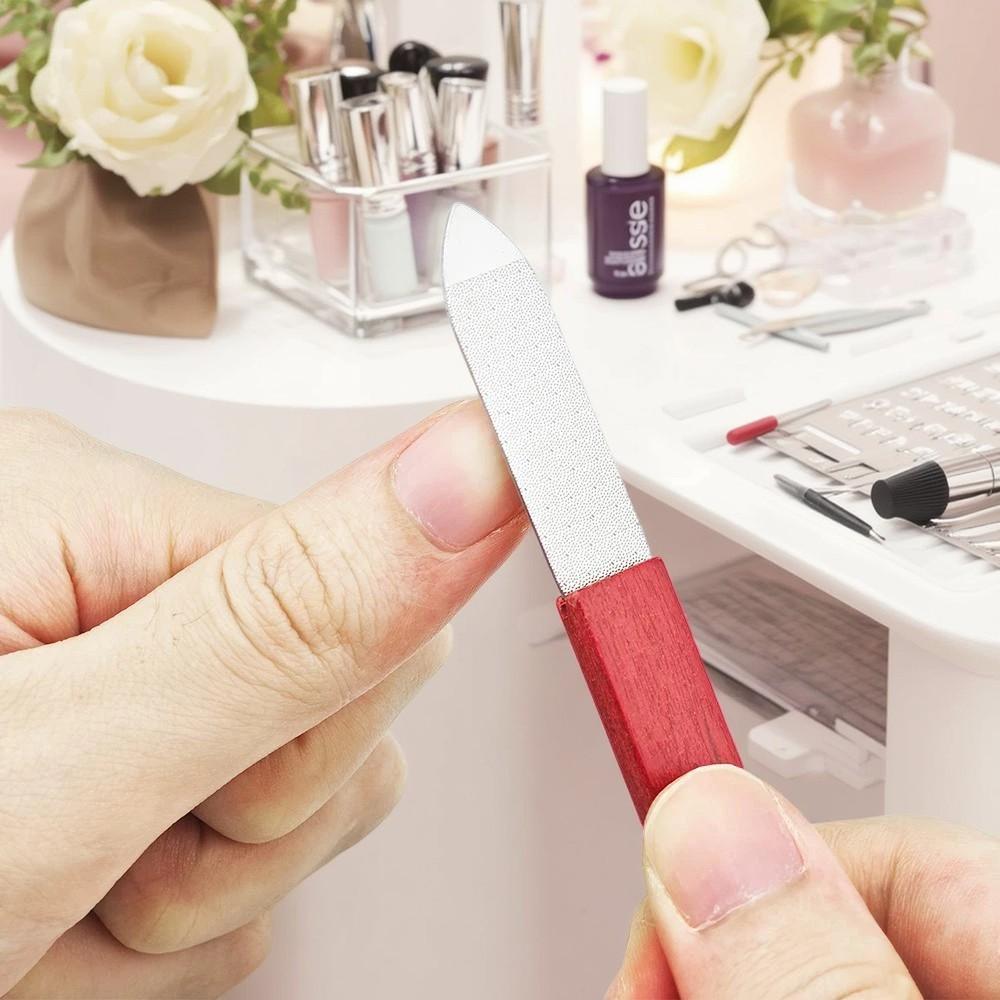
The source article describes this model as having a G10 handle, but the current laminate grade and construction still require confirmation. Buyers should verify the exact handle material, thickness and finish on the selected sample before treating G10 as an approved product specification.
Grip is not a minor detail. When a file is too thin, slippery or flexible in the wrong area, the user may compensate by pressing harder. That can make the nail edge less even and the filing process less comfortable. A handle with a stable, ergonomic feel helps the user guide the abrasive surface with smaller, more precise movements.
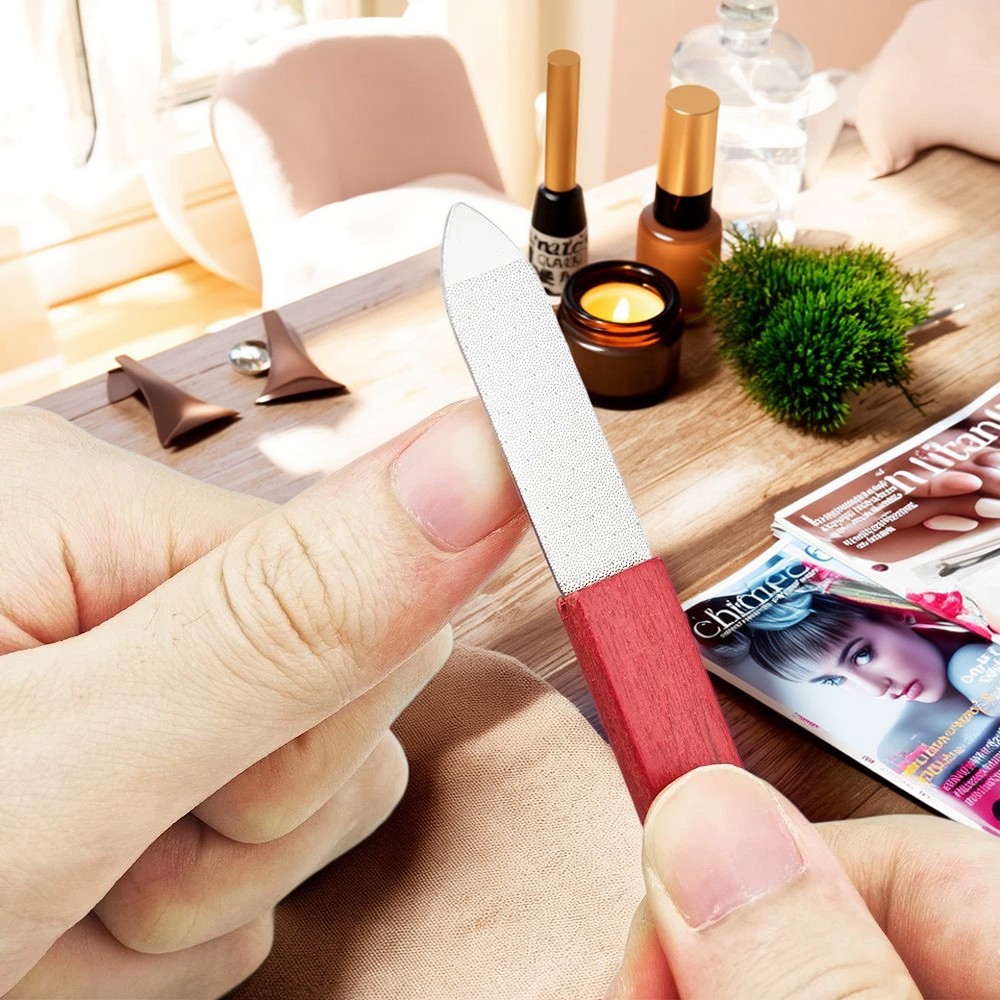
This nail file also has a red finish, which gives it a clear visual identity in a manicure kit or retail display. While color alone does not determine performance, a recognizable handle can help users locate the tool quickly among tweezers, scissors, clippers and other grooming accessories.
The finely textured filing surface is intended for shaping and smoothing. Instead of focusing only on speed, the tool supports a more controlled approach: shorten gradually, refine the contour, then smooth the edge. The pointed tip adds another useful function for cleaning and refining edges, particularly around corners where a wide file may be less precise.
How to Use a Precision Nail File Without Over-Filing
Even a well-made file performs best when used with a careful technique. Over-filing can thin or weaken the edge, especially on natural nails. A simple step-by-step process helps achieve a clean shape while preserving nail strength.
Start with clean, dry nails. Dry nails are easier to shape accurately because the edge is firmer and less flexible.
Decide the shape first. Choose a rounded, oval, square or soft-square edge before filing so both hands can be matched consistently.
Remove length gradually. Use light pressure and check the nail from the front and side. Avoid taking off too much at once.
Refine the side edges carefully. Use the slimmer areas of the file and keep the angle consistent to avoid uneven corners.
Smooth the free edge. Finish with gentle strokes to reduce roughness that can catch on fabric or hair.
Use the pointed tip only for detail work. It can help clean and refine edges, but it should not be forced under the nail or used aggressively.
For salons or retailers preparing customer education materials, these steps are useful because they show the tool as part of a healthy nail care routine rather than a generic accessory. Clear usage guidance can also reduce dissatisfaction caused by poor technique.
Buyer Checklist for Retailers, Salons and Grooming Brands
If you are evaluating a handled nail file for sourcing, merchandising or private grooming kits, look beyond the first impression. A file should be assessed as a working tool, a packaged item and a repeat-use product. The following checklist can help organize the decision without relying on vague claims.
Handle comfort: Check whether the handle feels secure for different hand sizes and whether the grip supports controlled pressure.
Surface consistency: Inspect the filing area for even texture, clean bonding and a predictable feel across the full working section.
Edge finishing: Review whether the tool can shape the free edge smoothly without leaving harsh scratches during normal use.
Tip usefulness: Confirm that the pointed tip supports detail work without making the tool difficult to store or package.
Visual presentation: Confirm the selected handle material and color, then assess whether they fit the intended retail, salon or travel kit positioning.
Packaging compatibility: Check length, protection and labeling needs so the filing surface and pointed tip are protected in transit.
Quality control expectations: Define acceptable appearance, texture and finish standards before placing repeat orders.
Olimor Beauty conducts quality checks from manufacturing to packaging for its grooming solutions. For buyers comparing different nail care tools, it is still useful to create an internal inspection standard that reflects your market: retail display quality, salon working durability, travel kit safety or gift-set presentation.
Care, Storage and Everyday Maintenance
Maintenance affects the life and hygiene of any manicure tool. After use, remove visible nail dust from the filing surface and handle. Store the file in a dry place, ideally separated from tools that could scratch or contaminate the abrasive area. If the file is carried in a bag, a sleeve or compartment can help protect the pointed tip and prevent contact with other personal items.
For professional environments, cleaning procedures should match the salon’s local hygiene rules and the tool’s material compatibility. For home users, simple habits make a difference: do not share personal nail tools unnecessarily, avoid leaving the file in damp areas, and replace any tool that becomes damaged, rough in an uneven way or difficult to clean.
Handled files are often kept longer than disposable emery boards, so storage matters. A stable handle and intact filing surface help preserve consistent performance. If the surface becomes clogged with residue, the user may press harder, which can reduce precision. Regular cleaning and sensible storage keep the file easier to control.
When the G10 Handle Nail File Is the Right Fit
A file with a confirmed, well-finished handle may suit users who want more control than a basic emery board. Buyers should validate the handle, filing surface and edge work together before positioning the item for manicure kits, travel use or professional stations.
For consumers, the appeal is straightforward: a lightweight handle, a finely textured filing surface and a pointed tip for refinement. For business buyers, the value is in a product that can be positioned around practical nail shaping rather than vague beauty claims. It can sit naturally alongside clippers, scissors, tweezers and other manicure accessories in broader product collections.
Distinguish the Handle from the Filing Surface
The merged diamond nail file article adds an important specification distinction: G10 describes the handle, while the filing performance depends on the separate abrasive or file surface. A buyer should not treat “G10 handle” as a complete material specification for the tool.
List the handle laminate, file-body material, abrasive type or grit, usable dimensions, pointed-tip geometry and cleaning instructions as separate approval items. This makes sample comparisons clearer and prevents a durable handle from masking an unsuitable filing surface.
Keep one complete approved reference that records how those parts work together. Compare several samples for abrasive coverage, the handle-to-file joint, surface consistency and tip finishing; one good display sample is not enough to establish batch consistency. If a supplier changes the abrasive application, body, handle construction or tip geometry, review a revised sample before treating it as the same file specification.
Prepare a Clear RFQ
Review the Olimor nail care tools, compare the metal nail file product reference, and then request nail file specifications and samples. Include the intended user, target market, product dimensions or reference, finish, logo, packaging, sample quantity and inspection expectations so the response can be based on the actual project.
Tag:
Related articles
- Manicure & Nail Tools
- OEM & Private Label Solutions
Manicure Scissors Manufacturer: Private Label Guide
- Manicure & Nail Tools
- Manufacturing & OEM Solutions
Travel Manicure Kit Manufacturer: Retail-Ready Buyer Guide
- Manicure & Nail Tools
- Manufacturing & OEM Solutions