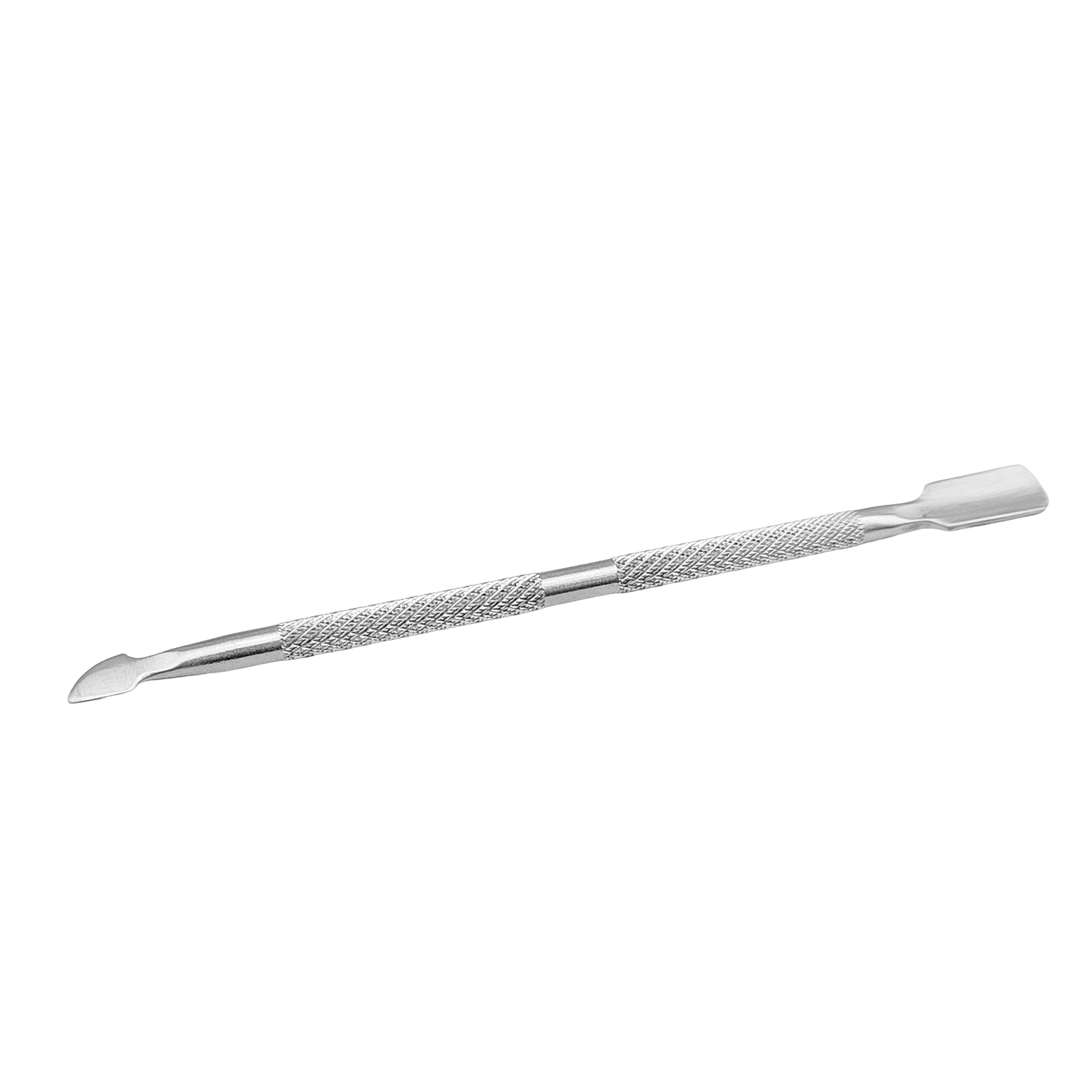
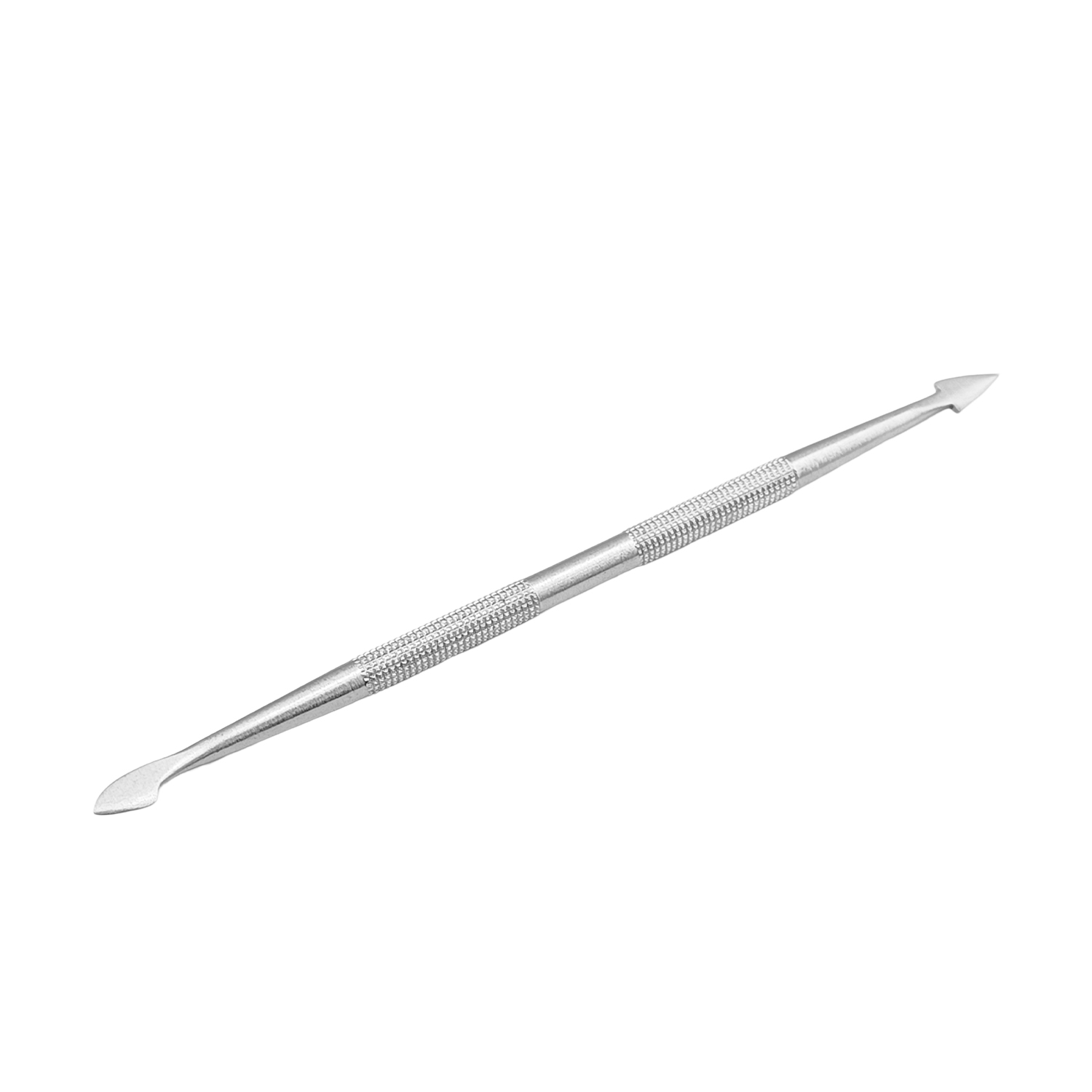
A dependable cuticle pusher manufacturer should be able to describe the working-end geometry, edge finish, handle texture, material, surface appearance, package restraint, and inspection method for the exact item being quoted. For nail brands, salon distributors, beauty retailers, pharmacies, ecommerce sellers, manicure-set companies, and private-label programs, those details matter more than a polished catalog photograph. A cuticle pusher is compact and familiar, yet small differences in the spoon edge, scraper profile, balance, or grip can change how controlled the product feels and how consistently it can be supplied.
Direct buyer answer: choose a cuticle pusher by intended channel, working-end combination, edge smoothness, angle, overall length, handle control, material, finish, branding area, and package format. Approve several production-representative samples, photograph the accepted ends under consistent light, and retain one signed sample with the final specification. A price comparison is meaningful only when every supplier is quoting the same tool and package.
Why a Cuticle Pusher Needs a Controlled Specification
Product names such as spoon pusher, scraper, cleaner, double-ended pusher, or manicure tool are used differently across catalogs. A buyer should not rely on the name alone. The purchase specification should show each working end, its width, profile, angle, edge condition, and relationship to the handle. It should also identify the approved handle pattern, overall length, surface direction, logo location, package, and revision.
The risk is not limited to a visibly damaged tool. A spoon may be symmetrical but too thick at the edge for the approved design. A scraper may be polished yet have a rough transition near the neck. A handle can look attractive but rotate too easily between the fingers. A tray may fit the tool on a desk and still release it during vibration. These are ordinary product-control questions, and they are easier to solve before mass production than after goods reach a retailer.
Begin with the target user and sales environment. A professional salon distributor may prioritize repeated handling, clear model identification, storage, and compatibility with its established procedures. A home-use beauty brand may emphasize intuitive product identity, comfortable grip, protective packaging, and carefully reviewed instructions. A gift set may need visual coordination with nippers, clippers, files, or tweezers. The metal tool cannot be specified independently from the channel in which it will be sold.
Working-End Geometry Controls Product Identity
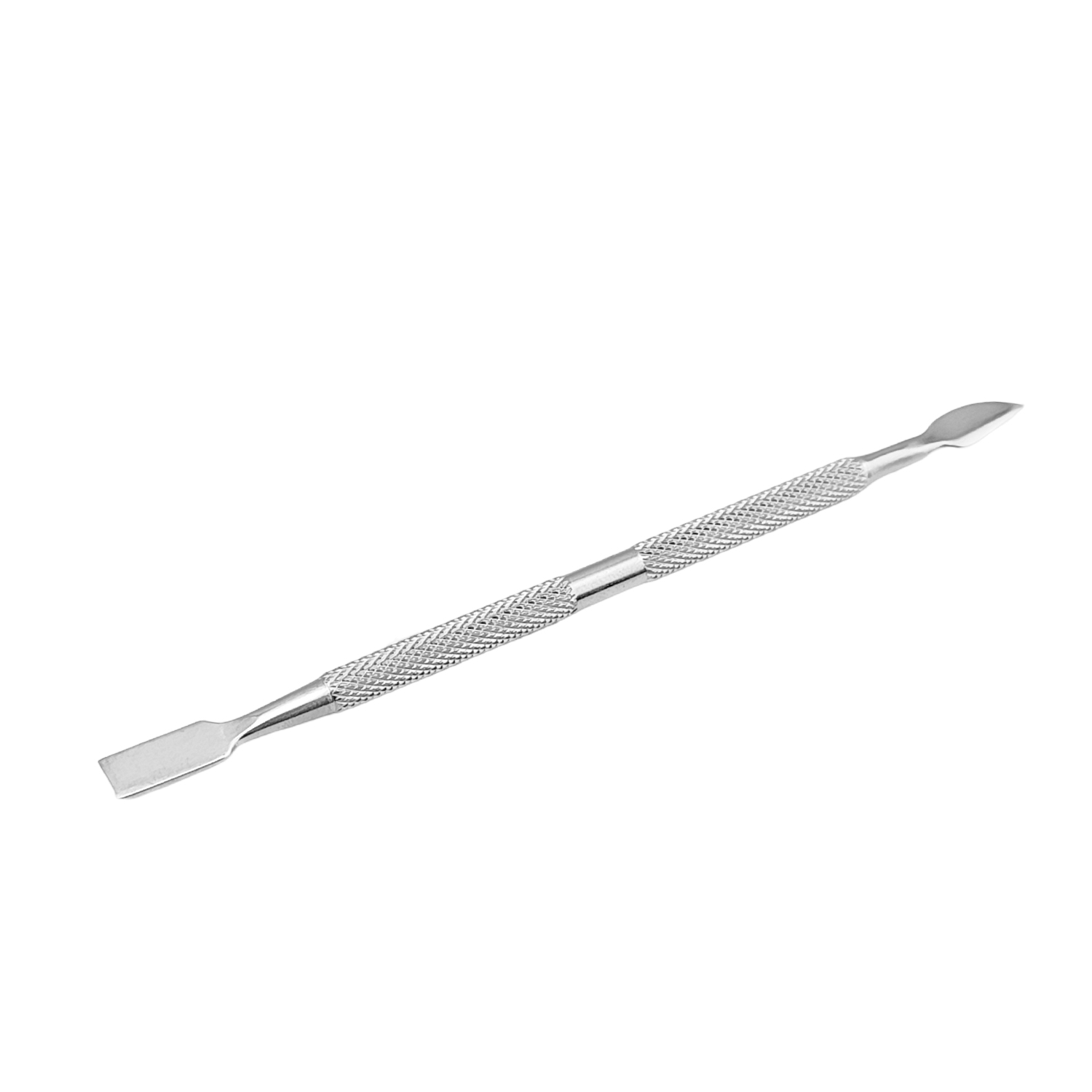
The spoon end is often curved across its width and may also be angled relative to the handle. Its usable width, curvature, edge thickness, and corner radius should be consistent with the approved sample. A broad spoon can present a different contact area from a narrow pusher. A steep angle changes the hand position. These differences are not automatically good or bad; they must match the buyer's intended product and user evaluation.
The opposite end may be a flat scraper, angled blade-like form, pointed cleaner, rounded cleaner, or another confirmed shape. Avoid using only informal labels such as "sharp end" in a purchase order. A drawing or close-up photograph with dimensions is clearer. If an end is intended to remain blunt or rounded, state that requirement. If a fine feature requires a cap or other protection, make that part of the final packed specification.
Inspect the transition between each end and the handle. There should be no unintended ridge, burr, crack, deep tool mark, or abrupt surface change. Compare front, side, and angled views. A working end that looks correct from above may be twisted out of plane. For a double ended cuticle pusher, both ends and the handle must be controlled together because correcting one feature can affect balance, length, or packaging.
Edge Finish: Smooth Does Not Mean Unspecified
Buyers often ask for a "smooth edge," but suppliers need a repeatable way to recognize it. The accepted edge should be documented with close-up photographs, an approved physical sample, and any practical dimensional limits. Inspect under consistent light and appropriate magnification. Run a suitable non-destructive check agreed by both parties, but do not improvise a test that damages the tool or creates an unsupported safety claim.
Pay attention to the corners of a spoon and the sides of a scraper. A center section may be well finished while a corner retains a burr. Also inspect pieces after logo application, surface treatment, cleaning, and packaging, because later operations can introduce scratches, residue, or contact marks. Quality approval should follow the production sequence rather than ending with an unfinished metal sample.
A cuticle pusher manufacturer should be able to explain where working ends are formed, how they are finished, how pieces are protected between operations, and which defects are checked before packing. The explanation does not need theatrical factory language. It needs to connect the process to the product features the buyer has approved.
Handle Texture, Balance, and Control
Handles may use knurling, crosshatching, grooves, a flattened grip, molded components, or a plain metal surface. Texture should provide the intended control without rough unfinished peaks. Inspect the beginning and end of the textured zone for sharp transitions. Compare the pattern around the handle for incomplete areas, double impressions, and inconsistent depth.
Handle diameter and length affect balance as well as packaging. A heavier or wider handle is not automatically more professional. Some buyers prefer a substantial feel; others need a compact tool for a travel set or small retail carton. Evaluate several samples with the target assortment. A pusher that feels balanced alone may make a manicure case uneven when combined with other tools.
Branding space also competes with grip space. A logo placed across deep knurling may lose legibility. A large polished logo zone may reduce the area available for texture. Confirm method, size, location, orientation, and contrast on a physical sample. Inspect the mark after normal handling and final packaging, then define what fading, distortion, or position variation is unacceptable.
Material and Surface Statements Need Product Evidence
OLIMOR's public pages identify the cuticle-pusher models referenced below as stainless steel. That is useful for shortlisting, but stainless steel is a broad material family. When a project depends on a particular grade, hardness, corrosion result, chemical compatibility, or professional reprocessing method, request confirmation and suitable evidence for the exact product and production version. Do not turn a category-level description into a lot-specific technical promise.
Surface finish affects both appearance and inspection. A bright surface can make fingerprints, fine scratches, or cloudy areas more visible. A satin direction may reduce glare but reveal inconsistent brushing when several pieces are aligned. Colored treatments introduce color tolerance, adhesion, masking, and contact-mark questions. Establish an approved visual range under controlled light instead of relying only on a screen image.
Cleaning language requires similar discipline. A visually clean tool is not automatically sterile. A sealed retail pouch is not automatically a sterile barrier. Statements such as medical grade, sterilized, rust proof, or compatible with every disinfectant should not be added without evidence and qualified review for the final product and destination market. Product copy should be accurate enough to build trust, not dramatic enough to create avoidable liability.
Published OLIMOR Models for Initial Sample Comparison
The following public details provide a practical starting point for sample selection. Confirm the current item, dimensions, finish, weight, package, and order-specific specification before placing them in artwork or purchasing documents.
| Item | Published material | Published size | Published weight | Buyer comparison point |
|---|---|---|---|---|
| TSR1015 | Stainless steel | 126 mm | 12.8 g | Longer silver platform for end-shape and handle comparison |
| TSR1005 | Stainless steel | 126 mm | 12.9 g | Similar length with a different working-end and grip presentation |
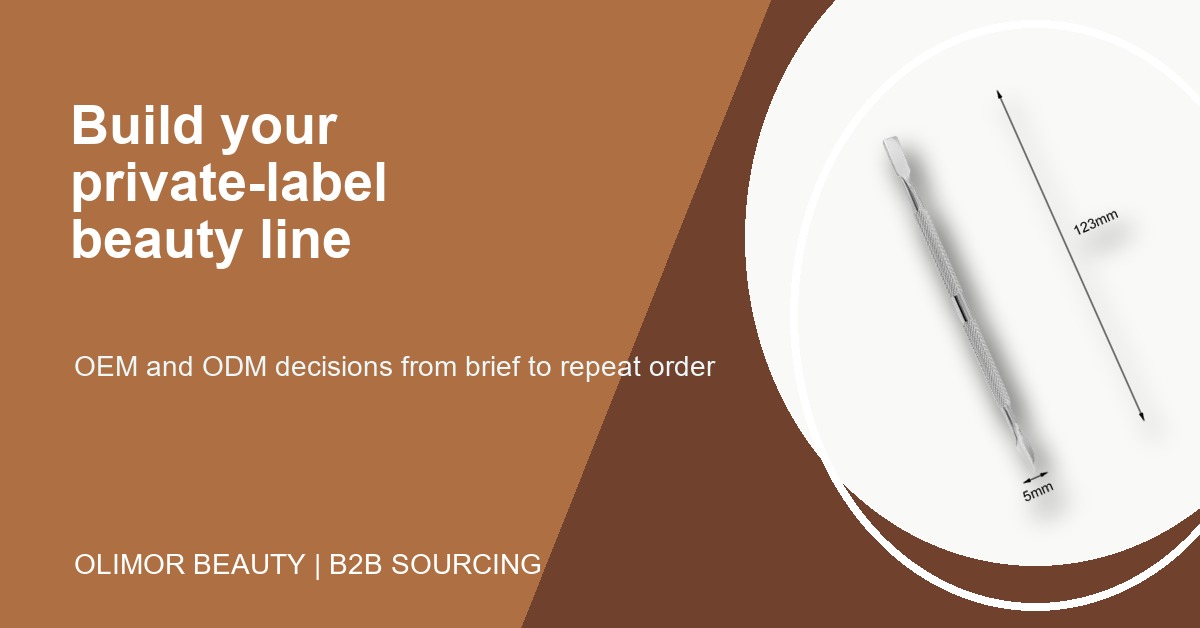
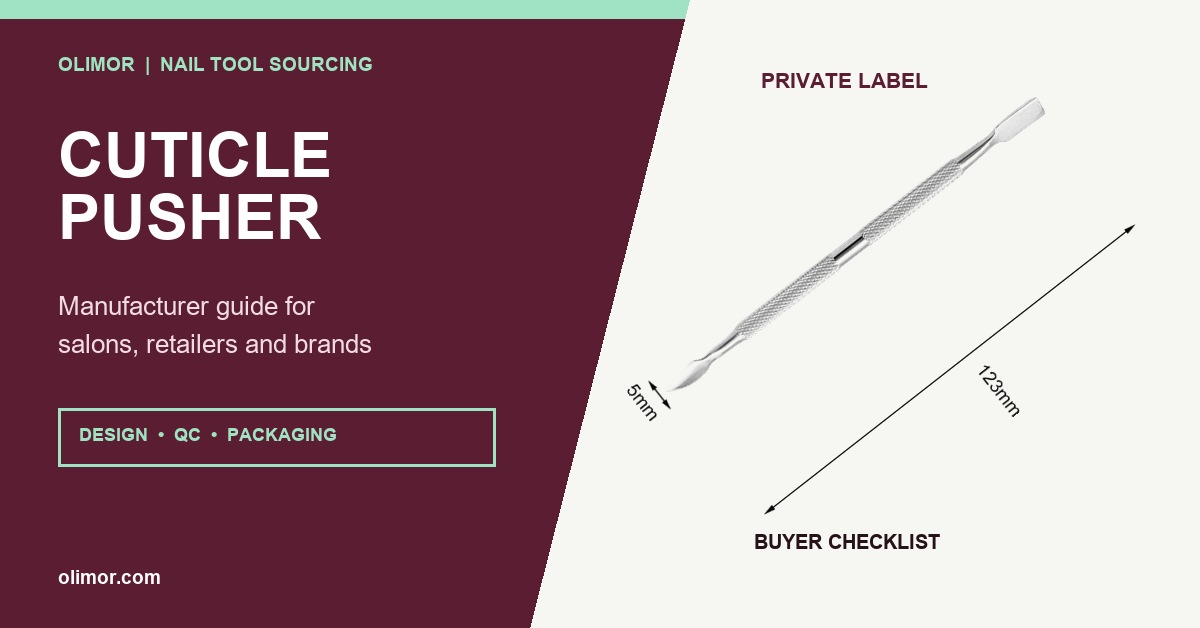
| TSR1004 | Stainless steel | 123 mm | 13 g | More compact length for balance and package-fit comparison |
Published dimensions and weights help narrow the sample list; they do not replace evaluation. Compare the actual end widths, angles, transitions, grip pattern, straightness, and hand feel. Confirm whether a stated size is overall length or another product dimension. Packaging and production tolerances should be agreed separately.
Customer Groups and Their Different Buying Priorities
Nail and beauty brands
Brands usually need the tool to fit a wider product language. Finish, logo, package typography, photography, and claims may need to coordinate with clippers, nippers, files, tweezers, or manicure sets. Keep a common visual system, but retain a separate specification for each tool. A shared color does not mean shared edge, warning, or packaging requirements.
Professional salon distributors
Professional channels may focus on repeat-order consistency, grip, tool identification, storage, cleaning information, and compatibility with established workplace procedures. The distributor should decide whether the selected tool and documentation suit the intended professional environment. Frequency of handling makes surface wear, logo durability, and package organization especially visible.
Beauty retail, pharmacy, and supermarkets
General retail needs a package that protects the working ends, communicates the contents quickly, survives hanging or shelf display, and carries the required product information. The tool shown in the main image must match the supplied ends. Check barcode, language, origin text, instructions, warnings, quantity, and color at final artwork approval.
Ecommerce and marketplace sellers
Online buyers cannot compare weight or edge finish before purchase. Listings should show close-ups of both working ends, overall dimensions, handle details, material wording, package contents, and the actual finish. Avoid exaggerated manicure outcomes or unsupported hygiene claims. A precise listing reduces the gap between the photograph and the item received.
Manicure-set, travel, and gift programs
A pusher in a set must remain in its cavity and avoid contact with neighboring metal tools. Compact packaging can create scratches, reversed tools, or punctured inserts when restraint is weak. Test the fully packed set, not only the empty case. Confirm orientation, removal space, replacement rules, and what happens after transport vibration.
Common Applications and Use Environments
Cuticle pushers are commonly offered as standalone nail-care tools, components of manicure kits, salon-supply items, travel grooming accessories, gift-set pieces, and private-label retail products. The sourcing specification should describe the commercial application without turning the article or package into a treatment guide. Actual use, cleaning, training, and safety procedures must follow the product instructions, professional protocol where applicable, and local rules.
Home bathrooms and travel cases expose products to moisture, handling, and storage variation. Retail shelves expose packages to hanging load, dust, customer handling, and temperature changes. Salon environments may involve more frequent use and established cleaning routines. Warehouses and international shipping add vibration, carton compression, and long storage periods. Material, finish, instructions, and packaging should be reviewed against the intended environment rather than an ideal studio photograph.
A stainless steel cuticle pusher supplier should ask where the product will be sold, who is expected to handle it, how it will be packed, and which claims or documents the buyer requires. Those answers influence the sample and control plan. They can also reveal when a proposed package or surface is unsuitable before artwork and production money are committed.
Private Label and OEM Cuticle Pusher Options
An OEM cuticle pusher project can begin with an existing platform and add branding or packaging, or it can involve new working ends, handle geometry, finish, molded components, or a custom set. The second route carries more development work, tooling questions, samples, verification, and time. Ask the supplier to separate standard options from structural changes.
- Working ends: confirmed spoon, scraper, cleaner, angled, rounded, or other geometry with dimensions.
- Handle: length, diameter, weight direction, texture, smooth branding zone, and grip transition.
- Surface: polished, satin, colored, or another confirmed appearance with an agreed visual range.
- Logo: method, position, orientation, scale, contrast, and normal-handling durability.
- Packaging: sleeve, pouch, tray, card, box, case, insert, cap, or set cavity.
- Documentation: item identity, instructions, warnings, languages, barcode, and destination-market information.
For OEM cuticle pusher development, approve the functional sample before treating artwork as final. Then approve a complete production-intent sample with the real logo, finish, restraint, insert, and outer package. A metal sample and a flat packaging rendering do not reveal whether the tool will move, scratch, hide text, or become difficult to remove.
Sample Approval That Can Survive Mass Production
A useful sample process starts with more than one piece. Compare multiple tools to see normal variation. Record item number, revision, overall length, weight range if required, working-end dimensions, handle details, finish, logo, and package. Photograph each end from the same angles and distance. Retain one approved sample in a protected location and identify who signed it and when.
At this stage, ask the cuticle pusher manufacturer to confirm that the retained reference can be used during production and final inspection. The name on a catalog page is not enough unless the sample, item number, and drawing all point to the same revision.
- Confirm the model, revision, material statement, surface, dimensions, weight direction, and package contents.
- Check straightness and whether each working end lies in the approved plane.
- Inspect spoon width, curvature, corners, edge condition, scraper profile, and neck transitions.
- Review handle texture for incomplete, doubled, rough, or inconsistent areas.
- Examine scratches, stains, residue, pitting, discoloration, polish direction, and finish mismatch.
- Verify logo size, position, contrast, orientation, and legibility on the actual handle.
- Pack the tool and check movement, contact, puncture risk, removal, and presentation.
- Approve artwork, instructions, warnings, barcode, origin information, carton markings, and assortment.
Create a short defect library with acceptable and unacceptable examples. Working-end photos are particularly valuable because phrases such as "slightly rough" or "minor twist" invite different interpretations. Add a ruler, scale, or measurement reference where useful, and update the library when the design revision changes.
Production and Pre-Shipment Quality Control
The control plan should follow the actual manufacturing route: material or component identity, forming, end finishing, handle texture, surface treatment, cleaning, logo application, assembly where relevant, packaging, and final inspection. Ask which processes are completed in-house and which are handled by approved partners. Traceability and corrective-action responsibilities should be clear.
Final inspection should draw pieces from more than one carton and, when possible, different positions in the production lot. Check identity and assortment before detailed workmanship. A correct tool in the wrong sleeve, a mixed end configuration, an outdated instruction insert, or a missing piece can affect a large quantity even when individual metal parts look good.
| Inspection group | Typical checks |
|---|---|
| Identity | SKU, item number, revision, end combination, finish, package, quantity, label language |
| Dimensions | Overall length, handle diameter, spoon width, working-end angle, package size |
| Workmanship | Straightness, burr, edge condition, twist, texture, transition, scratch, stain, residue |
| Branding | Logo position, scale, clarity, contrast, orientation, normal-handling resistance |
| Packaging | Restraint, contact, puncture, insert fit, barcode, artwork, carton quantity and markings |
Agree the sampling plan, defect categories, and acceptance criteria for the purchase order. A generic checklist cannot choose the right risk level for every market. The buyer should decide which defects are critical, major, or minor for the specific product, packaging, channel, and applicable requirements.
Packaging Is Part of the Tool Specification
The package has three jobs: protect the working ends and finish, keep the correct item and instructions together, and present the product accurately. A loose metal tool can rub against a card, cut an insert, or strike another item in a kit. The packaging engineer should check the fully decorated sample after vibration, handling, and any required transport evaluation.
Retail packages should make the configuration visible without exposing working ends to casual contact. Ecommerce packages need enough protection for parcel distribution, where a single unit may travel without the support of a full retail carton. Salon packs may need organized storage and clear identification. Gift and travel cases need secure cavities that still allow the user to remove the tool without forcing it against neighboring items.
Artwork should match the final product. Confirm the number of tools, end shape, finish, dimensions, material wording, instructions, warnings, barcode, language, and origin information. If a package photograph shows a different end or handle, customers may reasonably consider the delivered item incorrect. Conduct one final artwork-to-product comparison before printing.
Cost, MOQ, and Lead Time
There is no reliable universal price for a private-label cuticle pusher. Cost depends on the platform, end geometry, dimensions, material requirement, handle process, surface, logo, package, quantity, inspection, documentation, and development scope. A standard silver tool in a simple sleeve is a different project from a custom handle, colored finish, molded tray, printed case, multi-piece set, and market-specific documentation.
MOQ may be driven by the base tool, surface-treatment batch, logo method, molded component, printed package, or carton. Ask which component creates the minimum. A buyer may be able to use an existing metal platform while customizing the card, or share one tool across several language packs, subject to supplier confirmation and applicable labeling review.
Lead time is a sequence rather than one factory number. It can include requirement review, sample selection, structural development, tooling, finish trials, buyer feedback, artwork, package sampling, approval, material preparation, production, inspection, and shipment readiness. When an end shape, finish, or package changes after approval, affected steps need to be repeated. Keep a dated decision log so an earlier revision does not return during production.
How to Evaluate a Stainless Steel Cuticle Pusher Supplier
A capable stainless steel cuticle pusher supplier should answer model-specific questions. Ask for the controlled specification, key end dimensions, edge-finish checks, handle-texture criteria, surface acceptance, protection between operations, and final inspection record. Ask how item identity is maintained when several similar silver tools are being produced and packed at the same time.
Review production-representative samples rather than only showroom pieces. Compare several units and inspect pieces from different cartons when possible. Ask how nonconforming tools are isolated and how a repeated defect leads to corrective action. For repeat orders, confirm how the approved sample, drawing, artwork, and change history are retained.
Send the same brief to every shortlisted stainless steel cuticle pusher supplier. Require each company to mark assumptions, exclusions, and unconfirmed options. One quote may include a branded tray and inspection while another covers only an unbranded bulk tool. A shared request makes commercial differences visible.
A stainless steel cuticle pusher supplier should also state how surface appearance and working-end damage are checked after the tool has passed through logo application and final packing.
A Practical RFQ Checklist
- Destination market, sales channel, intended user, and product positioning.
- Standalone tool or set, with exact quantity and every included component.
- Reference model, close-up photographs, drawing, or required end configuration.
- Overall length, handle diameter, working-end dimensions, weight direction, and balance preference.
- Material statement, surface appearance, color tolerance, and evidence required.
- Logo artwork, method, position, scale, contrast, and durability expectation.
- Sleeve, pouch, tray, card, box, case, cap, or retail hanging requirement.
- Instructions, warnings, languages, barcode, origin text, and claim review.
- Order quantity, forecast, sample quantity, target date, and shipping destination.
- Inspection plan, third-party inspection needs, testing, and requested documents.
Attach one marked-up image that names each end, handle area, logo position, and package component. Ask the supplier to return the brief with comments rather than replying only with a price. The final purchase specification should have a revision number and approval record; chat messages and unmarked catalog photos are not enough for production control.
How OLIMOR Can Support a Cuticle Pusher Project
OLIMOR's Nail Care Tools collection gives buyers several stainless steel pusher platforms to compare. Public product pages provide item numbers and basic dimensions for initial shortlisting. Physical samples and order-specific confirmation remain necessary for working-end geometry, material details, finish, logo, packaging, testing, MOQ, price, and production timing.
Depending on the chosen model and confirmed project scope, discussions may include platform selection, end configuration, handle, finish, logo position, retail package, manicure-set composition, sample approval, and quality inspection. Brands building a broader range can also review OLIMOR's beauty and personal-care tool categories for related products.
For an OEM cuticle pusher inquiry, use the OLIMOR contact page and include the market, sales channel, estimated quantity, preferred item, required ends, finish, branding, package, documents, and target date. That information gives the team a practical basis for a product-specific review instead of a generic price reply.
The cuticle pusher manufacturer can then separate available platform options from changes that require new tooling or verification. An OEM cuticle pusher brief becomes much easier to schedule when those two paths are identified before artwork begins.
Frequently Asked Questions
What should a buyer check first when selecting a cuticle pusher?
Start with the intended user and working-end geometry. Confirm spoon width and curvature, opposite-end shape, edge finish, angle, straightness, handle grip, overall length, material statement, surface, and package restraint. Review several samples and record the accepted tool before approving artwork or a bulk order.
Is every double-ended cuticle pusher the same?
No. Products can differ in spoon width, curvature, angle, scraper or cleaner shape, neck transition, edge thickness, handle diameter, texture, length, weight, and finish. Similar catalog names do not prove interchangeability. Compare physical samples against one written specification.
Can a logo be added to a textured metal handle?
Branding may be possible depending on the selected platform, texture, logo method, size, contrast, and quantity. A smooth logo zone can improve legibility, but it may affect grip or tool appearance. Approve the mark on the real handle and inspect it after normal handling and packaging.
Can a cuticle pusher be supplied in a private-label manicure set?
Yes, subject to model, assortment, case, cavity, quantity, and project confirmation. Approve the complete set with every tool in its final position. Check movement, metal-to-metal contact, removal space, tool orientation, labels, instructions, and replacement rules before production.
Does stainless steel mean the tool will never corrode?
No absolute conclusion should be drawn from the general material name. Performance depends on alloy, manufacturing, finish, environment, chemicals, cleaning, drying, storage, and handling. If a particular test or compatibility claim matters, request evidence for the final product and have the requirement reviewed by qualified personnel.
What causes MOQ differences between similar cuticle pushers?
The minimum may come from the metal platform, surface-treatment batch, logo process, molded part, printed packaging, set components, or development work. Ask which element drives the quantity. Simplifying one custom component may reduce the practical minimum, subject to supplier confirmation.
What information produces an accurate quotation?
Provide target market, channel, quantity, reference model or drawing, end configuration, dimensions, material and finish requirements, logo, package, instructions, testing, inspection, documents, destination, and target date. Ask the supplier to identify assumptions and open questions before treating the quote as final.
Final Buyer Checklist
- Define the market, channel, user, and commercial application before selecting a platform.
- Name, photograph, and dimension both working ends.
- Inspect edge condition, corners, transitions, straightness, twist, and surface under consistent light.
- Confirm handle length, diameter, grip texture, balance, and branding area.
- Connect every material, finish, compatibility, and hygiene statement to appropriate evidence.
- Approve several functional samples and one complete branded, packed sample.
- Protect the ends and finish during production, packing, transport, and storage.
- Review instructions, warnings, claims, translations, barcode, and product photography.
- Agree sampling, defect classification, acceptance criteria, and change control.
- Compare suppliers against one revision-controlled RFQ rather than different assumptions.
Choosing a cuticle pusher manufacturer is a small-product decision with many visible consequences. The working ends must match the approved geometry, edges and transitions must be consistently finished, the handle must provide the intended control, and the package must protect the tool and describe it accurately. When those details are written down and checked on real samples, buyers can compare evidence instead of adjectives.
Developing a private-label nail-care tool or manicure set? Explore OLIMOR's cuticle pusher and nail-care tool range, shortlist the closest item numbers, and send your target market, quantity, end configuration, finish, logo, packaging, inspection, and sample requirements for a product-specific discussion.