Beauty Tools Wholesale: How to Build a Mixed Assortment That Sells
Wholesale beauty tools work best when the assortment is planned around real use, not only appearance. Buyers need tools that feel dependable in the hand, photograph well for online retail, fit the intended margin and arrive in a product mix that makes sense for salons, spas, e-commerce stores, promotional kits or beauty gift programs.
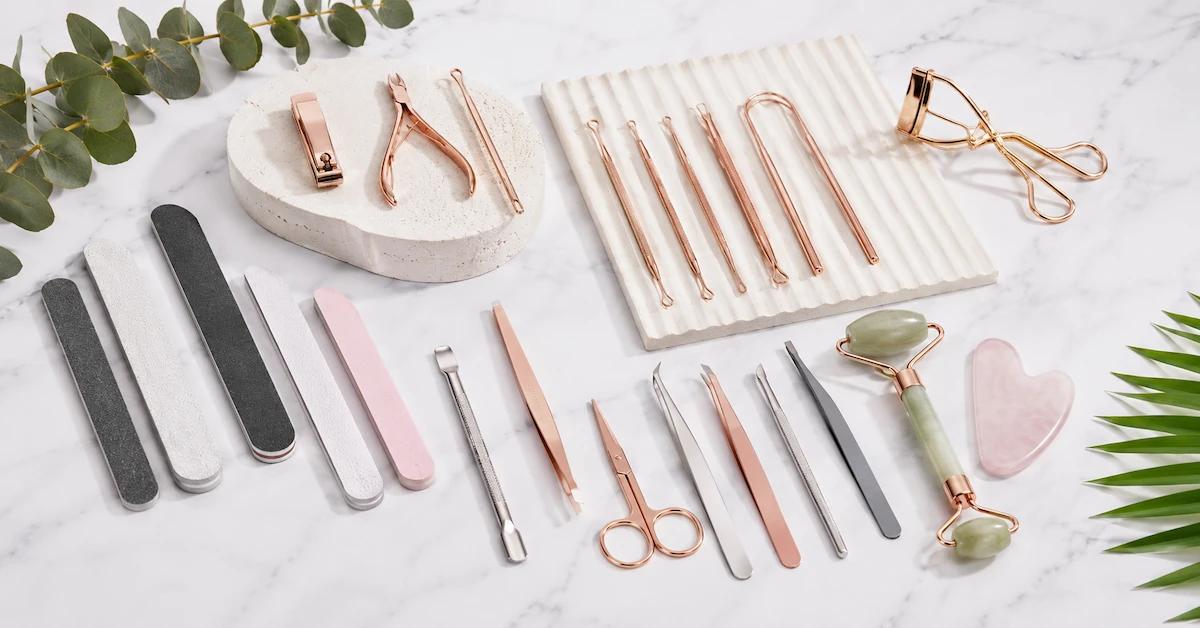
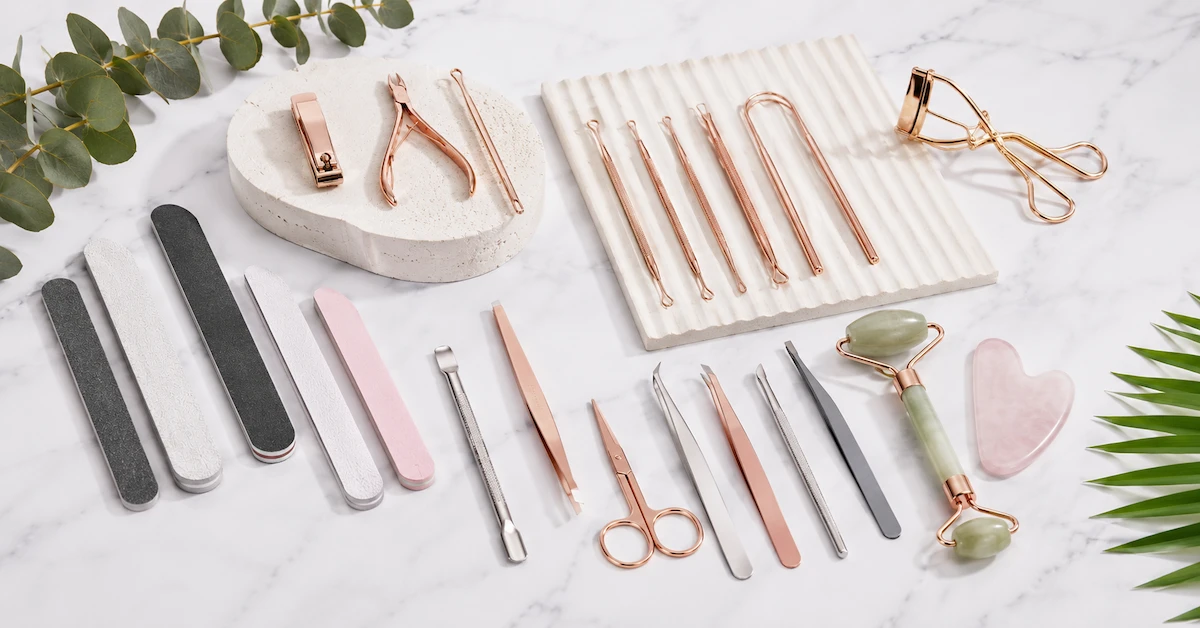
A mixed assortment can include nail files, cuticle tools, tweezers, small scissors, an eyelash curler, a facial roller and a gua sha-style massage accessory. These products all sit under personal grooming and self-care, but they are not bought for the same reason. Some are practical repeat-purchase items. Some complete a grooming routine. Others add visual value to a retail display or gift set. The role of a buyer is to choose a combination that customers understand quickly and are willing to reorder.
This guide explains how to evaluate beauty tools wholesale assortments from a B2B sourcing perspective: what to include, how to compare finishes and functions, what cost factors matter, how to inspect samples and how to ask a supplier the right questions before committing to an order.
What a Mixed Beauty Tool Assortment Usually Includes
A useful wholesale range should cover several grooming routines without becoming random. The assortment described here can be grouped into three commercial categories: nail care, eye and brow grooming, and facial massage accessories. Each category serves a different customer need and should be evaluated on its own terms.
Nail care tools
Nail files and emery boards are basic items, but they often carry a large share of daily demand. They are easy to add to starter kits, travel sets, counter displays and promotional packs. The visible assortment includes compact handheld files with rounded ends and several colors or finishes. That format is simple, familiar and easy for customers to understand.
Cuticle and nail tools add more function to the range. They may be used for trimming, pushing back or cleaning around the nail edge, depending on the exact tool design. For wholesale buyers, the most important questions are whether the edges are finished cleanly, whether the handle area is comfortable enough for controlled use and whether the appearance matches the intended retail tier.
Eye and brow grooming tools
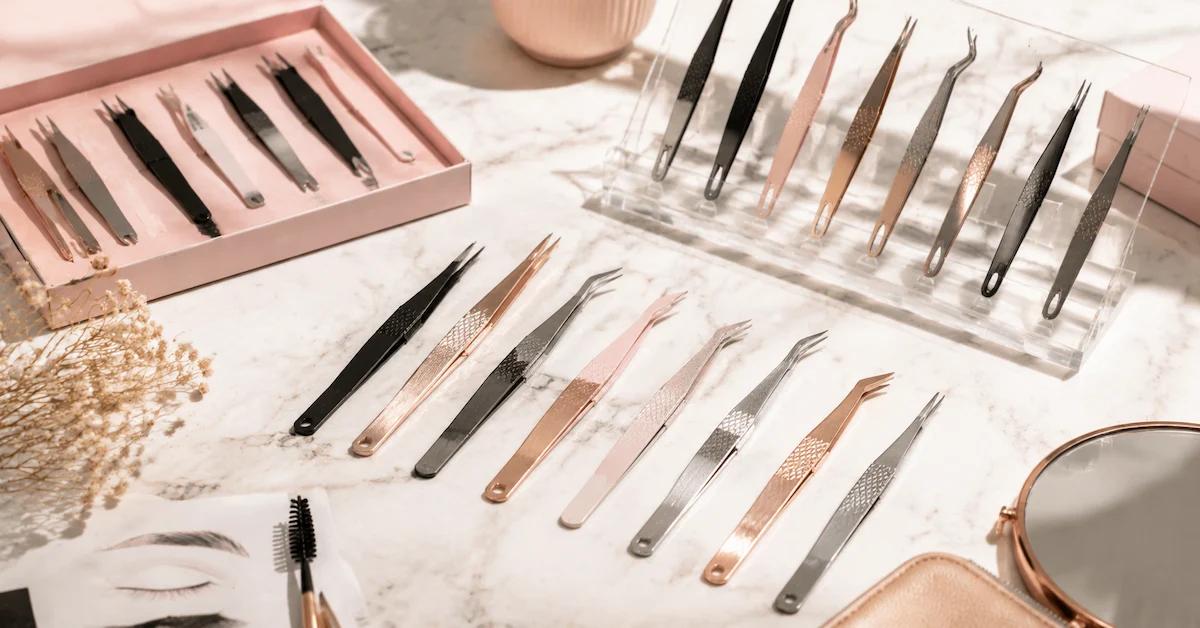
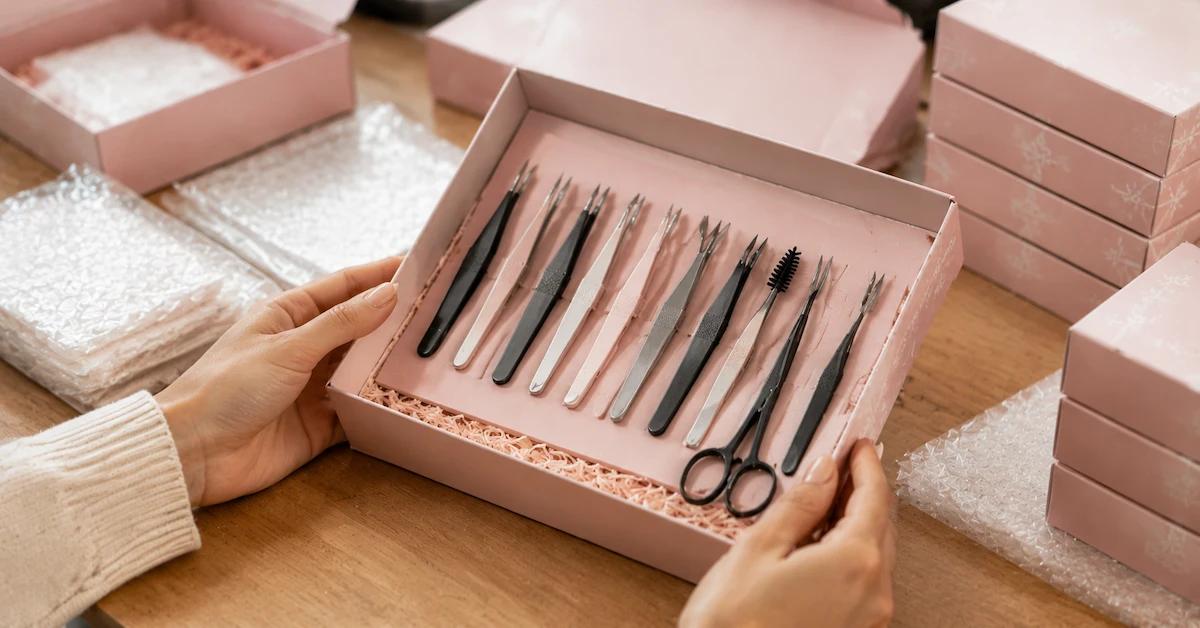
Tweezers, small scissors and an eyelash curler form the eye and brow section of the assortment. The tweezers appear in different styles, including pointed and slanted tips, with finishes such as rose gold, silver and black. Tip geometry matters because customers use different tweezer shapes for different tasks. Slanted tips are commonly selected for general brow grooming, while pointed tips are often chosen when more precision is needed.
Small scissors should open and close smoothly, sit securely in the fingers and feel stable at the joint. An eyelash curler should have a balanced frame, a comfortable grip and a hinge that does not feel loose. These are compact products, but small mechanical details strongly affect perceived quality.
Facial massage accessories
The assortment also includes a facial roller with green stone-like heads and a pink heart-shaped gua sha-style tool. These items widen the range beyond mechanical grooming and into skincare-adjacent self-care. They are often selected for retail displays, spa add-ons, gift boxes and online bundles.
Buyers should describe stone accessories carefully. Unless the supplier documentation verifies a specific mineral, it is safer to use language such as polished stone, stone-like material or facial massage accessory. Accurate copy protects the buyer from overpromising and helps avoid disputes when products reach retail channels.
How to Match Beauty Tools to Your Sales Channel
The right assortment depends on where the products will be sold. A salon counter, a spa reception area, an online marketplace listing and a promotional gift program all have different priorities. A product that performs well in one channel may not be the best choice for another.
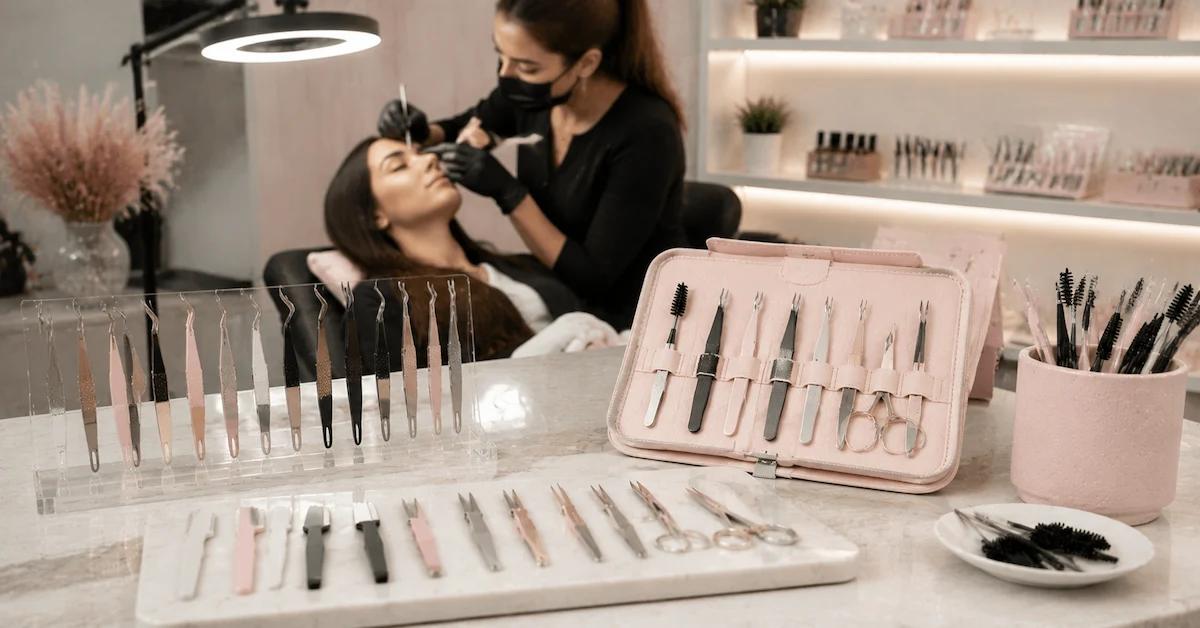
Salon and professional-adjacent buyers usually care about grip, control and durability of feel. They may prefer neutral finishes, simple packaging and tools that look practical rather than decorative. E-commerce sellers often need color variety, clean photography, bundle logic and product descriptions that clearly explain each tool. Spa and skincare retailers may give more space to facial rollers and gua sha-style tools because those items fit self-care routines and giftable merchandising. Promotional buyers usually want compact, easy-to-understand tools that can be packed efficiently and presented as useful extras.
Before choosing products from a beauty tools collection, define the selling situation first. Ask whether the customer is buying for daily maintenance, a treatment room, travel, gifting or a skincare routine. The answer will decide which tools deserve the most space in the assortment.
Wholesale Beauty Tool Selection Checklist
Buyers should inspect beauty tools as both functional items and retail products. A low unit cost is not useful if the tool creates returns, poor reviews or weak repeat orders. The following checklist helps compare samples and supplier offers without relying only on catalog images.
| Check area | What to review | Why it matters |
|---|---|---|
| Function | Tweezer tip alignment, scissor movement, eyelash curler hinge, nail file surface and tool edges | These details affect customer satisfaction and basic usability. |
| Finish | Rose gold, silver, black, matte or polished surfaces; consistency across matching tools | Finish quality shapes perceived value and merchandising appeal. |
| Material description | How metal, abrasive boards and stone-like accessories are described in supplier documents | Accurate descriptions reduce listing risk and avoid unsupported claims. |
| Packaging | Individual packs, trays, blister options, gift-set layout or bulk packing | Packaging affects shelf presentation, shipping efficiency and retail readiness. |
| Assortment logic | Whether the mix supports nail care, brow care, skincare or a complete grooming routine | A clear theme makes the range easier to sell and reorder. |
| Supplier support | Photos, samples, customization discussion, replenishment communication and quality review process | Reliable communication is important when scaling a wholesale program. |
Comparison: Mixed Assortment vs Single-Item Sourcing
Mixed assortments and single-item sourcing both have advantages. The better choice depends on whether the buyer is testing a category, expanding an existing line or replenishing proven sellers.
When a mixed assortment is stronger
A mixed assortment is useful when a buyer wants to build a complete grooming or self-care story quickly. It allows a retailer to offer nail files, tweezers, scissors, an eyelash curler and facial massage accessories without developing every item separately. This approach works well for gift programs, starter kits, promotional sets, salon counters and online bundles.
A mixed range also helps test customer demand. If buyers are unsure whether their audience prefers practical tools or more visual self-care items, a controlled assortment can reveal which products earn repeat orders.
When single-item sourcing is stronger
Single-item sourcing is better when the buyer already knows which tool performs well. For example, a retailer may want to reorder only a particular nail file style, tweezer finish or eyelash curler. This can simplify inventory planning and product descriptions. It also helps when the buyer wants to focus on one hero item instead of managing multiple product types.
Many successful wholesale programs use both approaches: a curated mixed set for discovery and giftable sales, plus individual replenishment for the best-moving tools.
Cost Factors Buyers Should Evaluate Without Chasing the Lowest Unit Price
Beauty tool cost is shaped by more than the item itself. Finish, tool complexity, packaging, customization, assortment size, inspection requirements and shipping configuration can all affect the final landed cost. Buyers should compare quotes carefully and ask what is included before assuming one offer is cheaper than another.
Metal grooming tools may vary in cost because of shape, finishing process, hinge construction or surface treatment. Nail files can vary by format, abrasive surface, color, printing and packaging. Facial rollers and gua sha-style accessories may vary by material description, polishing, assembly and presentation. Packaging can also change the commercial equation: a simple bulk pack may support salon or refill programs, while a retail-ready tray or gift box may be more suitable for e-commerce and gifting.
Customization may add value when it supports the buyer’s channel. Color coordination, branded packaging or a planned set layout can make a range easier to sell. However, customization should solve a real retail problem. Adding decoration without a merchandising purpose can increase complexity without improving sell-through.
Sample Inspection: What to Check Before Placing an Order
Samples are important because beauty tools are tactile products. Photos can show color and shape, but they cannot fully show alignment, grip, hinge feel, surface smoothness or how a set looks under ordinary retail lighting. A sourcing team should create a simple inspection routine before confirming an order.
- Check tweezers: confirm that the tips meet evenly, the edges are clean and the finish looks consistent along the handle and tip area.
- Check scissors: open and close them several times to feel for wobble, rough movement or uneven contact.
- Check the eyelash curler: review the frame shape, hinge movement, handle comfort and overall balance.
- Check nail files: look at the edge finish, board shape, abrasive surface and color consistency.
- Check facial rollers: review the handle, roller movement, surface finish and how the heads are secured.
- Check gua sha-style tools: inspect edge smoothness, polish, shape consistency and packaging protection.
- Check packaging: confirm whether the items remain secure, whether labels are clear and whether the presentation suits your channel.
If the products are intended for markets with specific consumer safety obligations, buyers should verify current requirements and supplier documents. For example, the EU General Product Safety Regulation and the U.S. Consumer Product Safety Commission are relevant public references for many consumer goods. Requirements can change, and applicability depends on product design, market and claims, so buyers should confirm the current versions and request supporting documentation from suppliers.
Common Sourcing Mistakes and How to Avoid Them
The first mistake is treating all beauty accessories as interchangeable. A tweezer is not just a metal tool; tip shape, alignment and finish affect how customers use it. A nail file is not only a low-cost add-on; it may be the item customers replace most often. A facial roller is not only a decorative object; assembly and surface feel influence whether it feels credible in a skincare routine.
The second mistake is making unsupported material or performance claims. If a stone type is not documented, do not describe it as a specific mineral. If a metal grade is not supplied, avoid claims about corrosion resistance, sterilization compatibility or professional performance. B2B buyers should keep catalog copy accurate and based on supplier documentation.
The third mistake is building an assortment that is too wide too early. A crowded selection can make inventory harder to manage and confuse customers. A focused launch might include one or two nail file formats, two tweezer styles, one eyelash curler and one facial massage accessory. After sales data becomes clear, buyers can expand into more finishes, gift sets or channel-specific bundles.
The fourth mistake is ignoring replenishment. A fast-moving file or tweezer may need regular restocking, while a facial roller may sell more slowly but improve the visual value of a display. Order planning should reflect different sales rhythms instead of treating every item in the assortment equally.
How to Evaluate a Beauty Tools Supplier
A good beauty tools supplier should support both product detail and assortment planning. Buyers should look for clear communication, consistent product presentation, realistic material descriptions and willingness to provide samples or packaging information. The supplier should be able to discuss how different tools fit different channels, not only quote individual items.
Useful questions include: Which finishes are available for the selected tools? Can the assortment be adjusted for nail care, brow care, skincare or gift sets? What packaging options are available? How are stone-like accessories described in product documents? What information is available for quality review before shipment? None of these questions requires exaggerated claims; they simply help the buyer understand the offer clearly.
It is also wise to compare the supplier’s product range with your merchandising plan. If your business needs a compact kit, the supplier should be able to support a logical mix. If your business needs individual replenishment, the supplier should help identify repeatable items. Buyers preparing a program can send requirements through the wholesale inquiry page or contact the team directly through Olimor contact support.
Practical Assortment Plans for Different Buyers
A salon counter assortment may focus on neutral metal tweezers, small scissors, nail files and a simple eyelash curler. The goal is practical retail appeal near the service area. A spa assortment may include a facial roller, gua sha-style tool and a smaller selection of grooming accessories, creating a softer self-care story. An e-commerce assortment may use color variation, bundled photography and clear item-by-item descriptions. A promotional kit may use compact tools that are easy to pack and immediately recognizable.
For new buyers, the safest approach is usually a tight starter assortment with room to expand. Choose products that share a visual direction, such as rose gold and pink tones for a giftable look or black and silver finishes for a more professional presentation. Keep copy simple and accurate. Once customer feedback and reorder patterns are clear, expand based on evidence rather than assumptions.
FAQ: Wholesale Beauty Tool Buying
Can I request samples before ordering?
Sample availability should be confirmed with the supplier. Samples are recommended for checking finish, alignment, packaging and the overall feel of the tools before placing a larger wholesale order.
Is there a minimum order quantity for mixed beauty tools?
MOQ depends on the selected items, packaging and customization requirements. Buyers should ask for the current MOQ for both mixed assortments and individual products.
Can the assortment or packaging be customized?
Customization may be possible depending on the product type and order plan. Discuss color selection, set composition, packaging layout and branding requirements early so the supplier can confirm feasible options.
How should quality be checked before shipment?
Buyers should agree on inspection points such as tweezer alignment, hinge movement, edge finish, packaging condition and material descriptions. Any required documents should be requested before final approval.
How is lead time confirmed?
Lead time should be confirmed case by case because it can depend on item selection, packaging, customization and order volume. Ask the supplier for the current schedule before planning a launch date.
Where to Go Next
Building a wholesale beauty tool assortment is not only about adding more items to a catalog. It is about choosing tools that work together commercially: practical nail files, well-aligned tweezers, stable scissors, a balanced eyelash curler and carefully described facial massage accessories. The right mix can support salon counters, online bundles, spa retail and gift programs without confusing the customer.
Before placing an order, define the channel, inspect samples, verify product descriptions and decide whether the assortment should feel practical, giftable, professional or skincare-focused. A restrained, well-planned selection will usually outperform a crowded range that looks attractive in a catalog but does not match the buyer’s market.
Tag: