Cuticle Nipper Jaw Sizes for Precise Nail Care
Cuticle nippers look simple, but the jaw size changes how the tool feels, how much skin it removes in one cut, and how safely it can be used around the nail fold. For salon professionals, a small difference in jaw length can affect speed and accuracy during repeated services. For home users, the right jaw size can make the difference between a controlled trim and an uneven cut that leaves the skin irritated.
Olimor Beauty supplies stainless steel cuticle nippers for manicure and pedicure tool buyers who need practical choices rather than guesswork. This guide explains what jaw size means, how common sizes behave in use, and what to consider when comparing nippers for personal care, salon retail, or wholesale sourcing. You can also browse related beauty tool products or review broader product collections when planning a nail care assortment.
What Cuticle Nipper Jaw Size Actually Means
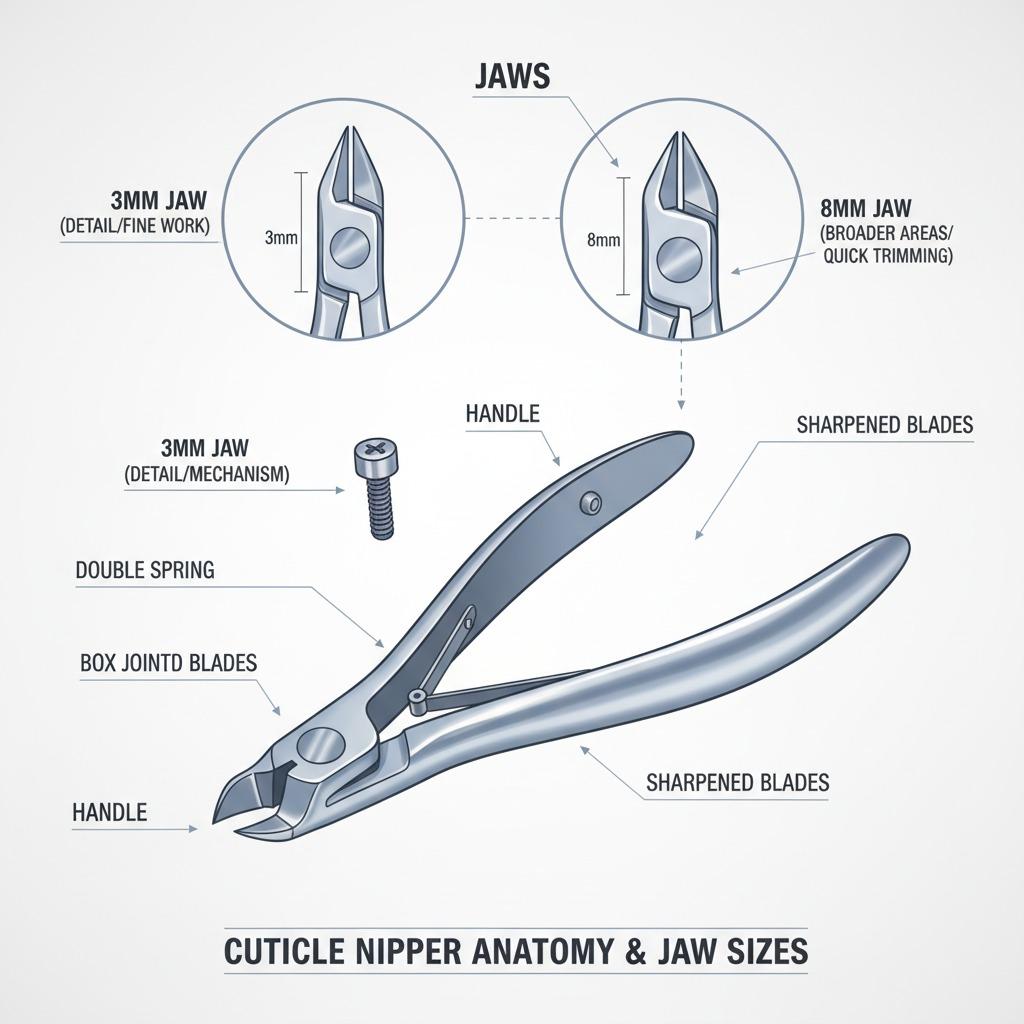
The jaw is the cutting part of the nipper. When people refer to jaw size, they usually mean the length of the cutting edge, not the overall length of the tool. A shorter jaw removes less tissue per cut and gives the user a clearer view of the working area. A wider jaw covers more surface and can be efficient when trimming larger, loose pieces of non-living skin.
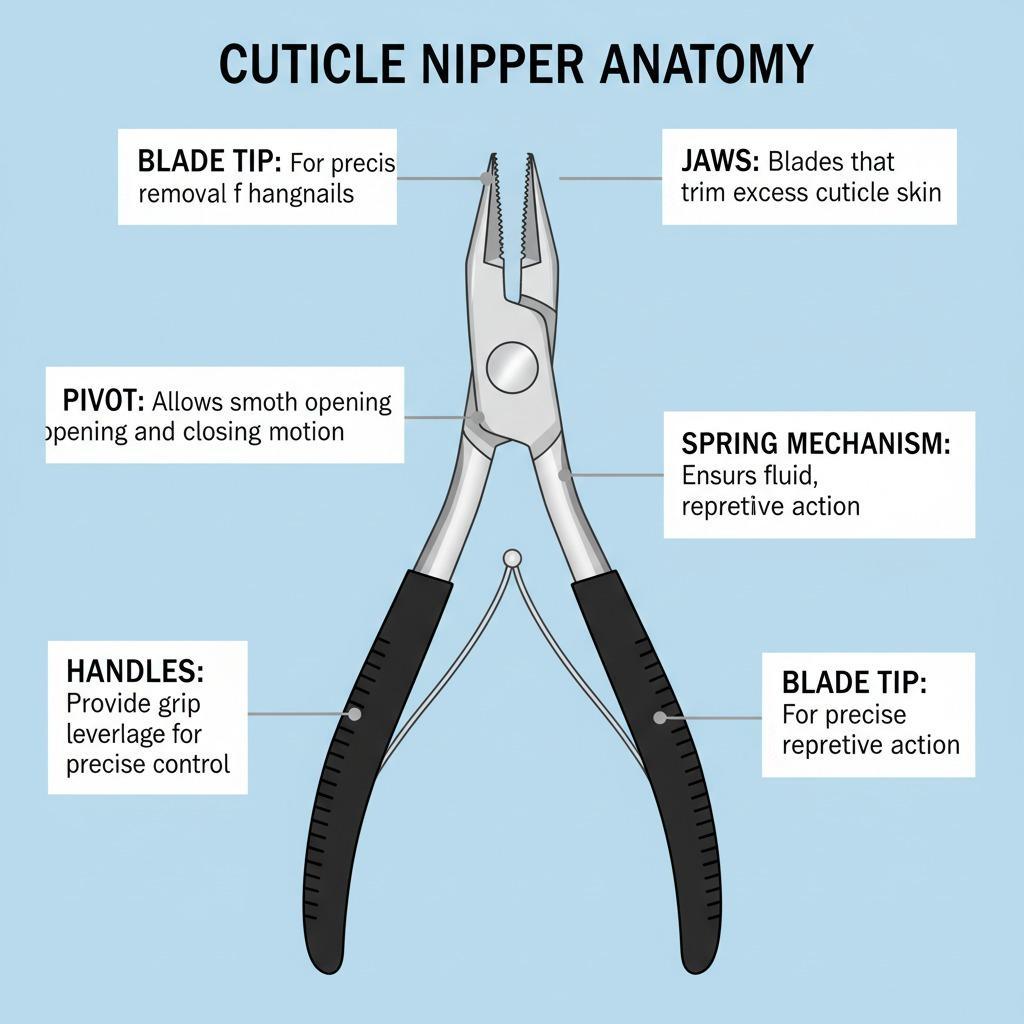
A cuticle nipper also includes handles, a pivot, a spring or return mechanism, and angled blades. All of these parts matter, but the jaw size strongly influences control. If the jaw is too large for the area being trimmed, the user may need to turn the tool awkwardly or cut too much at once. If it is too small for broad cleanup work, the service may take longer and require more repeated cuts.
In the supplied Olimor Beauty product context, jaw sizes are described from compact 3 mm options for intricate work to wider 8 mm options for broader areas. That range covers the needs of many manicure users, but choosing between them should be based on the job, the user’s experience level, and the type of cuticle work being performed.
How Smaller and Wider Jaws Perform in Real Use
Smaller jaws are valued for visibility and precision. They allow careful trimming near sidewalls, corners, and tight areas around the nail bed. A compact jaw can be especially helpful when the user wants to remove only a small loose edge rather than cut a continuous strip. This is why many detailed manicure tasks are easier with a smaller cutting surface.
Wider jaws are useful when there is more loose, softened cuticle tissue to remove. They can make fewer cuts across a wider area, which may improve efficiency for experienced users. However, a wider jaw also requires more judgment. Because it covers more skin at once, it is less forgiving if the tool is positioned incorrectly or if the user applies too much pressure.
The right jaw size is not only about professional versus home use. Some professionals keep multiple sizes because no single nipper is ideal for every client. A home user may prefer one middle or smaller size that feels predictable. A salon buyer may stock several jaw sizes so technicians can choose according to the service and their working style.
Quick Comparison of Common Jaw-Size Choices
The table below gives a practical way to compare jaw-size decisions. Exact handling will still depend on blade sharpness, pivot smoothness, handle comfort, and user skill.
| Jaw-size choice | Best suited for | Main advantage | Buyer caution |
|---|---|---|---|
| Compact jaw, such as 3 mm | Detailed cuticle work, sidewalls, tight nail corners | High visibility and controlled trimming | May be slower on broader cleanup areas |
| Mid-range jaw | General manicure use and mixed skill levels | Balances control and coverage | Still requires good blade alignment and comfort |
| Wider jaw, such as 8 mm | Broader loose cuticle areas and experienced handling | Efficient cutting over a larger area | Can remove too much if used carelessly |
Choosing a Jaw Size by User and Service Type
For professional nail technicians, the best nipper is often the one that reduces hand fatigue while keeping cuts predictable. A smaller jaw may be selected for detail work at the end of a manicure, while a wider jaw may be used when there is enough softened, loose cuticle to remove safely. Professionals should also consider how often the tool will be cleaned, disinfected, and used throughout the day, because comfort and durability matter under repeated use.
For at-home manicure users, precision is usually more important than speed. A smaller or moderate jaw size can help prevent over-cutting, especially for people who do not trim cuticles regularly. Home users should avoid cutting live skin and should work only on visible loose pieces after proper softening and preparation.
For wholesale, retail, or private assortment planning, it helps to think in terms of buyer segments. A basic retail set may focus on a versatile jaw size that most users can handle. A professional tool assortment may include compact and wider jaw choices. If you are comparing nippers for sourcing, you can send an inquiry with your intended market, packaging direction, and preferred tool mix so the discussion stays focused on practical requirements.
Blade Shape, Pivot Feel, and Handle Comfort Matter Too
Jaw size should never be evaluated alone. Two nippers with the same jaw length can perform differently if the blade angle, edge sharpness, pivot tension, or handle shape is different. A clean cut depends on the two cutting edges meeting evenly. If the pivot feels loose or rough, the user may lose control at the exact moment pressure is applied.
Handle design also affects precision. A comfortable grip helps the user make small movements without squeezing too hard. If the handles are slippery or poorly balanced, even a small jaw can feel difficult to control. Stainless steel construction is commonly valued for nail tools because it supports durability and is suitable for repeated cleaning when cared for correctly. Buyers should still review finishing, blade alignment, and packaging protection because these details influence how the tool arrives and performs.
- Check blade closure: the cutting edges should meet cleanly without visible gaps.
- Test the pivot: opening and closing should feel smooth, not loose or gritty.
- Compare visibility: the user should be able to see exactly where the jaw contacts the cuticle.
- Assess handle comfort: the tool should not force the wrist into an awkward angle.
- Match the jaw to the task: choose smaller jaws for detailed trimming and wider jaws for broader, loose cuticle areas.
Safe Technique for Cleaner Cuticle Trimming
A good nipper cannot compensate for rushed technique. Before trimming, the cuticle area should be softened and gently pushed back with an appropriate tool. The nipper should be used only on loose, non-living tissue. Cutting deeply into attached skin can cause pain, bleeding, or infection risk.
Use small, deliberate cuts rather than pulling or tearing. The jaw should close through the tissue cleanly, then release. Avoid dragging the nipper along the nail fold. If a piece does not cut easily, reposition the tool instead of increasing force. With compact jaws, expect to make more small cuts. With wider jaws, take extra care to confirm the entire cutting edge is placed only on tissue intended for removal.
- Clean the hands and prepare the nail area.
- Soften cuticles before trimming.
- Push back gently to identify loose tissue.
- Position the jaw where the loose edge begins.
- Close the nipper smoothly without twisting.
- Stop if the skin feels painful or attached.
- Clean and dry the tool after use.
Maintenance and Storage for Longer Tool Life
Cuticle nippers need consistent care because the cutting edges are fine and the pivot is a moving part. After use, remove visible residue, clean the tool according to the setting’s hygiene requirements, and dry it thoroughly before storage. Moisture left around the pivot or blade can shorten tool life. Even stainless steel tools should not be stored wet or tossed loosely into a drawer where the edges can be damaged.
For salons, tool rotation and inspection are important. A nipper that no longer cuts cleanly may pull the skin, which is uncomfortable and unsafe. For retailers and distributors, packaging should protect the jaw tips during shipping and display. For home users, a protective cap or dedicated pouch helps keep the edges from contacting other metal tools.
Sourcing Questions for Nail Tool Buyers
When selecting cuticle nippers for a product line or professional supply order, focus on verifiable handling and construction points rather than broad claims. Jaw-size assortment is one part of the decision, but buyers should also compare finishing consistency, edge alignment, spring response, surface smoothness, and packaging needs. If a sample review is part of your sourcing process, test each jaw size on realistic manicure tasks, not only by opening and closing the tool in hand.
Useful sourcing questions include whether the assortment should prioritize compact precision sizes, wider professional options, or a balanced range. Consider who will use the tool, how it will be sold, and whether it needs to sit beside other manicure implements in a coordinated set. For support with product selection or nail tool sourcing discussions, you can contact Olimor.
The Practical Takeaway
Cuticle nipper jaw size affects accuracy, visibility, speed, and user confidence. Compact jaws, including 3 mm options, are well suited to detailed trimming and careful home use. Wider jaws, including 8 mm options, can be efficient for broader loose cuticle areas when handled by an experienced user. The best choice is not simply the largest or smallest size; it is the size that matches the service, the user’s control, and the quality of the tool’s blade and pivot.
By comparing jaw size alongside stainless steel construction, ergonomic handling, blade alignment, and maintenance needs, buyers can make more practical decisions for personal nail care, salon use, or product sourcing. A well-chosen cuticle nipper helps create cleaner manicures with less strain and more predictable results.
Tag: