Why Gap Calibration Matters in Eyelash Curler Manufacturing
Gap calibration is one of the least visible but most important details in eyelash curler production. A curler may look polished on the shelf, but its performance depends on how accurately the upper jaw, lower jaw and cushion pad meet when the handles are pressed. If the gap is inconsistent, the tool can apply uneven pressure, miss sections of the lash line, create a weak curl or feel uncomfortable near the eyelid.
For beauty brands, distributors and retailers, understanding gap calibration helps turn eyelash curler sourcing from a visual purchase into a performance-based decision. The goal is not simply to choose a curler that looks appealing; it is to choose one that closes smoothly, distributes pressure evenly and gives the end user predictable control. Olimor Beauty focuses on practical manufacturing details like this because they influence daily usability, repeat purchases and customer confidence.
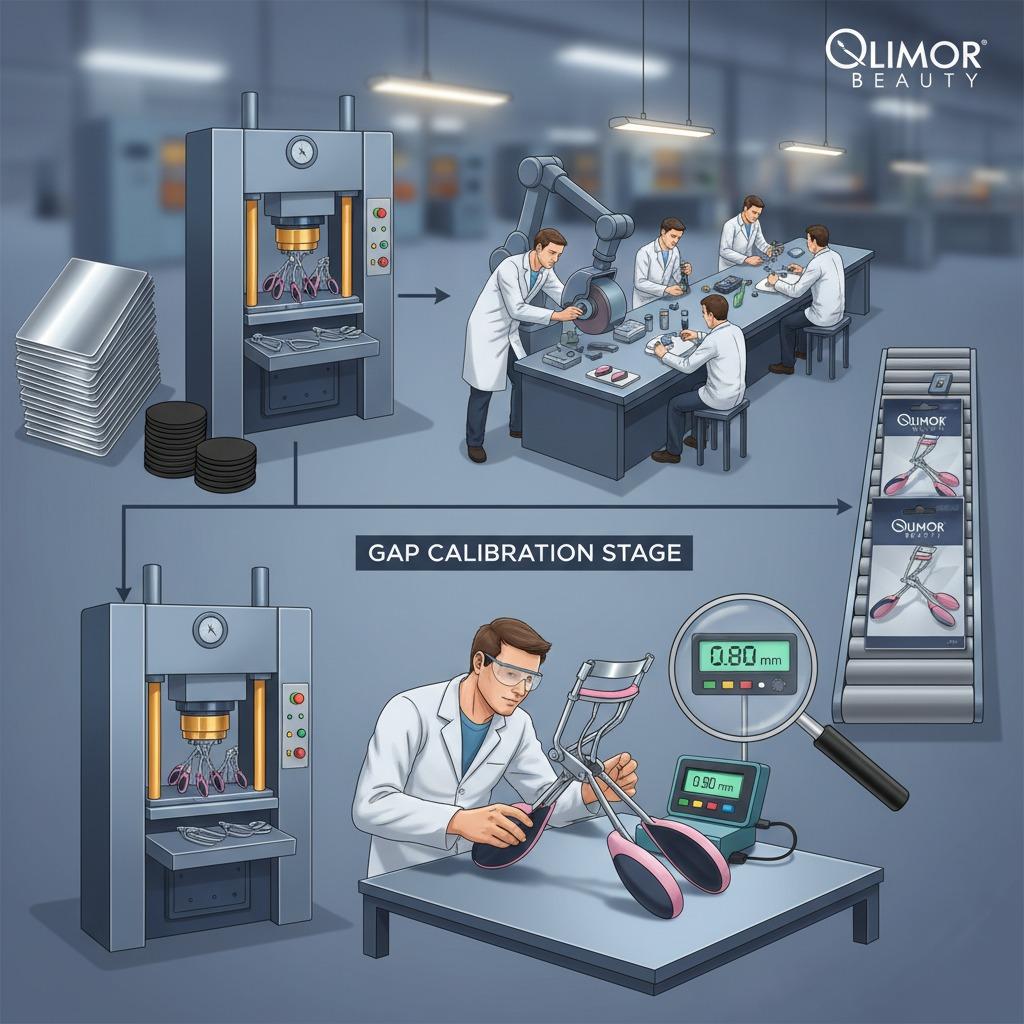
What Gap Calibration Means on an Eyelash Curler
On an eyelash curler, the “gap” refers to the space and alignment relationship between the pressing surfaces when the curler is open, partially closed and fully closed. In practical terms, it is about whether the jaws meet evenly across the full curve of the tool. The cushion pad also matters because it sits between the metal frame and the lashes, controlling how pressure is transferred.
A well-calibrated curler should close without a sudden sideways shift. The upper pressing bar should meet the pad in a controlled way, and the pressure should feel balanced from the inner corner area to the outer corner area. When calibration is poor, one side may close earlier than the other, the center may press too strongly, or a visible skew may appear when the handles are squeezed.
This is why calibration is not a cosmetic step at the end of production. It is connected to forming, assembly, hinge movement and pad fit. Even when the frame uses good materials, the curler can still perform poorly if the closing geometry is not controlled.
Why Jaw Alignment Affects Curl Quality and Comfort
Eyelashes are delicate, and the eyelid area leaves little room for error. A curler with a misaligned gap may pinch, bend lashes unevenly or create a crimped rather than lifted result. Users often blame their technique, mascara or lash type, but the tool itself may be the cause.
Good gap calibration supports three core outcomes. First, it helps the curler capture lashes along the lash line more consistently. Second, it reduces the chance of concentrated pressure points that can feel sharp or uncomfortable. Third, it improves repeatability, so the user can achieve a similar curl each time without excessive squeezing.
For brands, these details affect reviews and returns. A customer may not know the term “gap calibration,” but they will notice if the curler feels unstable, pulls at the lashes or gives different results on each eye. In a competitive category, consistent feel can be as important as packaging or finish.
Where Calibration Fits in the Manufacturing Process
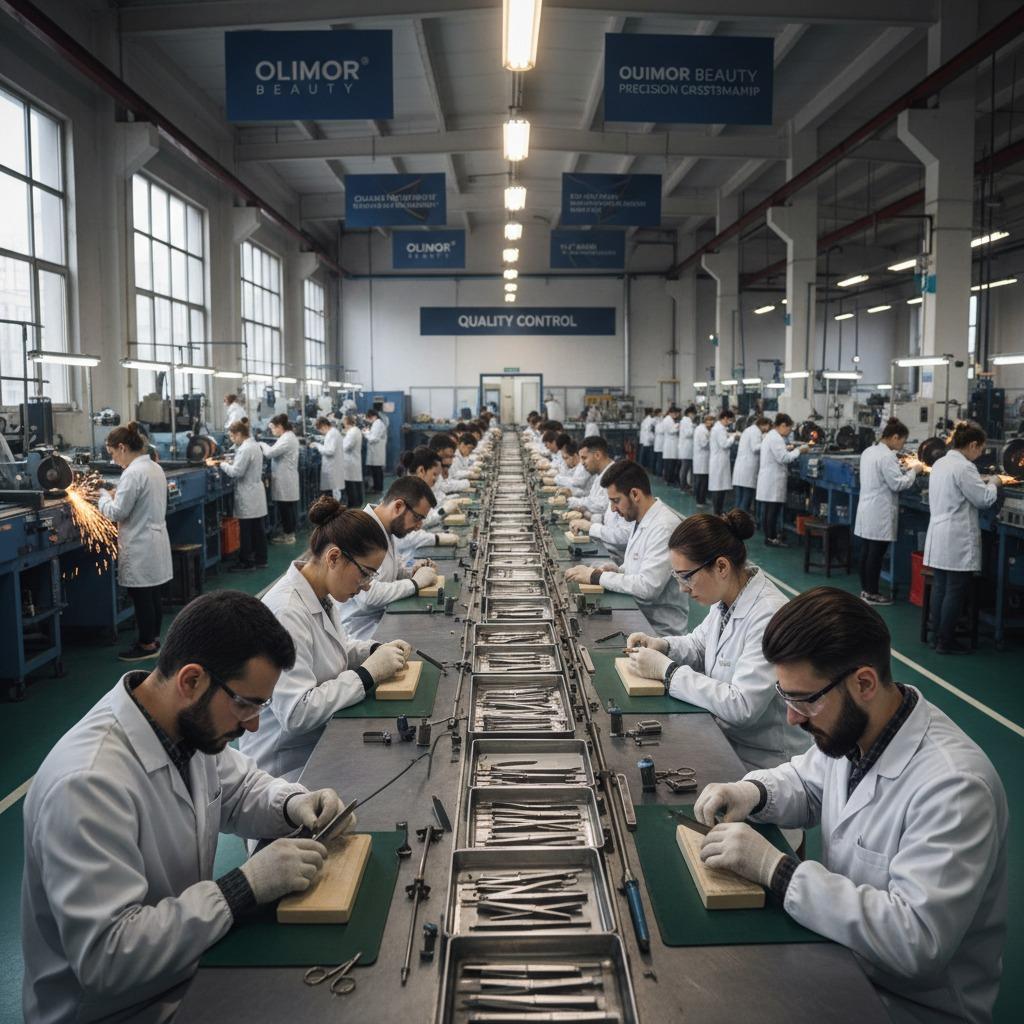
Gap calibration should be considered throughout the eyelash curler manufacturing process, not treated as a quick final correction. The original production sequence begins with material selection, including stainless steel, then moves into shaping and assembly. At each stage, small variations can influence the final closing action.
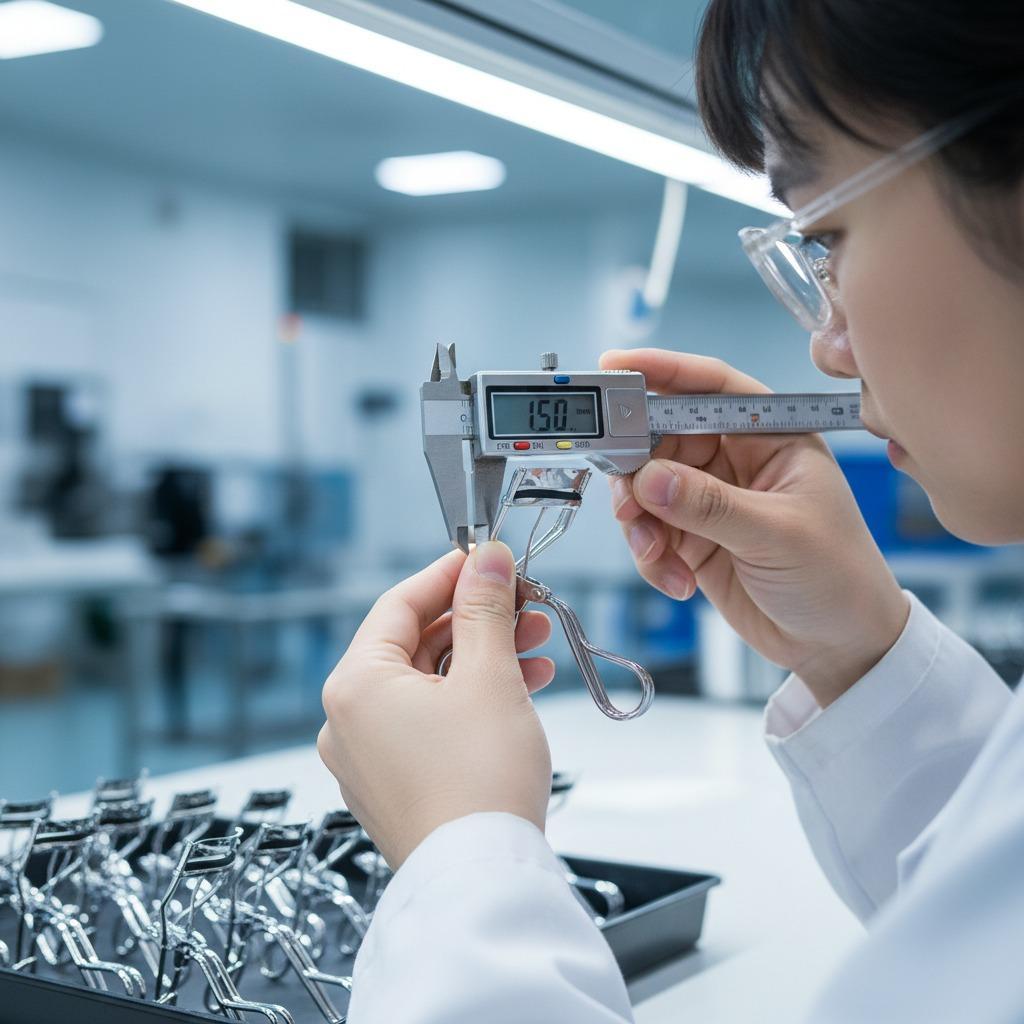
During forming, the frame curve and jaw shape must remain consistent. During assembly, the hinge, handles and pressing bar need to align without creating twist. During pad fitting, the cushion must sit securely and evenly. After assembly, inspection should confirm that the curler closes smoothly and that the contact line is appropriate across the working area.
For buyers comparing eyelash curler options, it is useful to look beyond color, plating and packaging. Ask how the factory checks jaw alignment, whether the pad is evaluated with the frame, and how samples are handled before mass production. If you are exploring broader beauty tool products, this same mindset applies to many tools: performance often depends on small contact points, not only the main material.
Practical Inspection Points for Buyers and Product Teams
A simple hands-on review can reveal many calibration issues before a product reaches customers. The inspection does not need to be complicated, but it should be systematic. Product teams should compare several samples, not only one display piece, because consistency across units matters.
- Check closure symmetry: Hold the curler at eye level and close it slowly. Watch whether one side touches the pad before the other.
- Feel the handle motion: The handles should move smoothly without grinding, looseness or a sudden jump near the closing point.
- Inspect the pad seat: The cushion should sit evenly in its channel. A raised or twisted pad changes the effective gap.
- Look for pressure marks: After repeated test closures, the pad should show even contact rather than one deep mark on a single side.
- Test with care near the lash line: A sample should feel controlled and stable, without forcing the user to squeeze excessively.
- Compare multiple units: Consistency between samples is often more important than the appearance of a single perfect unit.
These checks help buyers separate a visually attractive curler from one that is actually ready for regular consumer use. They also create clearer communication between the brand and the manufacturer because the issue can be described in terms of closure, contact and pad seating instead of vague dissatisfaction.
Common Calibration Problems and What They Mean
The following table summarizes common problems that appear when gap calibration is not controlled. It can be used as a quick reference during sample review or incoming quality checks.
| Observation | Possible cause | Why it matters |
|---|---|---|
| One side closes before the other | Frame twist, hinge variation or uneven assembly | Can create an uneven curl and increase discomfort on one side of the lash line |
| Center presses deeply into the pad | Curve mismatch between upper bar and cushion area | May crimp lashes in the center while leaving outer lashes less curled |
| Pad shifts during closure | Poor pad fit or channel control | Changes pressure distribution and may reduce product life |
| Handles feel loose or unstable | Assembly tolerance issue around hinge or handle connection | Makes the curler harder to control near the eye |
| User must squeeze very hard | Contact geometry, pad hardness or frame movement issue | Can reduce comfort and make the tool feel lower quality |
Maintenance and Use Also Influence the Gap
Manufacturing calibration gives the eyelash curler its baseline performance, but daily use and maintenance can change how the tool feels over time. A curler that is dropped, stored under pressure or used with a worn pad may no longer close as intended. This is why product instructions and replacement guidance are part of the overall quality experience.
Users should keep the pad clean and free of mascara buildup, because residue can harden on the cushion and affect contact. The curler should be stored in a way that avoids bending the frame or compressing the pad for long periods. If the cushion becomes cut, flattened or loose, it should be replaced according to the product’s intended design. A damaged pad can make even a well-calibrated frame feel harsh.
For brands developing an eyelash curler line, consider how easy it is for the customer to understand maintenance. Clear packaging copy or inserts can explain that the pad is a functional component, not just a soft accessory. This reduces misuse and helps protect the performance the manufacturer built into the tool.
Sourcing Questions That Lead to Better Eyelash Curlers
When sourcing eyelash curlers, gap calibration should be part of the product discussion from the first sample stage. Buyers do not need to specify unknown technical numbers if they are not relevant, but they should define the functional result they expect. The most useful questions are tied to measurable or observable outcomes.
- How is jaw alignment checked during assembly and final inspection?
- Are the frame and pad evaluated together as a working system?
- What visual or functional defects cause a sample to be rejected?
- How is consistency confirmed across multiple production units?
- How should the product be packed to avoid pressure or deformation during transport?
- What maintenance guidance should be given to the end user?
These questions help avoid decisions based only on appearance. They also support more productive sample feedback. Instead of saying “the curl is not good,” a buyer can identify whether the issue is side-to-side closure, pad movement, handle stiffness or pressure concentration.
Building a More Reliable Beauty Tool Program
Gap calibration is a small detail with a direct effect on eyelash curler performance. It influences comfort, curl consistency, perceived quality and long-term satisfaction. For product teams, it also provides a practical framework for evaluating samples and setting expectations with manufacturing partners.
Olimor Beauty works with beauty tools where details like alignment, assembly and inspection matter to the final user experience. If you are comparing curler options or planning a custom beauty tool program, explore Olimor product collections or send an inquiry with your project requirements. A strong eyelash curler starts with the parts customers can see, but it earns trust through the precision they feel every time they use it.
Tag: