Professional Beauty Tools for Training Kits and Classrooms
Professional beauty tools used in a classroom are not simply retail grooming accessories. They are teaching instruments. The right kit helps students learn hand position, pressure control, tool sequencing, storage habits and basic workstation discipline before they work with a client. For schools, salons and training programs, the main buying question is practical: will this set make instruction easier, safer and more consistent?
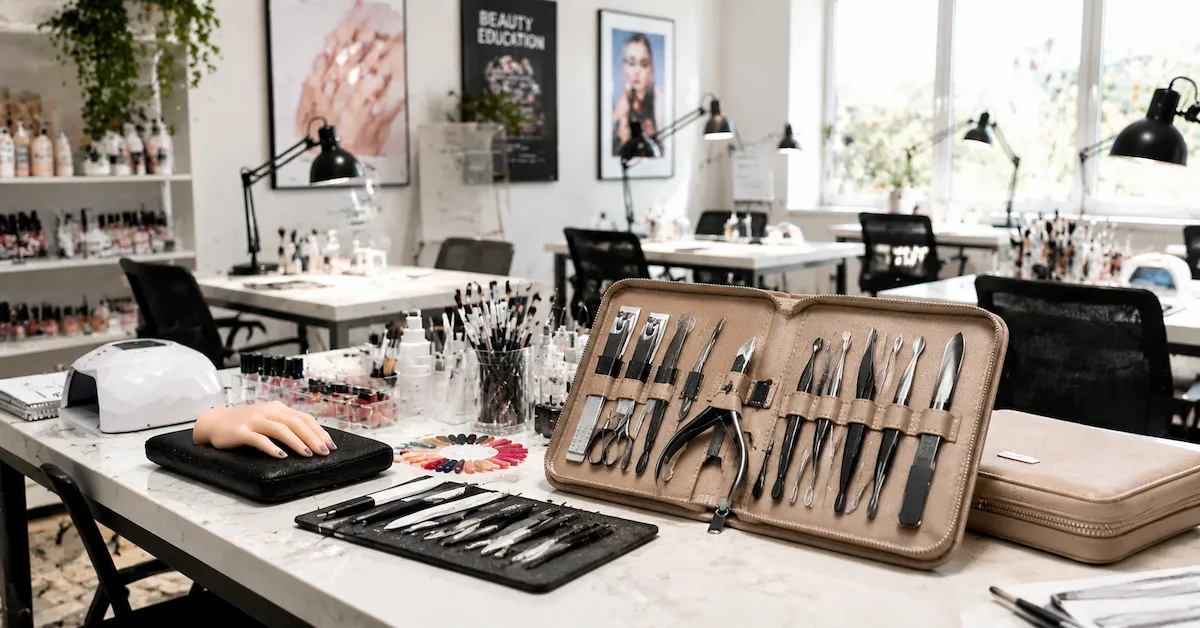
A training-focused kit may include small metal implements, an organized zippered case, a black tool roll or pouch, a mannequin practice hand, nail color swatches and tabletop organizers. That combination supports demonstration, repetition and transport between stations. It also gives instructors a clearer way to check whether tools are present, properly stored and ready for the next exercise.
This guide explains how to evaluate beauty training kits for classrooms, apprentice programs and salon-school environments. It covers tool selection, storage, maintenance, sourcing questions and supplier evaluation without assuming details that should be confirmed directly with the supplier.
What a Professional Beauty Training Kit Is Designed to Do
A professional beauty training kit is designed to support repeatable instruction. In a classroom, tools must be easy to identify, easy to return to their place and suitable for repeated practice. A kit that looks attractive but slows down demonstrations is not a good training asset.
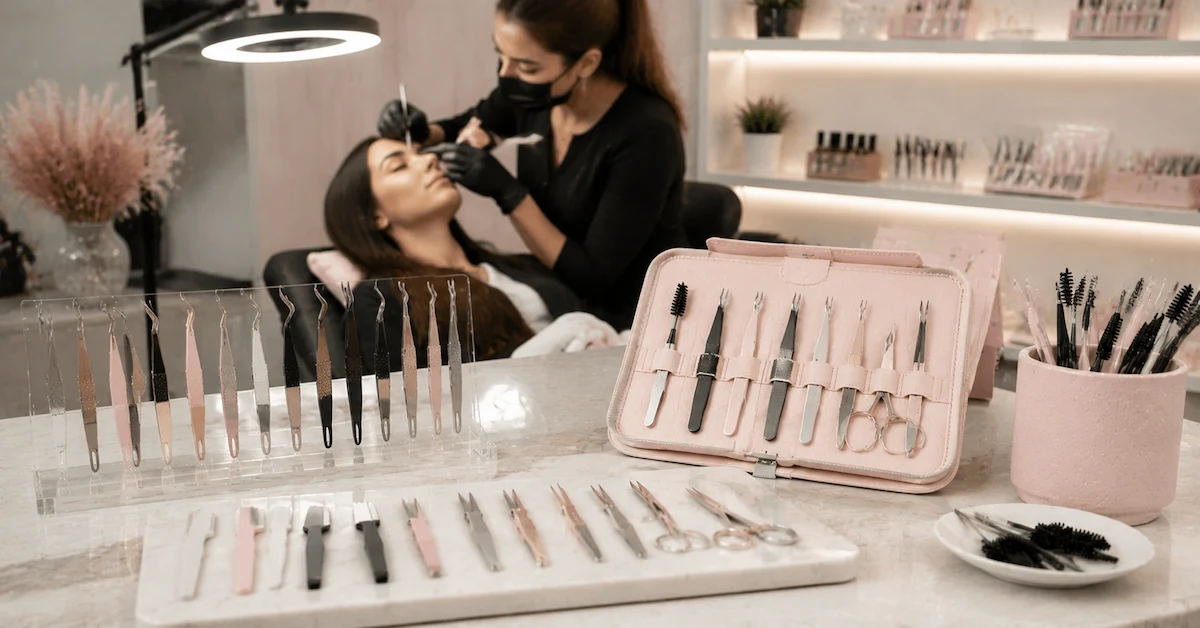
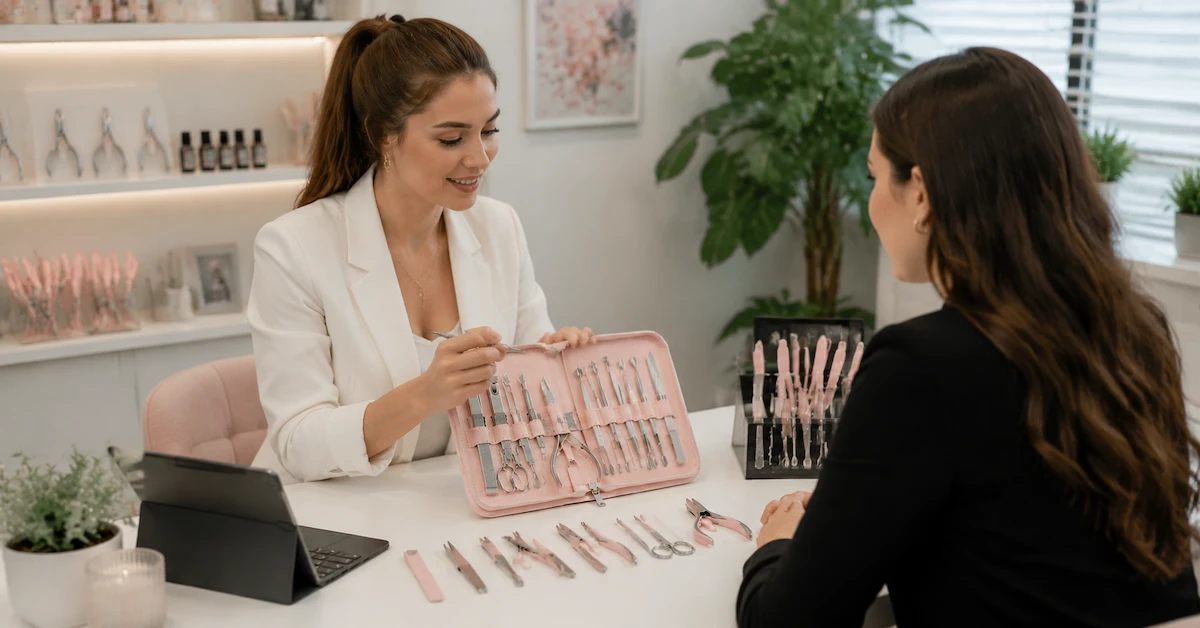
The visible training setup is built around an opened tan or beige zippered case holding multiple small metal tools. Nearby items include a black fabric holder or pouch, a mannequin practice hand, nail color swatches and desktop organizers. This type of setup can support manicure, pedicure, lash, brow or general esthetics exercises depending on the exact tools included.
For buyers, the purpose of the kit should be defined before comparing options. A school may need consistent kits for many students. A salon may need a compact apprentice station. A traveling educator may prioritize portability and secure storage. These use cases overlap, but they do not require the same purchasing decision.
Core Components Buyers Should Evaluate
Training kits are best evaluated by function, not by the number of pieces shown in a photo. A larger assortment is not automatically better if students cannot understand which tool belongs to which task. Buyers should ask whether every component supports the lesson plan.
Organized Case or Tool Roll
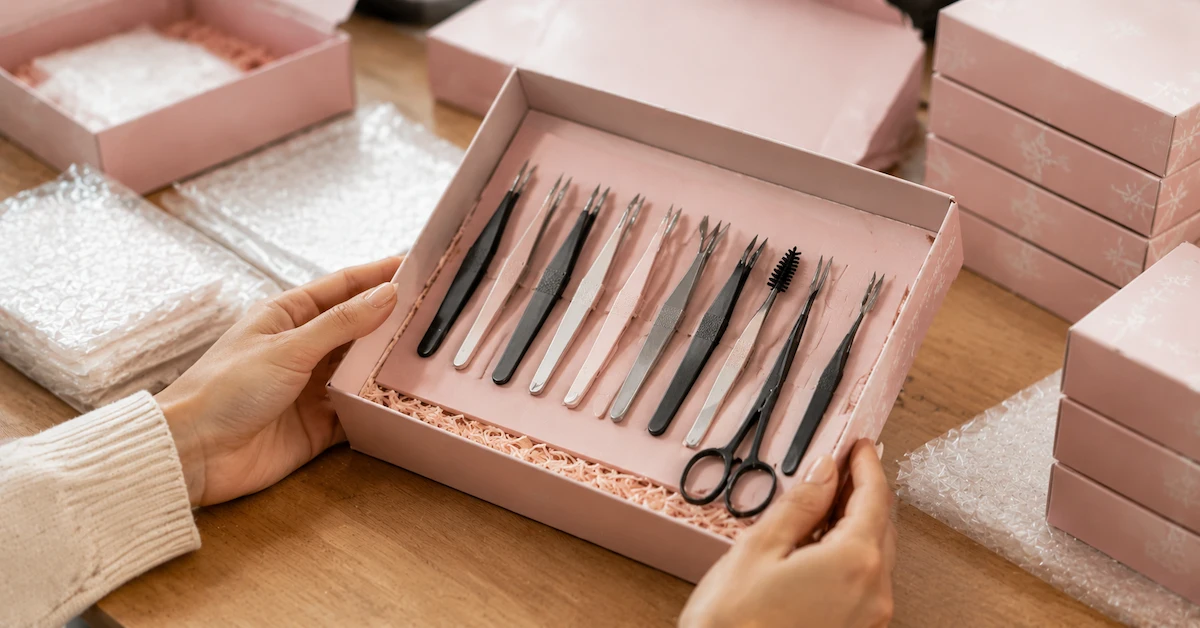
The case appears to open flat and hold tools in dedicated positions. This layout helps students see the full set, reduces searching during demonstrations and makes missing items easier to identify. A tool roll or pouch can also protect smaller implements during transport.
Check the zipper, stitching, slot spacing and how firmly tools are retained. If tools are packed too tightly, students may struggle to remove them. If slots are too loose, tools may shift, fall out or rub against each other during storage.
Small Metal Implements
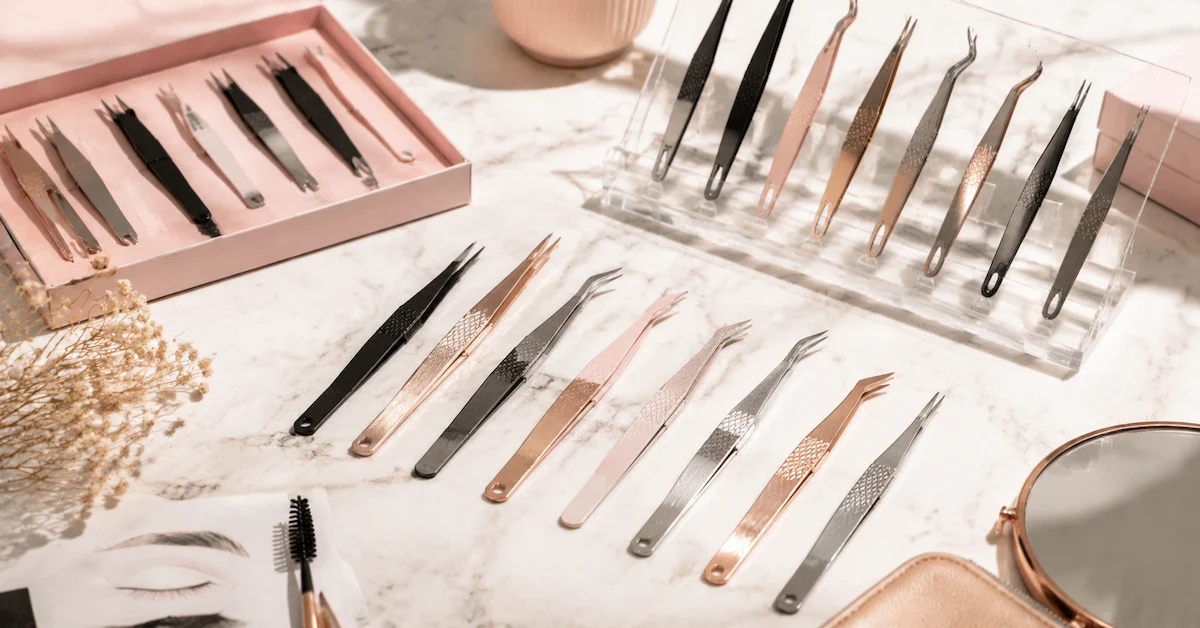
The visible tools appear to include tweezers, nippers, scissors, spatula-like implements and other precision hand tools. These categories are useful for training because they teach students how to select the right implement for each step rather than relying on one all-purpose tool.
Buyers should verify exact materials, finish, edge condition and whether replacement tools are available. The image shows metal tools, but it does not confirm material grade, sterilization compatibility or performance specifications. Those details should come from supplier documentation.
Practice Hand and Demonstration Props
A mannequin practice hand is more than a classroom accessory. It helps students practice grip, angle, pressure and pacing without the stress of working on a live person. Practice props also give instructors a stable teaching surface for corrections.
The exact material of the practice hand should be verified before purchase. In many training environments, practice hands may use vinyl, silicone-like or other synthetic materials, but buyers should not assume material, durability or chemical compatibility without confirmation.
Swatches and Tabletop Organizers
Nail color swatches and organizers help students connect tool handling with workflow planning. Organizers also keep the workstation clearer, which supports better sanitation routines and more professional habits. For classrooms, small improvements in station order can save significant time over repeated lessons.
Comparison: Classroom Kit, Salon Apprentice Kit and Travel Educator Kit
The same professional beauty tools can serve different training settings, but the buying priorities change. Use the comparison below to align the kit with the real use case.
| Use Case | Primary Need | What to Prioritize | Questions to Ask |
|---|---|---|---|
| Beauty school classroom | Consistent instruction across many students | Matched contents, easy inventory, durable storage, clear layout | Will multiple kits have the same tool assortment and storage positions? |
| Salon apprentice station | Practical onboarding for new technicians | Compact setup, professional presentation, tools matched to salon services | Does the kit support the specific techniques the salon teaches? |
| Travel educator kit | Portability between locations | Secure closures, protected tips, lightweight case, fast setup | Can the kit be transported without tools shifting or exposed tips? |
| Esthetics or nail lab | Repeated practice and demonstration | Practice props, workstation organization, cleaning compatibility | Do the tools and storage system fit the lab sanitation procedure? |
How to Inspect Materials and Construction Before Buying
Material and construction details matter because training tools are handled repeatedly by beginners. Drops, incorrect storage and frequent opening and closing are normal in a classroom. A kit must tolerate routine use without becoming difficult to manage.
From the visible setup, the case appears to have a synthetic or leather-like exterior with stitched edges and a zipper. The tools appear to be metal. The black holder looks like fabric or foam, and the trays or organizers appear to be plastic or acrylic. These are common material categories for training environments because they can be lightweight and practical, but visual inspection is not enough for procurement.
Before placing a larger order, inspect a sample or request detailed product information. Check whether the case lies flat on a table. Open and close the zipper several times. Remove and replace each tool. Look at whether the slots maintain shape and whether tips are protected when the kit is closed.
For metal implements, look for visible burrs, uneven edges, loose joints, rough surfaces or inconsistent finish. For tools with cutting or gripping functions, ask how the supplier inspects function before shipment. Do not rely on appearance alone, especially if tools will be used for instruction where consistency from kit to kit matters.
If sanitation is part of your program, confirm cleaning requirements with the supplier and compare them with your own school or salon procedures. Public bodies such as the U.S. Food and Drug Administration and occupational safety regulators may publish relevant guidance depending on the product type and workplace setting. Local cosmetology boards may also have sanitation rules. Always verify current versions, local requirements and supplier documents before approving a kit for training use.
Selection Criteria for Schools, Salons and Procurement Teams
A strong purchasing process starts with the curriculum, not the catalog. List the techniques students must practice, then match the tools to those exercises. If the kit includes items that are not taught, they may add confusion. If it omits tools needed for core lessons, instructors will have to supplement the kit later.
Use this checklist when evaluating professional beauty tools for training:
- Contents list: Confirm exactly which tools, practice props, pouches, swatches and organizers are included.
- Tool purpose: Match every item to a lesson, service step or practice exercise.
- Storage layout: Check whether tools are visible, secure and easy to return to the correct position.
- Consistency: Ask whether multiple kits can be supplied with the same assortment and comparable finish.
- Replacement planning: Confirm whether individual tools or components can be replaced if lost or damaged.
- Cleaning workflow: Verify whether tools and storage materials fit your sanitation process.
- Handling comfort: Test grip, weight balance and ease of removal from the case.
- Inspection documentation: Ask what the supplier checks before dispatch and what product details can be provided.
- Customization needs: Decide whether branding, tool assortment changes or packaging changes are required before requesting a quote.
For a broader view of available beauty tools and kits, buyers can review Olimor product categories at professional beauty tool products. If your program is still defining the ideal mix, browsing the beauty tool collection can help compare different formats before narrowing the specification.
Cost Factors That Affect Beauty Training Kit Purchasing
Price comparisons are useful only when the kits are truly comparable. Two kits may look similar but differ in tool count, case construction, included practice props, packaging, customization and inspection requirements. Procurement teams should compare total value rather than the lowest unit price shown in a quote.
Common cost factors include tool assortment, metal tool finish, case material, packaging, replacement parts, customization requests and order volume. Additional costs may also come from sample evaluation, freight, duties, internal inspection and classroom distribution.
For schools, standardization can reduce hidden costs. If every student receives a similar kit, instructors spend less time explaining variations. Inventory is easier to manage, and replacements are simpler to track. For salons, a smaller but carefully selected kit may be more efficient than a large assortment that includes tools apprentices do not use.
When requesting a quote, ask suppliers to separate what is included in the standard kit from optional accessories. Also ask whether the displayed setup is a complete selling unit or a representative arrangement. This prevents confusion when comparing suppliers and avoids surprises after the purchase order is issued.
Common Problems and How to Prevent Them
Many training-kit problems are preventable if buyers inspect the product as a teaching system rather than as a set of individual items. The first common mistake is overbuying style and underbuying function. A polished case does not compensate for confusing organization or tools that do not match the curriculum.
The second mistake is assuming one kit fits every training module. Nail training, lash practice, brow work and general esthetics may use overlapping tools, but they are not identical workflows. If a program teaches multiple modules, it may be better to create separate tool sets for each module rather than one oversized kit.
The third mistake is ignoring replacement. In student environments, tools can be dropped, misplaced or damaged. A good kit layout makes missing tools obvious, but the purchasing plan should also cover how replacements will be sourced.
The fourth mistake is not testing the storage system. Cases, pouches and slots often fail before the tools themselves. If the zipper catches, the case does not lie flat or the slots loosen quickly, students will stop using the system properly. That creates clutter and weakens the teaching value of the kit.
Supplier Evaluation for B2B Buyers
Supplier evaluation should focus on clarity, consistency and responsiveness. A reliable supplier should be able to explain what is included, what can be changed and what should be verified before purchase. They should not force buyers to guess from photos.
Ask for product specifications, sample availability, packaging details and customization options if those matter to your program. If you need multiple kits for a classroom, ask how consistency is managed across the order. If the kit will be used with cleaning procedures, request material information and any available supplier guidance, then compare it with your internal sanitation policy and applicable local rules.
For customized orders, define the tool assortment, case color, packaging format and any logo or labeling needs early. Avoid approving a large order until the sample, contents list and packaging presentation are clear. If your team is ready to discuss a project, Olimor can be reached through contact us or by sending a specific request through the product inquiry form.
Maintenance and Classroom Use Tips
Even good professional beauty tools need a simple maintenance routine. In classrooms, maintenance must be easy enough for beginners to follow and clear enough for instructors to audit. The goal is not only to preserve tools, but also to build professional habits.
After each exercise, students should return tools to their assigned positions, separate used items according to the program’s sanitation procedure and report damaged or missing tools immediately. Instructors should periodically check cases for loose slots, zipper issues, exposed tips, bent tools or components that no longer sit securely.
Tool storage should remain dry, orderly and protected from unnecessary impact. Cases should not be overloaded with unrelated items. Practice hands and swatches should be stored separately if they can press against precision tools or distort the layout. These simple habits make the kit more useful over repeated lessons.
FAQ
Can I request samples before ordering beauty training kits?
Sample availability should be confirmed with the supplier. For schools and salon groups, sample review is useful because it allows instructors to test the storage layout, handling and contents before approving a wider rollout.
Is there a minimum order quantity for customized kits?
MOQ depends on the product configuration, packaging and customization request. Buyers should confirm the current requirement directly when submitting an inquiry rather than assuming a fixed quantity.
Can the tool assortment or case be customized?
Customization may be possible depending on the selected tools, case style, packaging and branding requirements. Provide a clear contents list and intended use so the supplier can advise what is practical.
How should buyers verify quality before a bulk order?
Review a sample, inspect the case and tools, confirm the contents list, check replacement options and ask what inspection steps are used before shipment. Any sanitation or regulatory requirements should be verified against current local rules and supplier documents.
What affects lead time for training kits?
Lead time can depend on product availability, order size, customization, packaging and shipping arrangements. Request a current estimate after the final specification is confirmed.
A Practical Next Step for Buyers
The best professional beauty tools for training are the ones that make learning easier and more repeatable. Before buying, place the proposed kit next to the lesson plan. Check whether the tools match the exercises, whether the storage helps students stay organized and whether the practice props support early skill development.
For schools, the goal is consistency across classrooms. For salons, the goal is a focused apprentice setup. For distributors and procurement teams, the goal is a clear specification that can be sourced, inspected and repeated. When a kit supports those goals, it becomes more than a collection of tools; it becomes part of the training system.