Custom Nail Clippers for B2B Beauty Supplies: A Practical Buyer Guide
For beauty retailers, salon groups, distributors and private label buyers, nail clippers are small products with a large influence on customer trust. A clipper that cuts cleanly, feels stable in the hand and arrives consistently finished can support repeat sales. A poor clipper can lead to nail splitting, returns and complaints that are difficult to correct after products are already on the shelf.
Olimor Beauty supplies B2B beauty tools for buyers who need practical grooming products rather than generic accessories. This guide focuses on custom nail clippers and related beauty supplies, explaining what to evaluate before placing a bulk order, how to compare construction details, and which questions help clarify whether a product fits your retail, salon or promotional channel.
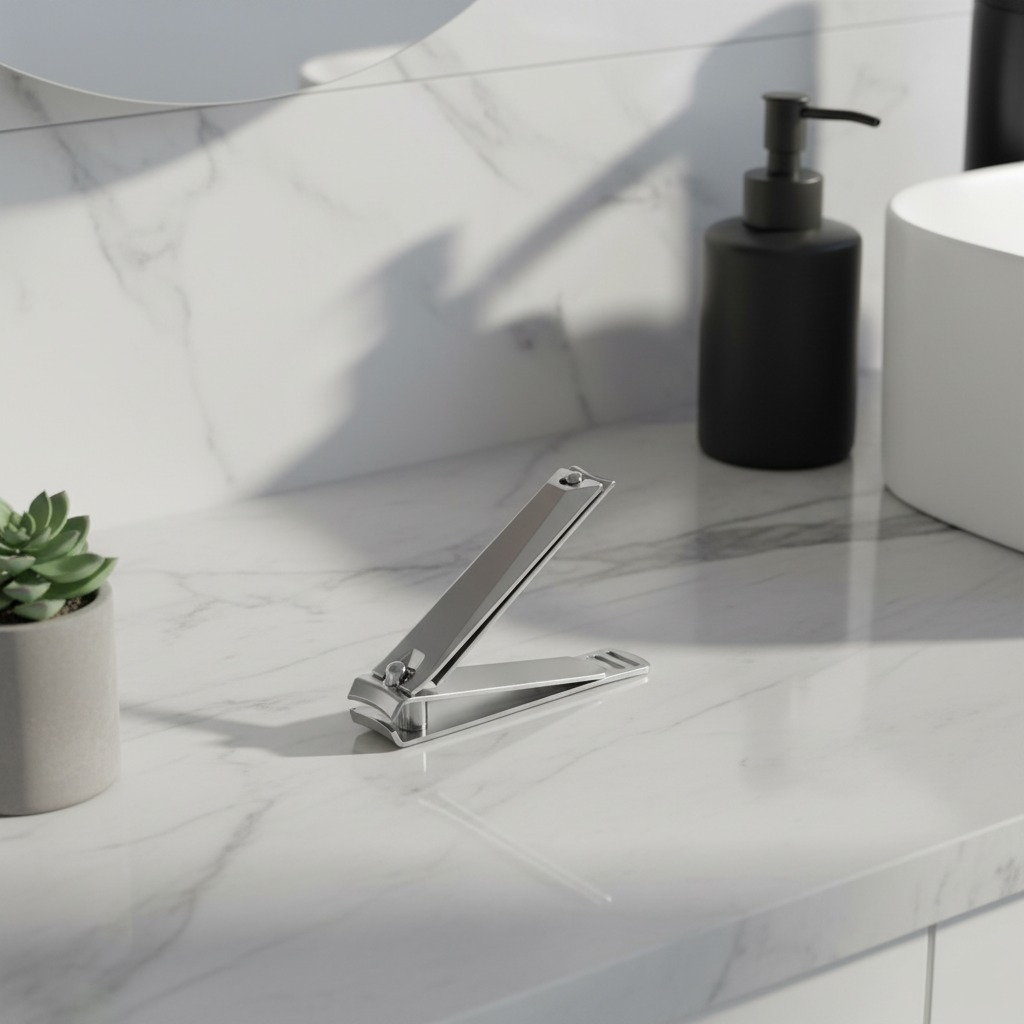
Why Nail Clippers Matter in a B2B Beauty Assortment
Nail clippers are often treated as basic grooming tools, but in B2B buying they serve several important roles. They can be sold as individual retail items, added to manicure and pedicure kits, used in salon back bars, packed into travel grooming sets, or included in gift and promotional programs. Because the tool is familiar to almost every consumer, buyers must focus on execution: cutting performance, durability, finish and packaging.
A reliable nail clipper can also create a lower-risk entry point for a beauty tools assortment. Compared with trend-led cosmetic items, clippers are practical, compact and easy to merchandise. They do not depend on shades, fragrance preferences or seasonal color changes. This makes them useful for drugstores, supermarkets, beauty chains, hotel amenities, travel retailers and e-commerce sellers that want a stable grooming category.
When reviewing beauty tool products, consider how the clipper will be positioned. A salon may need a simple, washable, easy-to-handle tool. A retailer may need a polished item with attractive hanging packaging. A travel kit supplier may prioritize compact size and a built-in nail file. The same general product category can require different construction and presentation choices depending on the sales channel.
Key Features to Evaluate in a Custom Nail Clipper
The original appeal of a custom nail clipper is not only the option to change appearance. Customization should help the buyer match the product to user needs, price positioning and packaging format. Before discussing branding or finish, start with the functional details that determine whether the tool performs well in daily use.
- Blade alignment: The upper and lower blades should meet evenly. Misalignment can crush the nail or leave rough edges instead of producing a clean cut.
- Cutting edge sharpness: A sharp edge reduces pressure during cutting and helps lower the risk of nail splitting. It is especially important for toenail clippers, where the nail is usually thicker.
- Material choice: The supplied article identifies premium stainless steel as a key feature. For B2B sourcing, confirm that the chosen material suits the expected finish, corrosion resistance needs and target price.
- Lever feel: The lever should move smoothly and provide enough leverage without feeling loose. A stable lever helps both professionals and home users cut with control.
- Ergonomic grip: A comfortable grip is useful for repeated salon use and for consumers who prefer a more secure hold.
- Built-in nail file: A file can add convenience for at-home and travel use, but its surface, placement and durability should be checked during sampling.
- Compact format: Smaller clippers can fit travel kits and impulse retail packaging, while larger shapes may be better for toenails or professional use.
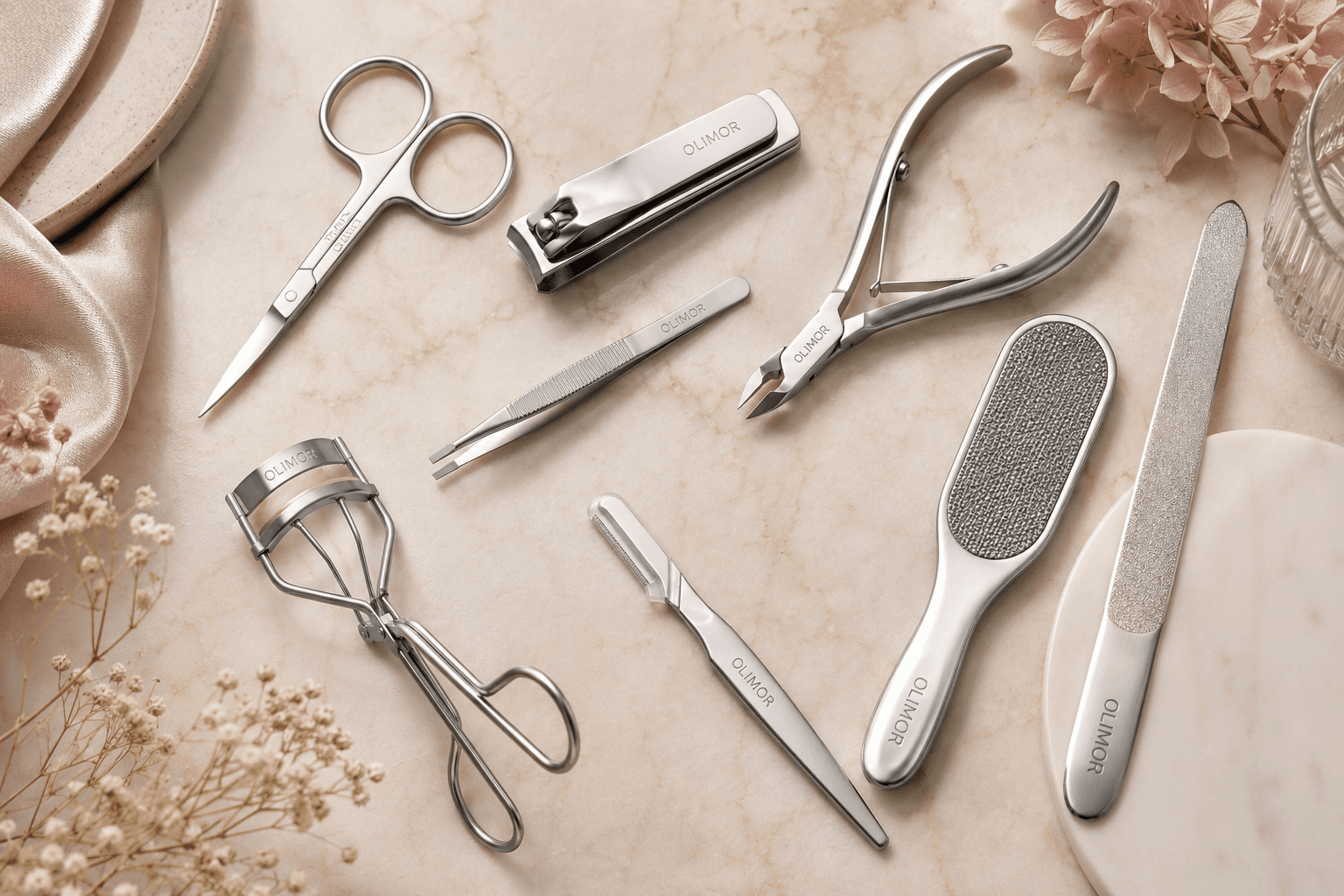
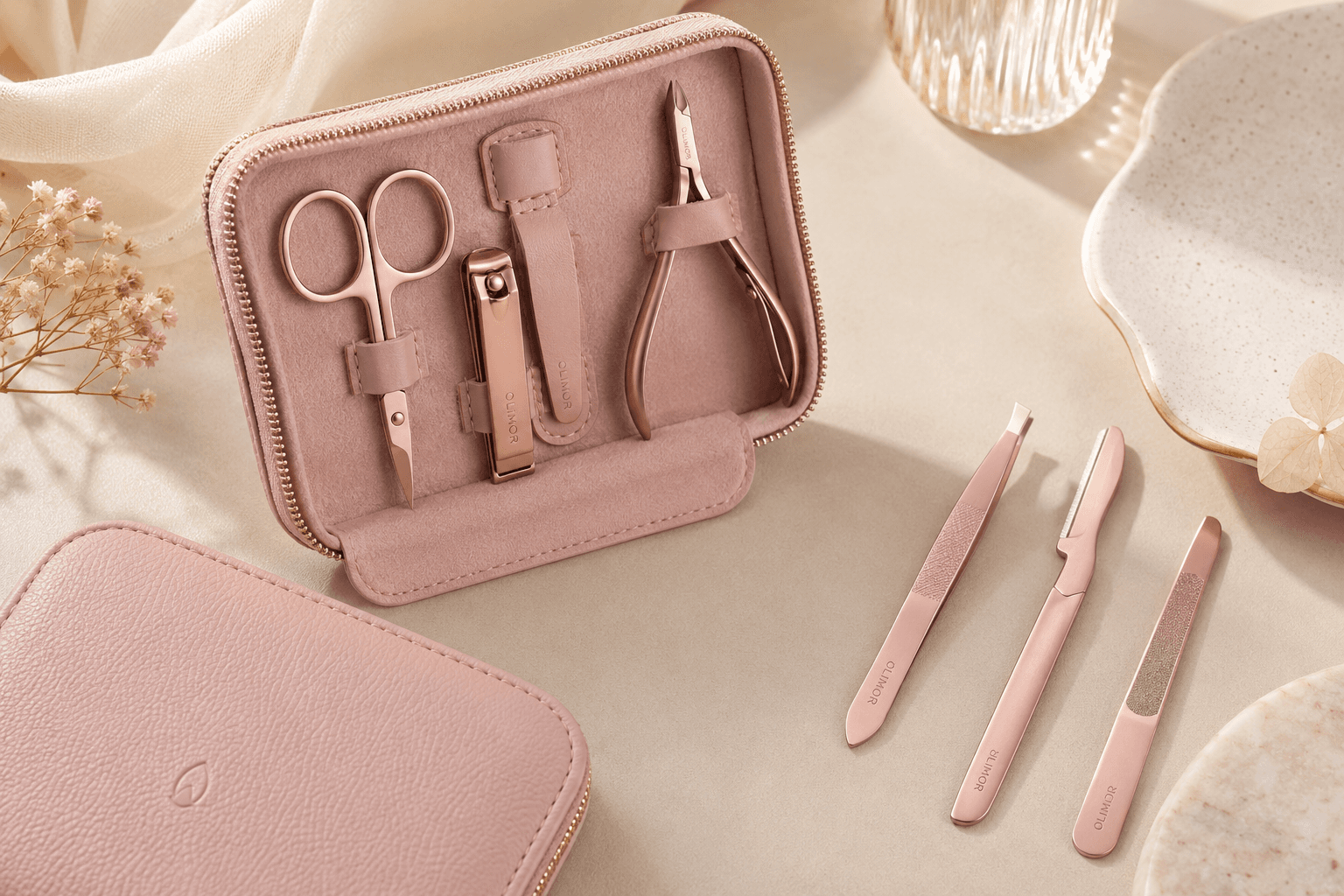
For buyers building a multi-item grooming range, it is helpful to test nail clippers together with tweezers, scissors, files and other manicure tools. This shows whether the assortment feels consistent in weight, finish and quality level. You can also review Olimor product collections when comparing how grooming tools may be grouped for different selling scenarios.
Matching Clipper Design to Retail, Salon and Kit Use
A custom nail clipper should be specified around its use case. A single universal design may not satisfy every buyer, particularly when the product needs to fit a fixed package size or retail price point. Clarifying the use case early helps avoid unnecessary revisions later.
| Use case | Buyer priority | Design considerations |
|---|---|---|
| Retail peg display | Visual appeal and clear function | Clean finish, compact packaging, easy-to-read product claims and visible tool shape |
| Salon supply | Repeated handling and reliable cuts | Comfortable grip, stable lever, simple cleaning and consistent blade alignment |
| Travel grooming kit | Space-saving convenience | Compact size, integrated nail file and secure placement inside the kit |
| Private label program | Brand consistency | Logo placement, surface finish, packaging artwork and quality checks across batches |
| Pedicure-focused set | Cutting thicker nails | Appropriate blade size, leverage and comfortable pressure during use |
This kind of matching is especially important for B2B beauty supplies because the end user may never know the factory behind the product. They will judge the retailer or salon brand printed on the package. That means the supplier decision affects not only procurement cost but also brand reputation.
Quality Control Points Before Bulk Ordering
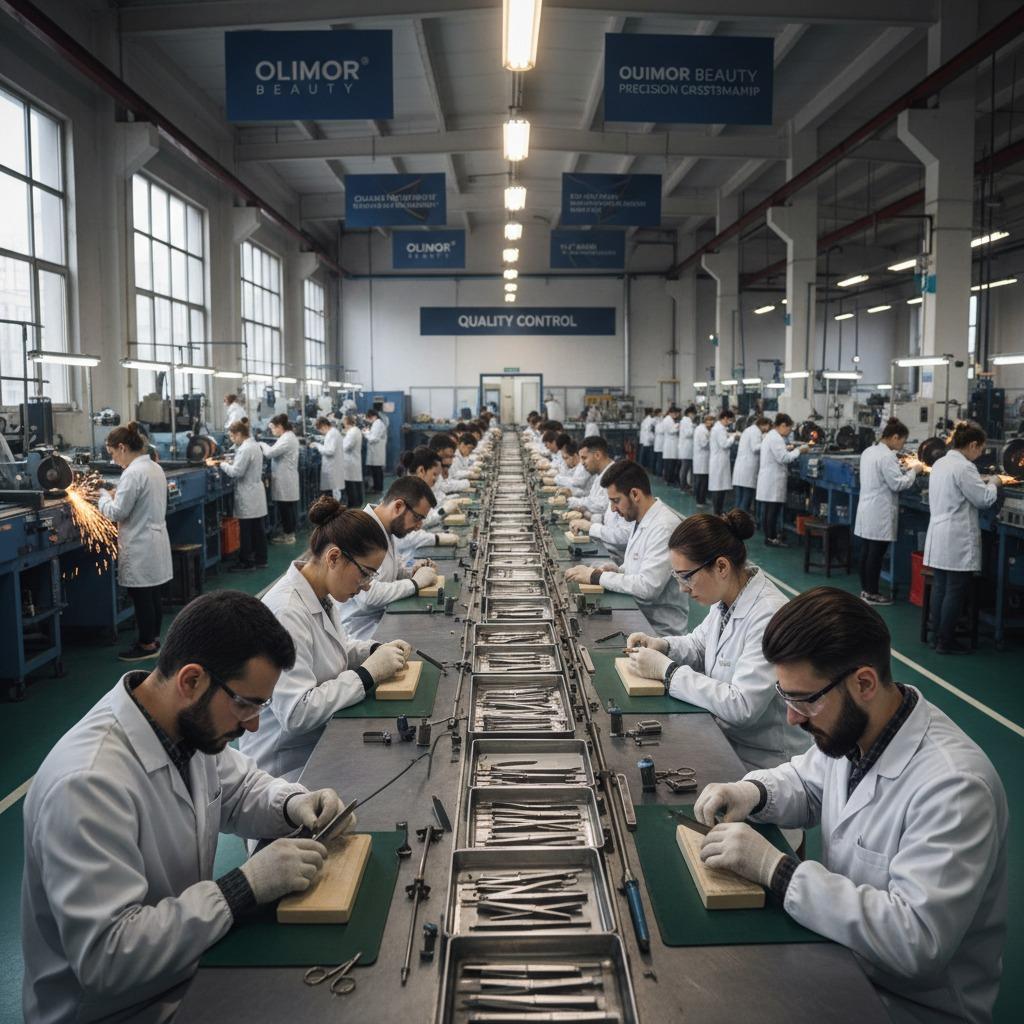
Olimor Beauty emphasizes internal inspections and quality assurance protocols for its nail clipper supply. For buyers, quality control should be discussed in practical terms that can be checked on samples and production goods. Instead of relying only on broad descriptions, create a checklist that reflects how the product will be used.
- Check sample cutting performance. Test the clipper on fingernail and, when relevant, toenail applications. The cut should be clean without requiring excessive force.
- Inspect blade closure. Hold the clipper against the light to see whether the blades meet evenly. Uneven contact is a warning sign.
- Review surface finish. Look for scratches, rough edges, sharp corners outside the cutting area, discoloration or inconsistent polishing.
- Test lever movement. Open and close the lever several times. The motion should feel stable, not loose or gritty.
- Evaluate the nail file. If a built-in file is included, check whether it is practical to access and whether it adds real value for the intended package.
- Confirm packaging protection. The clipper should not move excessively in the pack or arrive scratched after transit handling.
- Define acceptable inspection standards. Agree on how visible defects, cutting issues and packaging problems will be classified before mass production is completed.
These steps are useful whether you are buying for a national retail program or a smaller salon supply order. They also make communication more objective. A phrase such as “good quality” can mean different things to different teams; a defined inspection checklist is easier to confirm and repeat.
Customization Choices That Actually Affect Sales
Customization should support both product function and market positioning. Many buyers begin with logo placement, but there are several other choices that can influence how the nail clipper performs on shelf and in the customer’s hand.
Finish is one of the first decisions. A highly polished surface may look clean and premium, while a satin or matte impression may better suit a practical salon tool. The right option depends on your brand direction and how easily the finish can be maintained through packing, shipping and everyday use. Handle shape is another practical detail. A clipper intended for frequent use benefits from a grip that feels secure, especially when hands are wet or when the user is cutting thicker nails.
Packaging is equally important for B2B beauty supplies. Retailers need space-efficient packaging with clear information. E-commerce sellers may care more about protection during parcel delivery. Salon suppliers may prefer simple packaging that reduces waste and is easy to store. If the nail clipper will be included in a kit, the dimensions and fixing method should be reviewed alongside the rest of the items.
Branding should remain readable and durable, but it should not interfere with handling. For private label buyers, the best result usually comes from aligning the tool finish, logo treatment and packaging artwork rather than treating each part separately. When you are ready to discuss a specific sourcing project, you can send an inquiry with your target channel, quantity plan, packaging expectations and any reference samples you are using for comparison.
How to Choose a Reliable Nail Clipper Supplier
A reliable nail clipper supplier should do more than accept an order. The supplier should help you clarify the product specification, prepare samples that match the intended use, and keep quality expectations consistent from raw material selection to final packaging. The supplied information highlights Olimor Beauty’s focus on ergonomic designs, durable materials, internal inspections and bulk order support, which are all relevant factors for B2B buyers.
During supplier evaluation, look for clear communication around what can be customized, which details are fixed by the existing tool structure, and how defects are handled. It is also useful to compare sample pieces from the same proposed specification rather than judging only one perfect display sample. Consistency is often more important than one impressive unit.
A good sourcing discussion should cover the end market, not just the item name. For example, “custom made nail clipper” is a starting point, but the supplier also needs to know whether the product is for salon use, travel kits, retail shelves or a promotional set. Each channel changes the priorities for size, packaging, finish and inspection.
Maintenance and Use Guidance for Better Customer Experience
B2B buyers can reduce complaints by including simple care and use guidance on packaging or inserts. Nail clippers should be kept dry after use, stored away from heavy impact, and cleaned appropriately according to the user environment. Consumers should avoid using a fingernail clipper on nails that are too thick for the tool, because excessive force can damage the nail or the clipper.
For salons, basic handling procedures are even more important. Tools should be managed according to the salon’s hygiene process and local operating requirements. Even a well-made clipper depends on proper storage and cleaning to maintain its cutting feel over time. If your business sells to professional users, consider whether your packaging or product page should include straightforward maintenance language.
Build a More Dependable Beauty Tools Program
Custom nail clippers are practical B2B beauty supplies when they are selected with care. The strongest programs begin with clear use cases, then define blade alignment, cutting feel, ergonomic grip, material expectations, packaging and inspection standards. By focusing on these details before production, buyers can create grooming tools that are easier to sell and more dependable for end users.
Olimor Beauty works with businesses looking for nail clippers and related grooming tools for retail, salon and kit applications. To compare options or discuss a custom supply plan, contact Olimor with your market, preferred product format and packaging goals.
Tag: