

Why buyers care about the right OEM beauty tools manufacturer
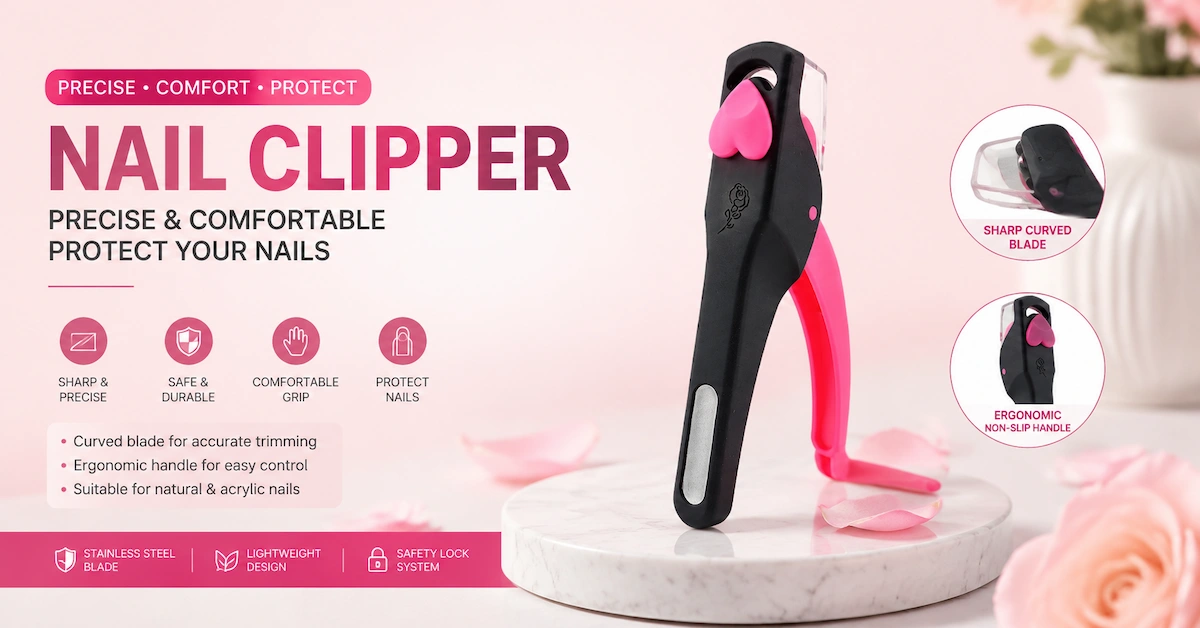
Choosing an OEM beauty tools manufacturer is rarely just about getting a product made. For sourcing teams, salon brands, and private-label retailers, the real question is whether the factory can turn a small grooming item into a dependable commercial product that feels comfortable in the hand and holds up in use. A nail clipper looks simple on the surface, but buyers know better: the blade geometry, the grip design, the locking mechanism, and even the finish all affect how the tool performs and how customers judge the brand behind it.
That is especially true for everyday items like manicure tools. A user may forgive a decorative package that is a little plain. They will not forgive a clipper that slips, pinches, or leaves a rough edge. If you are comparing a beauty tools supplier or screening a professional beauty tools manufacturer, you are really deciding how much control you want over product feel, material quality, and market positioning.
What this product category tells us
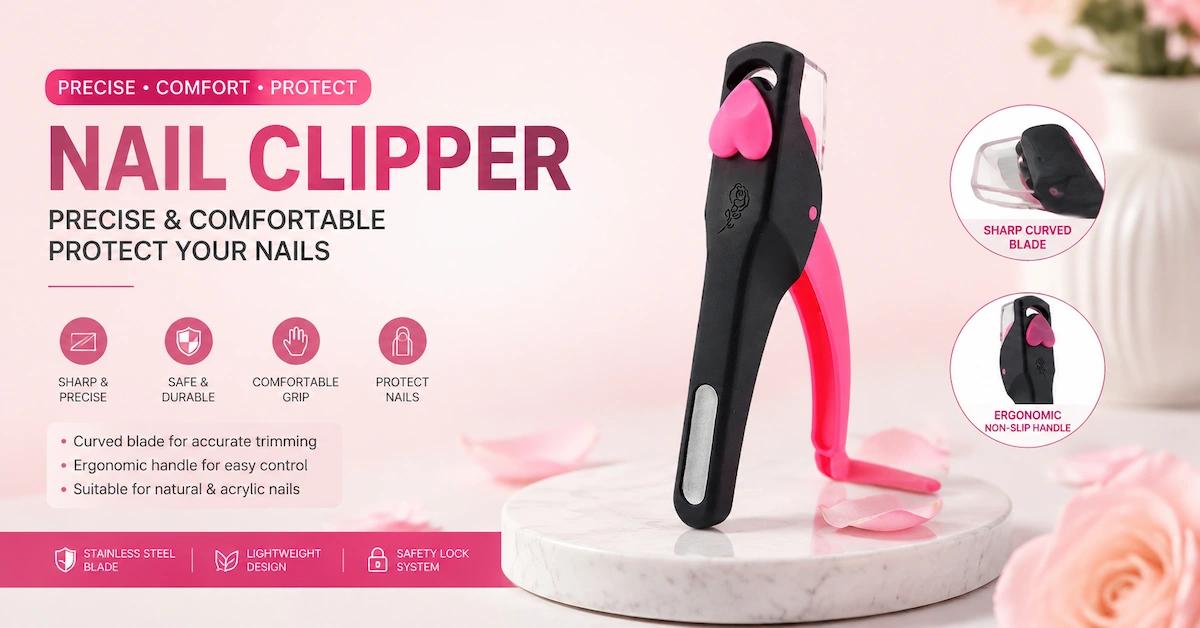
The product data points to a nail clipper with a curved stainless steel blade, an ergonomic non-slip handle, and a safety lock system. That is a useful starting point because it tells buyers the product is not just cosmetic; it is a functional hand tool built around precision. The on-image claims also suggest it is designed for “precise & comfortable” trimming and to “protect your nails,” which is exactly the kind of language private-label buyers use when they want to position a basic grooming product as more premium.
In practical terms, this is the sort of item that can sit in several channels at once: home grooming, travel kits, salon retail shelves, gift sets, and promotional packs. The curved blade is important here. It usually signals a controlled trimming action, which many consumers prefer for fingernails. If the product is also intended for acrylic nails, that should be verified carefully during sourcing rather than assumed from the marketing graphic.
Quick buyer takeaways before you request samples
Before you move into sampling or packaging work, there are a few things worth checking early.
The stainless steel blade should be evaluated for edge quality and consistency, not just the material label. A blade can be stainless steel and still feel dull or uneven.
The grip matters more than many first-time buyers expect. A curved, ergonomic body can improve control, but only if the non-slip area actually performs when hands are slightly damp or when the tool is used repeatedly.
The safety lock is useful for storage and travel, yet the locking action should feel secure without becoming stiff. If a lock is too loose, it becomes a nuisance. If it is too tight, consumers may stop using it properly.
And finally, any claim about suitability for natural nails, acrylic nails, or salon use should be treated as a claim to verify, not a fact to repeat blindly in your listing copy.
What typically separates a basic clipper from a sellable private-label product
A lot of low-cost nail clippers look similar in photos. In the market, though, the differences show up in the hand. Buyers should pay attention to the blade profile, the smoothness of the lever action, the alignment of the cutting edges, and the finish quality around the pivot point. Small defects become obvious fast when a tool is used on a sink counter or in a travel pouch.
For an OEM beauty tools manufacturer, the value is not only in making the metal part. It is in coordinating the full product stack: blade, handle, locking component, finish, packaging, and the branding surface if one is available. That matters because manicure tools are often sold in sets, and a single weak item can downgrade the entire assortment.
The product description suggests a lightweight design. That can be a real selling point for travel and daily grooming, but lightweight should not become flimsy. Buyers sometimes mistake low mass for convenience, then discover that a tool feels unstable in the hand. A better goal is controlled weight distribution, especially in a small cutting tool.
Material and structure: what to look for
The image-based information points to a stainless steel blade and a black-and-pink body, likely molded plastic or coated metal. From a sourcing perspective, that combination is common because it balances function and styling. Stainless steel is the obvious choice for the cutting element, while colored handle components allow the product to stand out in retail channels without overcomplicating the design.
Blade quality
The blade is the heart of the tool. Curved cutting edges are often preferred for nail trimming because they can follow the nail shape more naturally. Still, the curve should be assessed against the target user. A consumer trimming their own fingernails at home may want one feel; a salon buyer may want something else. One practical caution: if the edge is marketed as “sharp,” that should not be confused with aggressive. Excessive bite can make the tool feel less controlled.
Handle and grip
The ergonomic handle is a meaningful feature, not just a styling detail. A non-slip area can help reduce hand fatigue and improve confidence for users with limited hand strength or less experience. This is one reason beauty tools supplier catalogs often highlight grip design in simple grooming products. It is an easy feature to show in photos, but it also has real use value.
Safety lock and storage
The safety lock system matters for retail presentation and consumer convenience. Buyers planning to sell through travel accessories, gift sets, or online marketplaces should treat the lock as a functional requirement. A clipper that opens in a pouch is an annoyance; a clipper that stores closed feels more intentional and premium.
How manufacturers usually approach this kind of product
The likely manufacturing route here is straightforward in principle, though execution still matters. The steel cutting component is generally formed through metal processing steps such as stamping and shaping, while the handle body may be produced through plastic molding or a coated assembly process. Exact methods cannot be confirmed from the available product information, so it is best to ask the factory how the parts are made, assembled, and finished.
For buyers, the question is not whether the process is simple. It is whether the factory can keep the parts aligned and the action consistent from sample to mass production. Small hand tools are unforgiving that way. A tiny shift in alignment can affect the cut.
Selecting an OEM partner: what to ask in the first round
When you evaluate an OEM beauty tools manufacturer, start with the product questions, not the marketing talk.
Ask how they control blade alignment and sharpness consistency.
Ask what handle materials or coatings are available and whether color matching is repeatable.
Ask if they can support logo placement, blister packaging, or gift-box packaging.
Ask what custom options exist for size, lever feel, or surface finish.
If the supplier says yes to everything immediately, slow down. A careful answer is usually more useful than a fast one. In this product category, overpromising is common, especially when buyers are sourcing through intermediaries rather than the factory itself.
Common mistakes buyers make with manicure tools
The first mistake is buying on image alone. A neat product photo can hide poor edge quality or awkward leverage.
The second is assuming all stainless steel blades perform similarly. They do not.
The third is overdesigning a low-price item. A small clipper does not need unnecessary decoration if the target buyer wants a clean utility product. At the same time, it should not look generic if it is meant for retail shelves.
The fourth is ignoring packaging. For beauty tools, the package is part of the product story. A basic clipper in thoughtful packaging can sell better than a better clipper in a forgettable sleeve.
Where this product fits in the market
This type of nail clipper sits in the everyday grooming segment, but it can be positioned in several ways. A mass-market brand may focus on function and price. A salon brand may emphasize comfort and precision. A travel brand may stress the lock and compact form. A private-label buyer can go either direction, but the positioning should be decided early, because it affects finish choices, packaging, and even the wording used on the retail card.
If you are working with a professional beauty tools manufacturer, ask them which of those routes they have actually supported before. Experience with manicure tools is worth more than broad “beauty” capability when the product is this specific.
Practical buyer advice before launch
Request samples from more than one source if possible, then compare them side by side under normal use, not just under studio lighting. Open and close the clipper several times. Try it with dry hands and, if appropriate for your test plan, with slightly damp hands. Check whether the lock remains stable after handling. If your packaging includes a hanging card or travel pouch, test the full retail presentation, not only the bare tool.
For sourcing teams, the best decision is usually the one that reduces complaints later. A well-made nail clipper is not glamorous, but it is the kind of product people notice only when it disappoints them. That makes quality control especially important.
FAQ for buyers
Is this only for home use?
The available product information suggests home grooming, travel kits, and salon-adjacent use, but any professional claim should be verified with the supplier.
Can it be marketed for acrylic nails?
The image text appears to suggest that, but buyers should confirm actual performance before using that claim in sales material.
What is the strongest selling point here?
The combination of stainless steel blade, curved cutting edge, ergonomic grip, and safety lock gives the product a practical value story.
What should I request from the factory?
Samples, finish options, packaging options, and clear confirmation of materials and assembly methods. If you are comparing a beauty tools supplier shortlist, those basics will tell you more than a polished brochure.
Next step for sourcing teams
If you are developing a private-label grooming line or refreshing an existing manicure assortment, this is the time to ask for samples and production details. A capable OEM beauty tools manufacturer should be able to explain the build, show you the material options, and tell you where customization is realistic versus where it would add cost without helping the market fit.
For a product like this, the decision is not whether the clipper exists. It is whether it can be turned into a tool customers trust enough to use every day.
Tag:
Related articles
- Beauty Tools Manufacturing
- ODM Beauty Tools Solutions
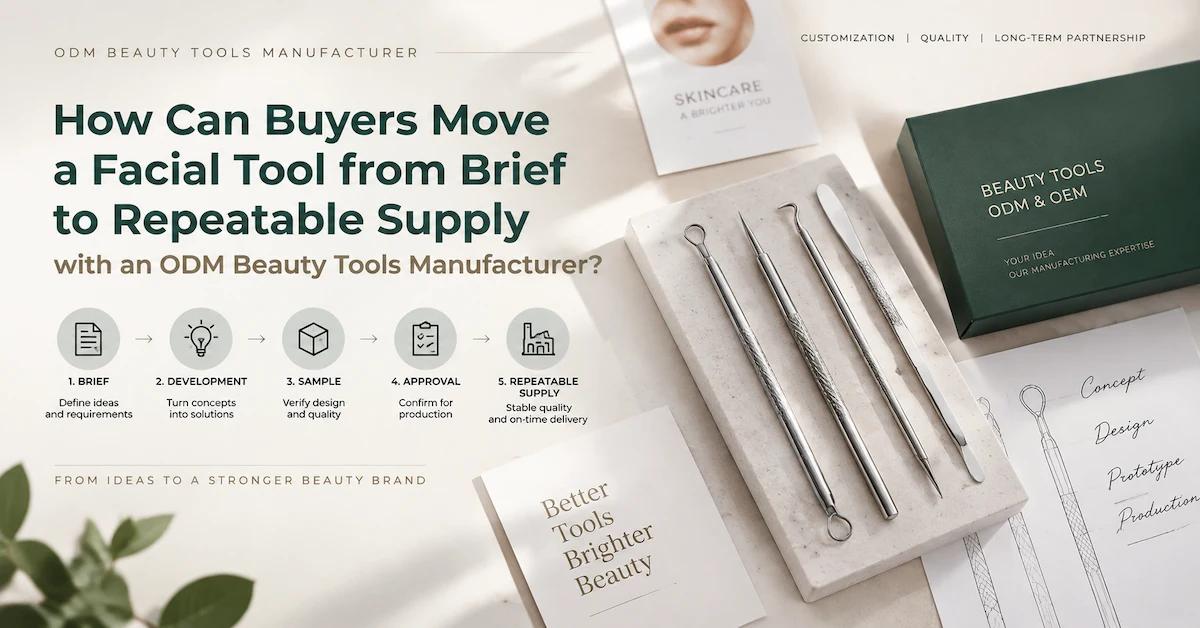
How Can Buyers Move a Facial Tool from Brief to Repeatable Supply with an ODM Beauty Tools Manufacturer?
- Beauty Tools Manufacturing
- OEM & Private Label Solutions
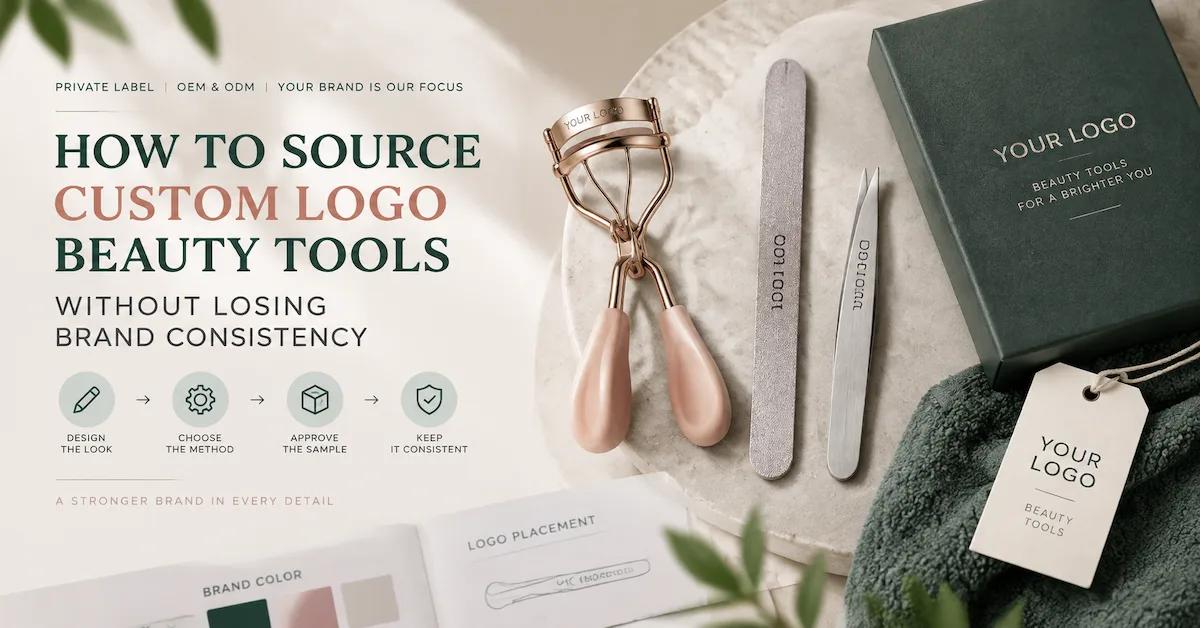
How to Source Custom Logo Beauty Tools Without Losing Brand Consistency
- Beauty Tools Manufacturing
- OEM & Private Label Solutions