

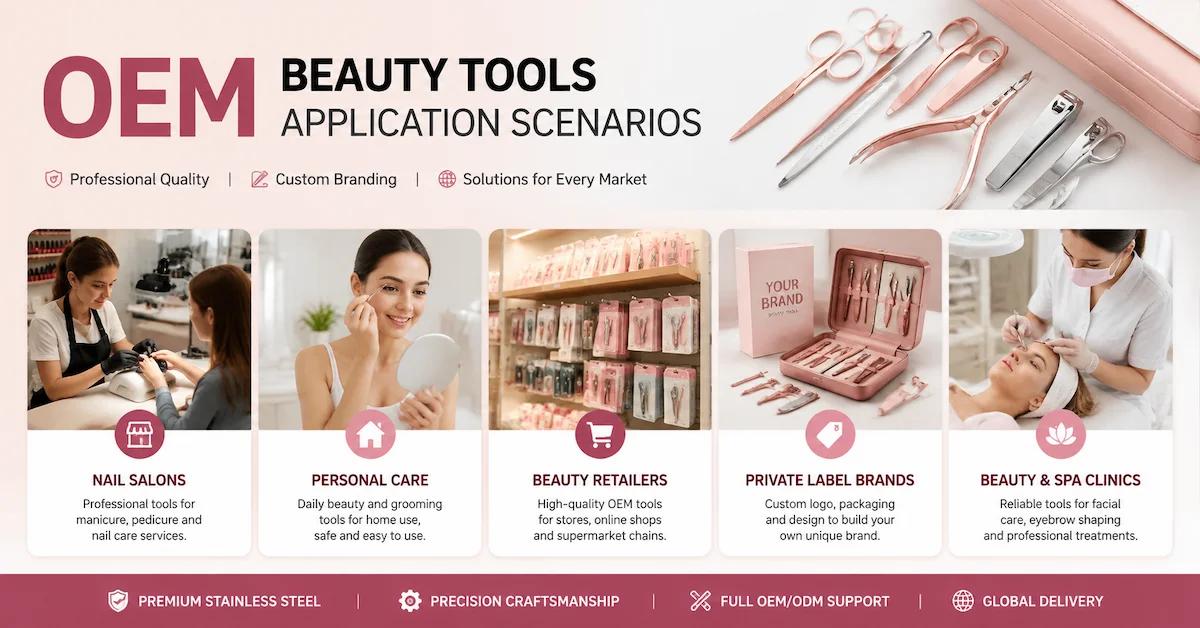
What buyers should look for in an OEM beauty tools manufacturer
If you are sourcing from an OEM beauty tools manufacturer, the real decision is not whether the tools look polished in a catalog. It is whether the factory can deliver consistent metal quality, stable branding, and packaging that fits your channel without creating problems later. That matters whether you are buying for a salon chain, a private-label retail launch, or a broader grooming line that needs manicure, pedicure, or skincare accessories built to spec.
Beauty tools are deceptively simple. A cuticle pusher, a nail spatula, a pair of grooming scissors, or a plier-style implement all seem straightforward until you start comparing edge finishing, handle comfort, corrosion resistance, and how each item sits in a branded case. Small differences show up quickly in returns, complaints, and whether end users trust the product.
This guide is meant to help sourcing managers and product teams decide what to check, what to ask for, and where the usual mistakes appear when ordering makeup tools OEM or skincare tools OEM programs alongside nail-care sets.
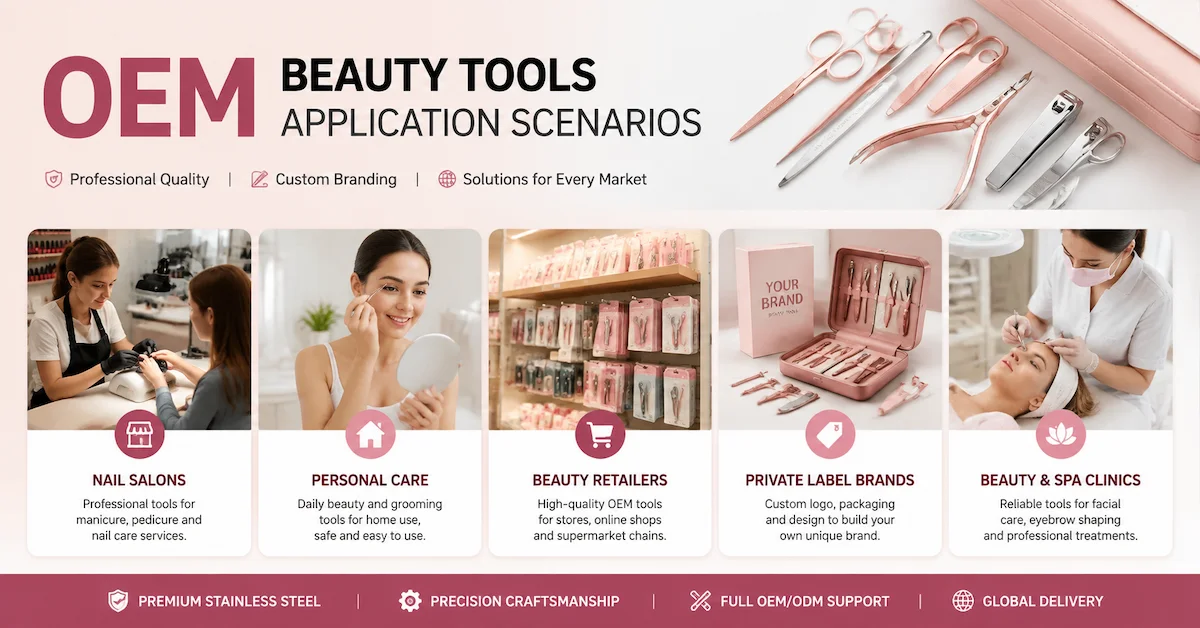
Why beauty tool sourcing deserves more attention than it usually gets
Beauty and grooming tools sit in an awkward middle ground. They are neither low-risk commodity items nor highly complex devices, but they still have to meet practical expectations every time a customer opens the box. A stainless steel tool set may appear generic on paper, yet a weak hinge, rough polish, or flimsy case can turn a private-label launch into a headache.
For brands, the stakes are commercial as much as technical. The same product may need to sell in salons, pharmacies, e-commerce stores, and gift sets. That means the factory has to support different packaging styles, visual branding, and, in many cases, multilingual retail requirements. An OEM beauty tools manufacturer that handles only one narrow format may not be enough if your line needs expansion later.
What a typical manicure and pedicure tool set includes
Based on the product information provided, the category here is a beauty/grooming tools set centered on manicure and pedicure work. The visible items include slim hand tools with spoon-like or spatula-like ends, pointed tips, angled tips, and scissor-like or plier-style implements. That combination is common in nail-preparation kits and personal grooming sets.
In practical terms, these tools are used for cuticle pushing, cuticle cleaning, nail surface prep, and general hand or foot grooming. Some buyers will position them as salon-grade accessories, while others sell the same core set as home-use grooming essentials. The difference is usually less about the tool itself and more about finish quality, packaging, and how the kit is presented.
Materials and finish
The provided information points to premium stainless steel with a polished metallic silver finish, plus some rose-gold or pink-toned pieces that appear coated or color-finished. The exact coating type is not identifiable from the image, so it should not be assumed. Still, the visual cues matter because finish affects shelf appeal and, in some markets, perceived quality as much as function does.
When a buyer compares suppliers, it is worth asking whether the same tool can be supplied in different surface finishes, because brand lines often need both clinical-looking silver and softer cosmetic colorways. A capable factory should be able to discuss metal forming, polishing, and assembly without overselling what is not shown in a sample photo.
How OEM and ODM support changes the buying process
Many sourcing teams use the terms OEM and ODM loosely, but they are not interchangeable in practice. OEM usually means the factory produces tools to your brand’s requirements, while ODM often means you adapt an existing factory design or set structure. In beauty tools, the distinction affects more than artwork. It can change packaging structure, tool arrangement, branding placement, and how much design control you actually have.
If your project needs a private-label manicure kit in a pink carry case, for example, the manufacturer may already have an internal platform for the set, then customize the case color, logo, insert card, or box sleeve. That is often faster than developing a new platform from scratch. For a startup or a seasonal retail program, that can be the difference between hitting a launch window and missing it.
For more technical brands, OEM customization may go deeper: handle shape, end geometry, finish color, engraved logo, and retail-ready packaging. Just keep in mind that every added variation increases the need for sample approval. Small mismatches in tool length, polish level, or logo placement can become obvious when the set is photographed for e-commerce.
Quick reference: what to compare before you place an order
When reviewing an OEM beauty tools manufacturer, do not start with the printed catalog alone. Start with the parts of the offer that affect quality and usability.
Check the base material and whether the factory clearly states stainless steel and any available finish options. Ask how the tools are polished and whether the company can keep a consistent appearance across a full set. Review the packaging format carefully: pink carry case, rigid retail box, insert tray, or blister-style display. Then confirm branding options, since private-label buyers usually need logos on both the package and the product itself.
Delivery coverage is another practical factor. The image information mentions global delivery, which is helpful, but international buyers should still verify export handling, carton configuration, and whether the supplier supports the label format required in their market. A tool set can be perfectly made and still cause delays if the export documentation or packaging language is not ready.
Selection criteria that actually matter
1. Consistency of metal finishing
Beauty tools are handled directly. Users notice burrs, rough edges, and uneven polishing very quickly. That is especially true for cuticle pushers and fine-tip implements. Ask the manufacturer for close-up sample photos or physical samples from more than one unit, not just one hero sample. A good OEM beauty tools manufacturer should be comfortable discussing surface finish repeatability.
2. Tool geometry and function
Different end shapes solve different tasks. Spoon-like ends help with pushing and cleaning. Angled tips can give better access around the nail edge. Plier-style pieces serve a different grooming purpose than slim spatula tools. Even if the exact tool names are not listed, the buyer should map the set to actual end-user use before approving the package.
3. Packaging and presentation
For retail, packaging is not a side detail. The pink case or box shown in the product information already signals a more giftable, consumer-facing presentation. That can help sell through in beauty stores, but it can also introduce issues if the insert is loose or if the tools shift during shipping. Ask how the set is packed, protected, and displayed.
4. Brand customization
If you are pursuing makeup tools OEM or skincare tools OEM alongside nail kits, consistency across product lines matters. Buyers often prefer one branding language that runs across a broader beauty assortment. A factory that can support logo placement, color matching, and packaging variation gives you more flexibility later, even if your first order is modest.
Common mistakes buyers make with beauty tool sourcing
The most common mistake is treating a sample like a final production standard. One attractive set does not guarantee that the next batch will match it. Another mistake is ignoring how the product will be used. A salon buyer may need more durable packaging and easier sterilization handling, while a retail buyer may care more about shelf appeal and unboxing.
There is also a tendency to over-specify one detail and under-specify the rest. A buyer may focus on logo size but forget to define finish expectations, tool positioning in the case, or whether the set is meant for nail preparation, pedicure maintenance, or more general grooming. That leads to confusion later when the product does not quite fit the channel.
A smaller but important caution: do not assume every stainless steel tool behaves the same way. Stainless steel is a broad category, and the real-world feel depends on forming quality and finish, not just the label. Since the exact steel grade is not provided here, it is better to request the supplier’s specification sheet than to make assumptions from appearance alone.
Practical advice for salon, retail, and home-use buyers
Salon buyers usually want function first. They need tools that are easy to handle, visually clean, and suitable for repeated use in a professional environment. Retail buyers often need stronger packaging and a more gift-ready presentation. Home-use buyers tend to care about clarity and ease of use. One product can serve all three, but the merchandising approach should not be identical.
That is where an OEM beauty tools manufacturer can be useful if they truly understand channel differences. A set in polished stainless steel can be positioned as a salon staple in one market and a self-care accessory in another. The same core items may even support broader grooming categories, but only if the packaging and branding are aligned with the buyer’s customer base.
Questions to ask before you approve the first sample
Ask what customization is available for branding, packaging, and color finish. Ask whether the factory supports global delivery and what the typical export process looks like. Ask how the tools are assembled and whether the set can be reconfigured if your assortment changes. If the supplier offers multiple versions, request side-by-side sample comparisons instead of relying on one photo set.
It is also worth asking whether the factory has experience with both retail and salon programs. That tends to reveal how flexible they are with packaging, carton protection, and order structure. A factory that only makes anonymous bulk sets may not be the best fit for a private-label launch.
FAQ
Can the same manufacturer handle both nail tools and broader beauty accessories?
Often yes, especially if they already support custom branding and packaged sets. Many factories that produce manicure and pedicure tools also support adjacent grooming or beauty accessory lines, but you should confirm the exact product scope before planning a larger program.
Is stainless steel enough for a premium beauty tool set?
It is a strong starting point, but the final impression depends on finish quality, tool geometry, and packaging. Stainless steel can look premium or ordinary depending on how well it is formed and presented.
What is the safest way to launch a private-label set?
Start with a sample that reflects the real market use case, not just a display piece. Confirm branding, packaging, and tool arrangement early. Small changes later can affect both cost and shelf presentation.
What to do next
If you are evaluating an OEM beauty tools manufacturer for a manicure or pedicure set, start by asking for a sample spec, packaging options, and branding support details in one conversation. That will tell you far more than a polished product photo ever will. For buyers comparing makeup tools OEM and skincare tools OEM options as part of a wider beauty line, the best supplier is usually the one that can keep the product consistent while still leaving room for your brand to look distinct.
Before you commit, compare the finish, case structure, and customization options against the channel you are actually selling into. That simple step prevents a lot of avoidable rework later, and in this category, rework is usually more expensive than it first appears.
Tag:
Related articles
- Beauty Tools Manufacturing
- ODM Beauty Tools Solutions
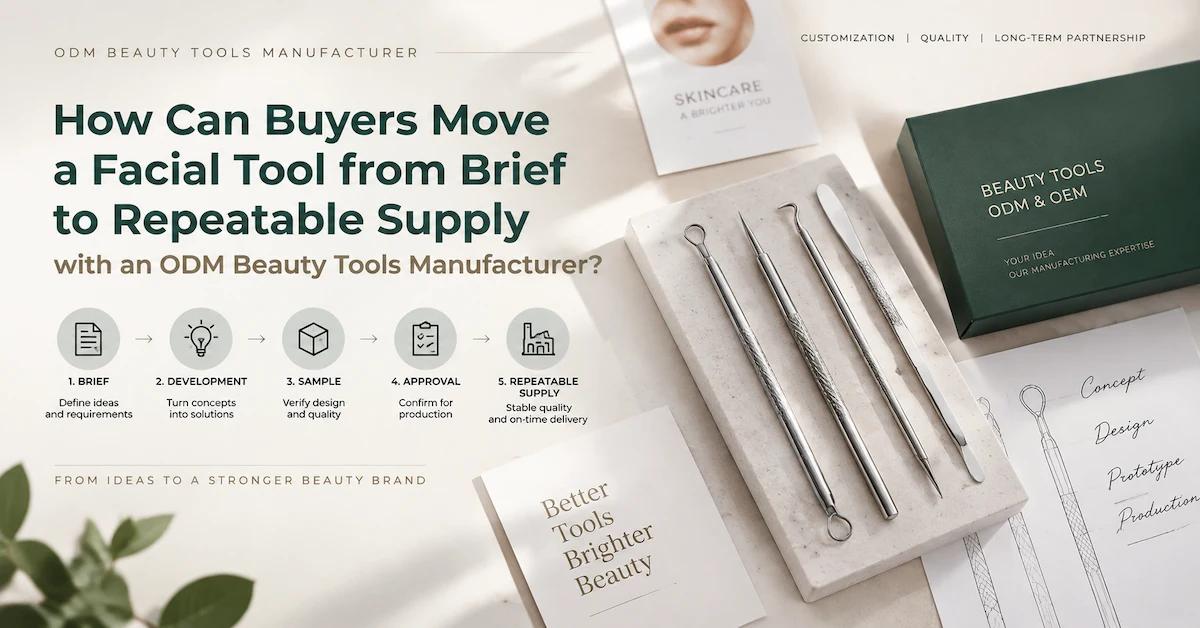
How Can Buyers Move a Facial Tool from Brief to Repeatable Supply with an ODM Beauty Tools Manufacturer?
- Beauty Tools Manufacturing
- OEM & Private Label Solutions
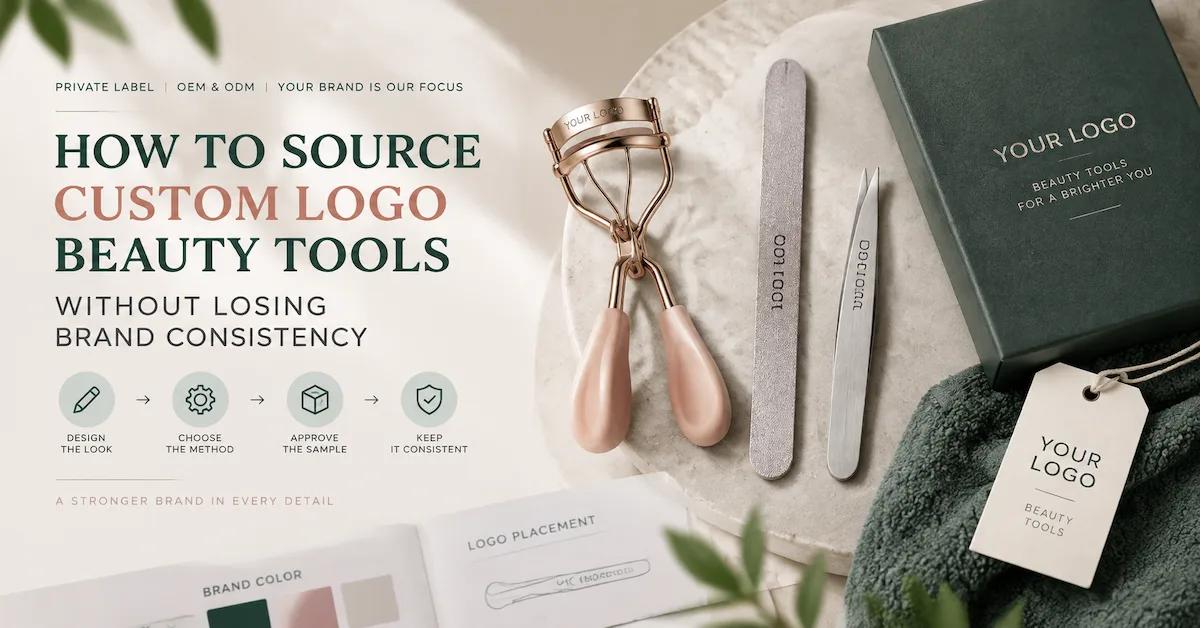
How to Source Custom Logo Beauty Tools Without Losing Brand Consistency
- Beauty Tools Manufacturing
- OEM & Private Label Solutions