Nail Clippers for Thick Nails: How to Choose, Use and Maintain the Right Tool
Thick nails need a different kind of clipper than the small, lightweight tool often kept in a handbag or bathroom drawer. When a clipper is too narrow, too flexible, or difficult to control, it can squeeze the nail instead of cutting it cleanly. That may leave jagged edges, encourage splitting, or force the user to apply more pressure than is comfortable. For personal care users, salons, grooming retailers, and beauty tool buyers, the goal is the same: a nail clipper that gives controlled cutting power without unnecessary strain.
Olimor Beauty offers nail clipper options for buyers looking for practical grooming tools, including designs focused on stainless steel construction, ergonomic handling, non-slip grip areas, and precision jaws. This guide explains what matters when selecting nail clippers for thick nails, how to use them safely, and what to check when comparing products for retail, salon, or personal care use. To view related categories, explore Olimor beauty tool products or browse available product collections.
Why Thick Nails Are Harder to Trim
Thick nails are not always the same. Some people naturally have stronger, denser nails. Others experience thicker toenails with age, repeated pressure from footwear, or long-term nail damage. In all cases, the nail plate may resist a standard clipper. The result is often a sudden snap, an uneven cut, or a clipper that slips sideways before the blade finishes the cut.
A suitable nail clipper for thick nails needs to address three practical problems. First, the cutting edge must meet the nail evenly so pressure is concentrated where it belongs. Second, the lever and handle area must give enough control for gradual clipping rather than one uncontrolled bite. Third, the user needs a secure grip, especially when trimming toenails where the angle is less convenient than trimming fingernails.
For buyers sourcing beauty tools, this means the best choice is not simply the largest clipper. A very large tool can still feel awkward if the grip surface is smooth or if the jaws do not align well. The better question is whether the clipper combines jaw strength, edge precision, comfortable leverage, and stable hand positioning.
Key Features to Look for in Nail Clippers for Thick Nails
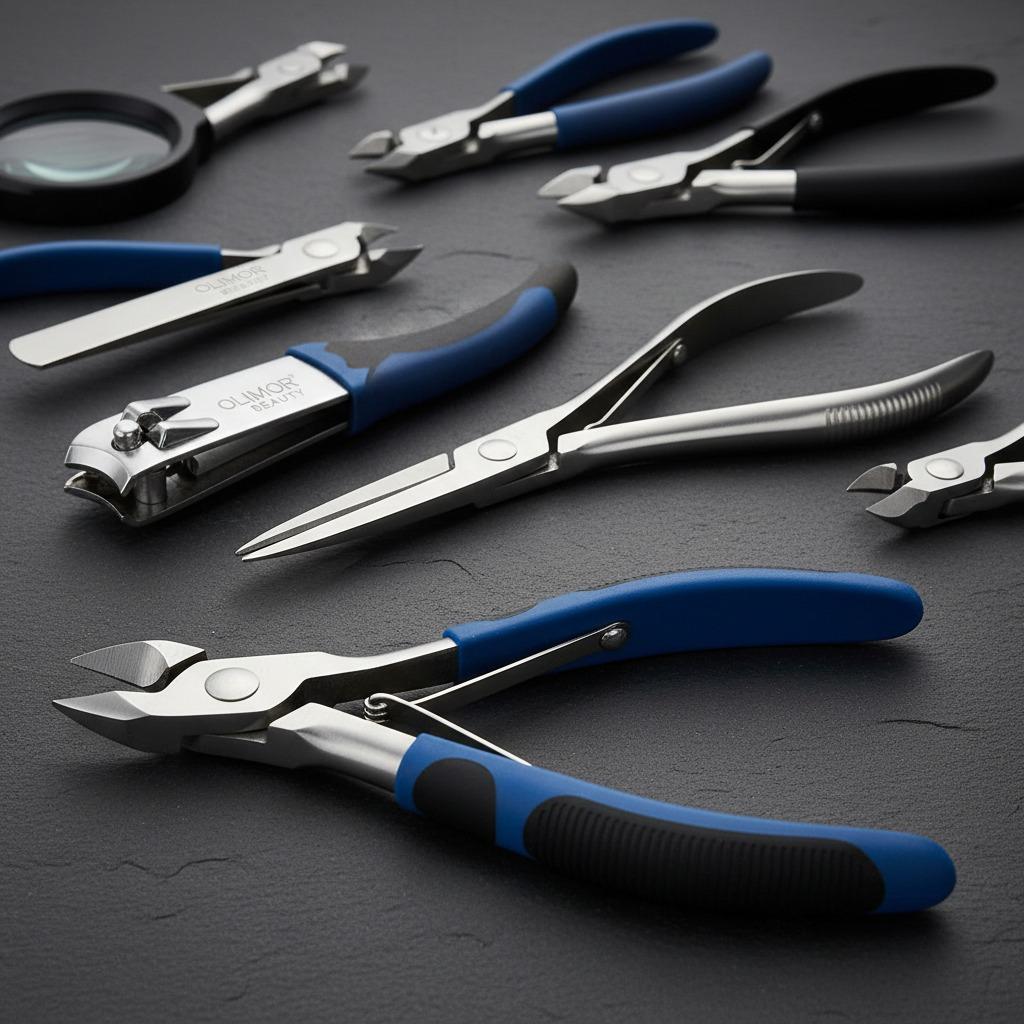
When comparing nail clippers for thick nails, focus on functional details that affect the cutting experience. Product descriptions may sound similar, but small design choices can make a meaningful difference in daily use.
- Stainless steel construction: Stainless steel is widely used in nail tools because it supports durability and is easier to clean than many lower-quality materials.
- Precision jaws: Jaws that meet evenly help cut through a thick nail instead of crushing or tearing it. Check alignment from the front and side when evaluating samples.
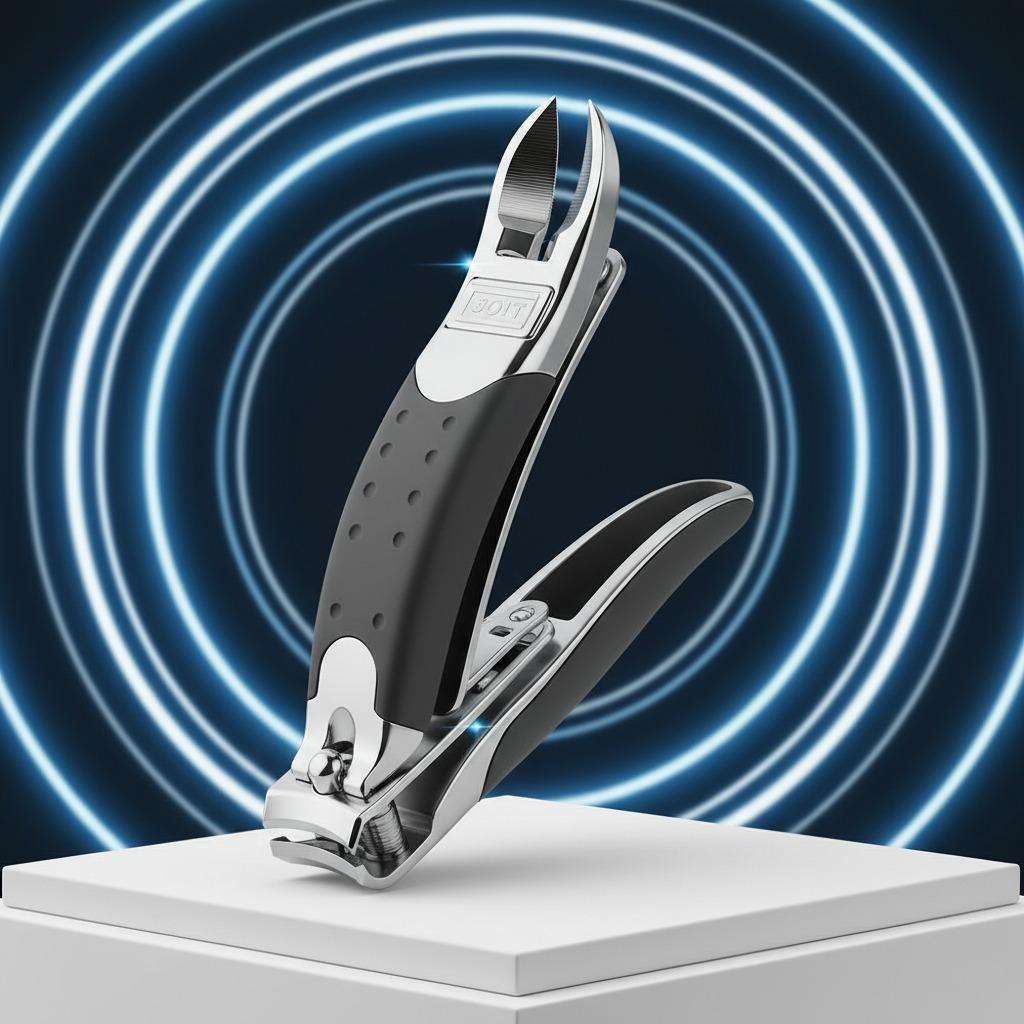
- Non-slip handle design: A textured or non-slip handle helps reduce sliding, especially when more pressure is needed. The original Olimor product presentation highlights non-slip black handles as a comfort feature.
- Ergonomic grip: Thick nail trimming can require repeated clips. A handle that sits naturally in the hand can reduce fatigue and improve control.
- Compact but stable body: A compact shape is convenient for storage, but it should still provide enough leverage and a secure hold.
- Smooth edge result: A good clipper should leave a clean cut that needs minimal filing. Rough edges may indicate poor jaw alignment or a dull cutting edge.
If you are purchasing for resale or professional use, do not judge only by appearance. Request or inspect physical samples where possible and test them on nail-like materials or suitable sample conditions. A tool can look polished but still feel weak if the lever flexes or the jaws shift under pressure.
How to Trim Thick Nails More Safely and Cleanly
Even a strong clipper works best with the right technique. Thick nails should not be rushed. Trying to remove too much nail in one cut increases the chance of cracking the nail or cutting too close to the skin. The following process is useful for many at-home users and salon care routines.
- Clean and dry the tool first. Wipe the clipper before use. If the tool has been stored in a damp bathroom, make sure it is dry and free from visible residue.
- Soften the nail if needed. Trimming after bathing or after soaking the feet briefly can make some thick toenails easier to cut. Dry the nail surface enough to prevent slipping.
- Cut in small sections. Start at one side and make several controlled clips across the nail. Avoid forcing the entire nail width into one cut.
- Follow the natural shape. For toenails, many users prefer a straighter cut with slightly softened corners to reduce sharp edges. Avoid cutting deeply into the sides.
- Stop if there is pain. Pain, bleeding, severe discoloration, or suspected infection should be handled by a qualified healthcare professional rather than by aggressive trimming.
- Finish with a file if necessary. A light filing step can smooth corners and reduce snagging on socks or shoes.
For elderly users or anyone with reduced hand strength, grip comfort matters as much as cutting strength. A non-slip handle gives more confidence and may make the tool easier to position. If the nail is extremely thick, distorted, or difficult to see clearly, professional podiatry care may be more appropriate than home trimming.
Selection Criteria for Retailers, Salons and Beauty Tool Buyers
For B2B buyers, a nail clipper for thick nails should be evaluated from both user and business perspectives. End users care about clean cutting, comfort, and durability. Retailers and salons also need consistency across batches, appropriate packaging, and a product that is easy to explain to customers.
| Evaluation Point | Why It Matters | What to Check |
|---|---|---|
| Jaw alignment | Uneven jaws can bend or tear thick nails. | Check whether the cutting edges meet evenly without visible gaps. |
| Grip security | More pressure is often needed for thick nails. | Hold the clipper with dry and slightly damp hands to assess slippage. |
| Lever feel | A stable lever improves control during repeated clips. | Press slowly and check for wobble, flexing, or uncomfortable edges. |
| Cleaning access | Nail tools should be simple to wipe and maintain. | Look for surfaces that do not trap visible debris unnecessarily. |
| Packaging clarity | Customers need to understand the tool’s intended use. | Confirm that claims are accurate and do not overpromise medical results. |
When preparing a sourcing brief, include the intended sales channel, target user, packaging needs, and any appearance preferences. For example, a salon-focused tool may prioritize grip and cleaning convenience, while a retail grooming set may require a compact profile and clear consumer instructions. To discuss nail clipper options or provide a purchasing brief, you can send an inquiry or contact Olimor.
Maintenance Tips That Help Clippers Last Longer
Thick nails place more stress on the cutting edge than thin fingernails, so maintenance should not be ignored. After each use, remove nail fragments and wipe the clipper clean. If the clipper becomes wet during cleaning, dry it fully before storage. Storing stainless steel tools in a dry location helps keep the surface in better condition over time.
Do not use a nail clipper as a general cutting tool for plastic tags, wire, packaging, or craft materials. That can damage the alignment of the jaws and reduce cutting quality. If the clipper starts crushing nails rather than cutting them, or if the edges no longer meet properly, it may be time to replace it. For shared environments such as salons, follow local hygiene rules and use suitable cleaning procedures between users.
It is also worth checking the clipper before every trim. Look for loose parts, rough edges, or changes in jaw alignment. A tool used for thick toenails needs to remain stable under pressure. If it feels unsafe or unpredictable, stop using it.
Choosing the Right Nail Clipper with Confidence
The right nail clipper for thick nails should feel controlled, secure, and strong enough for the task. Stainless steel construction, precision jaws, ergonomic handling, and non-slip grip features all contribute to better trimming. Just as important, the user should trim gradually, avoid cutting too close, and maintain the tool properly after use.
For consumers, that means fewer rough edges and less frustration. For salons and retailers, it means choosing a practical beauty tool that matches real customer needs rather than relying on generic grooming claims. Olimor Beauty supports buyers looking for functional nail care tools and related grooming products. Review the available beauty tool products or reach out through contact Olimor when you are ready to compare options for your market.
Tag: