Nail Clipper Reviews: How to Choose an Ergonomic Nail Care Tool That Fits the User
A nail clipper looks simple, but small design choices affect comfort, control, cutting cleanliness and long-term hygiene. For individual buyers, the right clipper can make routine grooming quicker and safer. For salons, beauty retailers and private-label buyers, clipper design also influences customer satisfaction, repeat purchases and product positioning. This guide explains the main nail clipper types, what ergonomic features actually do, and how to evaluate quality without relying on vague marketing claims.
Olimor Beauty focuses on practical beauty tools for everyday and professional nail care. If you are comparing clippers for retail, salon use or sourcing, it helps to look beyond appearance and consider who will use the tool, what nail thickness it must handle, and how it will be cleaned and stored after each use.
Start With the User and the Nail Type
The best nail clipper is not the same for every person. A slim fingernail clipper may feel precise on small hands but may struggle with thick toenails. A heavy-duty toenail clipper may cut strongly but feel oversized for detailed finger work. Before comparing finishes or handle styles, define the main use case.
- Everyday fingernail trimming: Look for a compact tool with a smooth lever action and blades that meet evenly.
- Toenail care: Choose a larger, stronger clipper with enough jaw opening for thicker nails.
- Limited hand strength: Prioritize leverage, textured grip and a handle shape that reduces slipping.
- Travel or gym bags: Consider a safety lock or compact design that protects the cutting edge.
- Salon or retail use: Evaluate cleaning access, consistency between units and packaging suitability.
When buyers skip this step, they often choose a clipper that looks appealing but does not match the actual nail care task. A good review process begins with the user, not with the decoration.
Common Nail Clipper Types and Where They Work Best
Most nail clippers fall into a few familiar categories. Understanding the differences makes product comparison much easier.
Lever-style clippers are the most common. They use a top lever to press the cutting jaws together. They are easy to understand, simple to store and suitable for many home users. The quality difference is usually found in blade alignment, handle comfort and the smoothness of the lever mechanism.
Toenail clippers are usually larger and stronger than standard fingernail clippers. They are made to handle thicker nails and often have a wider jaw. A poorly designed toenail clipper may crush or tear the nail instead of cutting cleanly, so blade sharpness and stability matter.
Pointed or angled clippers are used when the user needs more access at the nail edge. They can help with careful trimming around corners, but they require control and should be used conservatively. Over-cutting nail corners can contribute to irritation.
Scissor-style nail clippers appeal to users who prefer a cutting motion similar to small scissors. Some people feel they offer more visibility and control, while others prefer the speed of a lever clipper. For retail assortments, carrying different styles can serve different user habits.
There is no single universal winner. A strong assortment or sourcing plan often includes more than one clipper type so that buyers can match tools to different nail conditions and user preferences.
What Makes an Ergonomic Nail Clipper Different?
Ergonomics is not just a larger handle. A useful ergonomic nail clipper should improve grip, reduce the force required, and help the user keep the cutting edge steady. This is especially important for people with reduced hand strength, older users, anyone trimming thick toenails, and professionals who use tools repeatedly.
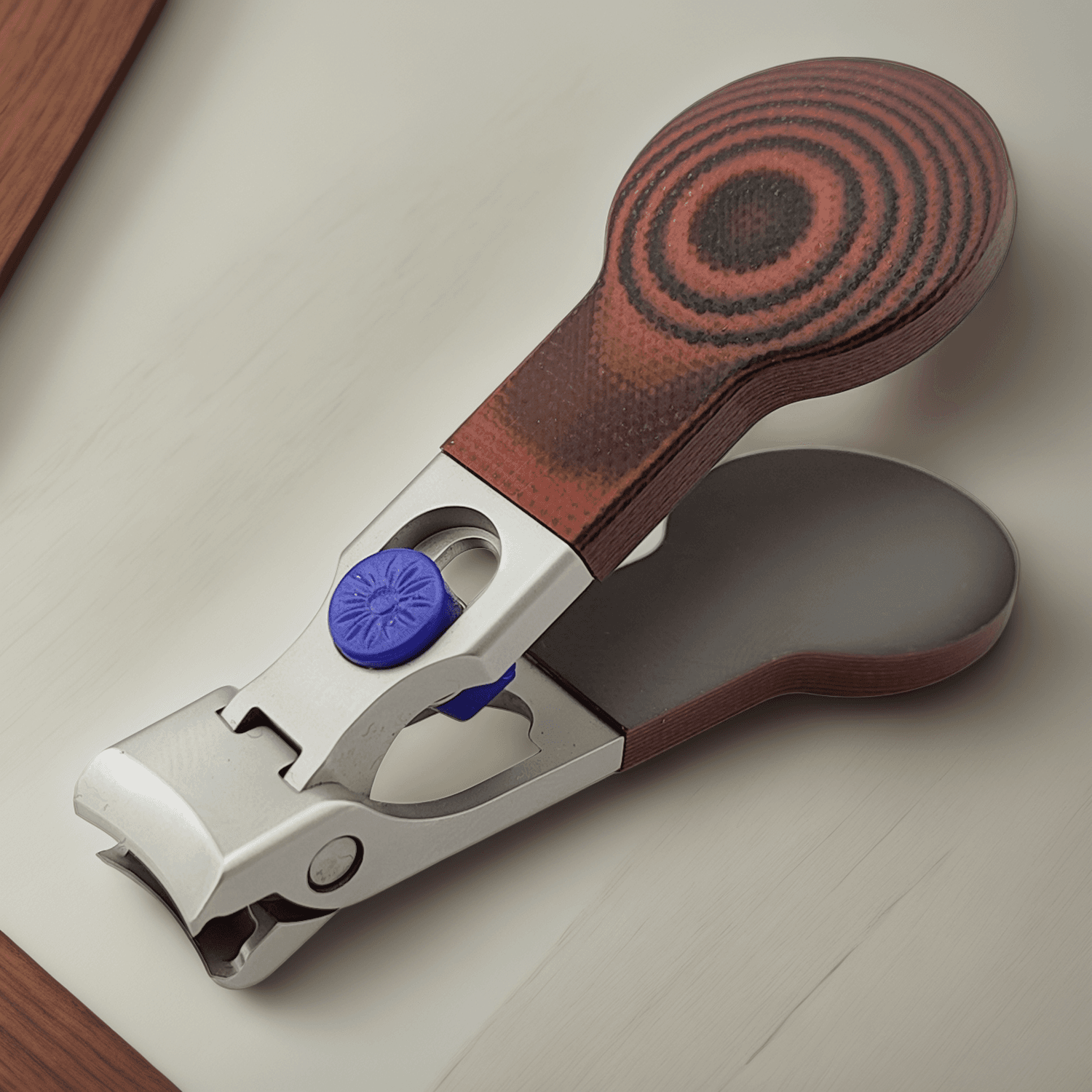
The 2025 ergonomic nail clipper described by Olimor Beauty includes several design points that show how ergonomics can be built into a small tool. Its G10 composite handle has a concentric ring texture intended to improve grip. Stainless steel metal components are used for corrosion resistance. The leverage mechanism is designed to expand cutting force, which can help when trimming strong nails. It also includes an adjustable blue dial knob for customized pressure and a safety lock for more secure storage.
These features are useful to evaluate because they relate directly to common user problems: slipping fingers, inconsistent pressure, difficult thick nails and exposed sharp edges during storage. When reviewing any ergonomic clipper, ask whether each feature solves a real handling problem or only changes the appearance.
Blade Quality, Alignment and Cutting Feel
The cutting edge is the heart of the tool. Even the most comfortable handle cannot compensate for dull or uneven blades. A good nail clipper should create a clean cut with minimal squeezing, cracking or jagged edges. The blades should meet evenly across the cutting surface, and the lever should move without a gritty or unstable feeling.
For beauty tool buyers, a simple inspection routine can prevent many complaints. Open and close the clipper several times. Check whether the blades contact evenly. Look for burrs, rough edges or visible gaps. Test how the lever returns after pressure is released. If possible, compare multiple units, not only one sample, because consistency matters for retail and salon purchasing.
Material choice also affects durability and cleaning. Stainless steel components are valued because they can resist corrosion better than many lower-grade alternatives, but buyers should still consider finishing quality, hinge stability and how easy the clipper is to wipe clean after use.
Buyer Checklist for Retailers, Salons and Home Users
Use this checklist when comparing nail clippers across different suppliers or product lines. It keeps the decision focused on performance rather than decoration alone.
- Define the main use: Fingernails, toenails, thick nails, travel, salon service or retail gifting.
- Check grip security: Look for textured surfaces, handle length and a shape that stays stable when fingers are slightly damp.
- Evaluate cutting force: The lever should reduce effort without feeling loose or uncontrolled.
- Inspect blade alignment: Blades should meet cleanly and cut without bending the nail.
- Consider safety storage: A lock or protected edge is useful for travel kits, drawers and professional stations.
- Review cleaning access: Nail debris should be easy to remove, and surfaces should be simple to wipe dry.
- Assess consistency: For wholesale or retail buying, compare several samples from the same batch before deciding.
- Match packaging to audience: A salon refill tool, a premium gift item and a value retail item may need different presentation.
For broader assortment planning, you can review Olimor Beauty beauty tool products or browse related product collections to compare how nail care tools fit alongside other personal care items.
Maintenance Habits That Extend Clipper Life
A nail clipper needs simple but consistent care. After each use, remove nail fragments from the jaw area. Wipe the tool with a clean dry cloth, especially around the hinge and blade edge. If the clipper has been exposed to moisture, dry it before storage. Avoid tossing it loose into a crowded drawer where the blade can be damaged by other metal tools.
For shared or professional use, hygiene routines should be stricter. Follow the cleaning and disinfection methods appropriate for the setting and local requirements. The tool should be fully dry before being stored to reduce the risk of corrosion around the hinge or blade. A safety lock, when present, should be engaged during storage or transport so the cutting edge is protected and the lever does not catch on other items.
Users should also avoid forcing a small fingernail clipper through nails that are too thick for its jaw. Excessive force can misalign the blades or stress the lever. If toenails are unusually hard, trimming after bathing or soaking may make the process easier, and a stronger toenail clipper may be more suitable.
Sourcing Questions That Lead to Better Nail Clipper Decisions
For business buyers, a nail clipper is both a functional item and a customer experience product. A weak lever, slippery handle or rough blade edge can quickly lead to negative reviews. Before placing an order, prepare objective questions and evaluation points.
Useful sourcing questions include: What materials are used for the handle and metal components? How is blade alignment checked? Is the lever mechanism consistent across multiple samples? How is the product protected during shipping? Does the design include a safety lock or other storage feature? What packaging options are available for the intended sales channel? These questions help clarify the product’s practical value without assuming specifications that have not been confirmed.
If you are developing a nail care assortment or comparing ergonomic nail clipper options, you can send an inquiry with your intended use case, target customer and packaging needs. For more detailed discussion about product selection, you may also contact Olimor.
Final Thoughts: Choose Comfort, Control and Clean Cutting
A well-chosen nail clipper should feel stable in the hand, cut cleanly with reasonable pressure and store safely between uses. Ergonomic features are most valuable when they improve grip and reduce effort, not when they simply make the tool look different. Blade alignment, handle texture, lever strength, corrosion resistance and cleaning access all deserve attention.
Whether you are buying one clipper for personal grooming or evaluating nail care tools for a beauty business, focus on the full user experience. The right tool makes trimming more controlled, reduces avoidable nail damage and supports a cleaner, more reliable nail care routine.
Tag: