












Import Nail Clippers from China: A Practical Guide for Beauty Tool Buyers
Nail clippers are small products, but they carry large expectations. A buyer sourcing them for retail, salon supply, travel kits, promotional sets or private-label grooming ranges needs consistent cutting performance, safe edges, corrosion resistance, reliable packaging and predictable supply. For many importers, China remains an important sourcing destination because it offers a wide range of nail clipper designs, mature metal-processing capabilities and flexible export experience.
This guide explains how to evaluate imported nail clippers from China without relying on guesswork. It compares local and imported sourcing, highlights quality criteria, and gives a practical checklist for buyers who want to assess a supplier such as Olimor Beauty for stainless steel grooming tools. If you are building a nail care assortment, you can also browse related beauty tool products or review broader product collections to understand how clippers fit within a complete range.
Local Sourcing vs. Importing: What Buyers Should Compare
Local purchasing can be convenient when you need very small quantities, immediate stock or simple replenishment. The trade-off is that product choice may be limited, packaging options may already be fixed, and unit prices can include multiple distribution markups. For a buyer developing a long-term product line, those limitations can make it difficult to maintain margins or differentiate the item on the shelf.
Importing nail clippers from China is often considered when buyers need more control over appearance, assortment planning and cost structure. Chinese export suppliers commonly offer different sizes, handle finishes, packaging formats and accessory combinations. The original Olimor Beauty article highlighted stainless steel nail clippers, ergonomic shapes, sharp blades, built-in files and a 70 mm stainless steel clipper weighing 30 grams. Those details are useful because they show the kinds of measurable features buyers should request and verify rather than relying only on catalog photos.
The best sourcing decision is not simply “local” or “imported.” It is whether the supplier can support the required quality level, documentation, packing method, inspection process and delivery schedule for your market. A low-cost nail clipper that arrives with inconsistent blade alignment, rough edges or weak packaging can cost more in returns and reputation than a better-controlled import order.
Key Quality Criteria for Imported Nail Clippers
A nail clipper looks simple, but performance depends on several small manufacturing details. Buyers should evaluate samples with the same seriousness they would apply to higher-priced beauty tools. The cutting edge must be sharp enough to trim cleanly without tearing the nail. The lever should press smoothly, return reliably and avoid wobbling. The jaw alignment should be even from side to side so pressure is distributed correctly across the blade.
Material selection is also important. Stainless steel is commonly used for nail clippers because it provides strength and better resistance to corrosion than many lower-grade alternatives. However, buyers should not assume all stainless steel products perform the same. Surface finish, polishing, heat treatment, edge grinding and storage conditions all affect the user experience. If a product is described as rust-resistant, the buyer should confirm how the finish is achieved and how the item is packed to reduce moisture exposure during shipping.
When reviewing samples, inspect the parts that users touch as well as the parts that cut. Rounded corners, a comfortable lever shape and a built-in file can improve daily usability. A lightweight clipper, such as the 70 mm and 30 gram example mentioned in Olimor Beauty’s product discussion, may be suitable for travel kits or compact grooming sets. Heavier options may feel more substantial for premium retail positioning, but weight alone does not prove quality.
Sample Evaluation Checklist Before Placing an Order
Before confirming an import order, create a written sample review process. This helps your team compare suppliers fairly and gives the manufacturer clear feedback if adjustments are needed.
- Cutting performance: Test on different nail thicknesses and check whether the cut is clean, even and controlled.
- Blade alignment: Look closely at the jaws when closed. Uneven contact can cause splitting or incomplete cuts.
- Lever strength: Press repeatedly to confirm smooth movement, stable rivets and no looseness.
- Surface finish: Check for scratches, burrs, sharp non-cutting edges, stains or inconsistent polishing.
- File usability: If a built-in file is included, verify that it is accessible and has a practical texture.
- Ergonomics: Confirm that the clipper feels secure in the hand and is not awkward for common trimming angles.
- Packaging fit: Make sure the clipper does not move excessively in the package and that sharp parts are protected.
- Batch consistency: Review more than one sample, ideally from different production batches when available.
This checklist is also helpful when communicating with a supplier. Instead of asking for “good quality,” you can define what good quality means for your customers and sales channel.
Design, Packaging and Market Positioning
Nail clippers are sold in many contexts: drugstores, supermarkets, online marketplaces, travel accessories, manicure kits, salon supply channels and gift packs. The same core tool may require different design and packaging decisions depending on the market. A compact stainless steel clipper with a built-in file can be practical for travel and everyday grooming. A cleaner finish and stronger presentation may be better for a retail display or personal care set.
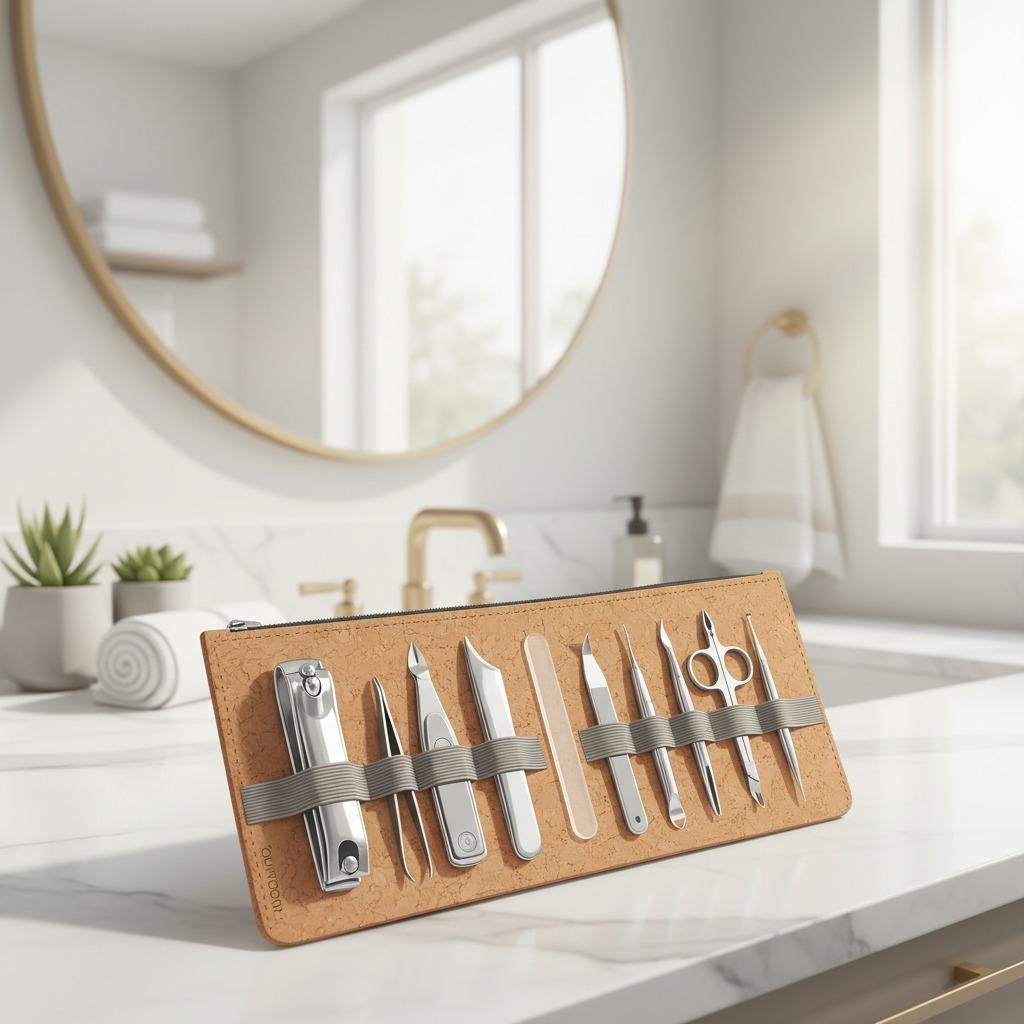
Packaging should protect the product, communicate the key benefit and support your channel requirements. For e-commerce, packaging must survive handling and reduce the risk of the clipper damaging other items in the parcel. For physical retail, visibility, hanging options and barcode placement may matter. For kit assembly, the clipper must fit consistently with scissors, tweezers, files or other grooming tools.
Buyers should also consider whether the product will be sold as a stand-alone item or as part of a broader beauty tool assortment. If you are comparing accessories to build a coordinated range, Olimor’s beauty tool products page can help you evaluate related categories. A nail clipper may be a low-cost item, but it often influences customer trust because it is used frequently and performance is immediately obvious.
Supplier Questions That Reduce Import Risk
A reliable supplier discussion should cover more than price. Nail clipper buyers need to understand how the supplier controls materials, production, inspection and packing. Olimor Beauty’s previous product description referenced quality assurance from raw materials to packaging. For an importer, that kind of end-to-end control is valuable, but it should be translated into specific checkpoints that can be confirmed before production.
| Buying Area | What to Clarify | Why It Matters |
|---|---|---|
| Material | Confirm the stated metal type and finish used for the clipper. | Material and finish affect strength, corrosion resistance and appearance. |
| Blade Process | Discuss cutting edge grinding, alignment checks and sample approval. | Sharpness and alignment determine real user satisfaction. |
| Inspection | Define what is checked before packing and what defects are unacceptable. | Written criteria reduce disputes and inconsistent shipments. |
| Packaging | Review packaging structure, labeling needs and transport protection. | Weak packaging can create damage even when the clipper is well made. |
| Order Planning | Confirm lead time, production schedule and export documentation process. | Importers need predictable timing for launches and replenishment. |
These questions help you compare offers more accurately. A slightly lower unit price may not be attractive if the supplier cannot explain inspection standards or packaging protection. Conversely, a supplier that provides clear sample feedback and stable production communication may reduce hidden costs over time.
Cost, Freight and Total Landed Value
Price is one reason many buyers consider importing nail clippers from China, but unit price is only one part of the buying decision. The total landed value includes product cost, packaging, inland handling, export fees where applicable, freight, insurance if used, duties, local customs handling and domestic delivery after arrival. A buyer comparing local and imported nail clippers should calculate the full landed cost before deciding which source is more competitive.
Bulk ordering can improve unit economics, but it also increases inventory responsibility. If you are testing a new retail channel or launching a new grooming set, a staged sourcing plan may be safer than immediately committing to a very broad range. Start with the clipper size, finish and packaging that best match your most predictable demand. After customer feedback, add variations if they solve a real market need.
Cost control should never remove essential product checks. Nail clippers interact directly with the body, and poor cutting edges can cause discomfort. It is better to reduce unnecessary packaging complexity or narrow the initial assortment than to compromise on blade performance, safe edges or corrosion resistance.
When to Work with Olimor Beauty
Olimor Beauty is relevant for buyers looking at stainless steel nail clippers and related grooming tools from China. The brand focus described in the existing product information includes precision, durability, ergonomic design, sharp blades, built-in files and quality assurance through the production and packaging process. For importers, those points align with the most important sourcing priorities: dependable performance, practical design and consistent presentation.
If you are preparing a nail clipper import project, organize your requirements before requesting samples. Define the target customer, sales channel, preferred clipper size, packaging format, finish expectations and inspection priorities. Clear requirements allow the supplier to recommend a realistic option and help you compare samples with less ambiguity.
For product discussions, customization questions or assortment planning, you can contact Olimor. If you already have a defined purchase plan, specifications or packaging brief, you may prefer to send an inquiry with the details so the team can respond more efficiently.
Final Buying Advice
Importing nail clippers from China can be a strong choice when you need a balance of cost, design flexibility and export-ready production. The most successful buyers do not focus only on the lowest quotation. They compare materials, blade alignment, lever feel, finish quality, packaging strength, inspection criteria and supplier communication.
A well-made stainless steel nail clipper is a repeat-use product that customers judge quickly. If it cuts cleanly, feels comfortable and arrives in good condition, it supports trust in the rest of your beauty tool range. By using a clear sample checklist and treating packaging and inspection as part of the product, importers can source nail clippers that are practical for everyday grooming and commercially reliable for retail or professional supply.