How Pad Density Affects Eyelash Curler Performance
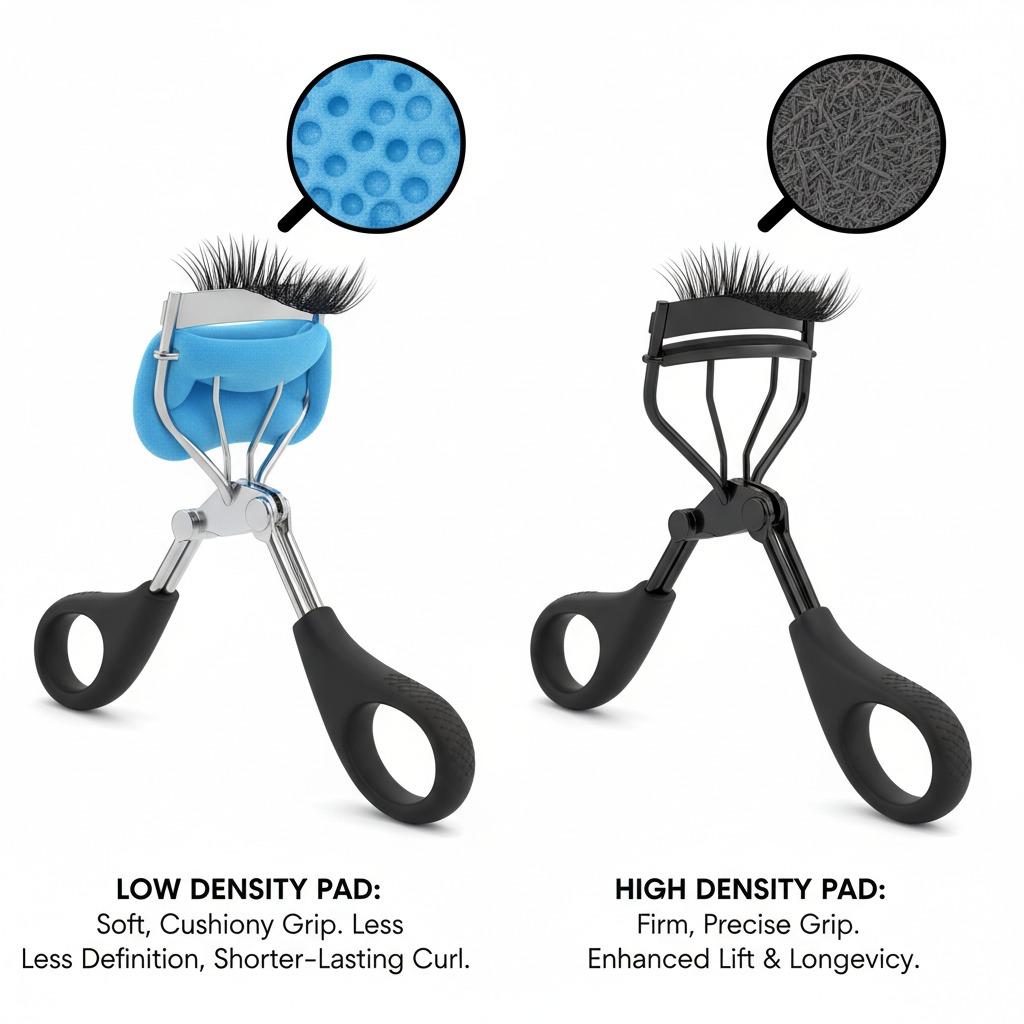
Pad density is one of the most important but easiest-to-overlook details in an eyelash curler. The cushion pad is the part that receives pressure, supports the lash line and helps transform a squeeze of the handle into a controlled curl. If the pad is too soft, too hard, poorly fitted or inconsistent from sample to sample, the user may experience weak lift, sharp bends, lash slipping or uncomfortable pinching.
For beauty brands, distributors and retailers, pad density is not only a product feature; it is a sourcing and quality-control point. A curler can have an attractive frame and packaging, yet still disappoint users if the pad collapses too quickly or does not match the frame channel. This guide explains how density affects performance, how to compare pad feel for different lash needs, what to inspect before buying, and how maintenance and replacement planning influence long-term customer satisfaction.
Olimor Beauty supplies practical beauty tools for commercial assortments. Buyers reviewing eyelash curlers and related categories can explore beauty tool products or discuss a sourcing project through Olimor Beauty contact.
What Pad Density Means in an Eyelash Curler
Pad density describes how compact, supportive and resistant the cushion material feels when pressure is applied. In everyday use, buyers often describe pads as soft, medium or firm. Those terms are useful, but they do not tell the whole story. Two pads may both be described as silicone-like, yet one may compress quickly and recover slowly while another may resist pressure and return to shape more cleanly.
The pad sits inside the lower curved channel of the eyelash curler. When the handles close, the upper bar presses the lashes against the pad. The pad must cushion that pressure while keeping the lashes in position. It should compress enough to feel comfortable, but not so much that lashes sink too deeply and lose shape control.
Density also works with other pad characteristics. Shape, length, surface finish, edge quality and fit in the frame all affect the curling experience. A firm pad that fits poorly can still shift or create pressure points. A soft pad with a clean fit may feel comfortable but produce insufficient lift for some lash types. The right evaluation looks at the pad as part of the complete tool.
How Density Changes Curl Shape, Grip and Comfort
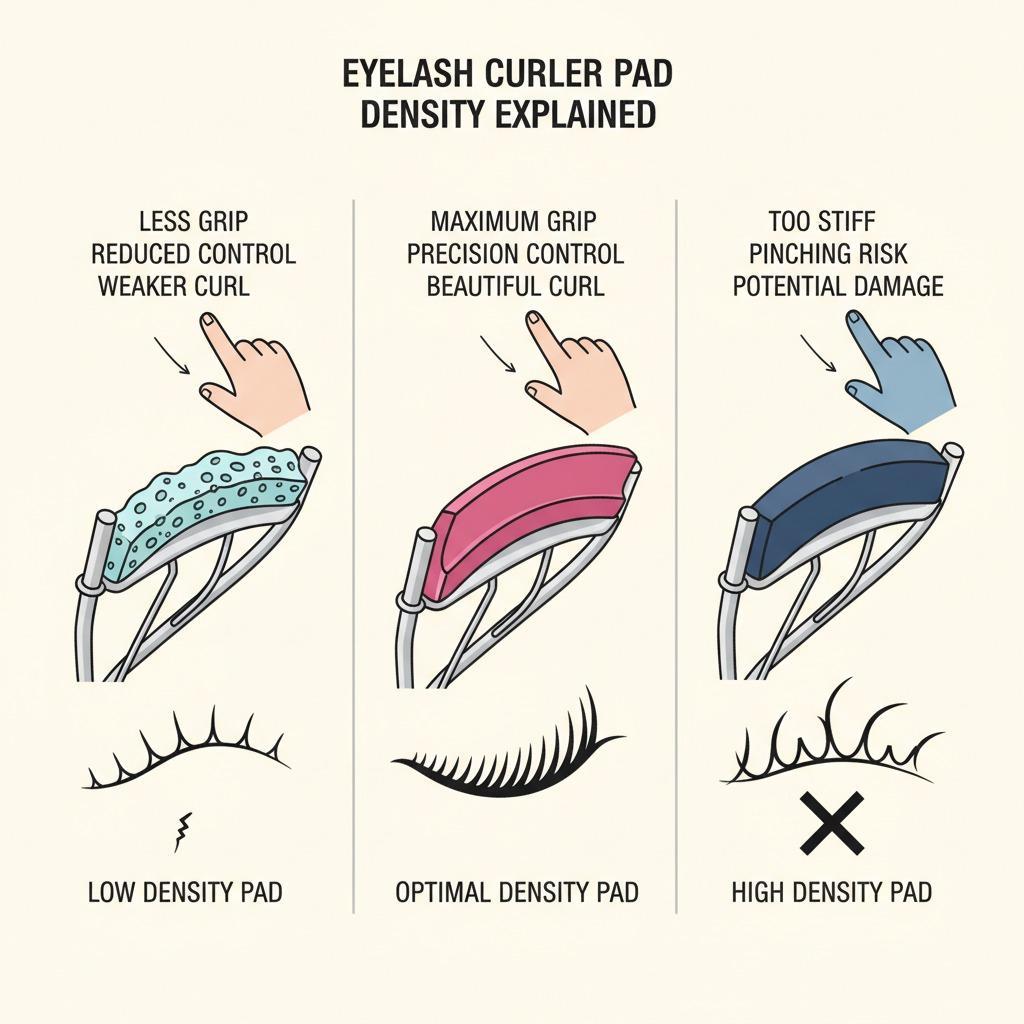
The main job of an eyelash curler pad is to help create a smooth curve rather than a flat crimp. When the pad density is balanced, the lashes are supported along the curve and the pressure feels controlled. When the density is poorly matched, the same frame can produce inconsistent results.
Effect on curl shape
A pad that is too soft may collapse under pressure. The lashes can sink into the cushion instead of being shaped evenly by the frame. This may create a weak lift, especially near the lash base, or an uneven curl from the inner to outer corner. A pad that is too firm may resist compression so strongly that the upper bar creates a sharper bend. This can make the curl look crimped rather than natural.
Effect on grip
Good grip means the lashes stay positioned while the tool closes. Pad density contributes to this by giving the lashes a stable surface. The surface should not feel sticky, rough or aggressive. Grip should come from controlled compression and a well-matched curve, not from drag that pulls at the lashes.
Effect on comfort
Comfort depends on frame shape, hinge movement, handle control and pad feel. The pad helps soften contact and distribute force. If it is uneven, too hard or poorly installed, the user may feel pinching or localized pressure. If it is too soft, the user may squeeze harder to compensate, which can also cause discomfort or crimping.
- Too soft: may reduce lift, deform quickly, allow lashes to sink or require extra squeezing.
- Too firm: may create sharp bends, harsh pressure or a less forgiving feel.
- Uneven density: may curl one area more strongly than another.
- Poor fit: may cause gaps, pad movement or pressure concentration.
- Balanced density: supports comfort, control and repeatable curl results.
Matching Pad Feel to Lash Type and User Habits
There is no universal pad density that works perfectly for every user. Lash thickness, natural direction, eye shape, makeup routine and curling technique all influence the preferred feel. For B2B buyers, this means sample testing should reflect the target customer rather than relying only on a hand-feel inspection at a desk.
Fine lashes often need gentle support. A pad that is overly firm may feel aggressive or create a visible bend too quickly. A balanced pad with moderate support can help shape fine lashes without requiring heavy pressure. Straight or downward-facing lashes may benefit from a pad with more resistance because it can help create a clearer base lift. Thicker lashes usually need a pad that does not flatten immediately when compressed.
User habits matter as well. Some users pulse the curler lightly from the base toward the tips. Others press once near the base and hold. A softer pad may suit users who prefer a gradual pulsing method, while a firmer pad may appeal to users looking for stronger base lift. However, excessive squeezing can cause crimping with almost any pad, so clear use instructions are important for retail success.
| User or product focus | Pad tendency to consider | What to watch during testing |
|---|---|---|
| Fine or delicate lashes | Moderate support with a forgiving feel | Check for sharp bends, pulling sensation and over-compression. |
| Straight or downward lashes | More supportive resistance may help lift | Check whether lift improves without discomfort or crimping. |
| Thicker lashes | Pad should resist flattening too quickly | Check whether the curl is visible and even across the lash line. |
| Beginner-friendly retail tool | Balanced, comfortable compression | Check whether results remain acceptable with light pressure. |
| Professional or precise-use positioning | Consistent density and secure frame fit | Check repeatability across multiple samples and users. |
Buyer Quality Checklist for Eyelash Curler Pads
For sourcing teams, pad density should be evaluated with a repeatable checklist. A quick squeeze test can identify obvious issues, but commercial buying decisions should also consider sample consistency, frame alignment, replacement-pad planning and user instructions. The goal is to understand whether the pad performs reliably inside the actual curler, not whether it feels soft or firm in isolation.
Sample inspection checklist
- Compression: Press the pad with steady pressure and compare how deeply it compresses across samples.
- Recovery: Release pressure and observe whether the pad returns to shape cleanly without a lingering groove.
- Fit in channel: Confirm that the pad sits evenly without lifting, sliding or leaving visible gaps.
- Surface condition: Look for a smooth surface, clean edges and no visible cracking, residue or deformation.
- Frame alignment: Close the curler slowly and check whether the upper bar meets the pad evenly along the curve.
- Hinge action: Open and close the tool several times to feel for smooth, controlled movement.
- Curl result: Test under realistic use conditions and compare comfort, lift and evenness.
- Replacement pad match: Confirm whether replacement pads have the same shape and feel as the installed pad.
- Packaging instructions: Review whether cleaning, use and replacement guidance are clear for end users.
This checklist helps teams give specific feedback. Instead of saying a sample is simply “too weak” or “too harsh,” reviewers can identify whether the problem comes from pad density, pad fit, frame curve, hinge movement or user technique. That makes supplier communication clearer and reduces the risk of approving a tool based only on appearance.
Manufacturing Details That Influence Pad Performance
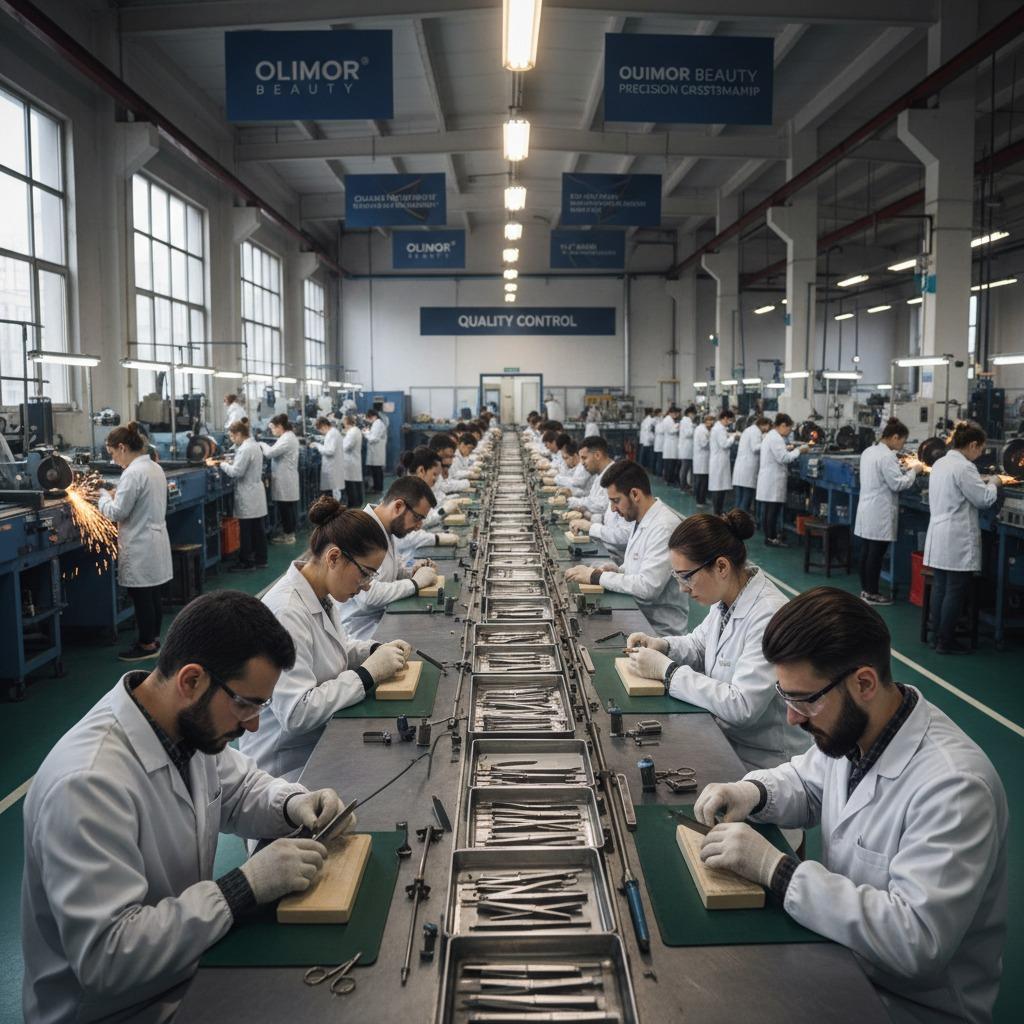
Pad density is connected to manufacturing consistency. Even when a buyer selects an ideal pad feel during sampling, production quality must keep that feel stable. Small variations in pad shape, channel fit or frame alignment can change how the finished curler performs.
Important manufacturing-related factors include the consistency of the cushion material, the accuracy of the pad profile, the cleanliness of the edges and the way the pad sits in the metal channel. The frame curve must also match the intended eye area and the pad must support that curve evenly. If the frame and pad do not work together, even a well-made pad can underperform.
Inspection should include more than one sample. Buyers should compare multiple pieces from the same submission and, where possible, request confirmation of how replacement pads will be supplied. If the replacement pad is a different shape or feel from the original, the user experience may change after the first pad wears out.
For regulated markets, buyers should verify current consumer product requirements, labeling expectations and documentation with their own compliance teams and suppliers. In the United States, the Consumer Product Safety Commission is a relevant public body for consumer product safety information. In the European Union, buyers should review applicable obligations under the General Product Safety Regulation and verify current versions and supplier documents. These references do not mean a specific eyelash curler is certified; they are starting points for due diligence.
Maintenance, Cleaning and Replacement Planning
An eyelash curler pad is a wear component. Repeated compression, cosmetic residue, skin oil and cleaning habits can change how it feels and performs. Over time, the pad may develop a groove where the upper bar contacts it. Once that groove becomes pronounced, lashes may be pressed into the same channel instead of being shaped smoothly, increasing the risk of a sharp bend.
Users should clean the pad regularly and inspect it before use. Many makeup users prefer curling clean lashes before mascara because mascara can make lashes stick to the pad and can leave residue. If a user curls after applying makeup, cleaning becomes even more important. Retail packaging and product pages should explain this clearly without creating unnecessary fear.
- Wipe the pad after use with a clean, soft cloth.
- Remove visible makeup buildup from the pad and metal channel.
- Check for grooves, cracks, hardening, uneven compression or pad movement.
- Replace the pad when recovery declines or curl results become inconsistent.
- Store the curler in a clean, dry place to protect the pad surface and frame.
For beauty businesses, replacement planning is commercially important. A curler may receive strong first-use feedback but lose customer satisfaction if replacement pads are difficult to identify or do not fit properly. Product managers should decide whether replacement pads will be included, sold separately or supported through customer service information.
Cost Factors: What Buyers Should Compare Beyond Unit Price
Pad density can influence perceived value, but buyers should avoid evaluating an eyelash curler only by the lowest unit price. A cheaper tool with an inconsistent pad may lead to more complaints, returns or negative product reviews. A higher-cost option is not automatically better either; the buyer still needs to inspect comfort, finish, fit and repeatability.
Commercial cost evaluation should include the frame material and finish, hinge construction, pad quality, replacement pad availability, packaging, inspection requirements and customization needs. Branding, color finishes, printed packaging and accessory pads can also affect the final quotation. Because these factors vary by project, buyers should request project-specific information rather than relying on generic price assumptions.
When comparing suppliers, ask for clear product details, physical samples, packaging options and quality-control expectations. A supplier should be able to discuss practical issues such as pad fit, surface condition and replacement compatibility. Buyers planning a private-label or assortment project can review Olimor beauty tool collections to compare product directions before preparing a sourcing brief.
Supplier Evaluation Questions for B2B Sourcing
A good supplier discussion turns pad density from a vague preference into a controllable product requirement. Before placing an order, buyers should prepare questions that connect user experience with production reality.
- What pad feel is recommended for the intended customer group and product positioning?
- How does the pad fit into the frame channel, and is it stable during opening and closing?
- Are replacement pads available, and do they match the original pad shape and feel?
- How are visible pad defects such as cracking, uneven edges or residue checked?
- Can the supplier provide samples for internal review before order confirmation?
- What packaging, color, branding or instruction customization options are available for the project?
- Which documents, product specifications or market compliance materials can be provided for buyer review?
These questions help avoid misunderstandings. They also support better communication between product development, purchasing, quality and marketing teams. If the target market values beginner-friendly comfort, the approved sample should reflect that. If the product is positioned as a precise beauty tool, consistency and frame-pad alignment become especially important.
To discuss eyelash curlers, pad requirements or related beauty tools, buyers can send an inquiry with target market, product positioning, packaging needs and any internal inspection requirements.
FAQ: Eyelash Curler Pad Density and Sourcing
Can buyers request samples before choosing an eyelash curler?
Yes. Samples are useful for checking pad density, frame alignment, hinge movement, finish and packaging direction. Buyers should test more than appearance; they should evaluate compression, recovery, comfort and curl consistency.
Is there a fixed MOQ for customized eyelash curlers?
MOQ depends on the product, customization method, packaging and order requirements. Buyers should confirm project-specific MOQ with the supplier instead of assuming one standard quantity.
Can pad feel, color or packaging be customized?
Customization may be possible depending on the selected product and project scope. Buyers should discuss pad requirements, frame finish, branding and packaging early so the supplier can confirm feasible options.
How should quality be checked before shipment?
Quality checks should include pad fit, surface condition, frame alignment, hinge action, visible finish, packaging accuracy and sample comparison against approved requirements. Buyers should also verify any needed documents for their market.
What affects lead time for eyelash curler orders?
Lead time can be influenced by sample approval, customization, packaging development, order quantity and production scheduling. Buyers should request current timing from the supplier for each project.
Choosing the Right Pad Density Balance
The best eyelash curler pad is not simply the softest or the firmest. It is the pad that works with the frame to create a smooth curl, comfortable pressure and repeatable results for the intended user. For consumers, that means using the tool correctly, keeping the pad clean and replacing it when worn. For buyers, it means testing samples carefully and treating the pad as a performance component.
Pad density affects grip, compression, comfort, maintenance and perceived quality. When it is matched well with the frame design and target customer, the curler feels easier to control and more reliable in daily use. A clear sourcing checklist, realistic sample testing and practical replacement planning help beauty businesses choose eyelash curlers that support long-term customer confidence.
Tag: