











Choosing a Tweezers Supplier for Precision Grooming Products
Finding the right tweezers supplier matters for any business that sells or uses beauty tools professionally. A pair of tweezers may look simple, but buyers quickly notice the difference between a tool that grips cleanly and one that slips, pinches, rusts, or loses alignment. For beauty brands, distributors, salon chains, estheticians, brow specialists, and grooming retailers, the supplier decision affects customer satisfaction, repeat purchases, and the overall credibility of a product range.
The strongest sourcing choice is rarely based on price alone. Precision grooming tools need consistent tip alignment, comfortable handling, dependable material selection, clean finishing, and stable repeat supply. A supplier should also make it practical for your business to test, scale, and reorder without unnecessary complexity. Olimor Beauty supports beauty tool sourcing for businesses that need dependable grooming tools, including stainless steel tweezers designed for precision use.
Start With the Actual Use Case
Before comparing suppliers, define how the tweezers will be used and who will buy them. A professional brow artist has different expectations from a general retail customer purchasing an everyday grooming kit. A distributor may care most about packaging consistency and reorder reliability, while a salon may prioritize hand feel and tip performance over decorative details.
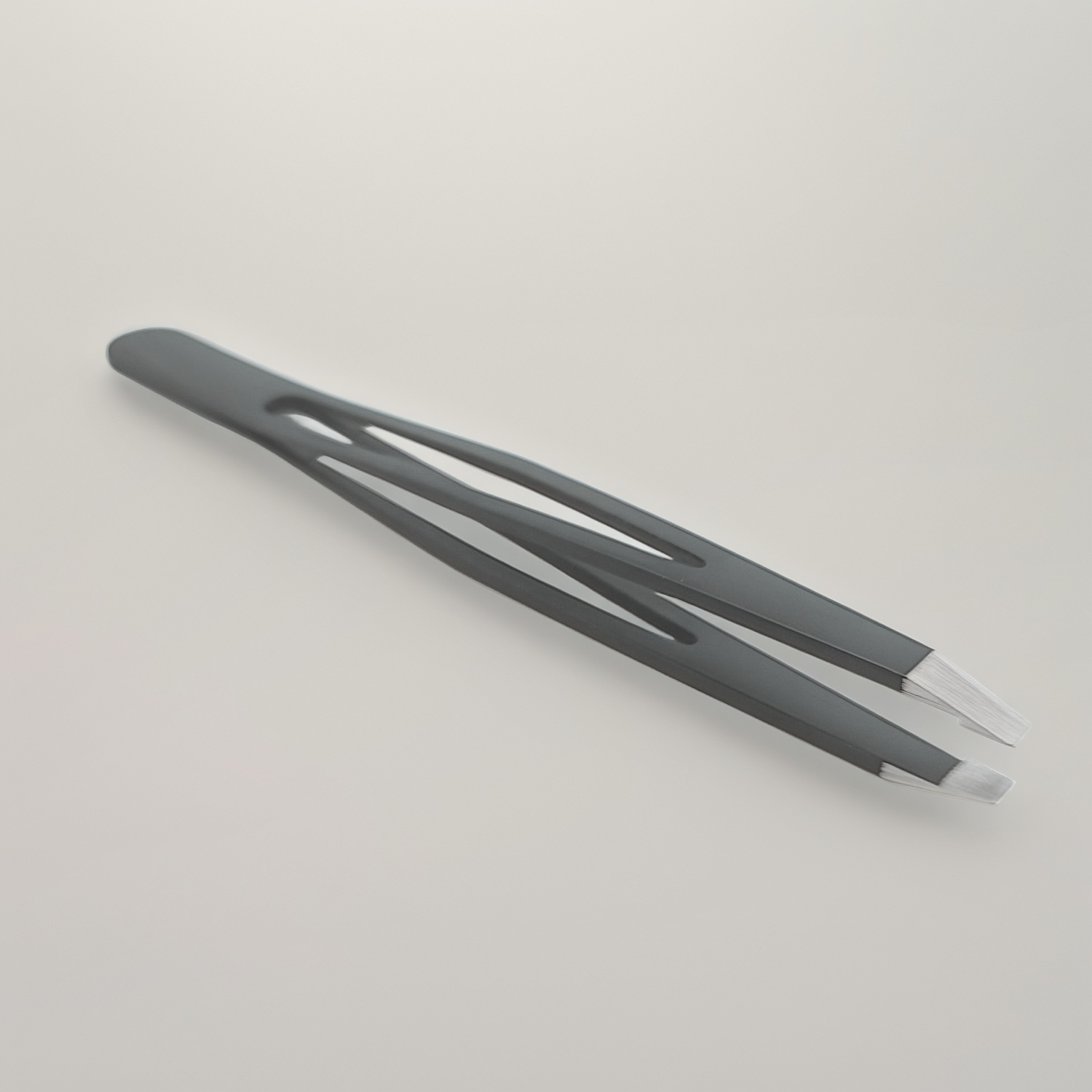
For precision grooming, slant tip tweezers are widely preferred because the angled edge helps users approach short hairs from a comfortable angle. The supplied Olimor Beauty article references SleekGrip Slant Tip Tweezers made from stainless steel, which reflects the type of tool many buyers look for when building a grooming assortment. The key is to match the tweezer format to the sales channel instead of treating all tweezers as interchangeable.
- Retail beauty kits: need an approachable design, reliable grip, and packaging that explains the tool clearly.
- Professional salon use: should focus on repeatable precision, hygiene-friendly materials, and comfortable control.
- Distributors: need consistent batches, organized communication, and product options suitable for different customer tiers.
- Startups and niche brands: often need flexible order planning before committing to large inventory volumes.
Manufacturer or Distributor: Why the Difference Matters
When evaluating a tweezers supplier, it is useful to understand whether you are working with a manufacturer or a trading-only distributor. A true tweezers manufacturer has closer control over production steps such as material selection, shaping, finishing, alignment, and final inspection. That does not automatically make every manufacturer the right fit, but it usually gives buyers a clearer path for discussing quality expectations and production feasibility.
A distributor may be appropriate for small, one-time purchases or mixed stock sourcing, but beauty brands and professional buyers usually benefit from closer production oversight. If the supplier can explain how tweezers are checked for alignment and finishing, the conversation becomes more practical. You are not only buying a metal grooming tool; you are buying the repeatability of the tool across cartons and reorders.
Olimor Beauty presents itself as a beauty tool supplier with production-focused capabilities. Buyers comparing beauty tool products can use this as a starting point for evaluating whether the available tweezers and related grooming tools match their product range and quality positioning.
Quality Signals to Check Before Ordering
Quality in tweezers is visible in small details. Two pairs can both be made from stainless steel, but one may have a better grip, smoother edges, and more stable alignment. For precision grooming, the tips should meet evenly and hold fine hair without excessive force. The handle should feel controlled in the hand, and the finish should be smooth enough for repeated use.
Because not every technical specification is published on a product page, buyers should prepare a practical inspection checklist. This keeps sourcing decisions objective and reduces the chance of choosing a supplier based only on photography or low unit cost.
| Quality area | What to evaluate | Why it matters |
|---|---|---|
| Tip alignment | Check whether the two tips meet evenly from the edge to the gripping point. | Poor alignment causes slipping and makes fine hair removal frustrating. |
| Grip performance | Test on fine hair or similar fibers to see whether the tweezer holds without cutting or sliding. | Reliable grip is the main reason customers repurchase or recommend a tool. |
| Edge comfort | Feel around the tips and handle for sharp burrs or rough finishing. | Rough finishing can make the product feel cheap or uncomfortable. |
| Spring tension | Open and close the tweezer repeatedly to judge resistance and control. | Tension that is too stiff causes fatigue; too loose may reduce precision. |
| Surface finish | Look for clean, even finishing and easy-to-clean surfaces. | Beauty tools should look professional and support hygienic handling. |
Why Stainless Steel Is a Common Buyer Requirement
The original product information identifies stainless steel as the material used for the referenced tweezers. For grooming tools, stainless steel is a practical choice because it is durable, suitable for frequent handling, and associated with easy cleaning in beauty and personal care settings. Buyers should still compare finish quality, edge preparation, and actual tool performance rather than assuming that the words “stainless steel” alone guarantee a premium result.
For retail buyers, stainless steel also provides a clear product story. Customers understand that grooming tools should be long lasting and easy to maintain. For professional users, the same material choice supports a more serious tool position, especially when paired with good alignment and controlled hand feel.
Wholesale Sourcing: Consistency Is as Important as Cost
Working with a wholesale tweezers supplier can help businesses manage inventory and create a consistent product experience. Bulk sourcing is often associated with better commercial terms, but consistency should be the main focus. If the first order performs well and a reorder feels different, the brand may receive complaints even if the product name and packaging remain the same.
When planning wholesale purchases, look beyond the first sample. A useful supplier conversation should cover how production batches are checked, how packaging is confirmed, and how reorders are matched to the approved product standard. This is especially important for retailers and large salon operations that need tools to feel the same across multiple locations or sales periods.
Businesses expanding beyond tweezers may also review Olimor Beauty product collections to build a more complete grooming or beauty tool assortment. Coordinating related tools from one supplier can simplify communication, though every item should still be evaluated on its own quality requirements.
Low MOQ Tweezers for Testing and Brand Growth
Not every buyer is ready for a large purchase order. A new beauty brand may want to test customer demand, a salon may want to trial a retail add-on, and a distributor may need to validate a new price segment before increasing volume. This is where low MOQ tweezers can be valuable. Lower minimum order quantities give buyers more room to evaluate product-market fit without tying up too much cash in inventory.
Flexible order planning does not remove the need for quality discipline. In fact, smaller test orders should be treated as learning opportunities. Track customer feedback, returns, staff comments, and reorder speed. If the product performs well, you can scale with more confidence. If changes are needed, it is easier to adjust before committing to broader distribution.
When comparing low MOQ options, focus on the full sourcing picture: sample quality, packaging readiness, communication speed, reorder path, and whether the supplier can support your likely next step. A low starting quantity is helpful only when the supplier can also support growth in an organized way.
Packaging, Branding, and Product Presentation
Tweezers are small products, but packaging plays a large role in perceived value. Retail customers need to understand the tip style, intended use, and care guidance quickly. Professional buyers may prefer simple, clean presentation that is easy to store and distribute. For private-label or branded retail programs, packaging consistency can be just as important as the tweezer itself.
A good buyer brief should specify the sales channel, target customer, packaging expectations, and any required product information. Avoid vague instructions such as “make it premium.” Instead, define what premium means for your market: minimal packaging, protective sleeves, clear usage notes, a certain color direction, or a practical display format. When details are not yet fixed, gather competitor references and customer feedback before finalizing decisions.
Care and Maintenance Guidance Adds Value
Even well-made tweezers perform better when customers care for them properly. Brands that include simple maintenance guidance can reduce complaints and improve the user experience. Care instructions should be practical and not overcomplicated.
- Wipe the tips after use to remove residue from skin, cosmetics, or hair.
- Keep the tweezer dry before storage to help preserve the finish.
- Store the tool with tip protection when possible, especially in travel bags or salon drawers.
- Avoid dropping the tweezer, as impact can affect tip alignment.
- Do not use precision tweezers as a general tool for prying, scraping, or cutting.
These instructions are especially useful for retail packaging, product inserts, and online product descriptions. They show that the brand understands how the tool is actually used after purchase.
Questions to Prepare Before You Send an Inquiry
A productive sourcing request is specific. Instead of asking only for a price list, prepare the details that help a supplier recommend the right solution. This saves time and reduces misunderstandings during sampling and quotation.
- What tip style do you need, such as slant tip tweezers for brow grooming?
- Who is the end user: retail customer, salon professional, distributor, or gift set buyer?
- Do you need bulk supply, a test quantity, or an ongoing reorder plan?
- What packaging format and branding requirements are being considered?
- How will you evaluate samples: grip, alignment, finish, tension, or all of these?
- Are you sourcing tweezers alone or building a broader beauty tool assortment?
For project-specific questions, buyers can contact Olimor or send an inquiry with product goals, expected use case, and order planning needs. Clear information helps both sides focus on the correct grooming tool solution.
Making the Final Supplier Decision
The best tweezers supplier for your business is the one that can deliver precision, consistency, and practical cooperation at the scale you need. Look for strong sample performance, clear communication, reasonable order flexibility, and a product range that fits your audience. Stainless steel construction, clean finishing, dependable tip alignment, and thoughtful packaging all contribute to a tool that customers will trust.
For beauty brands and professional buyers, tweezers are more than a small accessory. They are a daily-use product that can influence how customers judge the rest of a beauty tool line. Choosing the right supplier helps protect that reputation from the first order through every reorder.