How to Choose a Tweezers Bulk Supplier for Consistent Grooming Quality
For retailers, grooming brands, barbershop suppliers, and private-label beauty businesses, tweezers can look simple on a product sheet but perform very differently in a customer’s hand. A tweezer that slips, pinches skin, or loses alignment after light use can quickly damage repeat sales. When you are comparing a tweezers bulk supplier, the goal is not only to find a low unit cost. The better goal is to source a precision grooming tool that is consistent across every carton, suitable for your audience, and practical for your inventory plan.
Olimor Beauty focuses on beauty and grooming tools where precision, usability, and stable production control matter. If you are adding tweezers to a retail range or expanding an existing grooming assortment, it helps to evaluate suppliers with a structured checklist instead of relying only on catalog photos. Below are the main points to review before placing a bulk order.
Why Tweezers Quality Is Harder to Judge Than It Looks
Tweezers are small products, but they require careful manufacturing. A buyer may see stainless steel, a familiar shape, and attractive packaging, then assume the products are equivalent. In real use, the difference appears at the tips. The arms must close evenly, the grip should feel controlled, and the tips must meet cleanly enough to grasp short or stubborn hairs without repeated pulling.
Inconsistent quality often comes from weak control in the production process. If raw material inspection is loose, finishing is rushed, or the tips are not checked carefully, two tweezers from the same shipment can perform differently. That creates a problem for brands because customers do not judge the average item; they judge the exact piece they receive.
A reliable tweezers manufacturer should be able to explain how products are checked from material intake through final packing. Olimor Beauty’s approach includes internal quality control through the production stages, including inspection of raw stainless steel and attention to final packaging. These steps are important because a precision tool needs both good material handling and careful finishing.
Tip Alignment and Grip Should Lead the Buying Decision
The most important part of any tweezer is the working tip. For grooming customers, especially those removing beard hairs, brow hairs, or fine facial hairs, the tips must meet accurately. Poor alignment causes hair to slip. Overly sharp or uneven edges may scratch the skin. Weak tension can make the tool feel cheap, while excessive stiffness can tire the hand.
When comparing samples from a tweezers bulk supplier, test several pieces, not just one display sample. Open and close each tweezer slowly. The two tips should meet at the intended contact point without twisting to one side. Try grasping different hair thicknesses or a very fine thread to see whether the tweezer can hold without cutting or slipping. Also check whether the tension feels the same across multiple units.
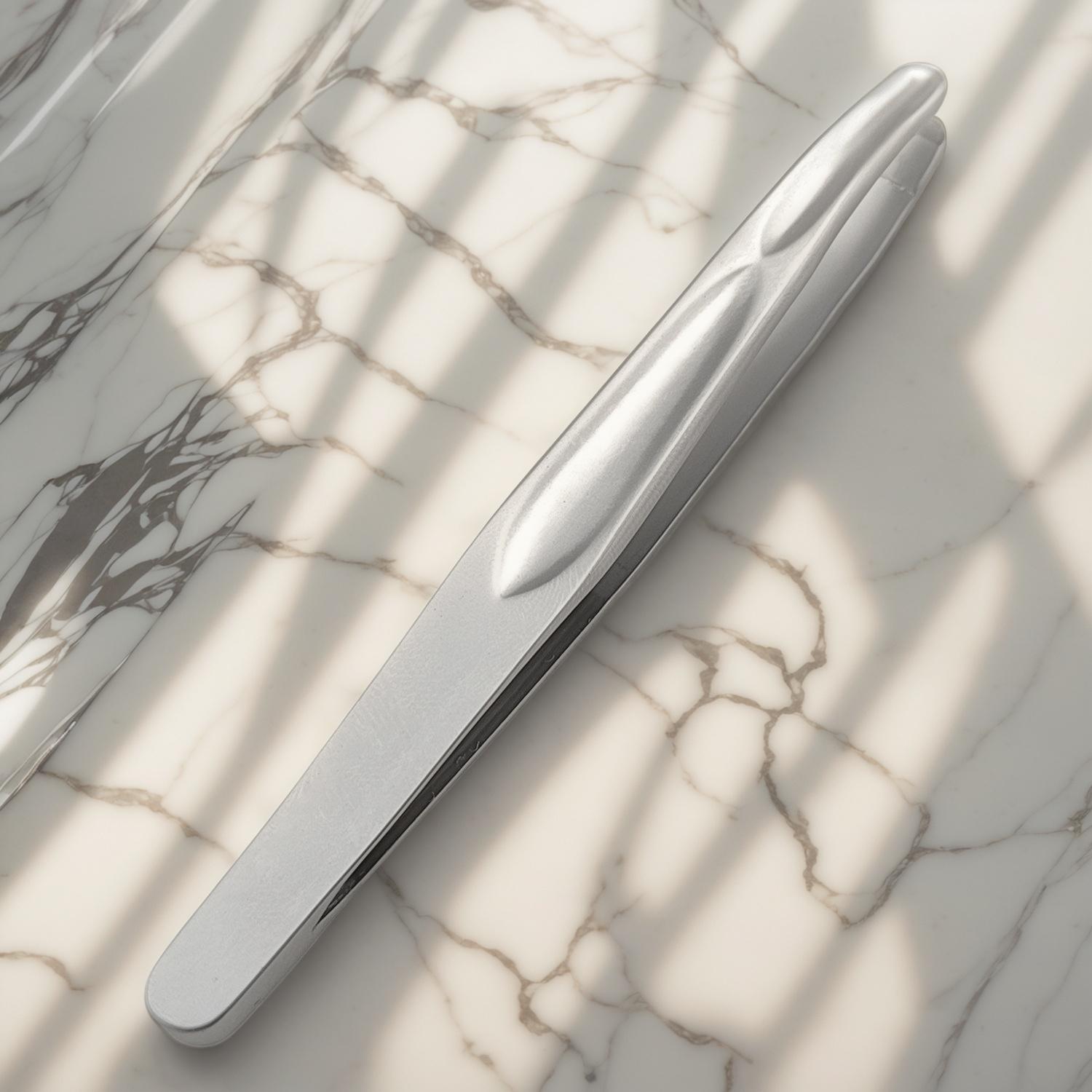
Olimor Beauty highlights precise grooming performance in products such as the Precision Crafted Beard Tweezer, which is designed for controlled removal of stubborn hairs. For bulk buyers, this type of product focus matters because beard grooming customers often expect a firm grip and repeatable control. Whether your end market is men’s grooming, salon retail, beauty accessories, or personal care kits, tip performance should be the first selection filter.
Material, Finishing, and Ergonomics Affect Repeat Sales
Stainless steel is commonly preferred for grooming tools because it is suitable for regular personal-care use and can be finished into precise working edges. However, the words “stainless steel” alone do not tell you whether the product will meet your quality expectations. Buyers should look at surface finish, edge consistency, arm symmetry, and how the tool feels after several minutes of handling.
Ergonomic design is also more than a marketing phrase. A tweezer should sit comfortably between the fingers and allow controlled pressure. If the arms are too slippery, too narrow, or uncomfortable at the edges, the customer may not use it often. For beard grooming or detailed facial grooming, the hand position needs to feel stable because users may work close to the skin.
During sample evaluation, review these details:
- Tip contact: The tips should meet evenly and hold fine hairs or fibers without repeated attempts.
- Arm tension: The squeeze should feel controlled, not weak, loose, or overly stiff.
- Surface finish: Check for rough areas, visible defects, or inconsistent polishing.
- Edge comfort: The holding area should not feel sharp against the fingers.
- Return shape: After squeezing, the tweezer should reopen naturally without distortion.
- Batch consistency: Test multiple samples to see whether the same feel and alignment repeat.
These points are especially important for brands selling through online reviews, beauty retailers, barbershop channels, or subscription grooming kits, where product disappointment can quickly become public feedback.
What a Serious Tweezers Factory Should Control
A supplier’s catalog may show many products, but the production process determines whether bulk orders remain consistent. A serious tweezers factory should control inspection points before, during, and after manufacturing. For buyers, this does not require a technical engineering background. It requires asking the right production questions and knowing what evidence to look for in samples.
The core areas include raw material inspection, forming, finishing, tip filing, alignment checking, cleaning, and final packaging. The original handling of stainless steel matters because defects or inconsistencies can become harder to correct later. Tip work is especially important because even a visually attractive tweezer can fail if the final contact point is inaccurate.
Olimor Beauty emphasizes internal quality control at each stage of production, from raw stainless steel inspection to final packaging. The company also identifies hand-filed tips as part of its quality commitment. For buyers, that detail is meaningful because hand attention at the tip stage can improve the tool’s ability to grip hairs precisely when compared with a product finished without careful alignment checks.
Bulk Ordering Should Match Your Sales Stage
Order flexibility is a practical sourcing issue. A new grooming brand may want to test demand before building a large inventory position. A retailer may need a smaller first order to confirm sell-through in several stores. An established distributor may require a broader plan across multiple products. The best supplier relationship supports the stage of the business instead of forcing a one-size-fits-all purchasing pattern.
Olimor Beauty offers low MOQ tweezers, which can help new and growing brands stock premium grooming tools without a large upfront commitment. This is useful when testing packaging, pricing, channel fit, or customer response. A lower starting quantity can also reduce inventory risk while allowing a buyer to evaluate real-world feedback before scaling.
When planning a bulk order, consider the following sequence:
- Define the user: Decide whether the tweezer is for beard grooming, brow shaping, salon retail, travel kits, or general personal care.
- Approve samples: Test several units for alignment, tension, finish, and hand feel.
- Review packaging needs: Confirm whether the package protects the tips and presents the product clearly.
- Start with a controlled order: Use the first order to test sales performance and customer response.
- Track feedback: Monitor returns, reviews, and comments about grip, comfort, and durability.
- Scale with consistency: Reorder only when the supplier can maintain the approved quality standard.
This process is slower than simply choosing the cheapest quote, but it is more likely to protect your brand margin and reputation.
Packaging and Final Inspection Are Part of Product Quality
Tweezers are precision tools, so packaging should do more than look attractive. It should keep the tips protected, prevent movement that could affect alignment, and present the product in a way that matches the sales channel. For e-commerce, packaging also needs to survive handling before the customer opens it. For retail shelves, the product should be easy to understand at a glance.
Final inspection should include both cosmetic and functional checks. Cosmetic problems can make a product appear low value, while functional issues create direct dissatisfaction. Buyers should review whether the supplier checks the tip closure after finishing and before packing, because damage or misalignment at the last stage can undo earlier production work.
If you are building a wider beauty accessories range, it can also help to compare tweezers alongside related beauty tool products. This gives you a clearer view of material finish, packaging standards, and product positioning across the supplier’s range. You can also browse Olimor Beauty product collections to plan complementary tools for retail sets or grooming assortments.
Buyer Checklist for Comparing Tweezers Bulk Suppliers
Use this checklist when reviewing suppliers, samples, and quotations. It helps separate real production value from surface-level claims.
| Evaluation Area | What to Check | Why It Matters |
|---|---|---|
| Tip alignment | Tips meet evenly and grip fine hairs or fibers | Determines grooming precision and customer satisfaction |
| Material handling | Stainless steel is inspected before production | Supports consistency before forming and finishing |
| Finishing quality | No rough edges, uneven polishing, or visible defects | Affects comfort, perceived value, and retail appeal |
| Tension | Arms close smoothly with controlled pressure | Improves usability during detailed grooming |
| Packaging | Tips are protected and presentation suits the channel | Reduces damage risk and supports brand positioning |
| Order flexibility | MOQ supports your launch or replenishment plan | Helps manage inventory risk and cash flow |
| Quality control | Inspection occurs through production and final packing | Improves batch-to-batch reliability |
Building a Better Supplier Partnership
The right tweezers wholesaler should help you offer a product that customers can trust. That means consistent production, clear communication, reasonable order planning, and attention to the details that make tweezers perform well. It is worth taking time to test samples, compare finishing, and confirm how quality is controlled before committing to a larger order.
Olimor Beauty is positioned for buyers who want precision grooming tools backed by production control and flexible partnership options. For businesses sourcing low MOQ tweezers or planning a broader wholesale grooming range, the focus should remain on performance first: aligned tips, comfortable handling, controlled finishing, and packaging that protects the tool.
If you are evaluating tweezers for your next product launch or replenishment plan, you can send an inquiry with your sourcing requirements. For questions about product options, packaging direction, or supplier fit, contact Olimor and outline your target market, sales channel, and expected use case. A better sourcing decision starts with a clear product standard, not just a price comparison.
Tag: