Eyelash Curler Design: What Makes a Curler Comfortable, Precise, and Professional
An eyelash curler looks simple, but small design decisions have a direct effect on comfort, lash placement, pressure control, and the final curl. For beauty brands, salon suppliers, private label buyers, and retailers, choosing the right curler is not only about appearance. It is about how the tool fits different eye shapes, how smoothly it opens and closes, how the pad contacts the lashes, and whether the overall construction feels reliable in daily use.
Olimor Beauty focuses on beauty tools where shape, finish, and function work together. Whether you are reviewing a curler for a retail line, building a professional kit, or comparing options across beauty tool products, understanding the design details will help you make a better sourcing decision. This guide explains the key areas to evaluate before selecting an eyelash curler for your customers or professional users.
Why Eyelash Curler Design Matters More Than It Seems
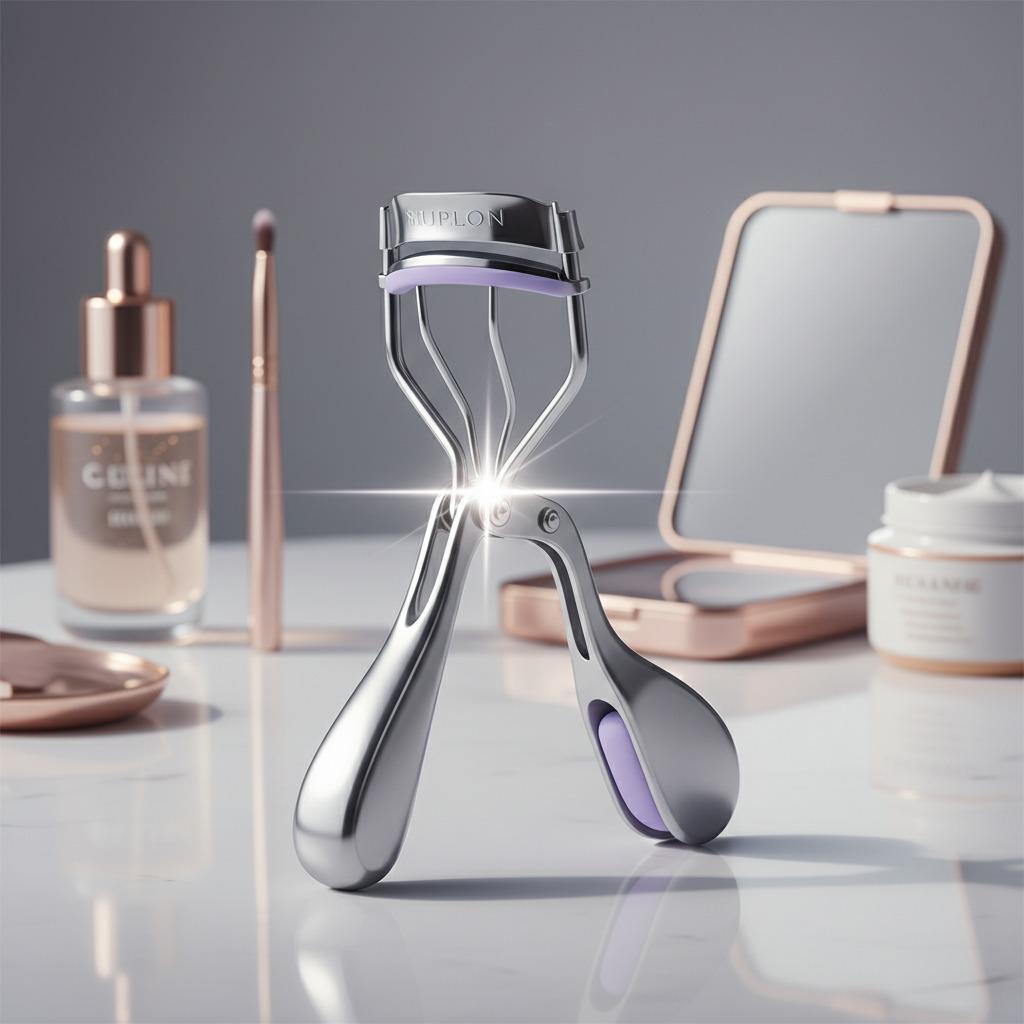
The purpose of an eyelash curler is to lift lashes from the base without pulling, crimping, or pinching the eyelid. To achieve that, the frame, handle, hinge, and cushion must work as a controlled system. If the curvature is too narrow, it may not reach the outer lashes. If it is too flat, it may not sit close enough to the lash line. If the handle is awkward, the user may apply uneven pressure.
For professional users, the difference becomes obvious over repeated applications. A balanced curler allows the hand to stay steady while the upper frame and lower pad align evenly. For retail customers, design affects confidence. A tool that feels stable and gentle is more likely to be used correctly and kept in the makeup routine.
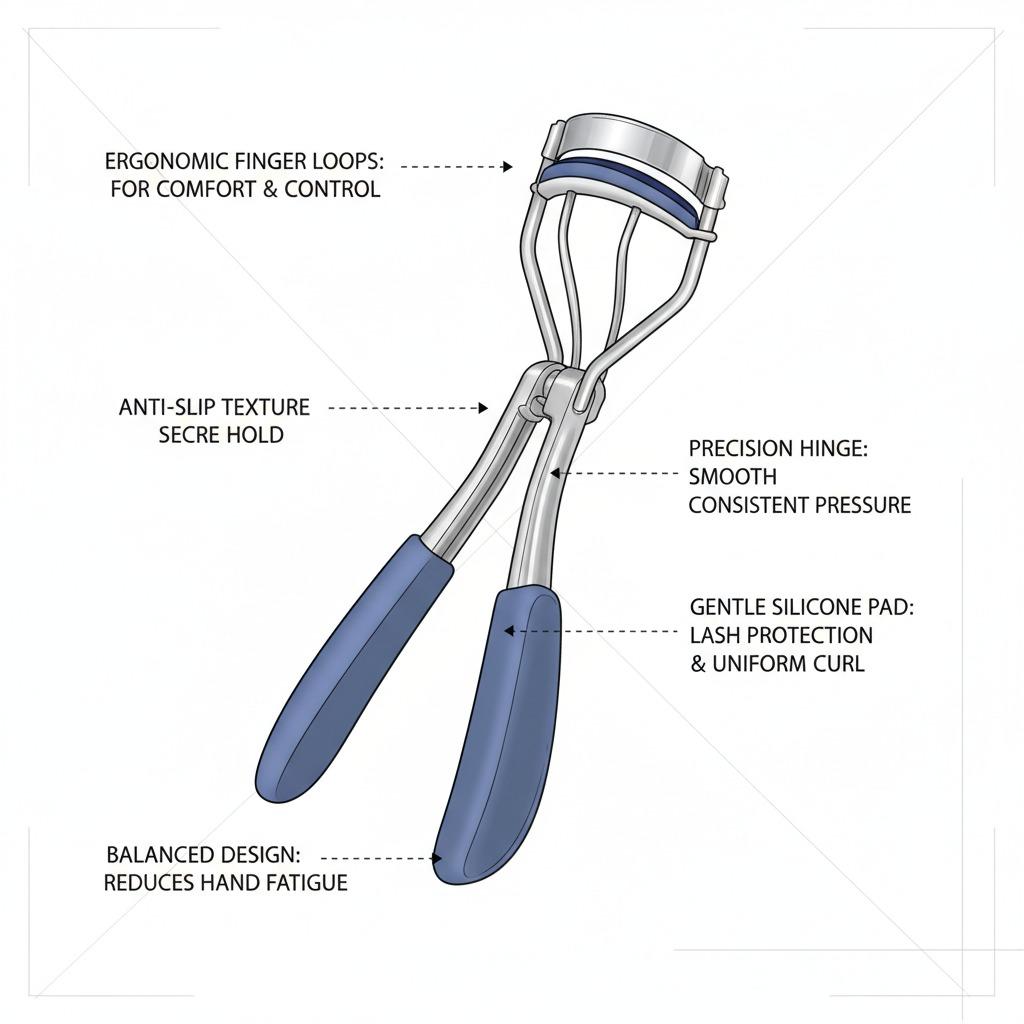
Strong eyelash curler functionality is therefore a combination of several factors: grip comfort, frame geometry, pad softness, edge finishing, opening angle, and pressure feedback. None of these should be evaluated alone. A shiny finish or attractive color can help a product stand out, but the tool must still close smoothly and contact the lashes evenly.
Key Design Elements to Compare Before Buying
When reviewing a professional eyelash curler, buyers should look beyond the first impression. A sample may look appealing in packaging, but performance depends on practical details. The following checklist can be used during product selection, internal review, or comparison testing.
- Frame curvature: Check whether the curve can suit the target customer’s common eye shapes. A comfortable curve should allow the tool to approach the lash line without excessive tilting.
- Handle shape: Ergonomic stainless steel handles, when specified, can provide a firmer grip and help reduce hand fatigue during repeated use.
- Hinge movement: The hinge should open and close smoothly without wobbling, scraping, or sudden resistance.
- Pad contact: The cushion should meet the upper bar evenly so pressure is distributed across the lashes instead of concentrated in one area.
- Edge finishing: Smooth, rounded edges help reduce discomfort near the eyelid and support a cleaner user experience.
- Pressure control: The user should feel when enough pressure has been applied, rather than needing to squeeze hard to see results.
- Replacement planning: For long-term retail satisfaction, consider how pads are supplied, packaged, and explained to the end user.
These criteria are useful for both branded product development and distributor selection. They also help separate meaningful design improvements from purely decorative features.
Comfort, Grip, and Control for Professional Use
Professional makeup artists and lash technicians often work with many clients in a short period of time. A curler that feels acceptable for one use may become tiring when used repeatedly. This is why grip comfort is a serious design point, not a minor detail. Handles should allow the fingers to apply steady pressure while keeping the wrist in a natural position.
Ergonomic stainless steel handles were highlighted in the product information, and that detail matters because stainless steel can support a stable hand feel when properly finished. However, buyers should still evaluate the actual shape and balance. A handle that is too small may feel restrictive, while one that is too wide may reduce control for users with smaller hands.
Control also comes from predictable closure. A good curler should not snap shut abruptly. It should allow gradual pressure, especially near the base of the lashes. This matters for new users who may be cautious around the eye area and for professionals who need consistent results across different lash lengths and densities.
Pad, Pressure, and Lash Protection
The cushion pad is one of the most important parts of eyelash curler design. It sits between the lower frame and the lashes, shaping the curl as pressure is applied. If the pad is too hard, the curl may appear sharply bent. If it is too soft, the lashes may not lift effectively. A well-matched pad supports a rounded curl and helps avoid crimping.
Buyers should test how the pad behaves after repeated presses. It should return to shape without deep cuts, uneven flattening, or shifting out of place. The pad should also align neatly in its channel. Even a well-made frame can perform poorly if the pad moves during use.
Pressure calibration is another useful concept when comparing samples. The tool should not require excessive force. Too much force increases the risk of discomfort and may discourage daily use. Instead, the best user experience comes from a frame and pad combination that creates lift with moderate, controlled pressure.
How to Evaluate Samples for Retail or Salon Supply
Before placing an order or adding a curler to a professional range, it is helpful to create a structured sample review. This keeps the decision focused on performance rather than personal preference alone. The table below can be used by product teams, salon buyers, or purchasing managers.
| Evaluation Area | What to Check | Why It Matters |
|---|---|---|
| Fit near lash line | Whether the frame reaches inner, center, and outer lashes comfortably | Improves usable lift across different eye shapes |
| Opening and closing | Smooth movement, stable hinge, no uneven drag | Supports better control and user confidence |
| Pad performance | Even contact, good rebound, no slipping | Helps create a rounded curl without harsh bending |
| Handle comfort | Grip size, finger position, wrist angle | Reduces strain during repeated or professional use |
| Finish quality | Rounded edges, clean surface, no rough contact points | Improves comfort around the delicate eye area |
| Packaging suitability | Protection, instructions, replacement pad communication | Improves retail presentation and after-sale experience |
For a broader comparison across beauty categories, buyers can also review Olimor product collections to consider how an eyelash curler fits into a wider tool assortment.
Maintenance Guidance Customers Will Actually Use
A well-designed curler also needs clear maintenance guidance. Retail customers may not know when to clean the tool or replace the cushion. Professional users may understand hygiene better, but they still need tools that are easy to wipe and inspect.
- Clean after use: Remove makeup residue from the pad and frame with a suitable gentle cleaning method, especially when mascara or eyeliner transfers to the tool.
- Inspect the pad regularly: Look for cracks, cuts, flattening, or looseness. A worn pad can change the curl shape and reduce comfort.
- Avoid curling after heavy mascara application: Sticky or stiff lashes may pull more easily. Many users prefer curling clean lashes before mascara.
- Store away from pressure: Do not crush the curler in a crowded makeup bag, as the frame or pad position may be affected.
- Replace worn parts when needed: If the cushion no longer rebounds or sits correctly, the user experience will decline even if the metal frame remains intact.
Including simple care instructions in packaging or product pages can reduce complaints and help customers get better results from the same tool.
Sourcing Questions for Beauty Brands and Distributors
When selecting an eyelash curler for a brand, distributor catalog, or salon channel, the right questions help clarify whether a product is suitable for your market. Instead of focusing only on price or appearance, consider how the tool will be positioned and used.
Useful sourcing questions include: Who is the target user: beginner, salon professional, retailer, or travel customer? What eye shapes are most common in the target market? Is the preferred finish classic, minimal, or retail-display focused? Will the product be sold alone or as part of a larger beauty tool set? How should replacement pads, usage instructions, and packaging information be handled?
Buyers should also consider quality consistency. A single good sample is not enough if future batches vary in hinge smoothness, pad alignment, or edge finishing. Establishing clear approval criteria helps protect product reputation and customer satisfaction. If you are comparing options for a new line or need help narrowing requirements, you can send an inquiry or contact Olimor with your target use case.
Choosing a Curler That Matches the End User
The best eyelash curler design depends on the user and sales channel. A salon-focused buyer may prioritize durability, grip comfort, and consistent pressure. A retail brand may care about packaging, ease of use, and a shape that feels approachable for beginners. A distributor may need a balanced design that can serve different customer groups without becoming too specialized.
Before final selection, test the curler in realistic conditions: clean lashes, different lash lengths, left and right eye use, repeated opening and closing, and post-cleaning inspection. The goal is not to find the most complicated tool, but the one that gives controlled lift, comfortable handling, and dependable construction.
Eyelash curler design is successful when users barely notice the mechanics. The frame sits correctly, the handles feel secure, the pad cushions evenly, and the curl looks natural rather than forced. For beauty businesses, paying attention to those details can turn a basic tool into a reliable product customers keep using.
Tag: