Cuticle Nippers Comparison: How to Choose Single Spring or Double Spring Tools
Cuticle nippers are precision nail-care tools used to trim loose cuticle and small hangnails cleanly. The best choice is not simply the sharpest tool or the most expensive-looking design. For salons, distributors and private-label buyers, the right cuticle nipper should combine controlled cutting, stable jaw alignment, comfortable handling, reliable spring return and packaging that protects the tips before the tool reaches the user.
This guide compares single spring and double spring cuticle nippers with a practical sourcing perspective. Olimor Beauty offers stainless steel cuticle nippers for nail grooming, including single spring and double spring options. Product details include hand-filed cutting edges, ergonomic grip design, stainless steel construction and quality checks during production and packaging. Those details are useful starting points, but buyers should still evaluate fit for use, inspection criteria, maintenance needs and supplier communication before placing an order.
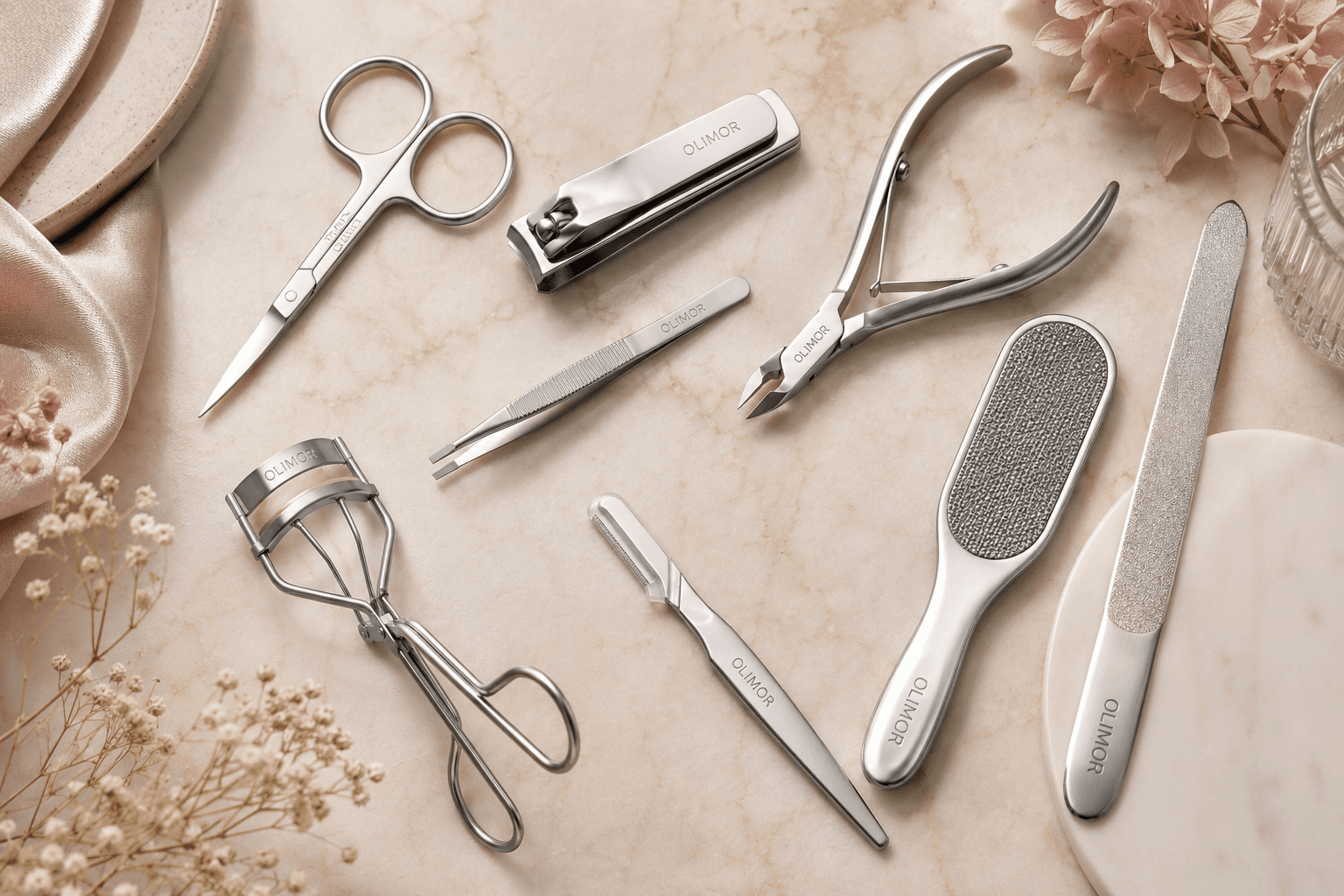
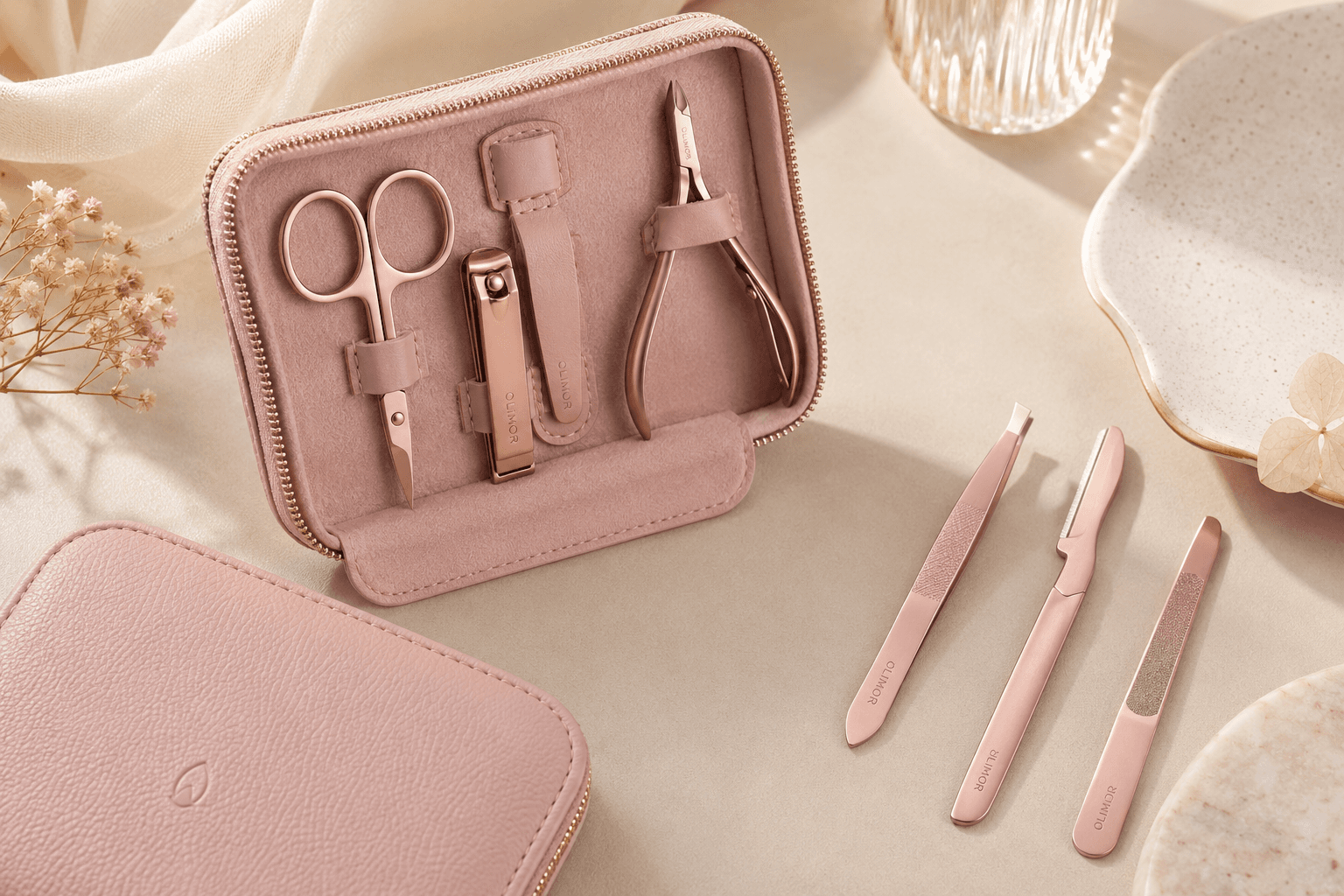
If you are reviewing manicure tools for a salon range, retail assortment or professional kit, you can compare related items in Olimor’s beauty tool products while using the checks below to narrow your cuticle nipper selection.
What Cuticle Nippers Are Designed to Do
Cuticle nippers are designed for small, precise trimming of dead, dry or lifted skin around the nail plate. They are not intended to cut the nail itself, remove healthy living skin or replace nail clippers. A good nipper should make short, controlled cuts without crushing, tearing or pulling the skin.
The tool works best after the cuticle area has been softened and gently pushed back. Once loose tissue is visible, the user can trim only the lifted portion. This matters because many quality problems blamed on a nipper are actually caused by incorrect use: cutting too deeply, trimming attached skin, working on dry skin without preparation or twisting the wrist to reach difficult angles.
For professional users, a cuticle nipper must remain comfortable during repeated open-and-close movements. For home users, the tool should feel stable and easy to control, even when trimming slowly. For B2B buyers, the product should also be easy to explain to end users: what it is for, how to inspect it, how to clean it and when to stop using it.
Single Spring Cuticle Nippers: Simple Control for Detailed Work
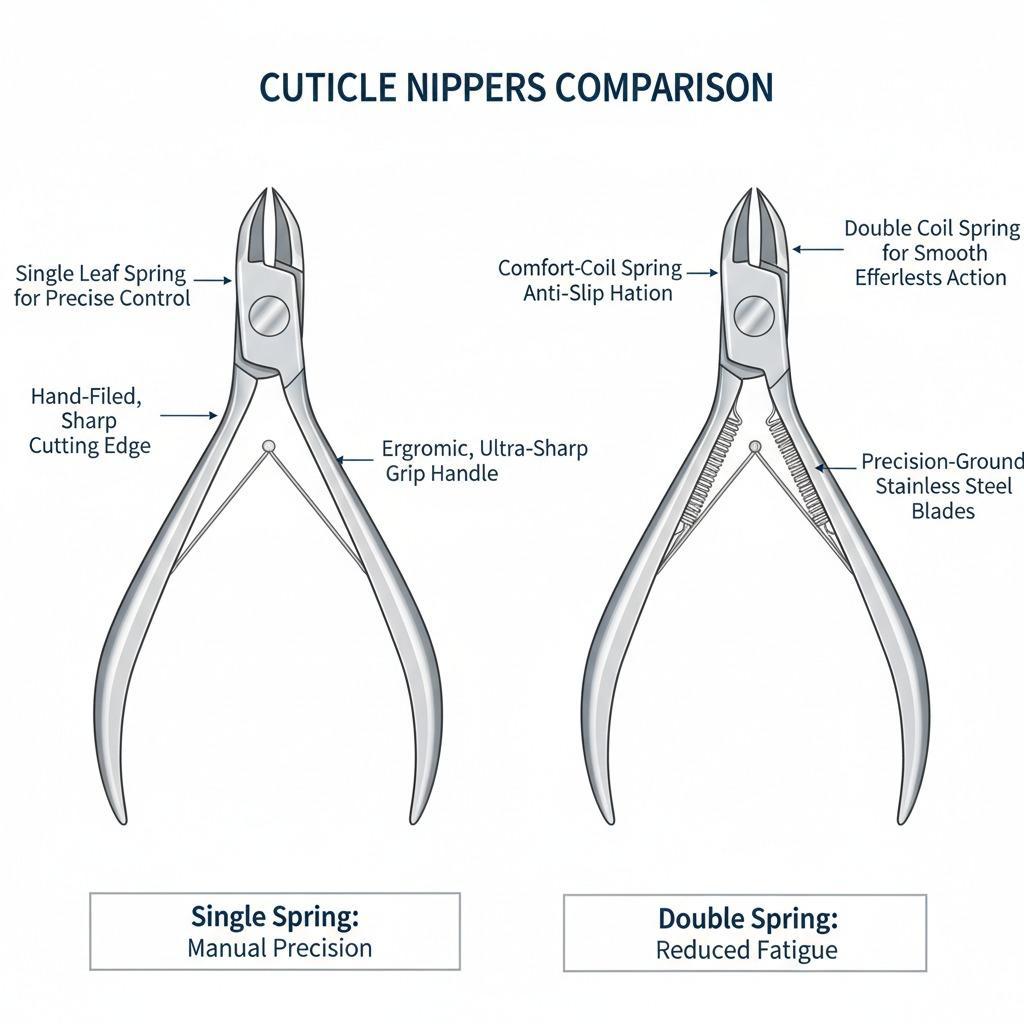
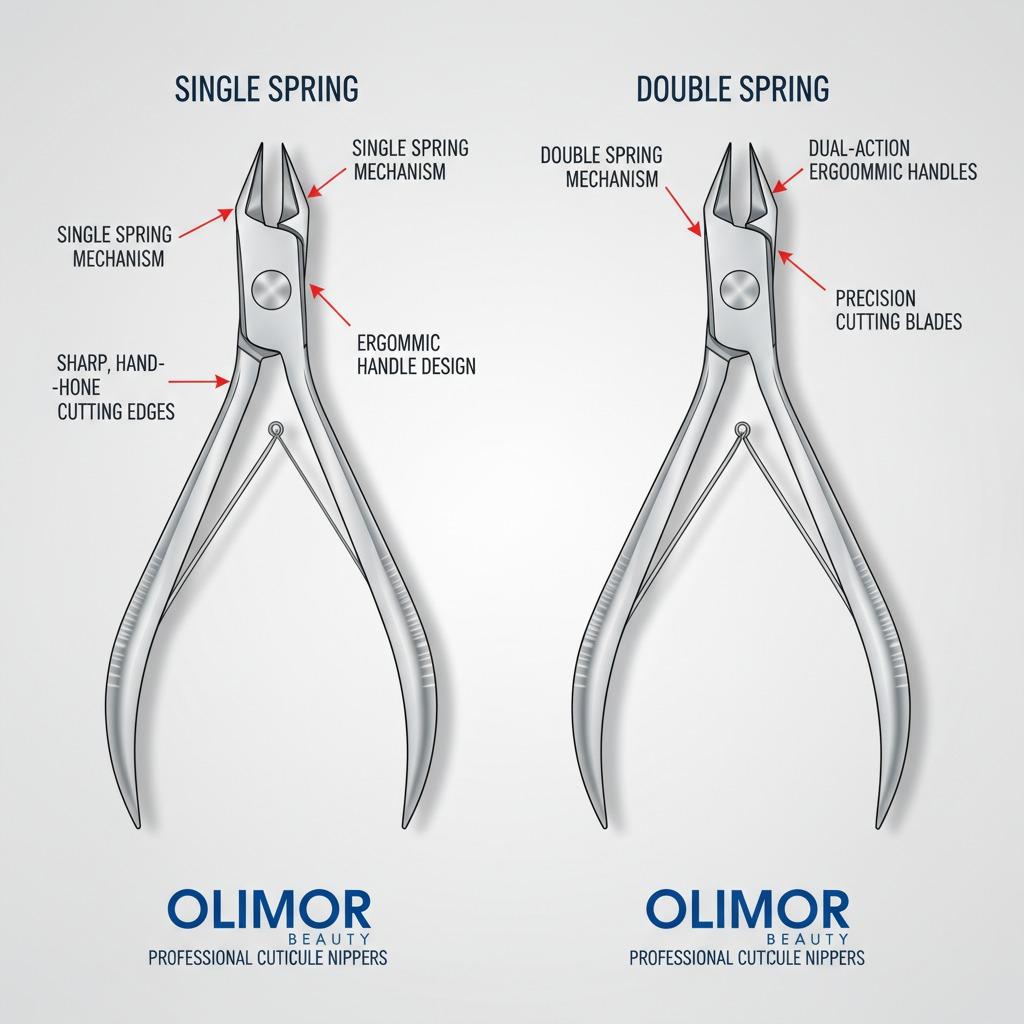
Single spring cuticle nippers use one spring arm to reopen the handles after each cut. This design is direct and familiar to many users. The return action is usually straightforward, and the mechanism is easy to inspect visually. For buyers who prioritize simplicity and controlled cutting feel, a single spring design is often a strong option.
Olimor Beauty’s single spring cuticle nippers are described with stainless steel construction, hand-filed cutting edges and ergonomic grip design. In practice, those points matter because the user is making very small cuts near sensitive skin. A hand-filed cutting edge can support cleaner trimming when the jaws are well aligned, while an ergonomic grip helps the user apply pressure in a controlled way rather than squeezing too hard.
Single spring nippers are often suitable for personal manicure kits, mobile nail-care kits, retail nail tool assortments and users who prefer a compact mechanism with fewer moving components. They can be especially useful for careful trimming around sidewalls, nail corners and small hangnails where the user wants to feel exactly how the jaws close.
When a Single Spring Nipper Makes Sense
- Occasional personal use: The user trims cuticles weekly or as needed and does not perform long sessions.
- Detail-focused trimming: The buyer wants controlled movement for small hangnails and lifted cuticle.
- Simple inspection: The spring, hinge and jaw contact points are easy to check before use.
- Training or retail education: The tool is easier to explain to beginners because the mechanism is uncomplicated.
Before purchasing, check that the spring returns smoothly, the handles close evenly and the cutting points meet without an obvious gap. A simple design is only useful when the hinge is stable and the jaws are properly finished.
Double Spring Cuticle Nippers: Assisted Return for Repeated Use
Double spring cuticle nippers use a paired spring mechanism to help reopen the handles after each cut. The main advantage is not automatically sharper cutting; sharpness still depends on the cutting edges and jaw alignment. The advantage is a smoother assisted return that may reduce hand strain during repeated use.
This design is especially relevant for nail technicians, salon teams and buyers supplying professional kits. During a manicure, the user may make many small cuts across both hands. A spring that helps reset the handles can support a steadier rhythm, especially when the user needs to work carefully without squeezing and reopening the tool manually each time.
Olimor Beauty’s double spring cuticle nippers are presented as stainless steel tools designed for smoother operation. For commercial buyers, that makes the double spring option worth considering when the product is intended for frequent service work, training schools, salon resale or customers who ask for more assisted handle movement.
When a Double Spring Nipper Makes Sense
- Professional manicures: The user performs repeated cuticle cleanup and values smoother handle return.
- Longer sessions: Assisted reopening can make the tool feel more comfortable over time.
- Consistent working rhythm: The mechanism helps the user make short, repeated snips without interrupting hand position.
- Comfort-led assortment planning: Retailers can offer double spring nippers as a more assisted alternative to single spring styles.
The tradeoff is that a double spring mechanism has more parts to observe. When comparing samples, check that both spring arms sit securely, open evenly and do not push the handles wider than the intended user can comfortably manage.
Single Spring vs Double Spring Cuticle Nippers
The better tool depends on the use case. A single spring nipper can be excellent for careful personal grooming, while a double spring nipper may be more comfortable for repeated professional cuts. Buyers should compare the spring mechanism together with jaw quality, hinge stability, handle comfort and packaging protection.
| Selection factor | Single spring cuticle nippers | Double spring cuticle nippers |
|---|---|---|
| Primary advantage | Simple, direct hand feel with fewer spring parts | Smoother assisted reopening during repeated use |
| Best fit | Personal nail care, detailed trimming, compact kits | Salon use, frequent manicures, comfort-focused users |
| Inspection focus | Single spring position, jaw closure and hinge stability | Balanced spring action, secure spring seating and smooth return |
| User experience | Controlled and straightforward | More assisted and rhythmic |
| Potential concern | May feel less assisted in long sessions | More moving parts to inspect and maintain |
| Buying priority | Precision, simplicity and easy handling | Comfort, repeatability and smooth operation |
How to Inspect Cutting Quality Before Buying
Spring type should not be the only buying criterion. A cuticle nipper cuts well because the jaws meet correctly, the edges are properly finished and the hinge holds the tool stable during pressure. Stainless steel construction is useful for a beauty tool because it supports durability and corrosion resistance, but it does not remove the need for careful finishing and inspection.
For B2B sourcing, sample review should be structured. Ask for clear product information and inspect the tool as a working instrument, not only as a catalog image. A nipper may look polished but still fail practical checks if the tips do not meet cleanly or if the hinge wobbles.
Practical Inspection Checklist
- Jaw alignment: Close the tool slowly and confirm that the cutting points meet evenly. A gap can leave skin uncut, while overlap can make the action rough.
- Tip precision: Fine tips help reach corners and hangnails, but they should appear symmetrical and stable.
- Cutting edge finish: Hand-filed cutting edges, as stated in Olimor product information, should feel clean and purposeful rather than rough or burred.
- Hinge movement: Open and close the nipper several times. It should move smoothly without side-to-side looseness.
- Spring return: The handles should reopen consistently without sticking, scraping or forcing the hand into an uncomfortable span.
- Grip comfort: The handles should fit naturally so users can trim with small, controlled pressure.
- Surface finish: Check the handle edges and body for rough spots that could irritate the hand.
- Packaging protection: The tips should be protected during storage and transport so the cutting edges are not damaged before use.
For distributors and salon supply buyers, these checks also help reduce after-sale complaints. Many return issues come from a mismatch between tool type and user expectation, so product descriptions should clearly explain whether the nipper is single spring or double spring and what kind of use it best supports.
Use and Safety Guidance for Cleaner Nail Care
A sharp cuticle nipper should make nail care more controlled, not more aggressive. The safest results usually come from preparation, restraint and hygiene. Users should wash hands, soften the cuticle area, gently push back the cuticle and trim only lifted or dead skin. If skin is attached, painful, red or bleeding, trimming should stop.
Professional salons must follow applicable local rules for cleaning, disinfection and tool handling. In the United States, salon sanitation requirements are often set by state cosmetology boards and local public health authorities. Some disinfectants used in salon environments may be U.S. EPA-registered; users should verify current product labels, local regulations and supplier documents rather than relying on general claims.
- Clean the nipper before use and confirm that the jaws open and close smoothly.
- Soften the cuticle area with warm water or a suitable nail-care preparation.
- Push back gently before trimming so loose tissue is visible.
- Hold the nipper at a comfortable angle; do not twist the wrist to force access.
- Trim only lifted, dry or torn skin in small snips.
- Do not cut a deep continuous line around the nail.
- Stop if the skin feels painful, attached or irritated.
- Clean, dry and store the tool after use with the tips protected.
Home users should treat cuticle nippers as personal precision tools, not household scissors. Sharing without proper cleaning can increase hygiene risk. Dropping the tool may also damage the fine tips or change jaw alignment even if the body still looks acceptable.
Maintenance, Storage and Service Life Factors
Cuticle nippers last longer when cleaning and storage are consistent. Stainless steel supports durability, but any precision cutting tool can be affected by residue, moisture, impact or poor storage. After each use, remove visible debris from the jaws, wipe the tool and dry the hinge area. Moisture trapped around the joint can affect smooth movement over time.
Storage is especially important for professional kits and retail inventory. Nippers should not be thrown loosely into a drawer with nail files, clippers and other metal tools. Contact with hard objects can nick the cutting edge or misalign the tips. Packaging should keep the tool stable and protect the jaw area during shipping, warehouse handling and retail display.
For salons, inspection should be part of the daily routine. Remove a nipper from service if it pulls instead of cuts, if the hinge becomes loose, if the spring no longer returns smoothly or if the tips are visibly damaged. For wholesalers and private-label buyers, ask suppliers how tools are checked during production and final packaging. Olimor Beauty states that quality checks are performed from raw materials to final packaging, which is relevant because precision nail tools can be damaged if the final handling stage is careless.
Cost Factors and Supplier Evaluation for B2B Buyers
Cuticle nipper cost is influenced by more than the spring type. Buyers should consider material selection, edge finishing, polishing, assembly consistency, inspection procedures, packaging and customization requirements. A lower unit cost may not be the best value if tools arrive with inconsistent jaw alignment or insufficient tip protection.
When comparing suppliers, avoid relying only on product photos. Request practical details about construction, spring design, finishing process, packaging options and quality-control steps. Do not assume certifications, test results or compliance documents unless the supplier provides current, verifiable evidence. If a product will be sold in a regulated retail environment, verify the relevant requirements in the target market before confirming packaging or claims.
Questions to Ask a Cuticle Nipper Supplier
- Which spring types are available: single spring, double spring or both?
- How are cutting edges finished and inspected before packaging?
- What packaging options protect the tips during transport and storage?
- Can the handle style, finish or packaging be customized for a retail or salon range?
- What documents, samples or production details can be reviewed before order confirmation?
If you are building a broader manicure tool line, review compatible items in the beauty tool collection so the nipper style, finish and packaging direction match the rest of your assortment.
How to Choose the Right Olimor Cuticle Nipper
Start with the user. For occasional home grooming and precise touch-ups, a single spring cuticle nipper offers a simple mechanism and direct control. For repeated salon work, professional kits or users who want more assisted handle return, a double spring cuticle nipper may be the better fit. In both cases, prioritize jaw alignment, clean edge finishing, smooth hinge movement, comfortable grip and protective packaging.
For commercial buyers, the best selection process is practical: define the intended use, compare samples, inspect the cutting action, confirm packaging needs and ask clear questions before ordering. Olimor Beauty supplies precision beauty tools, including cuticle nippers for nail-care routines. Buyers can contact Olimor Beauty to discuss product options or send a sourcing inquiry with preferred spring type, use case and customization needs.
FAQ
Can I request samples before choosing a cuticle nipper style?
Sample availability should be confirmed with the supplier. For B2B buyers, samples are useful for checking jaw alignment, spring return, grip comfort, edge finish and packaging protection before making a purchasing decision.
Is there a minimum order quantity for cuticle nippers?
MOQ can vary by product style, customization request and packaging requirement. Contact Olimor Beauty with the intended use, preferred spring type and order plan so the team can provide applicable purchasing details.
Can cuticle nippers be customized for retail or salon branding?
Customization may depend on the selected tool, finish, packaging and order requirements. Buyers should confirm available options directly and review samples or proofs before approving production.
How should quality be checked when receiving cuticle nippers?
Inspect jaw alignment, tip symmetry, hinge stability, spring action, surface finish and packaging condition. Any tool that pulls, sticks, wobbles or has damaged tips should be separated for review before distribution or use.
How long does production or delivery take?
Lead time depends on product availability, order quantity, packaging and customization. Ask for the current schedule and confirm all product details before placing an order.
Tag: