Bulk Nail Clipper Price: What Distributors, Retailers, and Resellers Should Compare
Bulk nail clipper price is not only a per-unit number. For distributors, retailers, and resellers, the real cost depends on product construction, assortment mix, packaging, inspection expectations, shipping volume, and how quickly the item can move through the sales channel. A low quote can become expensive if the clipper feels weak, has inconsistent blade alignment, arrives in packaging that does not fit the selling format, or creates avoidable after-sales issues.
Nail clippers are everyday grooming tools, but buyers still make careful decisions. A distributor may need a reliable item that can be supplied repeatedly to multiple accounts. A retailer may want attractive sets that are easy to display and simple for shoppers to understand. A reseller may focus on products that photograph well, ship efficiently, and create fewer complaints. This guide explains how to evaluate the buying factors behind bulk nail clipper price so your purchasing decision supports both margin and customer satisfaction.
Why Bulk Nail Clipper Price Varies Between Suppliers
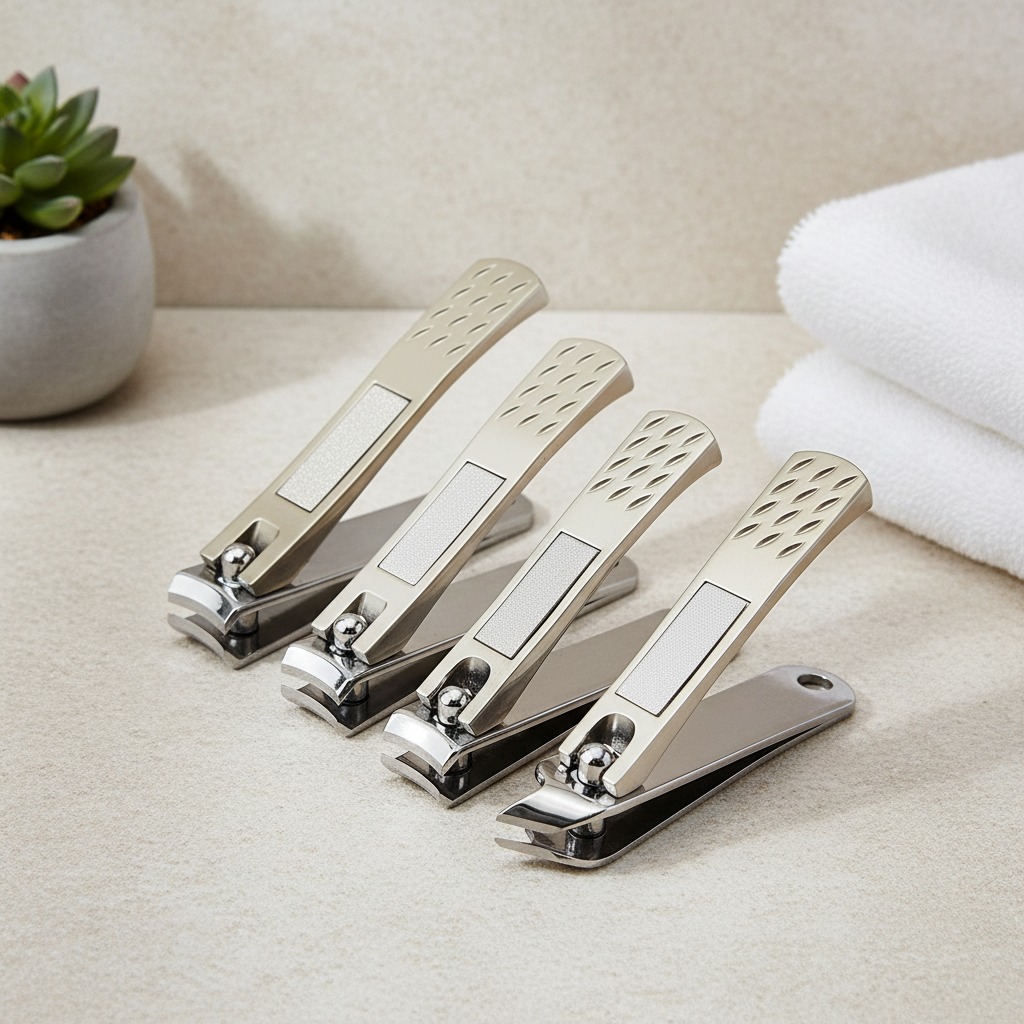
Two nail clipper quotes can look similar at first, but the products may not be equivalent. Price often reflects what is included in the tool, how it is finished, how it is packed, and how much sorting or quality control is required before shipment. A stainless steel construction, for example, is a useful starting point because buyers commonly associate stainless steel grooming tools with durability and clean appearance. However, the final value also depends on cutting feel, edge consistency, handle comfort, and the finish of the lever and body.
Ergonomic design is another important factor. A clipper that is difficult to grip may generate poor user feedback even when the metal appears acceptable. Textured grips, curved blades, wide-jaw options for tougher nails, and compact travel sizes all influence the final product positioning. A set that includes different clipper types can justify a different price point from a single basic clipper because it serves more use cases: manicure, pedicure, and quick touch-ups.
Packaging also changes the total landed value. Bulk-packed clippers may suit distributors supplying service businesses or repackaging partners. Retail-ready packaging may cost more but can reduce handling time for stores and improve shelf presentation. For buyers comparing beauty tool products, the right question is not simply “Which supplier is cheapest?” but “Which configuration best matches the sales channel and target customer?”
Distributor Priorities: Repeatable Supply and Cost Control
A nail clipper for distributors must be easy to reorder, simple to explain to downstream customers, and stable enough in quality to protect long-term accounts. Distributors often compare bulk nail clipper price across larger quantities, but they also need to consider consistency from order to order. If a product changes noticeably between shipments, retail clients may lose confidence or request returns.
For distribution buying, the most useful comparison is a structured landed-cost view. This includes the product cost, packaging cost, freight impact, inspection requirements, storage needs, and expected sell-through speed. Larger orders can improve per-unit economics, but only when the selected item matches market demand. Overstocking the wrong configuration can reduce cash flow even if the unit price appears attractive.
- Assortment clarity: Decide whether the order should focus on single clippers, multi-piece sets, or a mix of standard, wide-jaw, and compact travel sizes.
- Use-case coverage: Sets with manicure, pedicure, and touch-up options may work well for accounts that prefer complete grooming solutions.
- Inspection expectations: Define acceptable standards for cutting edge alignment, lever action, finish appearance, and packaging condition.
- Channel fit: Bulk supply, retail display, and online resale may each require different packaging and labeling approaches.
- Reorder planning: Choose a configuration that can be replenished without forcing customers to change their shelf layout or product page frequently.
Retailer Considerations: Shelf Appeal, Margin, and Inventory Risk
A nail clipper for retailers needs to be easy for shoppers to understand quickly. Unlike distributors, retailers often carry more visible inventory risk because products occupy shelf space, display hooks, drawers, or counter areas. A slightly higher unit price may be acceptable if the item presents well and helps customers choose without staff explanation.
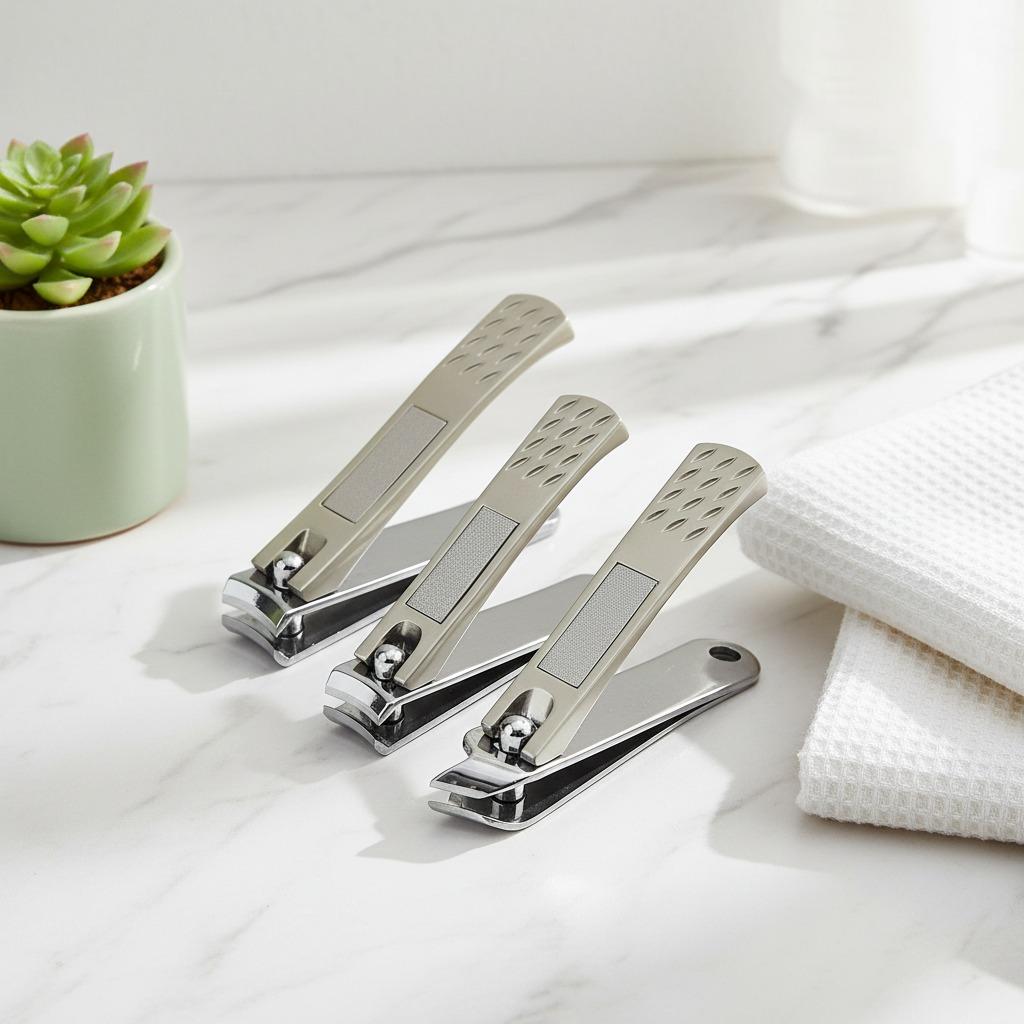
For store environments, product variety can be useful when it is not confusing. A three-clipper variety that supports manicure, pedicure, and touch-ups gives shoppers a practical reason to choose a set instead of a single low-cost item. Curved blades can be positioned around precision and controlled trimming, while textured grips can be presented as a comfort feature. Wide-jaw clippers can appeal to shoppers dealing with tougher nails, while compact travel sizes can fit checkout, travel, or personal-care categories.
Retail buyers should also compare packaging strength and display compatibility. Does the packaging protect the clipper finish during handling? Can the product hang, stand, or sit neatly in a tray? Is the product name and use case clear from the front? These details can affect sell-through more than a small price difference. If a store must rework packaging or explain the product repeatedly, the operational cost rises.
Reseller Strategy: Fast Listing, Clear Differentiation, and Fewer Complaints
A nail clipper for resellers often succeeds when the product is easy to list, easy to ship, and easy for the buyer to evaluate from photos and descriptions. Online shoppers compare grooming tools quickly, so resellers need visible differences: set composition, grip texture, compact size, wide-jaw function, or stainless steel construction. The product should not rely on vague claims. Clear, factual descriptions usually perform better and reduce returns caused by mismatched expectations.
For resellers, bulk nail clipper price should be assessed alongside packaging dimensions, product weight, listing photography, and customer service risk. A lower-priced item that arrives with inconsistent finish or blade alignment may create more complaints than a better-selected product with a modestly higher cost. Since nail clippers are functional tools, buyers notice cutting performance immediately.
Resellers should prepare product pages around real use cases rather than exaggerated promises. For example, describe whether the assortment is suited for fingernail trimming, toenail trimming, travel grooming, or household backup use. If selling a set, show the size differences clearly and explain why each clipper is included. This helps customers choose confidently and can reduce unnecessary questions before purchase.
Bulk Nail Clipper Price Comparison Checklist
The following checklist helps buyers compare quotes in a way that is more useful than looking at unit price alone. It can be used when reviewing a supplier offer, preparing a purchase request, or comparing different nail clipper assortments.
| Comparison Area | What to Review | Why It Affects Price |
|---|---|---|
| Material and finish | Stainless steel construction, surface finish, visible defects, lever smoothness | Better consistency can reduce complaints and improve perceived value |
| Blade design | Curved blades, cutting alignment, edge feel, wide-jaw option if included | Cutting performance is the main reason customers keep or reject the product |
| Grip and comfort | Ergonomic shape, textured grips, ease of pressure control | Comfort features can support stronger retail positioning |
| Assortment | Single clipper, compact travel size, or multi-clipper set | Sets may cost more but can serve broader use cases |
| Packaging | Bulk pack, retail pack, display suitability, protection during transit | Packaging affects shelf appeal, shipping volume, and handling labor |
How to Choose the Right Nail Clipper Assortment
The best assortment depends on who will buy the product after you. A distributor serving many account types may prefer a balanced selection that covers standard household grooming needs. A retailer with limited shelf space may prefer a compact set that clearly explains its manicure, pedicure, and touch-up uses. A reseller may choose products that create clear listing differences, such as compact travel sizes or wide-jaw options for tougher nails.
Before placing a bulk order, map the product to its expected sales environment. For a supermarket, drugstore, or personal-care aisle, simple packaging and fast recognition matter. For a salon supply or grooming kit category, the feel of the clipper and the completeness of the set may be more important. For online sales, photos, measurements, and feature descriptions must reduce uncertainty because the customer cannot test the tool before buying.
- Define the primary customer: distributor account, retail shopper, online buyer, salon user, or travel-grooming customer.
- Select the format: single clipper, three-clipper variety, compact travel size, or wider-jaw option.
- Review the functional details: curved blades, textured grips, ergonomic handling, and cutting consistency.
- Match packaging to the channel: bulk cartons, retail display packaging, or e-commerce-friendly protection.
- Compare total landed cost rather than only the quoted unit price.
Questions to Settle Before Confirming a Bulk Order
Good sourcing decisions come from clear requirements. Instead of relying only on broad descriptions such as “premium” or “high quality,” create a short product specification sheet for comparison. Include the clipper type, set composition, packaging preference, finish expectations, inspection points, and any labeling needs. This allows quotes to be compared fairly and helps avoid misunderstandings after production or packing.
Buyers can also prepare acceptable quality expectations in practical language. For example: blades should meet evenly, the lever should move smoothly, the grip texture should be consistent, and packaging should arrive clean and saleable. These points are simple, but they directly influence whether the final product is suitable for resale.
If you are building a grooming category or comparing nail clippers with other personal-care tools, browse Olimor Beauty product collections to understand available category directions. For project-specific sourcing, packaging, or assortment discussions, you can send an inquiry with your target channel and preferred product format.
Final Takeaway for Bulk Buyers
The most useful bulk nail clipper price is the one that supports your selling model. Distributors should focus on repeatable supply, clear assortment planning, and quality stability. Retailers should weigh shelf presentation, shopper understanding, and margin after handling costs. Resellers should prioritize clear product differentiation, reliable packaging, and accurate listing information.
Olimor Beauty nail clipper sets are positioned around practical grooming use, with stainless steel construction, ergonomic designs, curved blades, textured grips, and options such as wide-jaw and compact travel formats described for different trimming needs. When comparing offers, look beyond the headline price and evaluate the complete path from supplier carton to end user. That approach helps protect margin, reduce avoidable complaints, and build a product selection customers are more likely to buy again.
For buyers comparing nail clippers with other grooming tools or planning a customized purchasing discussion, you can also contact Olimor for the next step.
Tag: