How to Choose a Reliable Nail Clipper Manufacturer in China
Finding the best nail clipper manufacturer in China is not just a matter of comparing catalog photos. For importers, beauty retailers, private-label buyers and grooming kit brands, the right supplier must combine consistent cutting performance, durable materials, comfortable handling and reliable export execution. A nail clipper is a small product, but customers notice every detail: whether the blades meet cleanly, whether the lever feels stable, whether the finish resists rough edges, and whether the clipper still performs after repeated use.
Olimor Beauty focuses on practical beauty and grooming tools for daily use, including nail clippers designed around clean trimming, compact storage and dependable handling. When evaluating a nail clipper supplier, buyers should look beyond broad claims and examine the manufacturing decisions that affect performance in the hand. This guide explains the most important quality points to review before choosing a Chinese nail clipper manufacturer for retail, wholesale or custom sourcing projects.
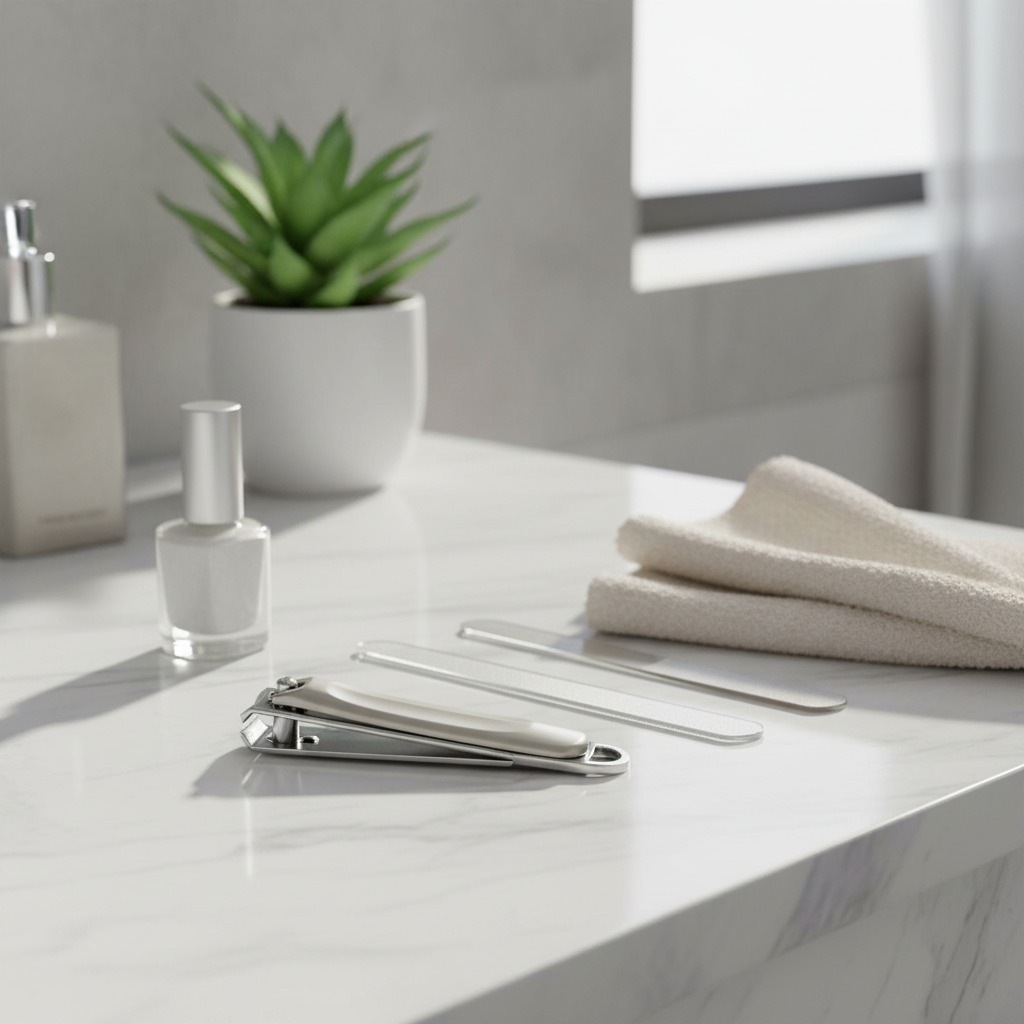
What Defines a High-Quality Nail Clipper?
A good nail clipper should cut cleanly without forcing the user to press excessively. The cutting edges need to align evenly from one side to the other, and the lever should transfer pressure smoothly. Poor alignment can crush the nail instead of trimming it, leaving rough edges or requiring several repeated cuts. For buyers, this is one of the simplest and most useful checks: test the clipper on different nail thicknesses and observe whether the cut is controlled, clean and predictable.
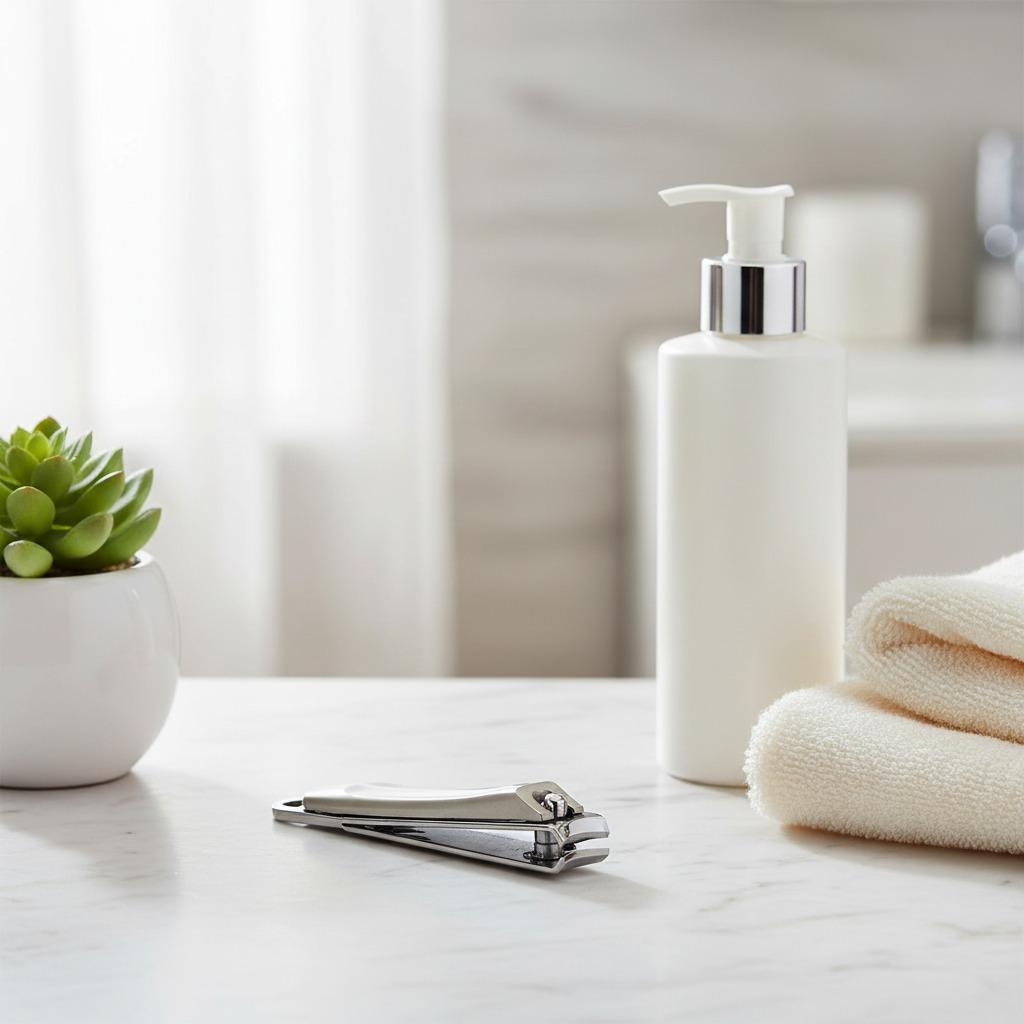
Material choice also matters. The supplied product information highlights stainless steel construction, which is a common choice for grooming tools because it supports strength, hygiene and corrosion resistance when properly processed and maintained. Buyers should still review the specific finish, edge consistency and surface quality of each sample. A nail clipper may look similar in a product photo, but the difference becomes clear when the spring action, blade bite and edge polishing are tested side by side.
Ergonomics should not be treated as a cosmetic feature. Olimor Beauty’s nail clippers are described with ergonomic handles that fit naturally in the hand. For retail buyers, this matters because nail trimming is a precision task, especially for elderly users, travelers, salon kits and everyday household grooming. A handle that is too slippery, too narrow or poorly balanced can make the product feel cheap even if the metal body is strong.
Buyer Checklist for Comparing Nail Clipper Suppliers
When comparing manufacturers, use a structured checklist instead of relying only on price. The lowest unit cost may not be the best value if it leads to inconsistent edges, packaging problems or high after-sales complaints. The following criteria can help buyers review samples and supplier capabilities more objectively:
- Cutting edge alignment: Check whether the upper and lower blades meet evenly without gaps, twisting or visible offset.
- Cutting feel: The lever should press smoothly and return reliably, without wobbling or scraping.
- Steel and finish: Review surface polishing, stain resistance, edge smoothness and whether corners are comfortable to touch.
- Handle comfort: Test grip stability with dry hands and slightly damp hands, especially for compact travel sizes.
- Consistency across samples: Inspect several units, not just one presentation sample, to understand batch stability.
- Packaging strength: Confirm that packaging protects the clipper during shipping and presents the product clearly for retail display.
- Export communication: Evaluate response clarity, product documentation, labeling support and the supplier’s ability to follow agreed requirements.
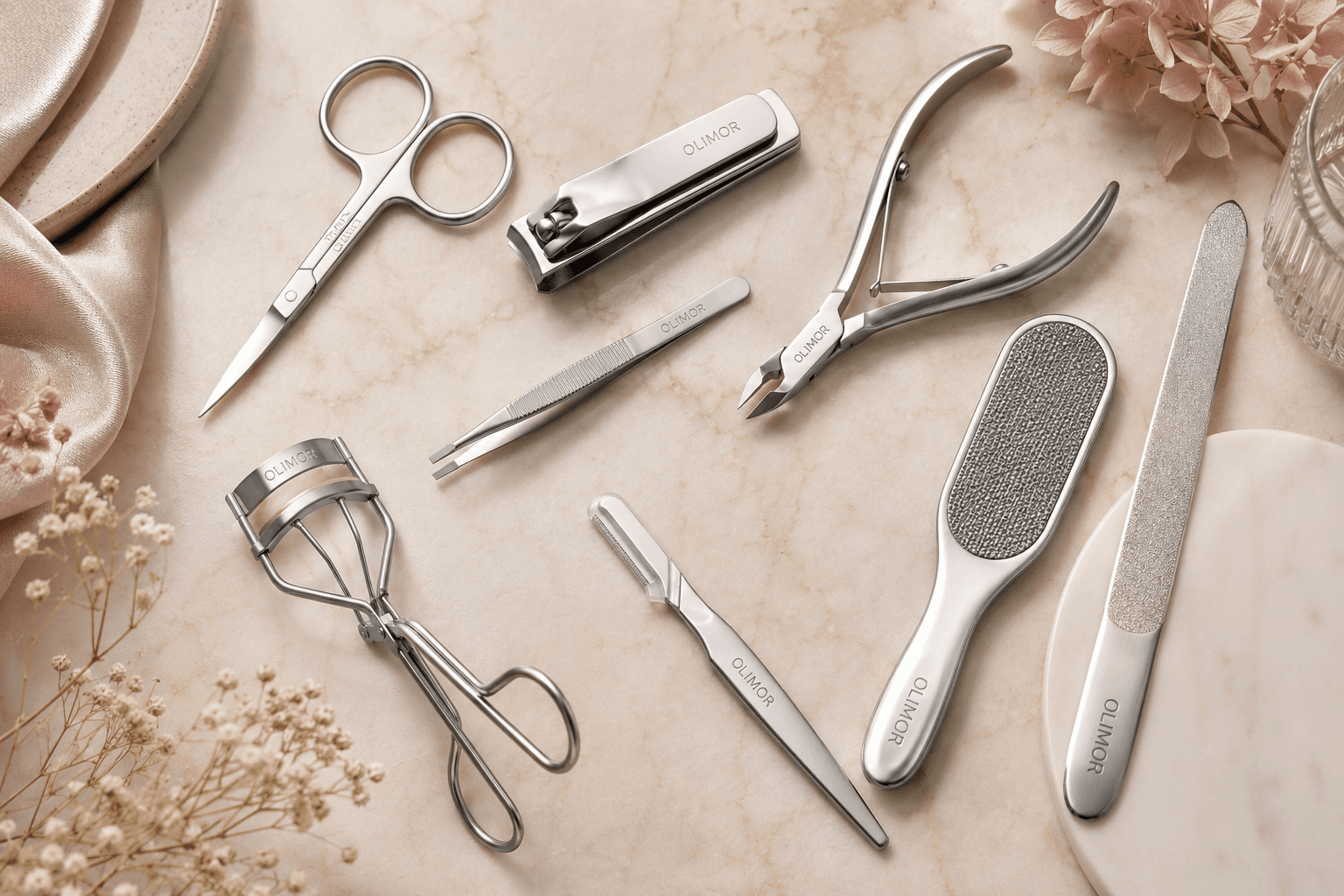
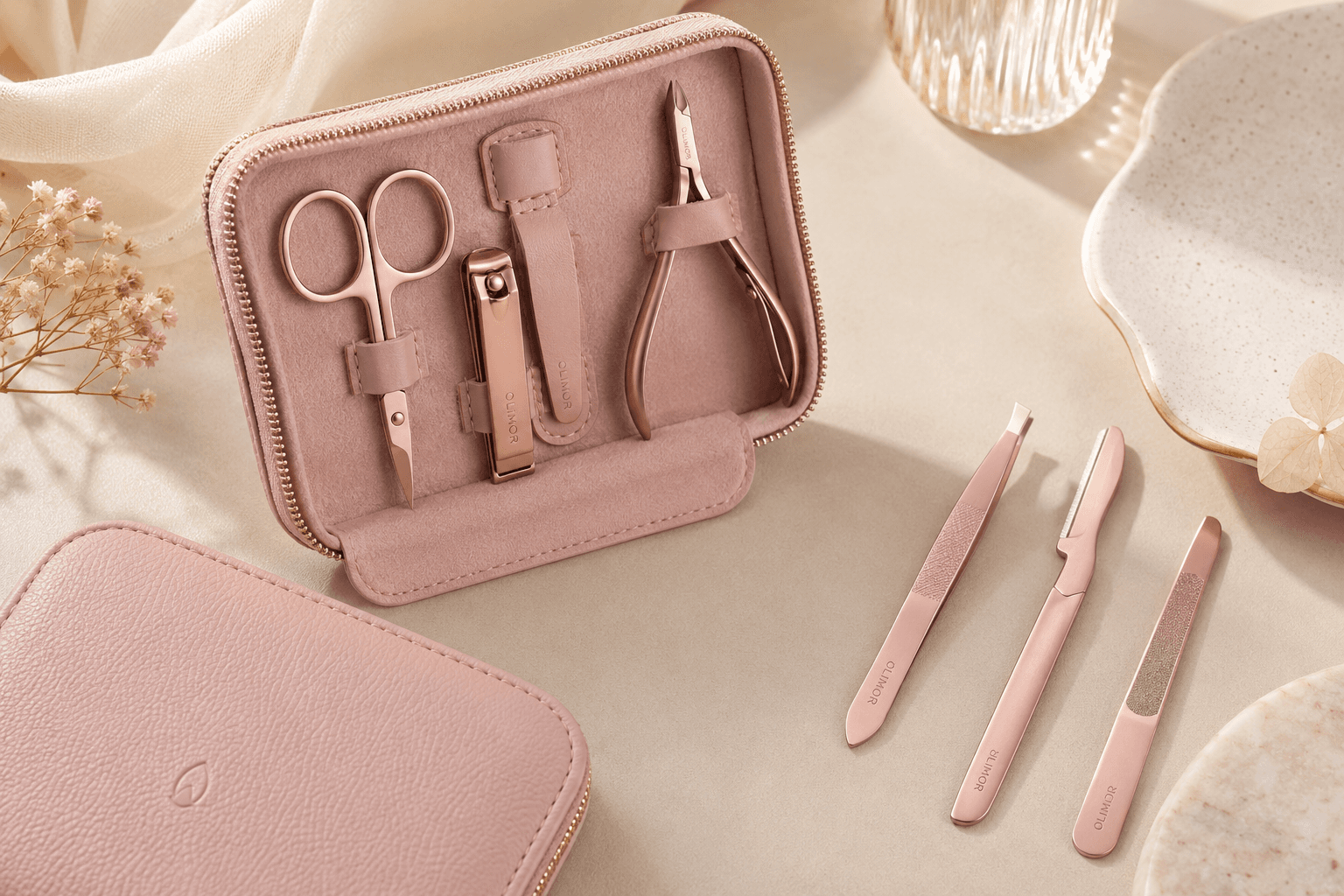
This process is especially important if you plan to add nail clippers to a grooming set, travel kit or beauty accessories line. Buyers can review related categories through Olimor’s beauty tool products page to understand how nail clippers may fit into a broader assortment.
Material, Edge and Finish Considerations
Stainless steel is valued in nail clippers because it offers a practical balance of strength and cleanability. However, the phrase “stainless steel” alone does not answer every sourcing question. Buyers should evaluate how the material is formed, sharpened, polished and assembled. The most important question is not only whether the clipper looks bright, but whether it keeps a consistent cutting edge and feels safe around the fingers.
The cutting edge deserves special attention. A sharp edge is necessary, but it should not feel uncontrolled or rough. A well-made clipper should trim without splitting the nail. The top and bottom blades should come together with a clear bite, and the cutting curve should match the intended use. Fingernail clippers are usually more compact and slightly curved, while toenail clippers may need a stronger feel and broader cutting area. If the supplier offers different styles, buyers should match the design to the target customer instead of assuming one clipper suits every use case.
Surface finishing affects both appearance and user comfort. Look for smooth edges around the lever, file surface, hinge area and underside. Any burrs or sharp non-cutting edges can create complaints, even if the blades themselves perform well. For retail products, consistent polish also influences perceived value on shelf and in e-commerce photos.
Ergonomics and Use Cases: Matching the Clipper to the Customer
Olimor Beauty emphasizes ergonomic handles and compact designs suitable for travel and everyday use. Those two qualities are important, but buyers should define the main use case before finalizing a product. A hotel amenity kit, a supermarket grooming tool, a premium manicure set and a travel pouch item may all require different design priorities.
For daily household grooming, a balanced lever and comfortable thumb contact are essential. For travel, compactness and secure packaging may be more important. For beauty sets, the nail clipper must coordinate visually with other tools while still performing well. For older users, grip stability and ease of pressing may matter more than a minimal silhouette. These practical differences help buyers choose the right size, handle profile, finish and packaging style.
If you are building a coordinated assortment, review Olimor’s product collections to consider how nail clippers can be paired with other grooming accessories. A consistent product family can help retail buyers simplify merchandising while giving consumers a clearer choice.
Quality Control from Raw Material to Packaging
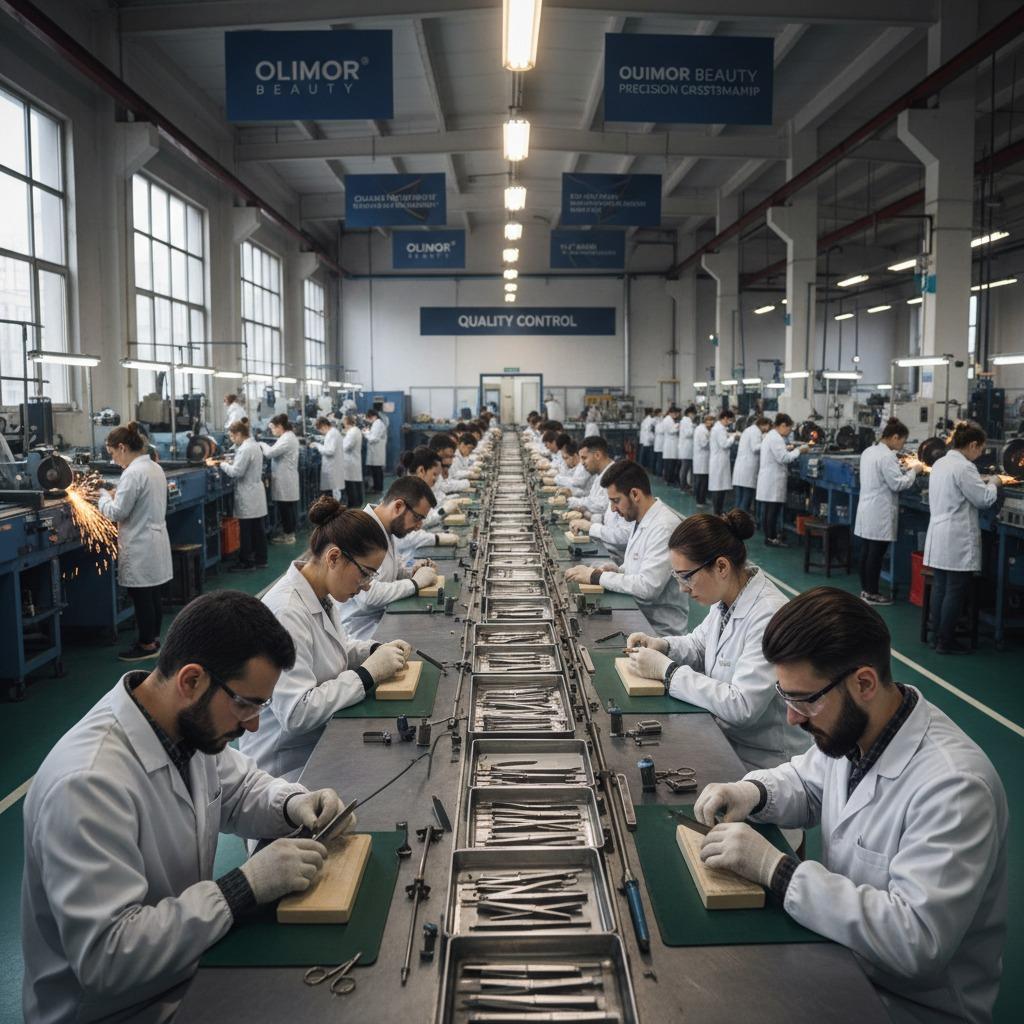
The original product information notes that Olimor Beauty uses internal quality controls from raw material selection to final packaging. For buyers, this full-process mindset is important because nail clipper quality can fail at several stages. Good steel can be weakened by poor forming. A clean body can be ruined by misaligned assembly. A sharp clipper can arrive scratched if packaging does not protect it during shipment.
A practical inspection plan should include incoming material review, in-process checks, blade alignment inspection, surface finish checks, functional cutting tests and final packaging review. Buyers do not need to turn every order into a laboratory project, but they should define measurable acceptance points. For example, sample approval should include cutting performance, cosmetic finish, packaging layout and labeling details. Once approved, production should match the accepted sample as closely as possible.
For export orders, documentation and packaging consistency are also part of quality. Carton marks, product labels, retail inserts and barcodes should be checked before shipment when they are required for the destination market. When regulatory or retailer-specific requirements apply, buyers should prepare those requirements early so the manufacturer can review feasibility before production begins.
Working with Nail Clipper Exporters in China
A capable nail clipper exporter should provide more than a product list. International buyers need clear communication, stable sampling, careful packaging and practical support during order confirmation. Since nail clippers are often sold as personal care tools, the details of finish, safety, labeling and presentation can influence both customer satisfaction and retailer acceptance.
When discussing a project, provide the intended sales channel, target customer, preferred finish, packaging type and any labeling rules that must be followed. This helps the supplier recommend a suitable direction and avoid unnecessary revisions. If the product will be part of a set, send the dimensions or reference details for the other tools so the nail clipper can match the overall kit layout.
It is also useful to request pre-production samples when design, packaging or finishing details are customized. A sample gives buyers a chance to confirm the hand feel, cutting action and visual presentation before larger production begins. For wholesale or retail sourcing conversations, you can send an inquiry with your project requirements, or contact Olimor for guidance on available beauty tool options.
Choosing Reliability Over Short-Term Price
Price matters in sourcing, but nail clippers are products where small quality differences quickly affect customer reviews. A clipper that looks acceptable but cuts poorly can damage a brand’s reputation. A slightly better lever, cleaner blade alignment or smoother finish may be worth more than a minor price reduction, especially for buyers selling through retail, e-commerce or gift sets.
The best nail clipper manufacturer in China for your business is the one that can meet your target quality consistently, communicate clearly and support the product from sample review through packaging and export. Olimor Beauty positions its nail clippers around stainless steel construction, ergonomic handling, compact design and internal quality control. For buyers seeking a reliable nail clipper supplier, the next step is to compare samples against clear performance criteria and choose the manufacturing partner that best fits the intended market.
Tag: