Curved Beauty Scissors for Precise Facial Grooming
Curved beauty scissors are small manual grooming tools designed for controlled trimming around the eyebrows, fine facial hair, moustache edges and visible nose hair. Their value is not speed. Their value is precision: the user can see the hair being trimmed, make very small cuts and avoid removing more hair than intended.
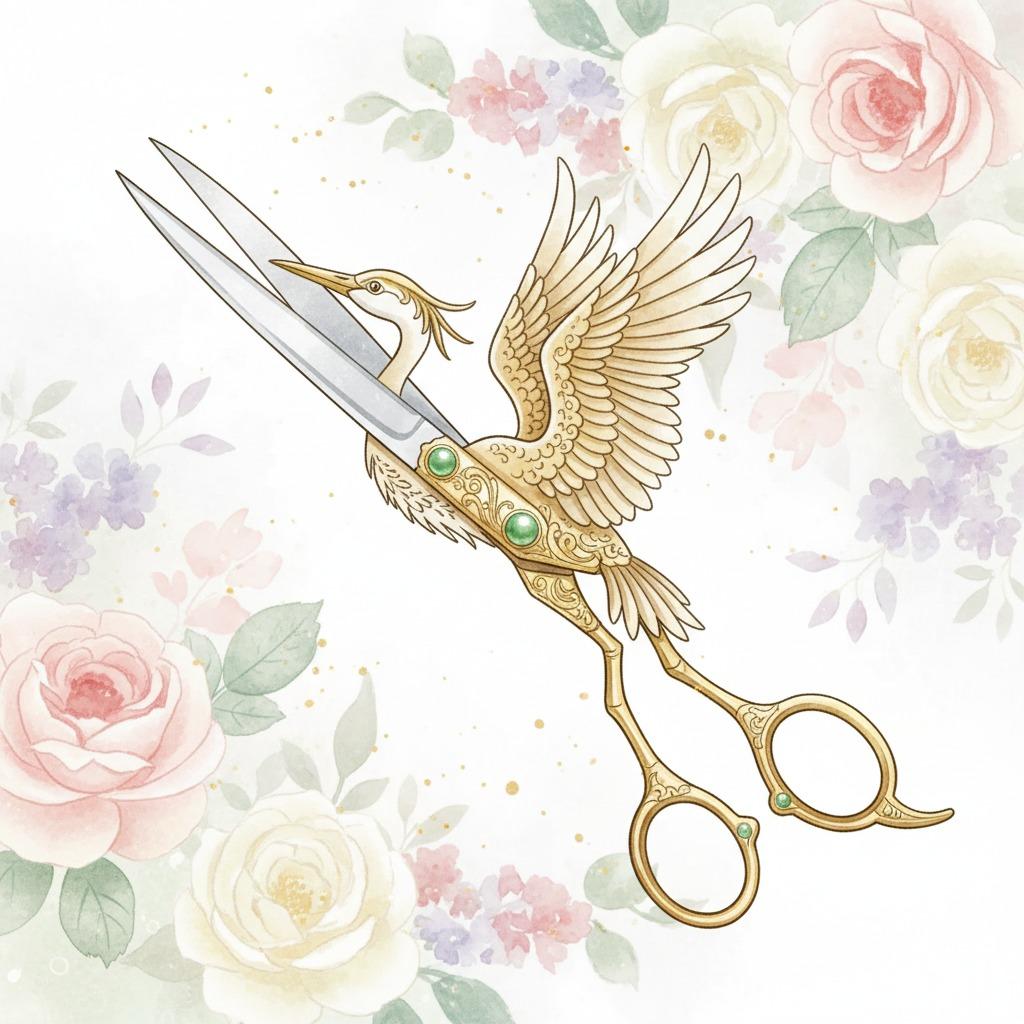
This guide focuses on an elegant Olimor Beauty scissor with curved stainless steel blades and a decorative handle inspired by a graceful heron. The tool is best understood as a detail grooming accessory rather than a general household scissor or full-size hair shear. For beauty retailers, grooming brands and assortment planners, that positioning matters because it affects packaging, customer education, sourcing checks and how the product should be displayed with other personal-care tools.
A well-selected beauty scissor should feel stable in the hand, cut cleanly through fine hair and be easy to wipe after use. It should also be presented with clear use guidance, because facial grooming takes place near sensitive areas. Buyers should evaluate appearance, blade alignment, finishing, packaging protection and supplier communication before placing the tool in a retail or private-label range.
What a Curved Beauty Scissor Is Best For
A curved beauty scissor is intended for short, careful trimming movements. The curved blade profile helps the cutting edge follow natural facial contours, which can be useful around the brow line, nostril opening, upper lip and beard or moustache edges. Compared with a straight blade, a curved blade may require less wrist rotation when trimming around rounded areas.
The most suitable uses include individual eyebrow hairs that extend beyond the desired shape, fine stray facial hairs, small moustache corrections and visible nose hairs at the nostril edge. The tool should not be used for deep nose trimming, eye-area contact, paper, tape, craft materials, packaging or fabric. Using grooming scissors on non-grooming materials can dull or dirty the cutting edge and reduce performance on fine hair.
For end users, the main benefit is control. A scissor shortens selected hairs without pulling them from the root. This differs from tweezers, which remove hair completely, and from electric trimmers, which can cut quickly but may be less precise for single-hair correction. Many grooming kits include more than one tool because each tool solves a different problem.
Product Features That Matter in Real Use
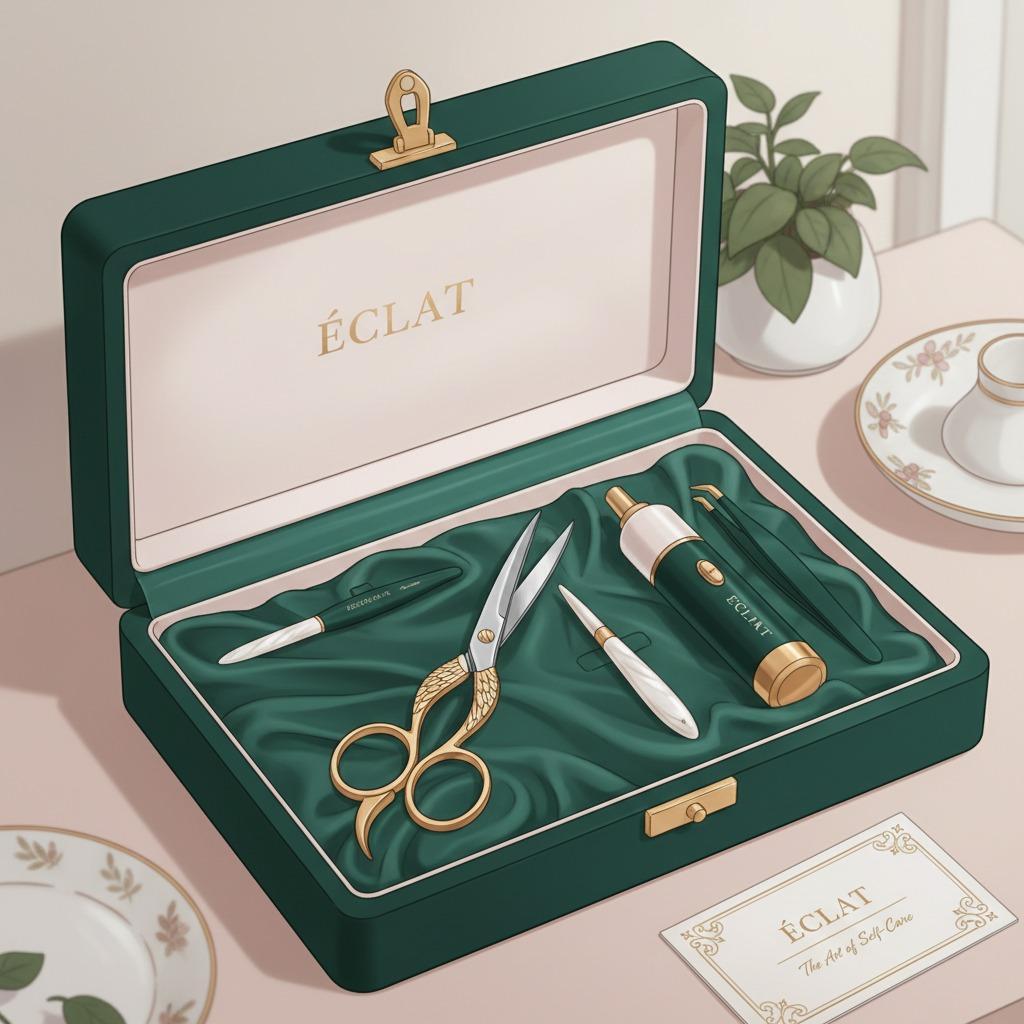
The Olimor Beauty scissor described here combines curved stainless steel blades with an ornamental handle. The handle has a decorative, heron-inspired appearance, giving the tool a refined look for a vanity set, personal grooming kit or beauty retail display. Decoration alone is not enough, however. A beauty scissor must also remain comfortable and controllable when held in front of a mirror.
Curved stainless steel blades
Stainless steel is commonly used for grooming tools because it provides a practical cutting surface and supports routine wiping after use. It does not eliminate the need for cleaning or dry storage, but it is a sensible material for tools that come into contact with hair and skin-adjacent areas. The curved shape is especially relevant for brow and facial contour work, where small changes in angle affect the result.
Decorative handle and grip orientation
The heron-inspired handle gives the scissor visual character, but it can also help users orient the tool quickly. During facial grooming, the user often looks through a mirror and makes tiny hand movements. A handle that feels recognizable in the fingers can make positioning more intuitive. Buyers should still check whether the handle shape supports steady control for the intended user group.
Compact manual operation
A manual scissor does not require batteries, charging or motor maintenance. It is quiet, portable and easy to understand. That makes it useful for home grooming, travel kits and beauty accessory assortments. A protective pouch or package is still important because the blade edges should not be left loose in a drawer or cosmetics bag.
Curved Scissors Compared with Other Grooming Tools
Choosing the right grooming tool depends on the result the user wants. For B2B buyers, comparison also helps define shelf placement, bundled kits and product descriptions. The scissor should not be marketed as a universal cutter; it is most effective as a detail tool for visible, controlled trimming.
| Tool Type | Best Use | Key Advantage | Important Limitation |
|---|---|---|---|
| Curved beauty scissor | Eyebrow ends, fine facial hair, visible nose hair edges, moustache details | High visual control for small cuts | Requires patience, lighting and careful handling |
| Tweezer | Removing selected hairs from the root | Longer-lasting removal of individual hairs | Can cause pulling discomfort and is not for trimming length |
| Electric trimmer | Fast reduction of larger or repeated areas | Convenient for routine maintenance | May be less precise for single-hair correction |
| Full-size hair shear | Haircutting and larger hair sections | Efficient for salon-style cutting | Oversized for nostril edges, brow details and fine facial work |
| Craft or household scissor | Paper, packaging and general tasks | Useful for non-personal-care materials | Not appropriate for hygienic facial grooming |
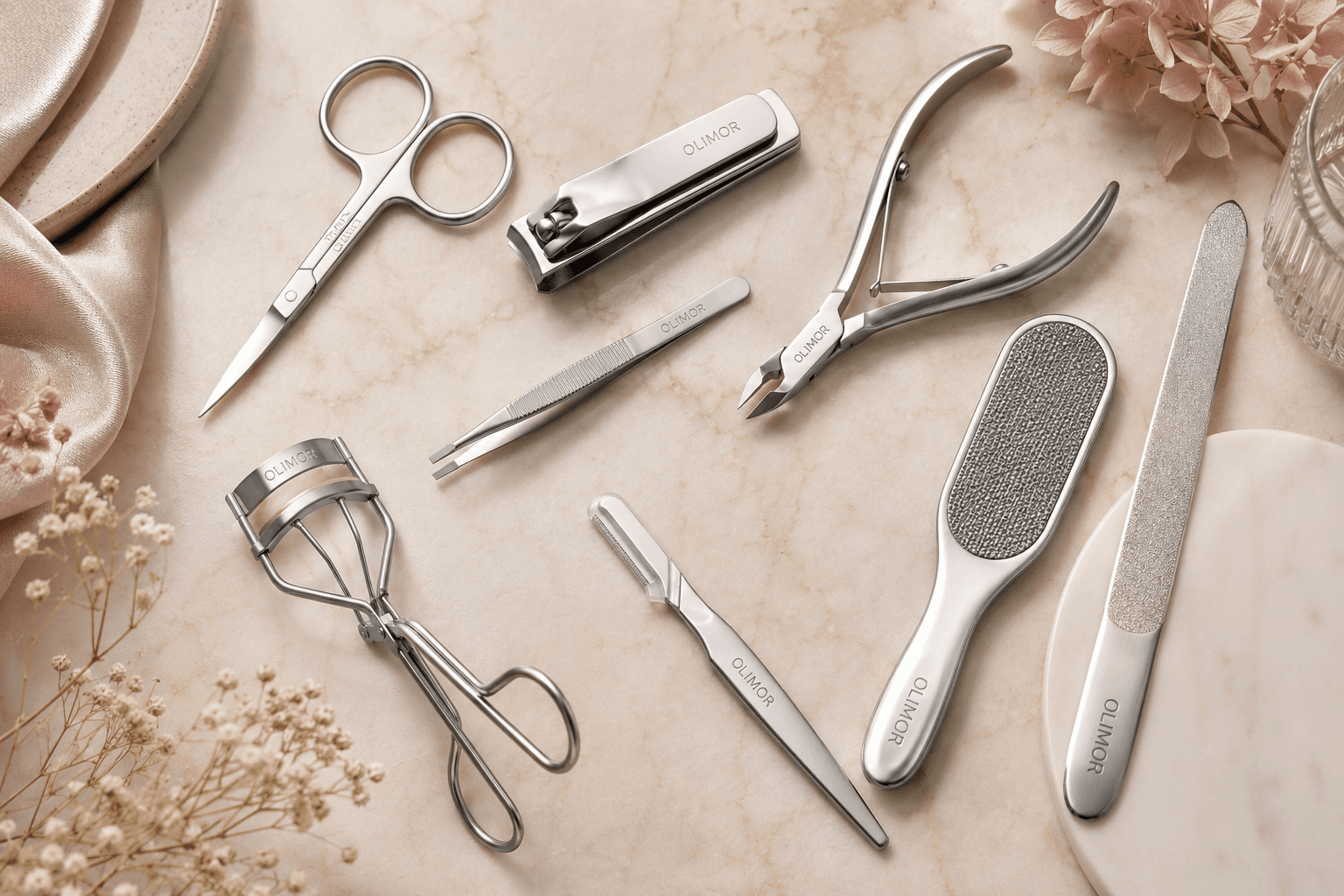
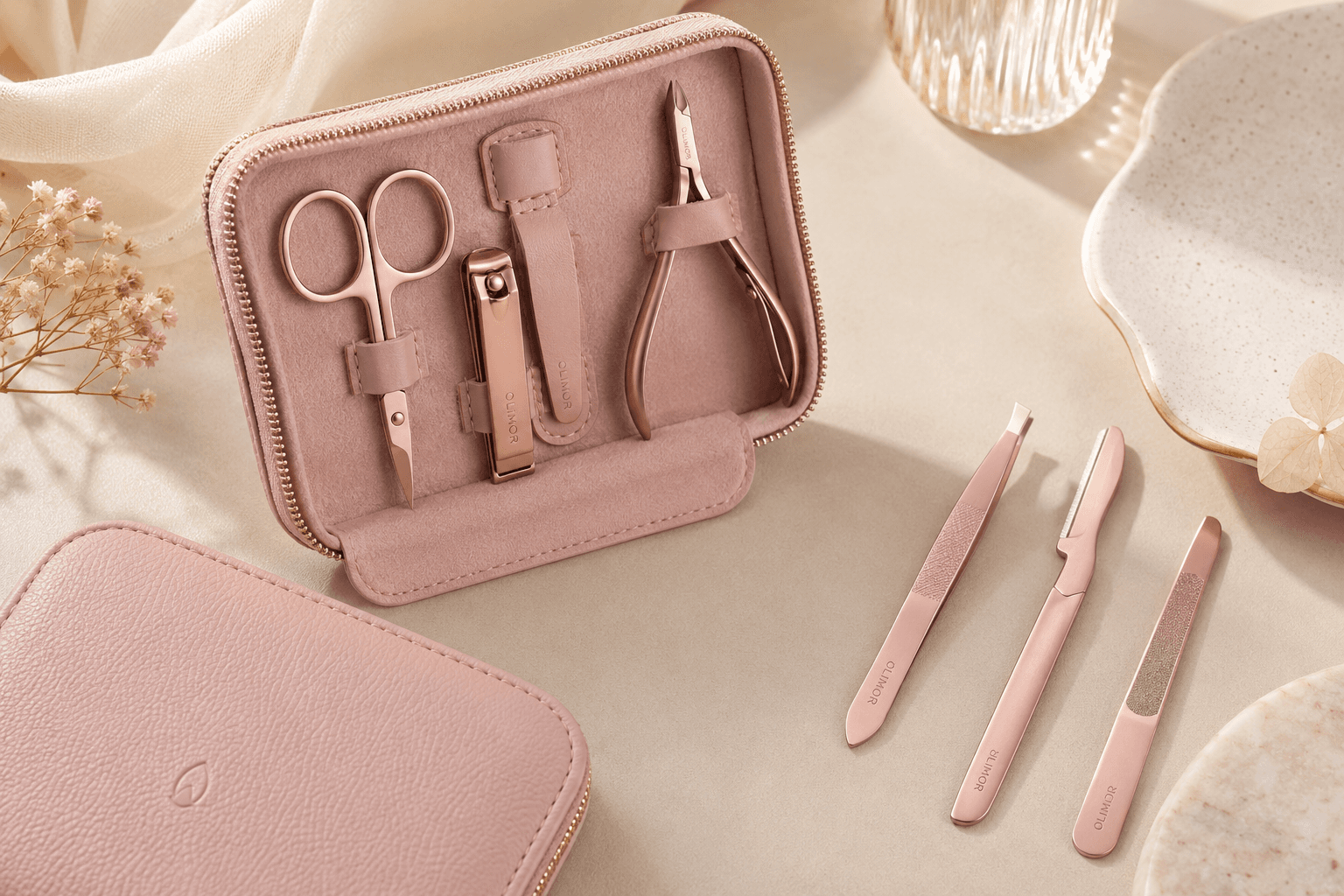
Retailers can position curved beauty scissors alongside related beauty tool products such as tweezers, facial razors, nail tools and brow accessories. The best assortment tells customers which task each tool is designed to perform.
How to Select Curved Beauty Scissors for a Retail or Brand Range
Selection should combine product handling with commercial fit. A beauty scissor may look delicate, but buyers should assess whether the tool can be packed, displayed, explained and used safely by the target customer. For private-label or wholesale planning, the same product can be positioned differently depending on finish, packaging and assortment strategy.
- Blade curve: Confirm that the curved edge suits facial detail trimming rather than broad cutting. The curve should help follow brows and facial contours.
- Blade meeting and alignment: Open and close the scissor smoothly during inspection. Misalignment can cause hair to bend or slip instead of being cut cleanly.
- Tip awareness: Any scissor used near the face requires careful instruction. Packaging or product copy should make clear that the tool is for external, visible trimming only.
- Handle comfort: Decorative detailing should not compromise grip stability. Consider whether the tool can be held steadily by users with different hand sizes.
- Surface finish: Check for rough edges, residue, uneven finishing or sharp areas where the fingers rest.
- Packaging protection: The package should protect the blade edges and reduce movement during storage and transport.
- Assortment role: Decide whether the scissor belongs in a brow kit, facial grooming set, travel kit, giftable accessory range or standalone display.
Buyers building a wider personal-care offer can review relevant grooming tool collections to plan how curved scissors sit beside complementary products without overlapping customer promises.
Inspection Points Before Bulk Sourcing
For B2B purchasing, inspection should go beyond a quick visual check. Beauty scissors are small, so minor inconsistencies can affect handling, perceived value and customer satisfaction. The goal is to verify that the tool matches the agreed sample, is cleanly finished and is appropriate for the intended retail channel.
Start with appearance. Check whether the decorative handle detail is consistent, whether the finish looks even and whether the product is free from obvious cosmetic defects. Then check function. Open and close the blades several times to feel for smooth movement. Look at whether the blade edges meet evenly. Confirm that the tool is not loose, overly stiff or uncomfortable to hold.
Next, review packaging. A grooming scissor should arrive protected, especially at the blade area. Packaging also has a communication role: it should identify the tool as a personal grooming scissor and support safe, limited use. If the product will be sold in a market with specific consumer product rules, buyers should confirm labeling, warnings and documentation with the supplier and their own compliance adviser.
Recognized public bodies such as the U.S. Consumer Product Safety Commission and European Union product safety regulators provide general expectations for consumer product safety. For goods sold in the EU, buyers should also review current requirements under the General Product Safety Regulation where applicable. Always verify current versions, market-specific obligations and supplier documents instead of relying on assumptions or outdated templates.
Safe Use Guidance for End Customers
Clear instructions reduce misuse and improve the customer experience. A beauty scissor should be used slowly, in good light and only on the intended grooming areas. The user should never rush trimming near the eyes, nose or lips.
- Clean and dry first. Use the scissor on clean, dry hair. Wet hair can sit differently and may appear shorter after it dries.
- Use bright, even lighting. A mirror and stable lighting help the user see exactly which hair is being trimmed.
- Trim only a little at a time. For eyebrows, brush hairs upward and cut only the tips that clearly extend beyond the desired shape.
- Do not insert deeply into the nose. Trim only visible hairs at the nostril edge. Nose hair has a protective role, so complete removal is not the goal.
- Keep the hand stable. Rest the elbow or hand if possible, and avoid trimming while walking, riding in a vehicle or looking away.
- Pause if skin is irritated. Avoid grooming over cuts, inflammation or sensitive skin until the area has calmed.
For moustache or beard details, the curved blade can help refine small uneven areas around the lip line. The same rule applies: remove less hair than seems necessary, check the result, then continue only if needed. Over-trimming is more difficult to correct than under-trimming.
Cleaning, Maintenance and Storage
Maintenance is simple but important. After each use, remove loose hair from the blades with a soft cloth or small brush. Wipe the cutting area carefully and allow the scissor to dry before storage. Stainless steel supports routine cleaning, but no grooming tool should be stored damp or dirty.
Keep the scissor in a pouch, case or dedicated compartment. Loose storage can damage blade edges, affect alignment or expose the tool to cosmetics, dust and other residues. Avoid dropping the scissor on hard surfaces, as impact can change how the blades meet. If the scissor begins to fold hair instead of cutting it, or if it feels misaligned, it should be inspected before further use.
In shared professional, demonstration or retail environments, cleaning should be more structured than in personal home use. Businesses should establish procedures appropriate to their setting and follow local hygiene expectations. A personal grooming scissor is often best treated as an individual-use item unless the business has suitable sanitation practices and customer communication in place.
Cost Factors Without Guesswork
The cost of curved beauty scissors can vary, but responsible sourcing should focus on the factors that influence value rather than unsupported price claims. Buyers should request current quotations directly from the supplier and compare them against product specification, packaging, order requirements and service expectations.
Common cost drivers include blade material and finishing, decorative handle complexity, packaging type, customization requirements, inspection expectations, order quantity, freight method and destination market requirements. A basic bulk-packed tool and a giftable retail item may have very different cost structures even if the core scissor shape appears similar.
Customization can also affect cost and timing. Branding, packaging artwork, assortment kits and market-specific labeling may require additional review. Buyers should clarify what can be customized, what information is needed, whether samples are available and how changes will be confirmed before mass production. For current options, use the product inquiry form with your intended market, packaging preference and application.
Supplier Evaluation Checklist
A good supplier conversation should be specific. Instead of asking only for the lowest price, buyers should confirm whether the supplier understands beauty-tool use, inspection needs and retail presentation. The following checklist can help structure the discussion.
| Question | What to Confirm |
|---|---|
| Can the supplier provide a sample? | Review actual handling, blade movement, finish and packaging before committing to a larger order. |
| What product details are fixed? | Confirm blade shape, stainless steel blade description, handle design and available packaging options. |
| What customization is possible? | Ask about branding, packaging artwork, kit combinations and any limitations. |
| How is quality checked? | Discuss appearance, blade alignment, opening and closing feel, cleanliness and packaging protection. |
| What documents are available? | Request current product, packaging and compliance documents relevant to the target market. |
| How will changes be approved? | Use approved samples, written specifications and clear confirmation before production. |
For buyers comparing multiple grooming accessories, it can be helpful to contact the supplier with photos of the intended retail range, target customer and channel. Olimor can be reached through contact options for sourcing discussions when you need to confirm fit, presentation or next steps.
FAQ for B2B Buyers
Can I request a sample before placing an order?
Sample availability should be confirmed directly with Olimor. A sample is useful for checking grip comfort, blade movement, decorative finish, packaging protection and how the scissor fits your target assortment.
Is there a minimum order quantity?
MOQ can depend on the product arrangement, packaging and customization requirements. Ask for the current MOQ when sending an inquiry, and specify whether you need standard packaging or a customized retail presentation.
Can the beauty scissor be customized for a brand or gift set?
Customization may be possible depending on the requested branding, packaging and set configuration. Provide artwork requirements, market destination and intended sales channel so the supplier can respond accurately.
How should quality be checked before shipment?
Quality checks should include visual finish, handle detail, blade alignment, opening and closing feel, cleanliness and packaging protection. Buyers should agree on inspection expectations in writing before production.
Final Buying Advice
A curved beauty scissor is a focused grooming tool for precise, visible trimming. The Olimor Beauty version combines curved stainless steel blades with a decorative heron-inspired handle, making it suitable for beauty kits, refined grooming assortments and personal-care retail displays where appearance and control both matter.
The best purchasing decisions come from matching the tool to a clear use case: eyebrow touch-ups, fine facial hair, visible nose hair edges and small moustache or beard corrections. Evaluate the sample carefully, confirm packaging and documentation, and avoid positioning the product as a general cutter. For assortment planning or current sourcing details, send a focused request through Olimor with the intended market, packaging needs and application.
Tag: