Wholesale eyebrow tools are a small product line with a surprisingly large number of buying decisions
At first glance, wholesale eyebrow tools look straightforward: tweezers, brow scissors, spoolies, and a few accessory pieces sold to salons or retailers. In practice, the category is more nuanced. Buyers are not only comparing shapes and finishes; they are deciding how the tools will perform in daily use, how they will display on a shelf, and whether the assortment makes sense for a salon, lash studio, cosmetic counter, or online beauty shop. That is why sourcing wholesale eyebrow tools is less about picking the prettiest set and more about choosing a product mix that fits real work.
For sourcing managers and product teams, the question is usually simple: which styles should be ordered in bulk, and which features are worth paying attention to when the product itself is small? The answer depends on use case. A brow bar needs precision and repeatability. A retailer needs visual appeal and a clear assortment story. A distributor needs enough variation to serve different downstream buyers without overloading inventory with near-duplicates. Those are not the same purchase decisions, even when the tools look similar in a photo.
What’s usually inside a wholesale eyebrow tool assortment
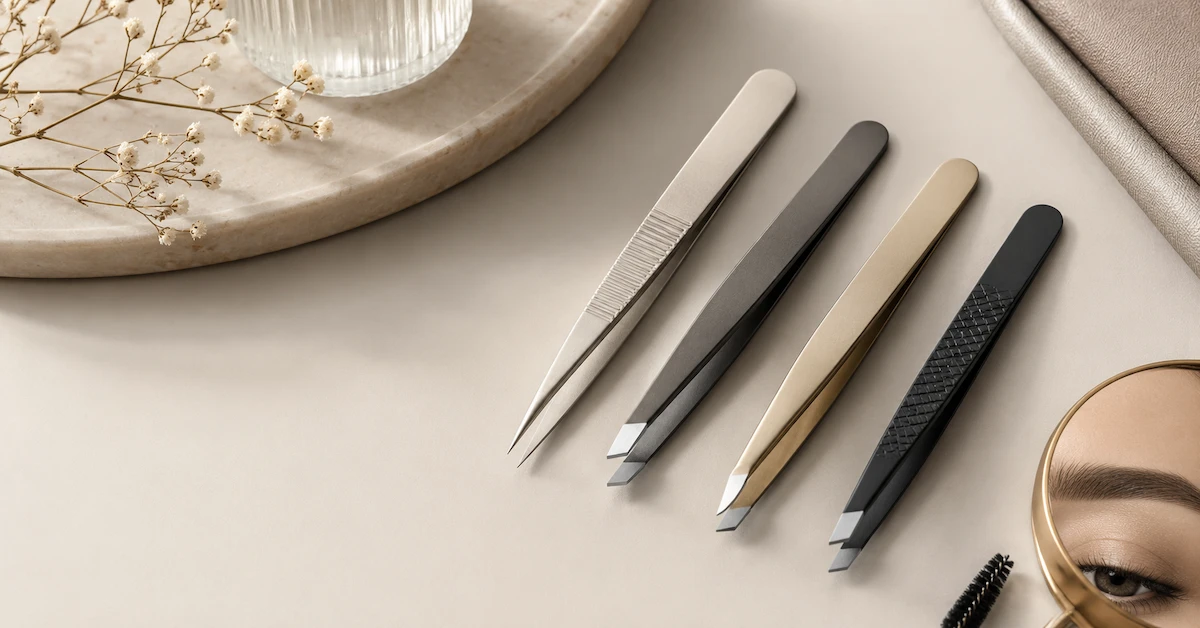
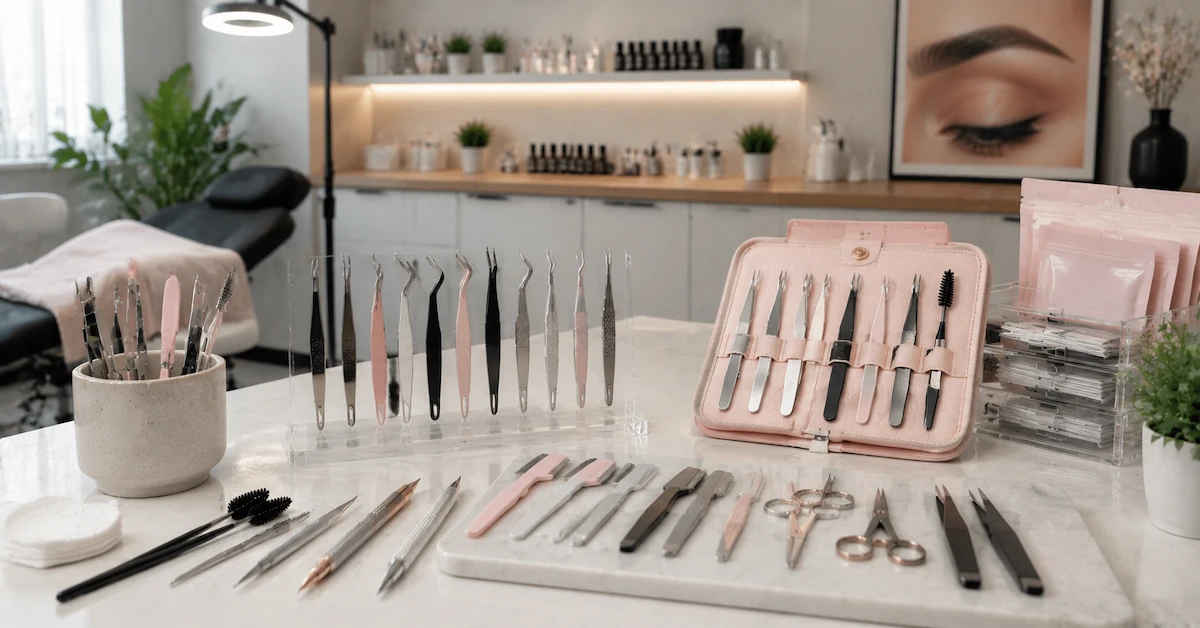
The product data points to a familiar mixed assortment: multiple tweezer styles, including slanted, pointed, and angled tips; a few tools with spoolie or brush ends; some comb-like attachments; and a small number of scissor-style grooming tools. That mix matters because different brow tasks demand different handling. A slanted tweezer is often the workhorse for general shaping. A pointed tip is better for isolated hairs or fine detail work. Angled tips can offer a compromise between control and speed. Brow scissors, meanwhile, are not there for plucking at all; they support trimming and cleanup, usually after shaping.
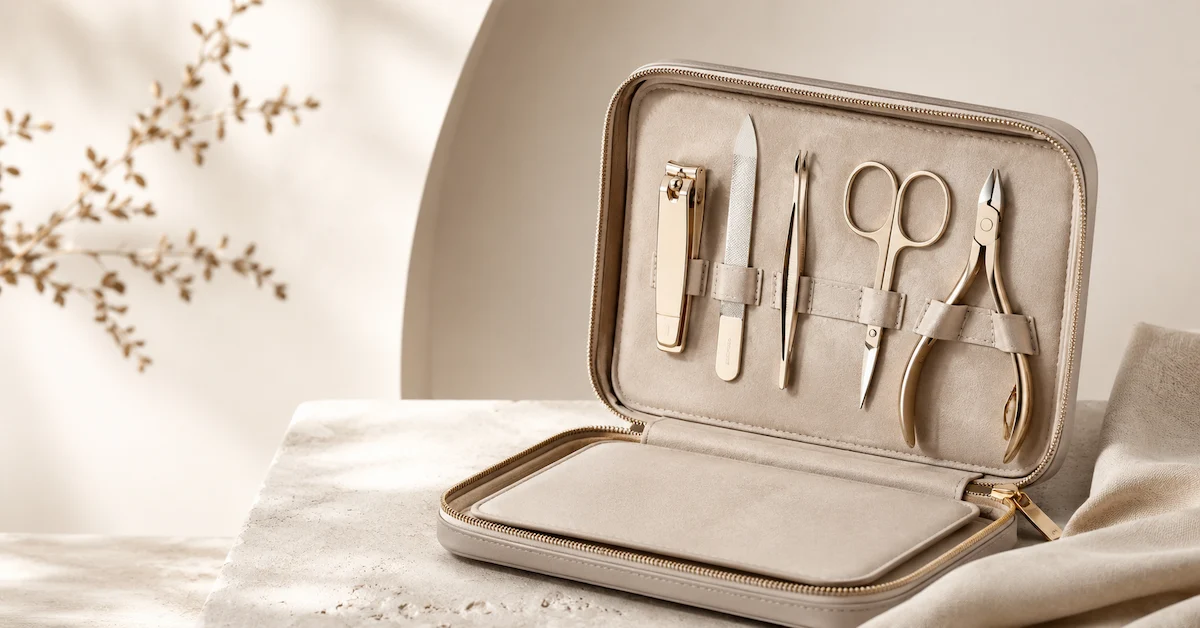
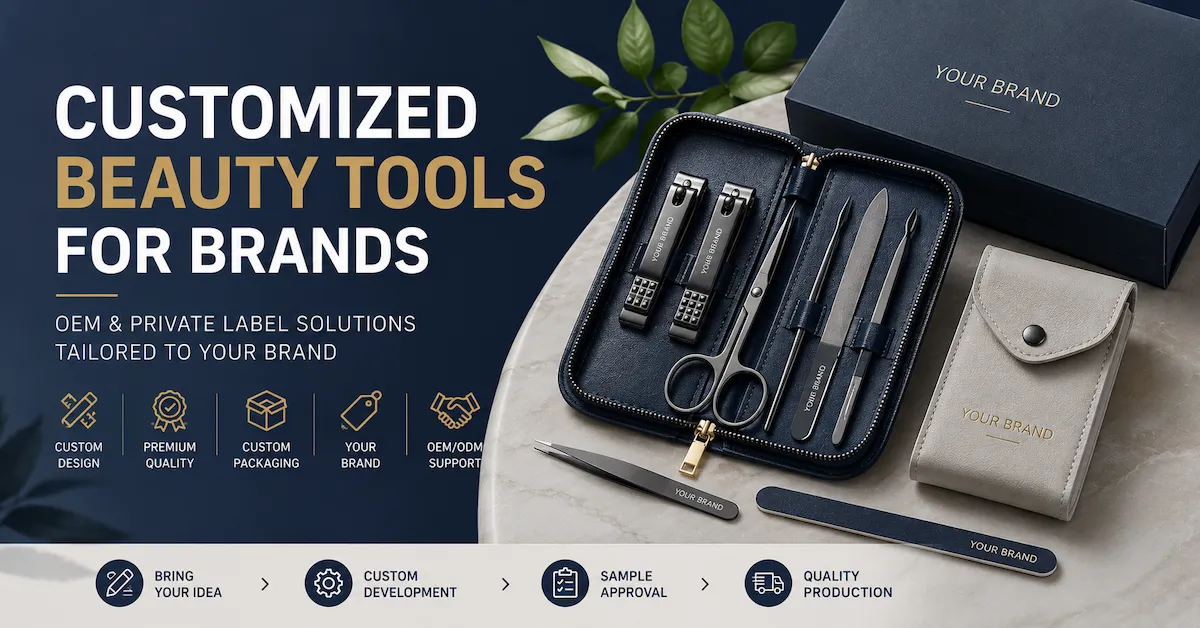
One practical detail from the product information is the way the tools are presented. Some are organized in clear acrylic display holders, and one set is shown in a soft zippered carry case with elastic loops. That is not a trivial packaging note. Presentation affects retail conversion, but it also affects how a buyer thinks about the assortment. A carry case suggests portability and organization. Acrylic display fixtures suggest counter merchandising. If your customer sells to salons, that may matter just as much as the metal finish.
Key takeaway for buyers
When comparing bulk eyebrow tools, do not judge the line by one “best” tweezer style. Look at the assortment as a system: precision tools for detailed work, trimming tools for finishing, and storage or display formats that match the channel.
Why material and finish deserve attention, even for a small hand tool
The visible construction suggests mostly metal tools, with finishes ranging from matte black to polished silver and pink-coated or rose-gold-toned handles. The exact metal grade is not provided, so it would be a mistake to claim stainless steel or any specific plating system as fact. Still, the appearance tells a buyer something useful: these are precision-form tools that depend on edge quality, alignment, and surface finishing more than on large structural parts.
In this category, the finish does more than influence appearance. It affects how the tool feels in hand, how easily it can be cleaned, and whether it will look premium in a retail set. A polished silver tweezer can read as classic professional hardware. A matte black or rose-gold finish may support a lifestyle or giftable positioning. The caution here is obvious but worth repeating: cosmetic finish should not distract from jaw alignment, tip consistency, or spring behavior. A beautiful tweezer that grips poorly will not stay in a salon drawer for long.
Metal forming and finishing processes are usually central to this category. Based on the product photos and descriptions, the likely manufacturing flow includes precision shaping, grinding, polishing, coating, and assembly. The exact process is not visible, so it should be treated as a general industry assumption rather than a confirmed spec. For sourcing teams, this is where sample evaluation matters. Two sets may look similar online and still differ in tip symmetry, edge finish, and hand feel once opened.
How wholesale buyers should evaluate eyebrow tools before placing a bulk order
For an eyebrow tools supplier, the conversation should not start with color alone. It should start with use. Ask where the tools will be used, how often they will be handled, and whether the customer cares more about salon utility or retail presentation. That one question can narrow the field quickly.
1) Tip geometry
Tip shape is the core functional decision. Slanted tips are popular because they can support both grip and visibility. Pointed tips offer greater precision but are less forgiving. Angled tips can sit somewhere between the two. If a line is going into retail, a mixed assortment often makes sense because it gives end users a choice. If the tools are going into a professional kit, a smaller, purpose-built selection may be better.
2) Handle shape and control
Some of the visible tools appear to have slim elongated bodies, while others have flatter, more ergonomic handles. That difference affects control during fine-detail work. For brow grooming, fatigue is real. A tool that is too slick or too narrow may feel fine for a quick demonstration and awkward during a long service day. This is a practical point, not a glamorous one, but salon buyers notice it immediately.
3) Storage and display format
Clear acrylic holders and zippered cases are not mere accessories. They shape the product’s channel fit. A bulk eyebrow tools assortment intended for salon resale may need compact, shelf-friendly packaging. A kit aimed at mobile artists or travel-friendly use may benefit from a soft case with elastic loops. If the tools are being sold through a cosmetic retailer, presentation can be a major part of the perceived value.
4) Consistency across the set
When a buyer orders bulk eyebrow tools, consistency matters more than flashy features. Tips should look aligned. Springs or tension should feel uniform where applicable. Coatings should not appear patchy. Edges should not show obvious burrs. Small flaws stand out very quickly in hand tools because the customer holds them close to the face and sees them under bright lighting.
Common mistakes when sourcing in bulk
One common mistake is over-ordering too many nearly identical shapes. A distributor may think variety helps, but too much overlap can create dead stock. Another is choosing display packaging that looks good in a sample photo but does not support the actual sales channel. A salon shelf and an e-commerce shipment do not ask the same thing from the product.
Another buyer-facing warning: do not assume every metal beauty tool is interchangeable simply because the category is small. Tool performance depends on alignment and finishing, and those details are easy to overlook if you only compare catalog images. It is also unwise to promise customers professional-grade performance unless that standard has been verified. The product information provided here does not confirm professional-grade or medical-grade status, so that claim should be avoided unless supported by supplier documentation.
Where bulk eyebrow tools fit best in the market
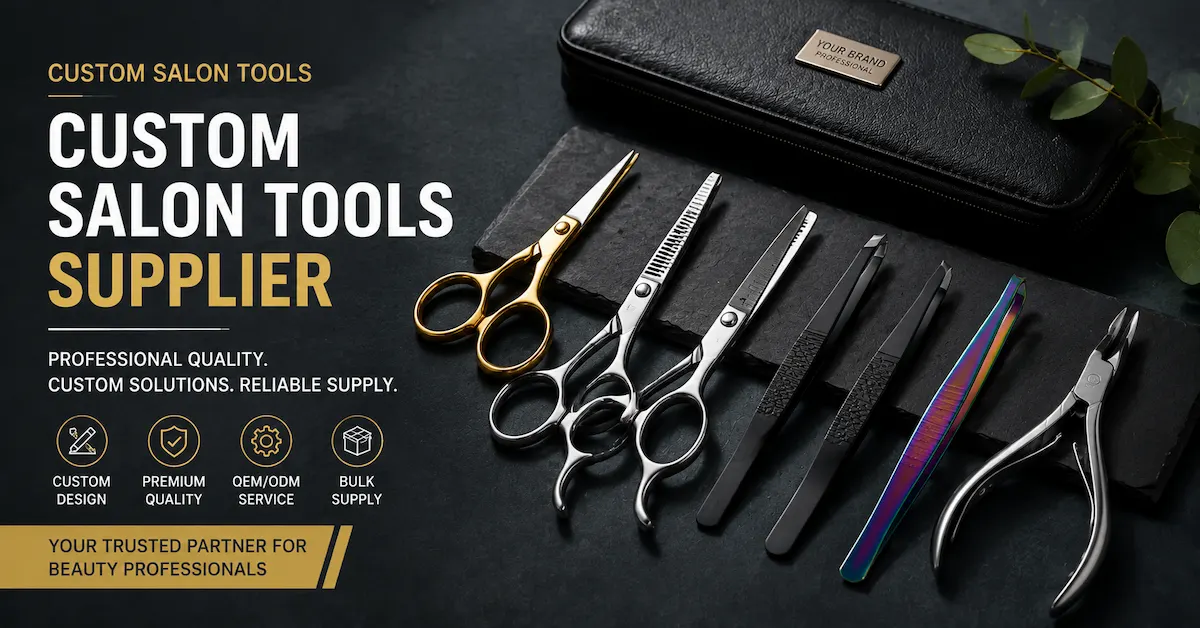
These products suit beauty salons, brow bars, lash studios, cosmetic retailers, wholesale distributors, and personal grooming kits. That broad application range is part of the appeal. A single assortment can serve service professionals and consumer-facing retail, provided the packaging and finish are aligned with the target customer.
For a salon, the value is utility and durability in daily handling. For a lash studio, the value may include fine-detail grooming alongside lash work. For a retailer, the visual story is just as important as function. And for a distributor, breadth matters: being able to offer multiple styles without carrying too many SKUs is often the difference between a workable line and a cluttered one.
Practical buying advice for sourcing managers and product teams
If you are comparing bulk eyebrow tools, start with three sample questions. First, which tip shapes match the downstream customer’s routine? Second, which finish best fits the brand position? Third, what packaging format will help the product move without adding unnecessary cost or complexity? That sequence usually prevents more mistakes than a long specification checklist.
It also helps to think in sets rather than individual items. A single tweezer can be judged in isolation; a wholesale assortment needs internal logic. If the line includes slanted, pointed, and angled tweezers, plus scissors or brush-ended accessories, the buyer should be able to explain why each piece exists. If not, the assortment may look broad but sell narrow.
For sourcing teams working with an eyebrow tools supplier, ask for samples that reflect the exact finish and packaging style you plan to sell. A tool in a display stand can feel different from the same tool in a zippered case, even before the customer touches it. Small category, yes. Small decision, no.
FAQ: quick answers buyers usually want
Are all wholesale eyebrow tools meant for the same task?
No. Different tip shapes and accessory tools serve different grooming tasks. A mixed assortment is usually more useful than a single style.
Should buyers focus more on finish or function?
Function first, finish second. Appearance matters for retail, but alignment, control, and consistency are the factors that determine whether the tool gets used.
Is a carry case better than a display holder?
Not always. A case is useful for portability and organization. A display holder is better for merchandising. The right choice depends on the sales channel.
What should be checked in samples?
Tip alignment, hand feel, surface finish, consistency across units, and whether the packaging matches the intended use.
Choose the assortment that fits the buyer, not just the catalog photo
Wholesale eyebrow tools are easy to misunderstand because they look like simple accessory items. They are not. They sit at the intersection of grooming performance, retail presentation, and practical storage. A good bulk order should make sense to the person holding the tool, the person displaying it, and the person selling it downstream.
If you are reviewing a line now, the next step is straightforward: compare tip geometry, finish, packaging format, and assortment logic against the needs of your channel. That is the fastest way to separate a workable wholesale eyebrow tools program from one that only looks complete on paper.