Vegan Manicure Tools Wholesale: A Practical Guide for Sustainable Nail Care Buyers
Vegan manicure tools wholesale is becoming a serious sourcing category for beauty retailers, nail salons, spa chains, promotional gift buyers, and private-label beauty brands. The demand is not only about avoiding animal-derived materials; it is also about choosing tools that feel professional, last through repeated use, and fit the values of customers who read ingredient lists, packaging claims, and brand policies closely.
For manicure tools, “vegan” usually refers to the complete product presentation: the tool materials, handle inserts, storage case, adhesives, coatings, cleaning accessories, and packaging should avoid animal-derived components. Stainless steel nail tools are a strong starting point because the working surface can be durable, hygienic, and suitable for precise grooming. However, buyers still need to evaluate the full kit rather than assuming every accessory is automatically vegan.
Olimor Beauty supplies beauty tools for businesses that need practical, commercially ready grooming products. If you are comparing beauty tool products for a salon retail shelf, ecommerce store, or branded nail care set, this guide explains how to evaluate vegan manicure tools wholesale with a focus on usability, sourcing clarity, and long-term customer satisfaction.
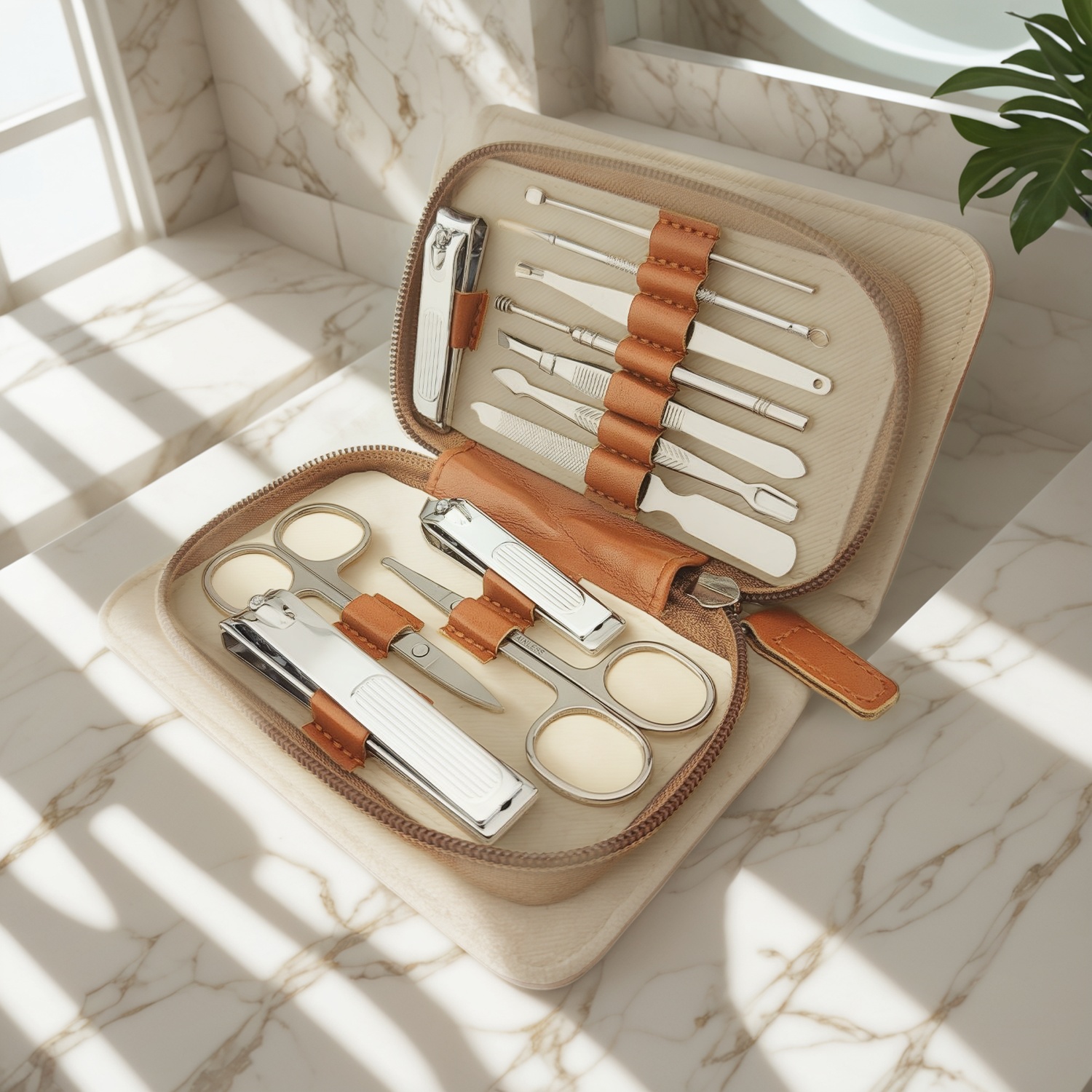
What Makes a Manicure Tool Set Vegan?
A vegan manicure tool set should be free from animal-derived materials across the visible product and hidden components. The metal instruments may be stainless steel, but buyers should also look at storage materials, protective sleeves, glue, decorative wraps, polishing cloths, labels, and presentation packaging. A kit promoted as vegan should not rely on leather, suede, horn, bone, animal-hair brushes, silk lining, or animal-based adhesives.
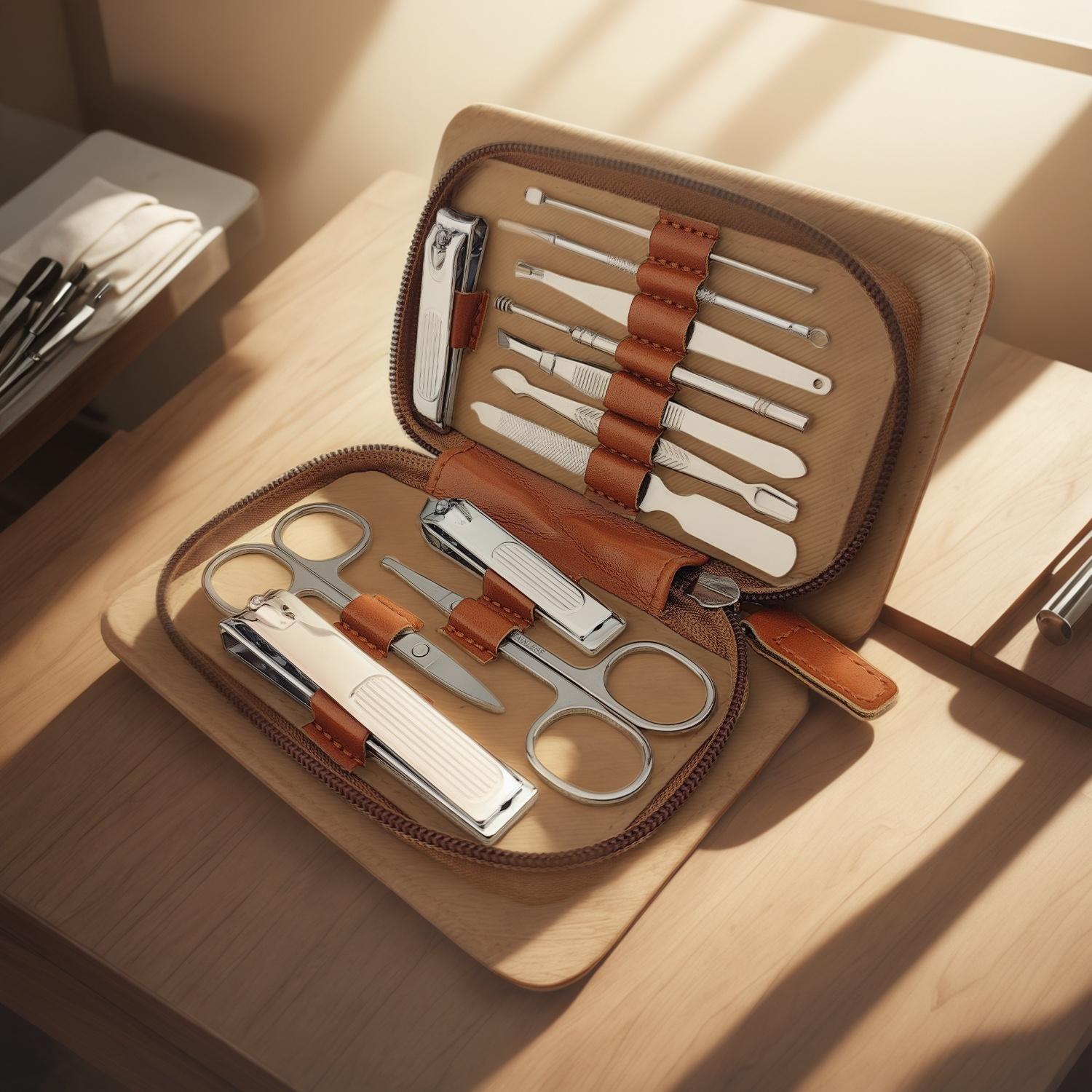
This matters because customers interested in vegan beauty often expect consistency. A stainless steel clipper in a leather pouch does not match vegan positioning, even if the tool itself is metal. Likewise, a nail care kit with an animal-hair dust brush can create a credibility problem for a brand that markets cruelty-free personal care.
For wholesale buyers, the safest approach is to define vegan requirements before sampling. A clear specification helps avoid mismatched packaging and reduces rework later. If the kit needs a pouch, consider synthetic alternatives. If a brush is included, check whether the bristles are synthetic. If a gift box uses special lining, confirm the material and adhesive choices are consistent with vegan positioning.
Core Tools to Consider in a Wholesale Vegan Manicure Kit
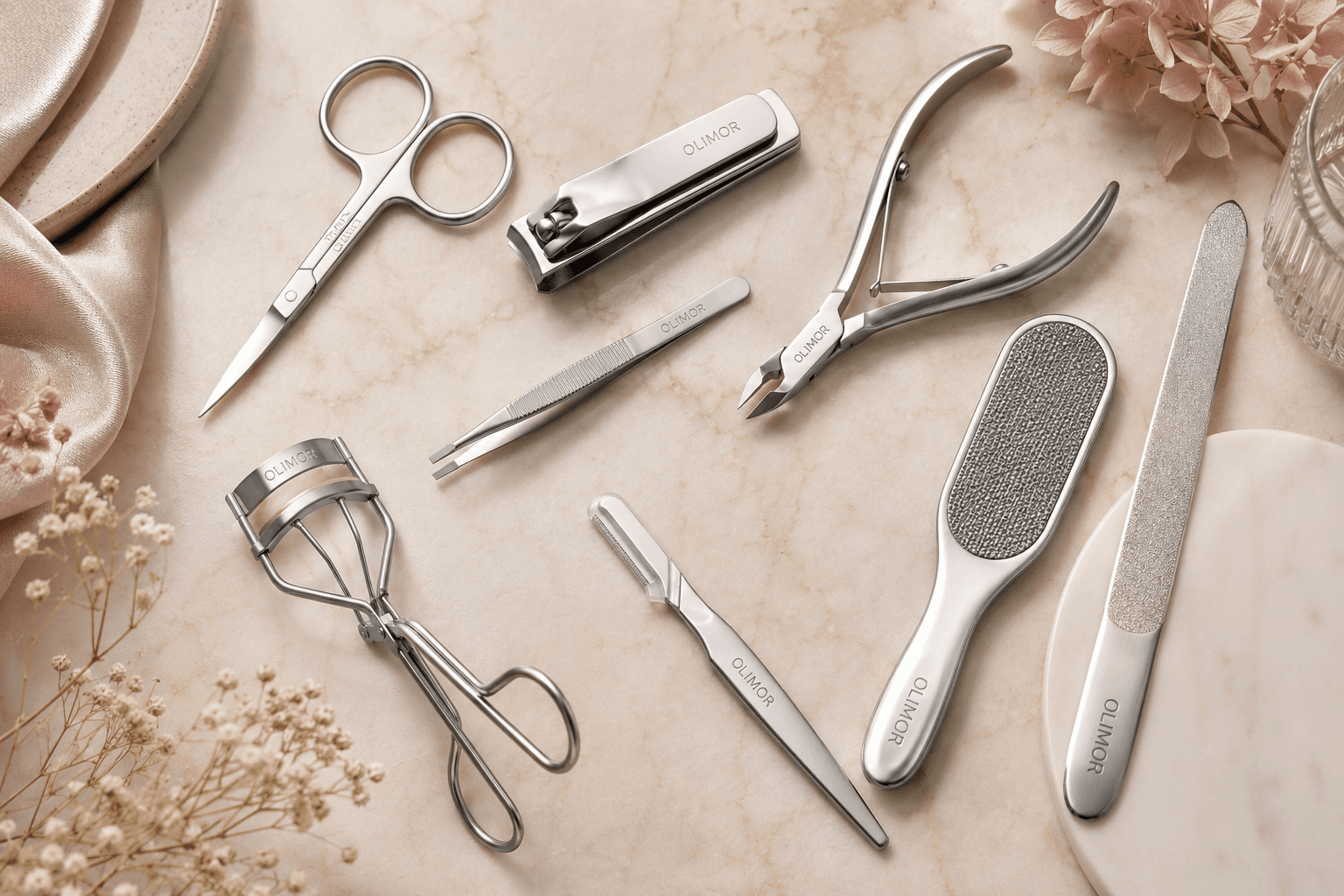
The right assortment depends on where the kit will be sold. A compact travel set may need only essential trimming and shaping tools, while a professional salon retail kit can include more detailed cuticle and finishing instruments. Rather than adding as many pieces as possible, buyers should focus on tools customers understand and can use safely.
- Nail clippers: A central item for most kits. Check cutting alignment, lever comfort, edge consistency, and whether the clipper handles both fingernails and toenails if advertised for that use.
- Nail file: Useful for smoothing and shaping after trimming. Consider whether the file surface is suitable for the target customer, from everyday home care to more frequent salon use.
- Cuticle pusher: Often included for clean nail preparation. Rounded edges and comfortable grip are important because this tool contacts delicate skin around the nail.
- Cuticle nipper or trimmer: Requires particular attention to sharpness, hinge movement, tip closure, and protective packaging to prevent damage in transit.
- Tweezers or detail tools: These may add retail value, but only if the precision and finish are reliable enough for regular use.
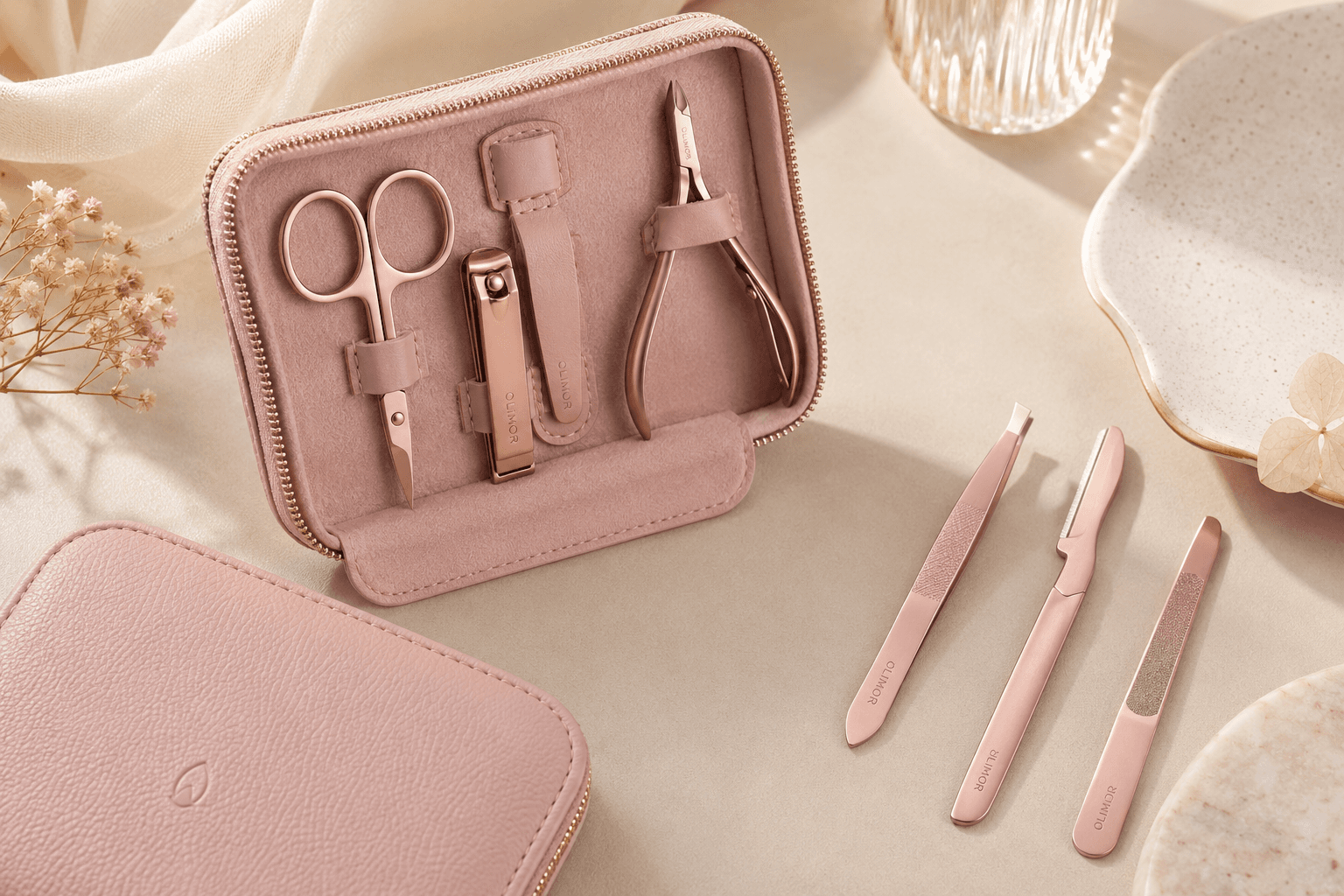
- Storage case: For vegan positioning, the case material is just as important as the tools. It should protect sharp edges, keep items organized, and avoid animal-derived materials.
When reviewing product collections, think in terms of customer scenario. A hotel amenity kit, an ecommerce gift set, and a nail salon retail kit do not require the same assortment. The strongest wholesale decisions come from matching the number of pieces, case style, and finish level to the selling channel.
Quality Criteria That Matter More Than Piece Count
Many buyers compare manicure sets by counting how many tools are included. That is easy, but it can be misleading. A smaller set with accurate cutting edges, comfortable handling, and stable packaging will usually create better customer feedback than a large set with inconsistent tools.
For stainless steel manicure instruments, inspect the details that affect real use. Nail clippers should cut cleanly without crushing the nail edge. Cuticle tools should not feel rough or overly sharp in unintended areas. Hinged tools should open and close smoothly. Files should be firmly attached and not shed grit easily under normal use. If a tool has a coating, plating, or color finish, the surface should look even and resist obvious flaking during handling.
Ergonomics are also important. Wholesale buyers sometimes focus on appearance because product photos drive online sales. Yet repeat purchases and reviews are shaped by hand feel. A clipper lever that is awkward, a pusher that slips easily, or a cramped case layout can reduce the perceived value of the whole kit. For salon and professional retail customers, practical handling can be more persuasive than decorative packaging.
| Inspection Area | What to Check | Why It Matters |
|---|---|---|
| Cutting performance | Clean trim, aligned blades, no visible gaps | Reduces nail splitting and customer complaints |
| Surface finish | Smooth edges, even polishing, no burrs | Improves safety and perceived quality |
| Hinge movement | Stable resistance, no wobble, smooth closure | Supports precise use over time |
| Case material | Non-animal material, secure loops or slots | Maintains vegan claim and protects tools |
| Packaging fit | Tools do not rattle, tips are protected | Helps prevent transit damage and returns |
Packaging and Branding Choices for Vegan Beauty Positioning
Packaging can strengthen or weaken the vegan message. For wholesale manicure tools, the case and outer box are often the first elements a customer sees. If the design looks premium but uses materials that conflict with vegan expectations, the product can lose trust quickly. Clear, simple material choices are usually better than vague claims.
Consider how the product will be displayed. Retail shelves may need a giftable box with a window or clear product photography. Ecommerce sellers need packaging that looks good in images and protects the tools during delivery. Salons may prefer compact cases that fit neatly at a reception desk or treatment room. Promotional buyers may prioritize a clean surface for branding, but the product still needs to be genuinely usable after the event.
Branding should be specific without overclaiming. Phrases such as “vegan manicure tools” or “animal-derived material free” should only be used when the full set supports that statement. Avoid relying on broad sustainability language unless the material and packaging choices are documented. A well-made stainless steel kit in a synthetic case can communicate responsibility more credibly when the description is accurate and restrained.
How Salons, Retailers, and Gift Buyers Use Vegan Manicure Tools
Vegan manicure tools wholesale can serve several business models. Nail salons may sell take-home maintenance kits to clients who want to care for their nails between appointments. Beauty retailers can place compact manicure kits near nail polish, hand cream, or travel accessories. Ecommerce brands can build bundles around self-care, grooming, or vegan beauty categories.
For salons, the priority is confidence. Clients who buy a kit from a professional setting expect clean edges, comfortable use, and a case that keeps tools organized. For retailers, the product needs to be easy to understand at a glance: what is included, who it is for, and why vegan materials matter. For gift buyers, presentation and perceived value are important, but the tools still need to perform when opened.
The buyer should also consider education. A short insert card can explain basic tool use, cleaning recommendations, and storage guidance. This does not need to make medical claims. Simple guidance such as wiping tools dry after cleaning, storing sharp tools in the case, and using cuticle tools gently can reduce misuse and help customers keep the kit in better condition.
Maintenance Guidance to Support Longer Product Life
Durability is a major reason many buyers choose metal manicure tools. Even so, maintenance affects product life. Customers should be encouraged to keep tools clean and dry, especially after contact with water, creams, oils, or nail treatments. If the kit is sold for personal use, the instructions can be straightforward and practical.
- Wipe tools after use to remove nail dust, skin residue, and cosmetic products.
- Dry metal tools before returning them to the case, especially if they were rinsed.
- Store sharp instruments in their slots or protective sleeves to prevent dulling and accidental contact.
- Avoid forcing hinged tools if debris is trapped near the joint; clean the area gently before reuse.
- Keep the kit away from prolonged moisture to protect both the tools and the case material.
For professional environments, cleaning procedures may be subject to local salon hygiene rules. Wholesale product descriptions should avoid promising sterilization compatibility unless the tool materials and construction have been properly confirmed for that process. Responsible wording protects both the supplier and the brand selling the kit.
Sourcing Checklist for Vegan Manicure Tools Wholesale
Before placing a wholesale order, buyers should prepare a concise specification. This helps a beauty tools supplier China or custom beauty tools manufacturer evaluate the project accurately and recommend appropriate options. The specification does not need to be complicated, but it should cover the decisions that affect cost, usability, packaging, and vegan positioning.
- Target sales channel: salon retail, ecommerce, travel, gift, promotional, or private label.
- Required tool list and whether each item is essential or optional.
- Preferred case material and confirmation that no animal-derived material is used.
- Finish direction, such as polished metal, matte look, or simple neutral styling.
- Packaging needs, including box structure, insert card, barcode space, and shipping protection.
- Quality expectations for cutting edges, hinges, surface finish, and tool organization.
- Branding requirements, including logo placement, color limitations, and claim wording.
If your project requires a vegan manicure set for retail launch, salon distribution, or branded beauty programs, you can send an inquiry with your target assortment and packaging direction. For broader sourcing questions or to compare manicure tools with other grooming categories, contact Olimor and outline your intended market, product style, and required claim language.
Choosing a Responsible Wholesale Direction
The best vegan manicure tools wholesale program balances ethics, function, and clear communication. Stainless steel instruments can provide the practical foundation for a durable grooming set, while carefully chosen synthetic cases and packaging help support vegan positioning. The strongest products do not rely on vague sustainability statements; they make material choices visible, keep the tool assortment useful, and meet the performance expectations of real users.
For beauty brands and buyers, the opportunity is to create nail care products that customers can understand and trust. Focus on the complete kit, not only the metal tools. Review the case, accessories, adhesives, packaging, and instructions. Test the trimming feel, edge finish, and storage layout. With careful sourcing, vegan manicure tools can fit modern beauty values while remaining practical for daily grooming, salon retail, and giftable personal care ranges.
Tag: