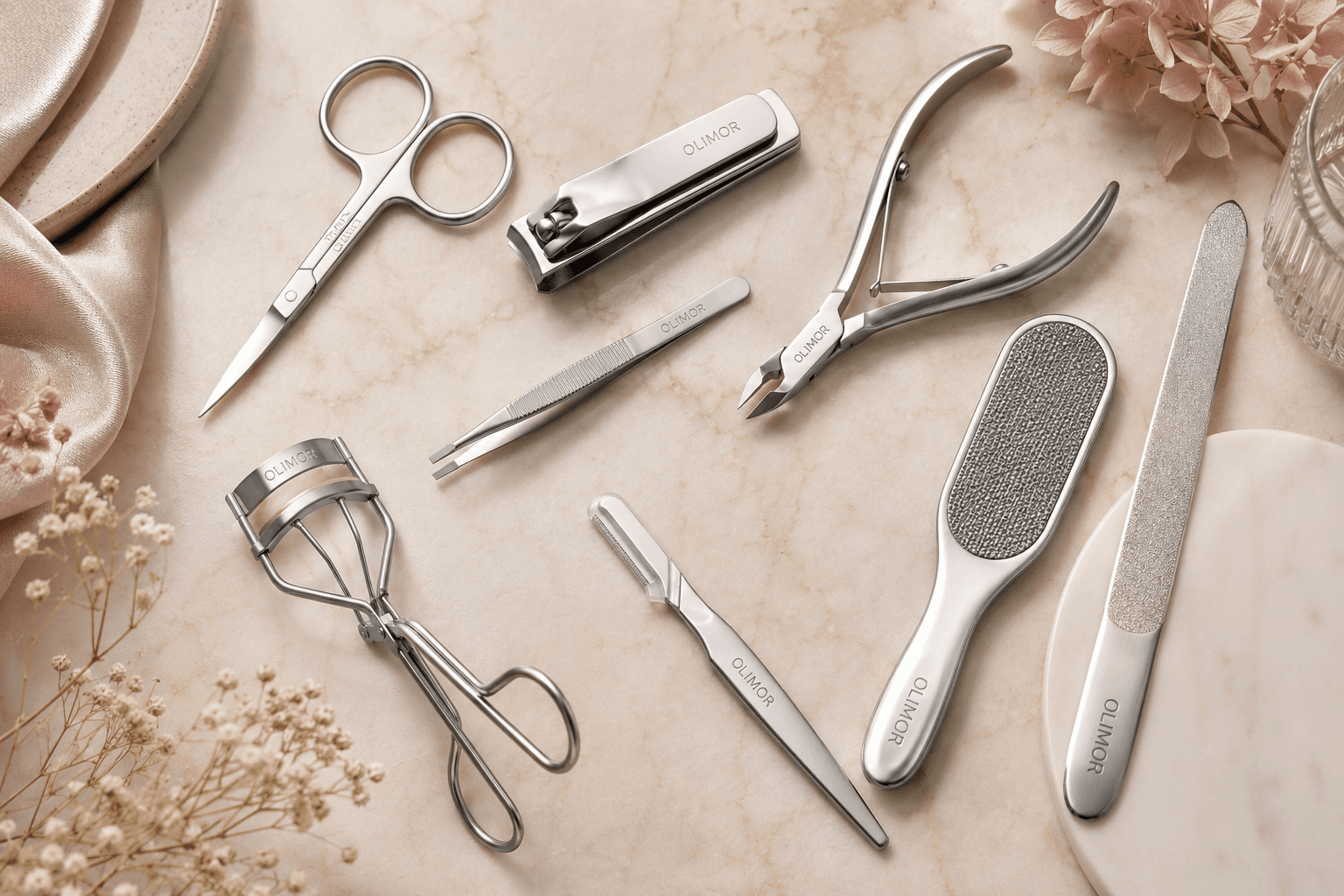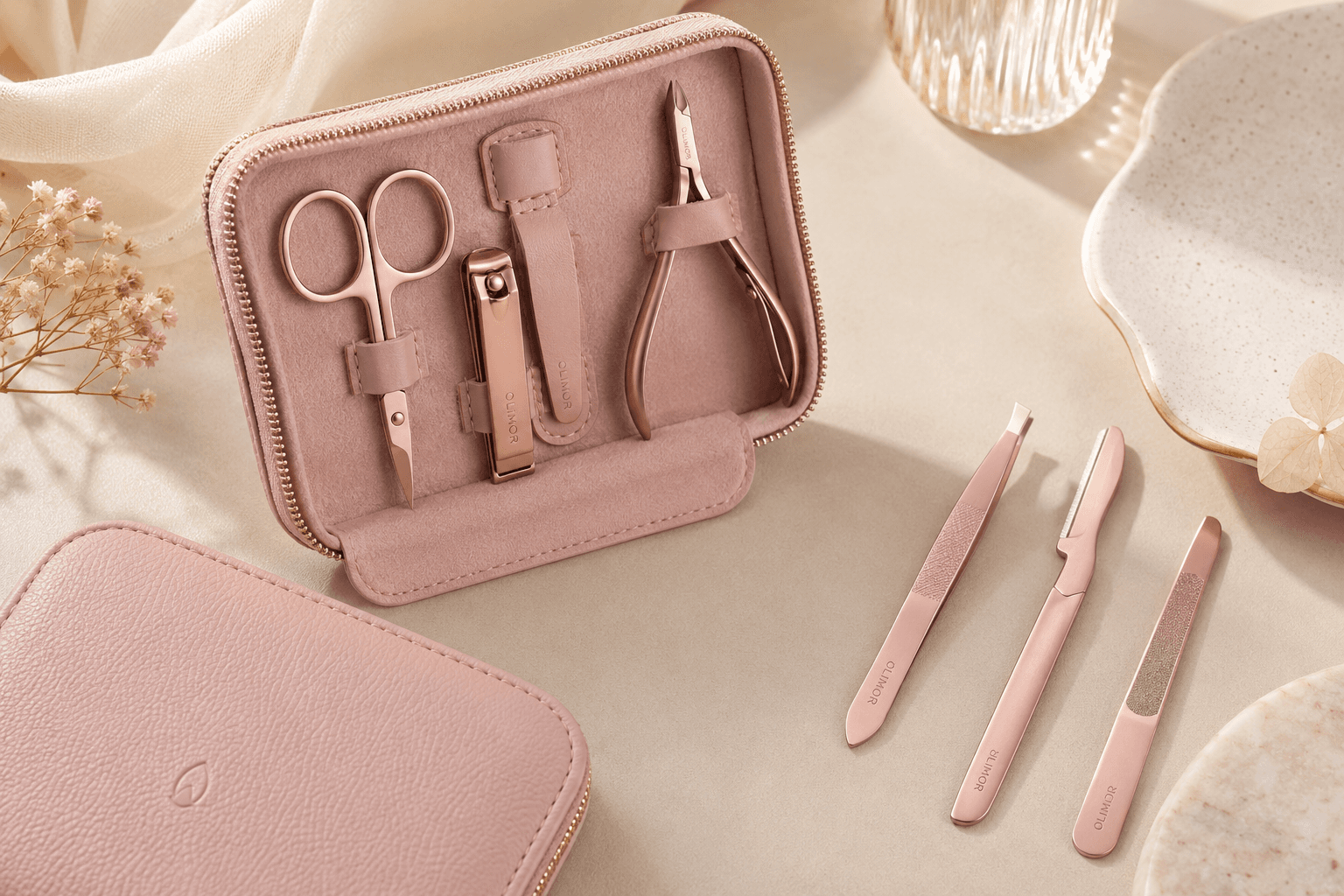
Wholesale Tweezers for Manicure Tool Buyers: Quality, Round Tip Options and Sourcing Guide
Wholesale tweezers may look like a simple purchase, but for manicure tool buyers they carry real risk and real value. Tip alignment, closing tension, edge finish, grip comfort and packaging protection all affect how the tool feels in hand and how customers judge your brand. A dependable tweezers supplier should help you source tools that are precise, durable and suitable for your sales channel, whether you buy for salons, beauty retail, e-commerce, hotel amenities or private label kits.
Olimor Beauty works in the professional beauty tools field with practical sourcing support, quality checks and a focus on stainless steel personal care tools. For buyers comparing manicure tools from Guangdong or building a broader beauty tool line, the best approach is to evaluate the tool, the supplier process and the fit with your customer needs rather than relying on broad marketing claims.
This guide covers what to check before placing a wholesale order, how to compare round-tip tweezers with other styles, and how to reduce returns through better inspection, packaging and care.
What makes a wholesale tweezer suitable for professional use?
Professional buyers should start with function. A tweezer can look good in a catalog and still fail in use if the tips do not meet cleanly, the body feels too stiff or the finish leaves rough edges. In beauty retail and salon supply, small defects are obvious to end users. One misaligned tip or uncomfortable grip can quickly lead to complaints.
The most useful sample review is practical. Check the tips under good lighting. The two sides should meet evenly without visible gaps or twisting. The tool should grip fine hairs or small manicure accessories without slipping, but it should not require excessive force. If the tension is too loose, the tweezer may feel imprecise. If it is too stiff, the user may tire quickly during repeated work.
For private label manicure tools, visual finish matters as much as function. Look for smooth polishing, consistent coating or matte finish, no sharp non-working edges and uniform color across the batch. Packaging should protect the tip during shipping and warehouse handling, because tip damage can turn a usable tool into a rejected item.
Round-tip tweezers, slanted tweezers and pointed tweezers: how to choose
Round-tip tweezers are a practical choice for manicure kits, hotel amenity sets, travel grooming packs and general beauty tool ranges. Their rounded ends offer a softer, less aggressive profile than sharp-point styles, which can make them feel more approachable for occasional users and safer for compact kits. Olimor Beauty describes its round-tip tweezer as lightweight, travel-friendly, stainless steel and suitable for gentle handling on sensitive skin.
That said, round-tip tweezers are not the best fit for every use case. If your customer expects highly precise brow shaping or detailed pickup work, a pointed or slanted style may be more appropriate. The right choice depends on the end user, not just the product photo.
| Style | Best fit | What buyers should check | Main watch-out |
|---|---|---|---|
| Round-tip | Manicure kits, hotel amenities, travel sets, gentle grooming | Smooth rounded ends, comfortable handling, compact packaging fit | May be less suitable for ultra-fine precision tasks |
| Slanted | General brow grooming and consumer retail kits | Controlled closing edge, clean tip meeting, easy grip | Can be too aggressive if the finish is rough |
| Pointed | Detail work, nail decoration pickup, precision beauty tasks | Symmetry, sharp but clean finishing, protective packaging | Needs careful handling to avoid tip damage |
| Curved | Specialized beauty and lash-related tasks | Curve angle, user comfort, reliable alignment | Should be matched to trained users and the intended technique |
For wholesale buyers, the right assortment often includes more than one style. A salon supply company may want a precision option and a gentler round-tip option. A retailer may prefer the most consumer-friendly styles. A hotel amenity buyer may prioritize round-tip tools that are easy for guests to understand immediately.
How to evaluate a tweezers supplier
A good tweezers wholesale supplier should be judged through a structured review, not broad promises. The goal is to understand whether the supplier can support stable quality, clear communication and the product presentation your market expects.
1) Check sample consistency, not just one piece
Compare several samples, ideally from different cartons or production batches if available. Look for alignment, tension, surface finish and shape consistency. One polished sample does not guarantee a reliable bulk order. In wholesale beauty tools, batch variation is a common source of returns.
2) Confirm inspection points
Ask how the supplier checks tip alignment, visible defects, edge comfort and finish. The best answer is practical and specific. For example, a supplier should be able to explain how it checks closing behavior and what happens when a piece fails inspection. If the supplier mentions quality-system documentation such as ISO 9001, ask which site and version apply and request the relevant supporting paperwork for your order.
3) Review packaging protection early
Packaging is not an afterthought. Tweezers with fine or rounded tips still need protection from rubbing, bending and cosmetic damage. If the tool will be sold in a pouch, on a card, or inside a manicure set, confirm that the packaging supports the whole kit. Buyers who are building a category line can review the broader range on the Olimor products page or compare formats in the collection overview.
4) Make private label decisions before production
Private label manicure tools need clear decisions about logo position, packaging format, artwork and end-market language. A salon-focused tweezer, a hotel amenity item and an e-commerce retail SKU may all need different presentation. Branding should never interfere with grip comfort or tool inspection. Approve a final sample before bulk production, not just a digital mockup.
What to discuss before placing a wholesale order
Before you confirm a purchase, align the tool specification with the actual use case. This is the point where many sourcing problems can still be prevented.
- Intended use: Brow grooming, manicure support, travel kits, hotel amenities or general personal care.
- Tip style: Round-tip, slanted, pointed or curved, depending on the user.
- Material and finish: Stainless steel, matte finish, polished finish or coated appearance.
- Grip comfort: Whether the tool feels stable for repeated handling.
- Packaging fit: How the tweezer sits inside a pouch, tray, card or kit.
- Branding needs: Logo placement, carton labeling and product language.
- Inspection expectations: What defects are acceptable, what must be rejected and how the supplier reports issues.
These discussions help you compare suppliers on real commercial needs rather than on vague statements such as “high quality” or “professional grade.”
Which buyer scenarios suit round-tip tweezers best?
Round-tip tweezers are especially useful when the product must feel safe, compact and easy to understand. They work well in beauty kits that are aimed at broad consumer use and in hospitality programs where the goal is practical guest convenience.
- Hotel amenity buyers: Guests usually want compact, familiar tools that are easy to use without instruction.
- Travel kit brands: Round-tip tools fit neatly into small pouches and feel less intimidating than sharp-point designs.
- Gift-set and promotional buyers: A rounded tip can support a more approachable presentation in bundled personal care sets.
- Retail private label buyers: The style is easy to position as a gentle, general-use beauty accessory.
- Salon and spa suppliers: Round-tip tweezers can support basic grooming, kit assembly and workstation use when precision is not the main requirement.
If your customers are specialists, such as lash technicians or advanced brow artists, you may need a different shape alongside round-tip options. The product should match the task, not just the category label.
Quality checks that reduce returns and complaints
Tweezers are small, but the inspection routine should be consistent. A few simple checks can prevent expensive after-sales issues.
- Tip alignment: Close the tweezer and confirm that the tips meet evenly.
- Tension check: Make sure the tool opens and closes smoothly without feeling too loose or too stiff.
- Surface review: Look for scratches, burrs, stains or uneven finishing.
- Grip test: Hold the tool as the end user would and see whether it feels stable.
- Packaging fit: Confirm that the tip is protected and the body is not rubbing against other items.
- Batch comparison: Review multiple pieces to see whether the approved sample reflects the shipment.
For buyers sourcing from a manicure tools exporter in Guangdong, these checks are especially important because location alone does not guarantee consistency. The strongest sourcing decisions combine manufacturing access with clear inspection rules and follow-up.
How to care for wholesale tweezers after purchase
Even a well-made tweezer can perform poorly if it is stored or handled badly. Buyers who distribute tools to salons, retail customers or hospitality partners should include simple care guidance.
- Keep tips protected during storage and shipping.
- Avoid placing the tool loose with hard items that can scratch the finish.
- Wipe the tool after use according to the intended care instructions for the market.
- Store the tweezer in a dry place to help maintain appearance and handling quality.
- Do not force the tips open beyond normal use, as this can affect alignment and tension.
For wholesale programs, care instructions also support the perceived value of the product. A simple card or insert can help end users understand how to keep the tool in good condition without adding unnecessary complexity.
Where Olimor fits into a sourcing workflow
Olimor Beauty supports buyers looking for practical beauty tools, including stainless steel tweezers, round-tip options and manicure-related personal care items. The most useful starting point is to review the product range, compare related tool formats and send a clear inquiry with your target use case, packaging needs and branding questions.
Use the contact page if you want to discuss product fit, or go straight to the inquiry form when you are ready to outline your sample request, packaging direction or private label plan. If you are still comparing categories, the product pages can help you assess whether round-tip tweezers, pointed styles or other beauty tools better suit your market.
FAQ
Can I request samples before a bulk order?
Yes. Sample review is one of the most important steps in wholesale tweezer sourcing. It helps you evaluate tip alignment, tension, finish and packaging before committing to a larger order.
What should I check in a sample?
Focus on how the tips meet, how the tool feels in the hand, whether the surface is smooth and whether the packaging protects the product during handling.
Are round-tip tweezers better than pointed tweezers?
Not always. Round-tip tweezers are often better for gentle, general-use kits and travel sets, while pointed tweezers are better for precise detail work. The best choice depends on the customer and use case.
Can Olimor support private label packaging?
Private label support depends on the product plan, artwork and packaging needs. Share your use case early so the supplier can confirm what is available for your order.
What affects lead time for a wholesale order?
Lead time usually depends on product style, packaging complexity, sample approval, artwork and order size. Confirm timing directly with the supplier after your specification is clear.
If you are comparing wholesale tweezers for manicure kits, salon supply or private label beauty ranges, start with a sample request and clear product brief. A well-defined order is easier to price, inspect and ship correctly.
Tag: