Wholesale False-Lash Tweezers for Precise Professional Application
For lash studios, beauty distributors, training academies and private label brands, tweezers are not a minor accessory. They directly affect placement accuracy, hand comfort, application speed and the final look of a lash set. When purchasing tweezers wholesale, the goal is not simply to buy a large quantity at a lower unit cost. The stronger goal is to build a consistent tool program that professionals can trust across repeated services, retail sales or branded kits.
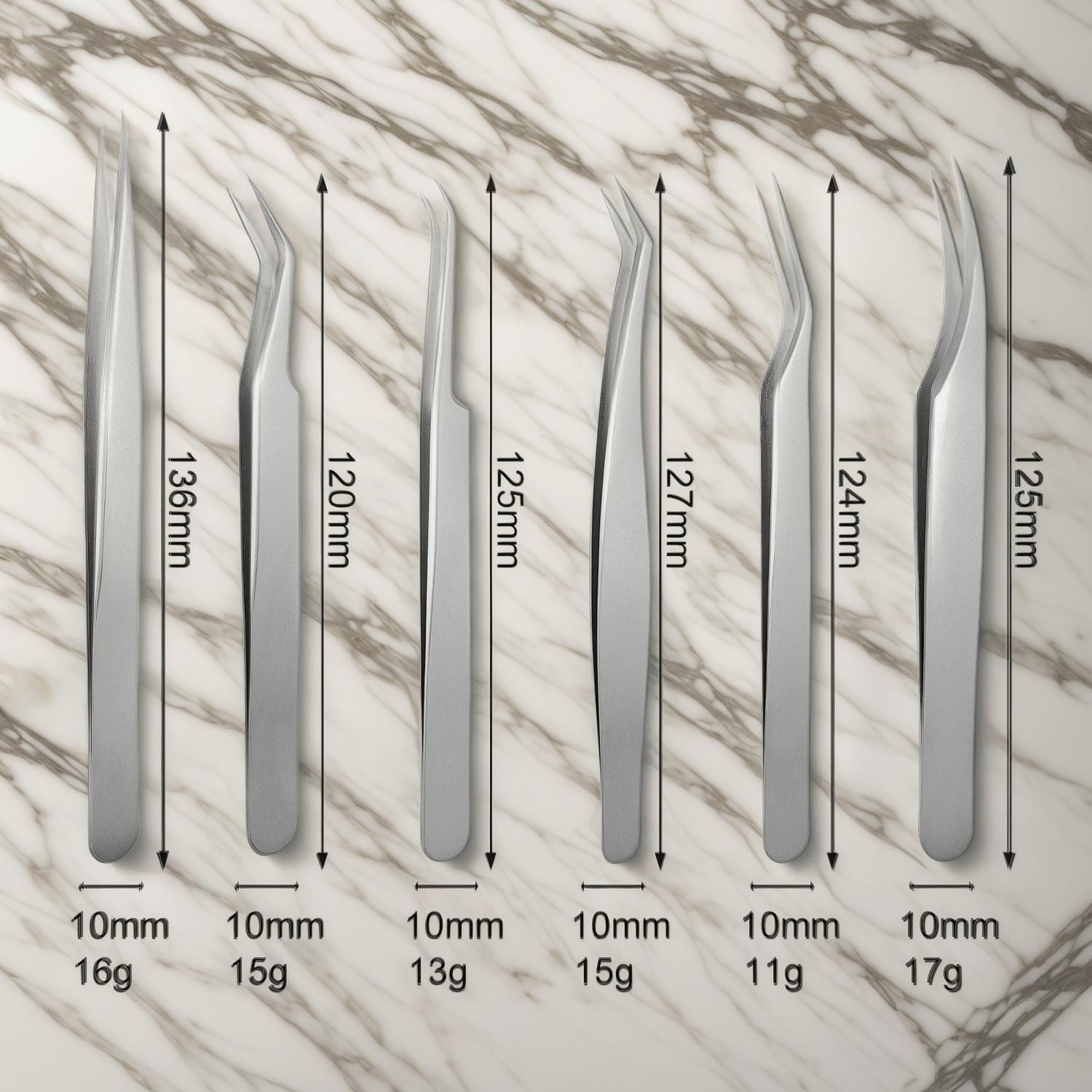
Olimor Beauty supplies professional beauty tools, including a collection of false-lash tweezers designed for controlled lash application. The range includes an elongated 136mm tweezer for broader placement work and a feather-light 11g, 124mm tool for delicate adjustments. Across the range, the tweezers use a consistent 10mm width, helping buyers compare styles while keeping hand feel and storage planning more predictable.
This guide explains how to evaluate wholesale false-lash tweezers before placing an order, what details matter for professional use, and how to plan quality checks, packaging and private label requirements. Buyers can also explore related beauty tool products or review wider product collections when building a complete assortment.
Why Tweezers Matter in Lash Services
False-lash application depends on repeatable control. A technician needs to pick up, isolate, position and release lashes without crushing fibers, misaligning the strip or fatiguing the hand. Even a small difference in tool balance can influence the technician’s rhythm over a full workday.
For wholesale buyers, this makes tweezers a high-sensitivity category. If the tips do not meet evenly, if the grip pressure is inconsistent, or if the tool feels awkward in the hand, customers may notice immediately. A lower-cost tweezer that causes repeated rework can become expensive through returns, complaints or poor brand perception.
Professional lash tweezers should support three practical outcomes: secure pickup, accurate placement and comfortable control. When reviewing samples, test them in real service-like conditions rather than only checking appearance. A polished finish and attractive packaging are helpful, but tip alignment, spring tension and balance are more important for long-term buyer satisfaction.
Choosing Length, Weight and Width for Different Users
The Olimor Beauty false-lash tweezer collection includes different size options for different application preferences. The elongated 136mm model is suited to users who prefer more reach and a broader hand position during placement. A longer body can feel stable for artists who like a controlled distance between fingers and lash line. It can also be useful in training environments where instructors want students to develop slower, more deliberate movements.
The 11g, 124mm tweezer is designed for lighter handling and delicate adjustment work. A lighter tool may be preferred by technicians who perform detailed placement for longer sessions or who want reduced hand strain during repeated fine movements. The difference between a heavier and lighter tweezer is not automatically a question of better or worse; it is a question of user preference, technique and service type.
The consistent 10mm width across the range is useful for wholesale planning because it provides a common reference point. Buyers can compare length and weight without dealing with large variations in body width. It can also simplify tray design, packaging inserts and display planning for retail or kit-based sales.
Selection Checklist for Wholesale Lash Tweezer Buyers
Before committing to a wholesale order, review each tweezer style against a structured checklist. This keeps decisions focused on performance rather than appearance alone.
- Tip meeting: The tips should meet cleanly and evenly when pressure is applied. Uneven tips can make lash pickup unreliable.
- Grip pressure: The spring feel should be firm enough for control but not so stiff that it causes hand fatigue.
- Balance: Hold the tweezer as it would be used during lash placement. The tool should not feel tip-heavy or awkward.
- Surface finish: Check for rough edges, burrs or areas that may scratch skin, snag lash fibers or affect cleaning.
- Consistency between pieces: In wholesale purchasing, the first sample is only part of the decision. Consistency across multiple pieces matters.
- Packaging compatibility: Confirm whether the tweezer fits planned retail cards, pouches, kits or protective sleeves.
- Branding area: If private label is planned, evaluate where logos or product codes can appear without interfering with grip.
- Use-case match: Decide whether each style is intended for professional salon use, training kits, retail resale or brand gift sets.
This checklist helps purchasing teams avoid vague evaluations such as “looks good” or “feels premium.” Instead, each decision is tied to a real use case and measurable buyer concern.
Wholesale Sourcing Questions That Improve Order Quality
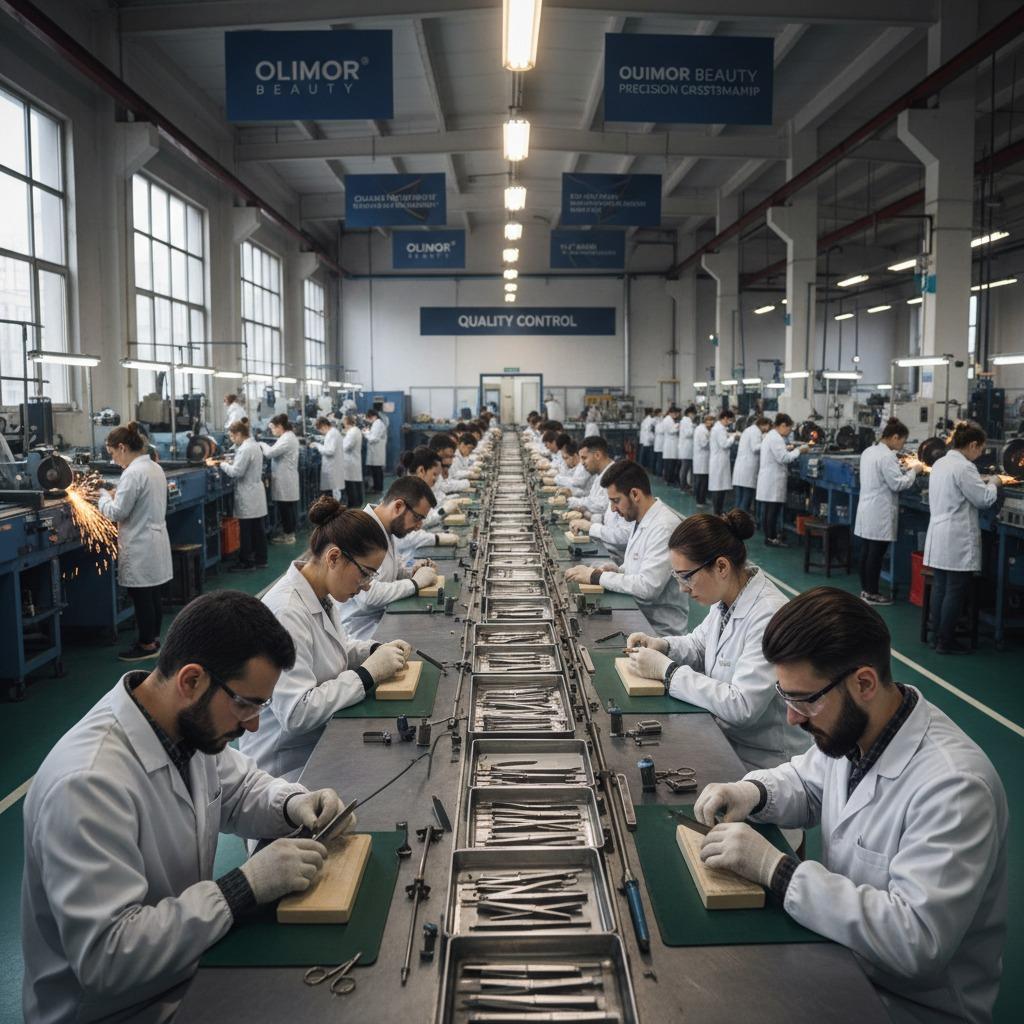
A good wholesale conversation should cover more than price and quantity. False-lash tweezers are precision tools, so buyers should confirm how product expectations will be communicated and checked before shipment. This is especially important for distributors and private label brands that need consistent results across repeat orders.
Useful sourcing questions include:
- Which tweezer styles are available in the false-lash tweezer range, and how do they differ in length, weight and intended use?
- How are tip alignment and finish checked during production and before packing?
- Can samples be reviewed before a larger wholesale order is confirmed?
- What packaging formats are available for bulk supply, retail display or branded kits?
- What private label options can be planned for the tool or packaging?
- How should artwork files, logo placement and packaging references be prepared?
- Can recyclable grooming tools bulk requirements be discussed for buyers planning more sustainable assortments?
These questions do not require overcomplicated documentation, but they encourage clearer expectations between buyer and supplier. If your project includes a launch deadline, promotional kit or retail display program, share those requirements early through send an inquiry so product selection and packaging planning can be aligned.
Private Label Planning for Lash Tweezer Lines
Private label tweezers can support salons, beauty brands, lash academies and distributors that want a more cohesive product identity. A branded tweezer may be included in a starter kit, sold as a retail add-on, paired with false lashes or used as a professional training tool. The key is to match the tweezer style to the brand’s customer rather than selecting a tool based on appearance alone.
For example, a lash academy may want a durable, easy-to-control tweezer that helps beginners develop stable hand movement. A professional lash studio may prefer a refined, lightweight option that supports longer working sessions. A retail beauty brand may focus on a tool that feels approachable for home users while still offering better control than generic accessories.
Private label planning should consider logo size, logo placement, packaging copy, safety wording, barcode requirements and product naming. Avoid making unsupported performance claims on packaging. Instead, focus on clear and useful descriptions such as intended use, handling guidance and care instructions. If several tweezer styles are included in one assortment, simple differentiation helps customers choose correctly.
Care, Storage and Handling Guidance for End Users
Wholesale buyers should think beyond the purchase order and consider how end users will maintain the tool. Proper care helps protect tip alignment and keeps the tweezer ready for precise lash work. Even a well-made tweezer can perform poorly if dropped, bent or stored loosely with other metal tools.
Recommended care guidance can include the following:
- Store tweezers in a protective sleeve, pouch or dedicated tray to prevent tip damage.
- Do not use lash tweezers for cutting, scraping, prying or other non-lash tasks.
- Keep the tips clean and dry after use according to the hygiene practices required by the service environment.
- Avoid dropping the tweezer on hard surfaces, as the tips may become misaligned.
- Inspect the tool regularly for changes in tip closure, surface condition or grip tension.
Including this guidance in retail packaging, training materials or after-sales instructions can reduce avoidable complaints. It also shows customers that the brand understands professional tool care, not just product presentation.
Building a Practical Wholesale Assortment
A strong tweezer assortment usually includes more than one handling option. Because lash technicians have different grip preferences, a single universal shape may not satisfy every customer. Combining an elongated option such as the 136mm model with a lighter 11g, 124mm option allows buyers to cover broader placement and delicate adjustment needs.
For distributors, this can support tiered selling: one style for professional kits, another for refill orders, and another for retail displays. For salons, it allows technicians to choose the tool that best fits their hand position and technique. For private label brands, it creates an opportunity to build a small but purposeful lash tool range without inventing unnecessary product claims.
When planning assortment depth, review your customer base. Are they professional lash artists, beauty schools, retail consumers, or mixed-channel buyers? Do they need individual tweezers, complete kits, or bulk replenishment? The clearer the use case, the easier it is to choose the right styles, packaging and product descriptions.
Work With Olimor Beauty on Wholesale Tweezers
Olimor Beauty focuses on professional beauty tools for buyers who need practical products, reliable presentation and thoughtful sourcing support. For wholesale false-lash tweezers, the important details are not limited to shape or price. Length, weight, width, tip control, hand comfort, packaging and private label planning all influence whether the final product performs well for customers.
If you are comparing wholesale tweezers for a salon program, distributor catalog, lash training kit or private label launch, start with clear application needs and a sample review process. Then define packaging, branding and maintenance instructions so the product is ready for real market use. To discuss suitable tweezer options or related beauty tools, contact Olimor with your project requirements.
Tag: