Tweezers Wholesale: How to Choose Manicure Tools That Buyers Will Reorder
Tweezers may look like a small item in a beauty-tool assortment, but they often reveal how carefully a supplier thinks about precision, finish and everyday usability. For salons, brow technicians, manicure stations, retail beauty brands and promotional beauty kits, tweezers need to feel controlled in the hand, grip reliably at the tip and withstand repeated cleaning and handling. A poorly aligned tweezer can make even a simple grooming task frustrating, while a well-made one becomes a repeat-purchase item.
Olimor Beauty works in the beauty-tools category where wholesale buyers often need dependable manicure and grooming tools rather than one-off novelty items. If you are sourcing tweezers wholesale, the goal is not only to find an attractive product. You also need to define the use case, compare tip shapes, evaluate finishing quality, plan packaging and confirm that the tool fits the expectations of your market. This guide explains how to approach that decision with practical criteria.
Why Tweezers Matter in a Manicure and Grooming Assortment
Tweezers are commonly associated with brows, but they are also useful around manicure and beauty workstations. They can help handle small decorative nail elements, remove tiny debris, position delicate items, pick up stickers or gems and support general grooming tasks. Because they are compact and affordable to ship compared with larger tools, they are also popular in retail kits, travel sets and private label beauty programs.
For wholesale buyers, tweezers offer several advantages. They are easy for customers to understand, suitable for both professional and personal use, and compatible with many packaging formats. A salon supply distributor may sell them as standalone tools, while a beauty brand may include them in a grooming set. The important point is to match the tweezer design to the real task instead of ordering only by appearance.
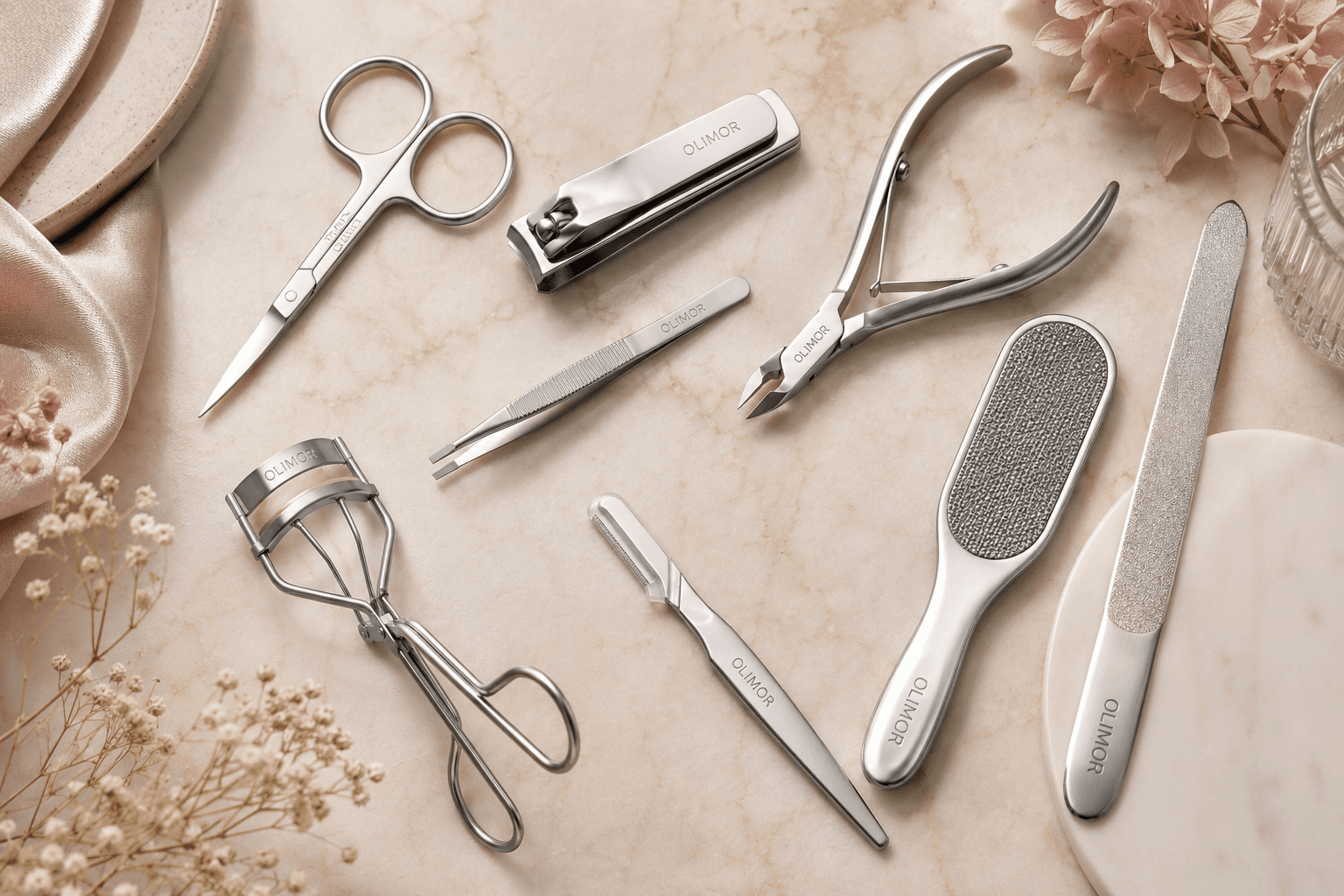
When reviewing beauty tool products, consider how tweezers will sit within the broader assortment. Are they meant to complement nail clippers and cuticle tools? Are they for brow grooming? Will they be sold in a pocket kit or displayed individually? The answers shape the right tip, length, tension and surface treatment.
Choosing the Right Tweezer Tip for the Job
Tip design is one of the most important purchasing decisions. A buyer may be tempted to choose the most visually distinctive option, but the tip must first perform consistently. The original Olimor Beauty article references a Double-End Tweezer and slanted tip tweezers, both of which reflect common market interest in multifunctional and precision grooming tools.
Slanted tip tweezers are widely used because they provide a practical balance between visibility and gripping ability. The angled edge can help users approach hair or small items from a comfortable angle. Pointed tips may suit fine detail work, but they require careful handling and may not be ideal for all retail audiences. Flat tips can grip broader surfaces but may be less suitable for very fine hair. A double-end design can add versatility, but buyers should check whether both ends are comfortable, aligned and easy to protect in packaging.
| Tip style | Best suited for | Wholesale buying focus |
|---|---|---|
| Slanted tip | General brow grooming, salon retail, personal care kits | Even closure, smooth edge, comfortable viewing angle |
| Pointed tip | Fine detail tasks and careful precision work | Tip protection, safety messaging, accurate alignment |
| Flat tip | Handling small beauty accessories or broader gripping tasks | Consistent contact surface and stable spring tension |
| Double-end tweezer | Multifunctional kits and buyers seeking a versatile tool | Usability at both ends, protective packaging and balanced feel |
The best choice depends on your audience. Professional users may value precision and consistent tension more than decorative finishes. Retail consumers may care about appearance, portability and easy handling. A strong wholesale specification should describe the intended function before discussing color or packaging.
Quality Checks Buyers Should Make Before Wholesale Ordering
A tweezer’s quality is easiest to judge at the working end. Tip alignment, edge smoothness and tension determine whether the tool feels professional. Before placing a wholesale order, build a checklist that can be used when reviewing samples and production pieces. This helps avoid vague judgments such as “good quality” and gives your team a repeatable way to compare suppliers.
- Tip alignment: The two sides should meet evenly without a visible gap when light pressure is applied.
- Grip consistency: The tweezer should hold a fine hair or small test material without sliding immediately.
- Edge finish: Tips should not feel rough, sharp in the wrong place or unevenly polished.
- Spring tension: The tool should open and close smoothly without requiring excessive force.
- Surface finish: Coating, polishing or plating should appear even, with no obvious stains, burrs or peeling on sample pieces.
- Hand feel: The body should be comfortable enough for repeated use, especially for salon or technician customers.
- Packaging fit: The tips should be protected during shipping and retail handling.
For manicure tools, cleanliness and finish are especially important because customers associate the tool with personal care. If your market involves salon professionals, sample testing should include repeated handling, cleaning according to your intended instructions and storage in the planned packaging. These steps do not require exaggerated claims; they simply help buyers determine whether the product suits its intended use.
Material, Finish and Ergonomics Without Guesswork
Wholesale product pages often make broad claims about materials and performance. Buyers should instead focus on verifiable details. If a supplier specifies a material, finish or coating, it should be documented clearly in the quotation and sample approval record. If those details are not stated, avoid assuming a grade or performance level based only on appearance.
Ergonomics can be evaluated directly. A tweezer should not feel slippery, poorly balanced or tiring after repeated closing motions. Texture, width and body shape all influence control. Decorative finishes can help a retail product stand out, but they should not interfere with grip or cleaning. For example, a bright finish may look appealing on a display card, while a matte or textured surface may feel more secure in the hand. The right option depends on the user and sales channel.
For buyers planning private label manicure tools, consistency matters as much as the first sample. Define acceptable finish range, logo position, packaging layout and tip protection method before moving to bulk production. When the product is small, even minor inconsistencies are noticeable because the customer holds it close and examines the working tip.
Packaging and Retail Presentation for Wholesale Tweezers
Packaging has two roles: it protects the tweezer and explains its use. A sharp or finely aligned tip can be damaged if it moves freely inside a box or pouch. For pointed or double-ended designs, tip protection becomes even more important. Retail buyers should also consider how the product will hang, stack or ship, because tweezers are often sold in high-volume displays or included in beauty kits.
Good packaging decisions start with the sales channel. A salon distributor may prefer simple protective packaging with clear product identification. A consumer beauty brand may need a more polished card, pouch or box. An e-commerce seller must think about damage during parcel shipping and how the item appears in photography. If sustainability is part of your product direction, evaluate packaging reduction, recyclable components and clear disposal information without making unsupported environmental claims.
It is also useful to decide whether instructions are needed. Basic care guidance can reduce customer complaints. For example, remind users to keep tips clean and dry, store the tweezer with protection when possible and avoid dropping the tool on the tip. Simple instructions are especially helpful when selling to general consumers rather than professionals.
How to Compare Manicure Tools Suppliers
Price is important in wholesale sourcing, but it should not be the only comparison point. A lower unit cost may be offset by inconsistent alignment, weak packaging or higher return rates. A practical supplier review looks at communication, sampling discipline, product range and ability to follow approved specifications.
- Start with the use case: Define whether the tweezer is for brow grooming, nail art handling, retail kits or professional salon resale.
- Request relevant samples: Compare the tip type, finish and packaging closest to your intended product.
- Record approval criteria: Keep notes on alignment, tension, finish, logo position and packaging protection.
- Clarify customization needs: Confirm artwork format, placement, packaging text and any private label requirements.
- Plan inspection points: Decide which features your team will check before shipment or upon receipt.
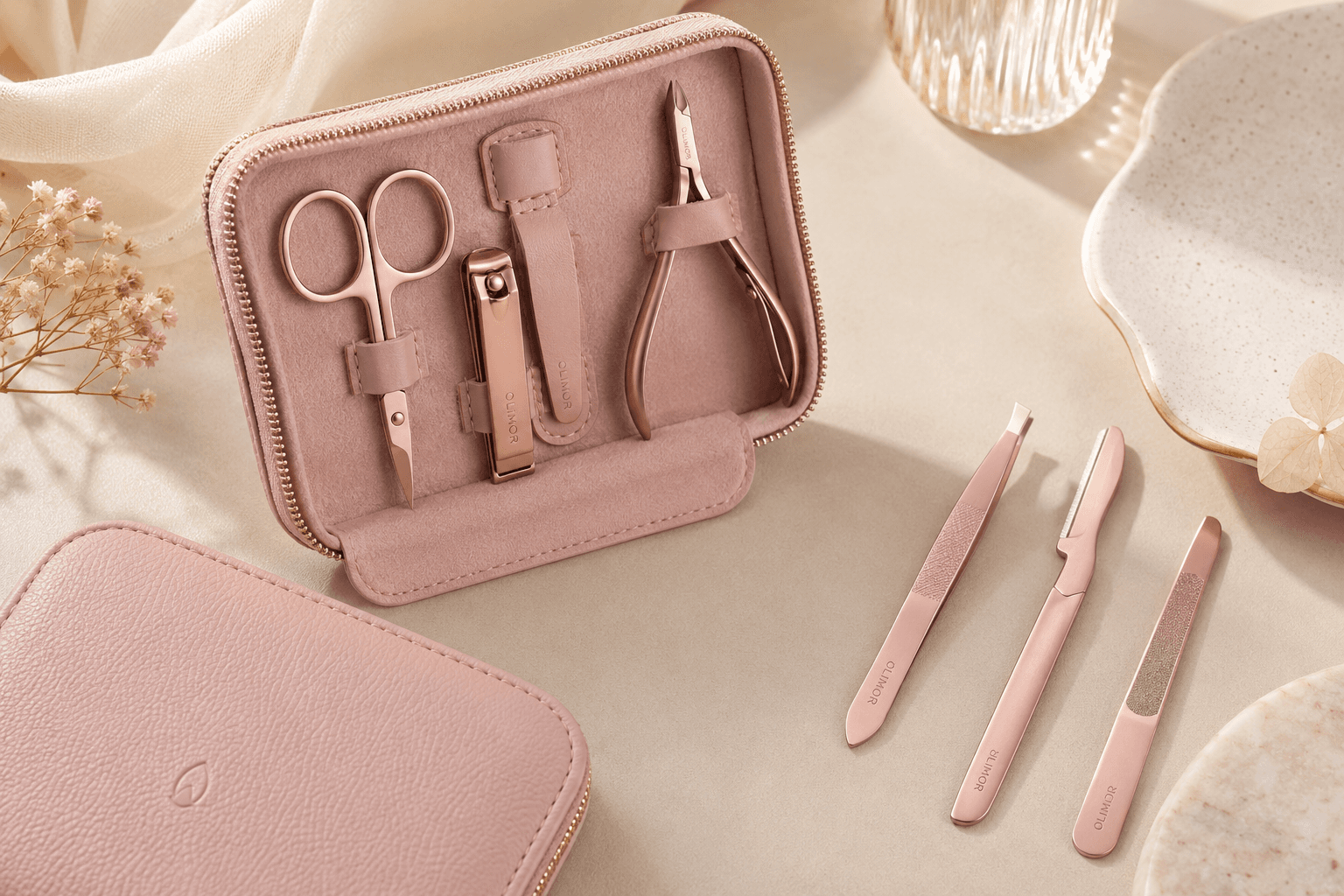
Olimor Beauty’s broader product collections can help buyers consider tweezers as part of a coordinated manicure and beauty-tool lineup. If you are building a set, the tweezer should match the quality level and visual direction of the other tools rather than feeling like an afterthought.
Common Wholesale Mistakes to Avoid
One common mistake is ordering tweezers based only on color. Color can attract attention, but the customer judges the tool by whether it grips properly. Another mistake is selecting a very precise tip for a broad consumer audience without considering safety, packaging and instructions. A pointed tool may be appropriate for certain users, but it needs careful presentation.
Buyers also sometimes overlook the difference between a sample and repeat production. Keep an approved sample and written specification so future orders can be compared. If you are sourcing for a brand program, do not rely on verbal descriptions alone. Confirm the final artwork, packaging copy and acceptable appearance range.
Finally, avoid mixing too many tweezer variations into a first order unless you have a clear reason. A focused selection, such as one slanted tip tweezer for general retail and one double-end tweezer for a kit, can be easier to manage than a wide assortment with uncertain demand.
Building a Better Wholesale Tweezer Program
A successful tweezers wholesale program begins with precision, but it does not end there. The strongest products combine a suitable tip design, comfortable hand feel, clean finishing, protective packaging and a clear role within the buyer’s assortment. For manicure and beauty-tool businesses, those details make the difference between a low-value accessory and a product customers trust.
If you are comparing options for professional beauty tweezers, private label manicure tools or grooming accessories in bulk, prepare your requirements before discussing production. Share the intended use, target customer, packaging expectations and any branding needs. To discuss a sourcing project, you can send an inquiry or contact Olimor with your planned product direction and sample requirements.
Tag: