

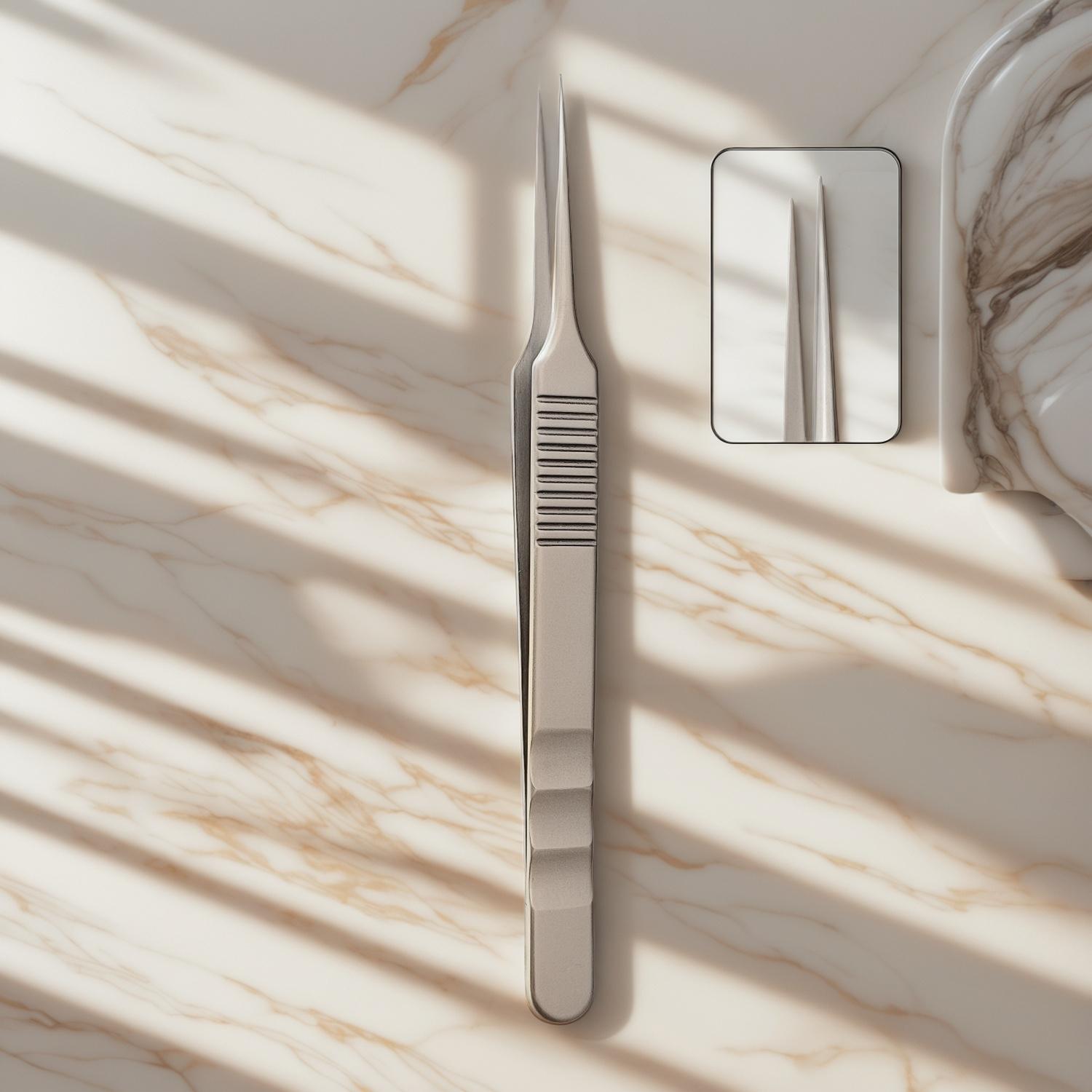
OEM Stainless Steel Tweezers for Wholesale Beauty and Precision Tool Programs
For beauty brands, distributors, salon kit suppliers and private label buyers, tweezers look simple at first glance. In practice, they are one of the most detail-sensitive tools in a professional assortment. A small difference in tip alignment, grip comfort or finishing can affect how easily a technician isolates a lash, shapes an eyebrow or handles a fine crafting task. That is why tweezers OEM sourcing should be approached as a precision tool project, not only as a packaging exercise.
Olimor Beauty provides OEM custom tweezers for buyers who need consistent stainless steel instruments for wholesale programs. The focus is on practical performance: premium stainless steel construction, elongated sharply pointed tips, ridged grips, corrosion-resistant metallic finishing and quality checks from raw material through final packaging. Whether the tweezers are intended for eyebrow services, lash extension work, medical-adjacent precision handling or craft use, the sourcing goal is the same: a tool that feels controlled in the hand and performs consistently across a shipment.

Why OEM Tweezers Require More Than a Standard Catalog Choice
Wholesale tweezers are often purchased in volume, but the user judges each pair individually. A professional may reject a tweezer if the tips do not meet cleanly, if the grip slips during service, or if the metal finish feels rough near the fingers. For retail buyers, inconsistent quality can lead to returns and weak repeat orders. For training schools and salon kits, unreliable tools can create frustration for new technicians who are still developing technique.
An OEM program helps buyers define the tool around a specific market position. A brand serving brow artists may prioritize fine point control and clean hair removal. A lash-focused kit may need a design that supports isolation and delicate placement. A distributor selling to mixed beauty and crafting channels may prefer a versatile pointed tweezer that feels stable across multiple uses. Instead of treating customization only as logo placement, strong OEM planning considers the entire use case: tip geometry, hand feel, finish, packaging and inspection expectations.
Key Performance Details to Review Before Ordering
The most important part of any precision tweezer is the working end. Elongated, sharply pointed tips are useful when the operator needs to reach small areas, separate fine materials or pick up individual hairs. However, sharpness alone is not enough. The tips should align evenly, meet with predictable pressure and allow controlled movement without forcing the hand to over-squeeze.
Grip is the second major factor. Olimor Beauty tweezers are described with ridged grips, which help reduce slipping during repeated use. This matters in salon environments where tools may be handled for long periods, and it also matters for lash extension work where small hand shifts can affect accuracy. A ridged surface should add control without feeling abrasive or catching on gloves, towels or kit liners.
Material and finish also affect long-term usability. Premium stainless steel supports durability and is a practical choice for tools that may be cleaned and handled frequently. A sleek metallic finish that resists corrosion helps the tweezer remain professional in appearance while protecting the surface from premature degradation. Buyers should evaluate whether the finish is uniform, whether edges are clean and whether the tool can be wiped and stored without showing immediate wear.
- Tip alignment: tips should meet evenly and hold fine materials with controlled pressure.
- Point shape: elongated sharply pointed tips suit detailed brow, lash and precision handling tasks.
- Grip texture: ridged grips help reduce slipping and support more confident handling.
- Surface finish: a smooth metallic finish should look clean and resist visible corrosion under normal care.
- Hand feel: the spring tension should feel balanced rather than stiff or unstable.
- Packaging readiness: the final presentation should protect the tips and support the buyer’s sales channel.
Matching Tweezer Features to Beauty, Medical and Craft Uses
One reason stainless steel pointed tweezers are popular in wholesale programs is their broad utility. In eyebrow shaping, precision tips help isolate unwanted hairs and work close to the brow line. In lash extension services, technicians need tools that support separation, placement and fine control. In craft applications, a pointed tweezer can assist with small components, decorative details and delicate materials. The original product positioning also references surgical procedures, which reinforces the importance of accurate handling and clean construction.
Even when one tweezer design can serve several markets, the buyer should decide which use case leads the specification. A brow-focused product may emphasize clean hair grip and retail-friendly packaging. A professional lash kit may prioritize lightweight handling and consistent tip closure across many pairs. A wholesale distributor may need a balanced design that can be explained clearly to different customer groups.
If you are comparing multiple beauty tool options, review Olimor’s broader beauty tool products to understand how tweezers can sit alongside other implements in a kit or retail assortment. For buyers building a coordinated range, the product collections page can also help frame how individual tools may be grouped for merchandising.
OEM Customization Decisions That Affect the Final Product
OEM custom tweezers can support different brand strategies, but each customization choice should be connected to the way the product will be sold and used. Before focusing on decoration, define the practical requirements. Who will hold the tool? How long will it be used in a single session? Will it be sold as a single item, packed in a professional kit or bundled with other beauty accessories? These answers influence both the tool specification and the packaging plan.
For a wholesale buyer, packaging is more than appearance. It protects the pointed tips in transit, makes warehouse handling easier and communicates the intended use to the end customer. A delicate pointed tweezer should not move freely inside packaging where the tips may be damaged. If the product is for retail shelves, the package should explain the purpose clearly. If it is for salon supply or training kits, the package may need to prioritize efficiency and secure storage.
Branding can be considered after function is defined. Logo placement, outer packaging design and kit configuration are common OEM discussion points, but they should not hide weaknesses in alignment, finish or handling. The strongest private label programs use customization to make a reliable tool easier to identify, sell and reorder.
Quality Control Points for Wholesale Tweezers
Olimor Beauty’s OEM custom tweezers are described as undergoing quality checks from raw materials to final packaging. For buyers, that is the right framework: inspection should not be limited to the finished carton. Stainless steel selection, forming, tip shaping, surface finishing, cleaning, grip consistency and packaging protection all influence the final user experience.
A practical buyer checklist can make sample review and production approval more consistent. Rather than relying only on photos, evaluate a physical sample in the same way your customers will use it. Test the tweezer on fine hair or small materials, hold it for several minutes, check whether the tips close evenly and inspect the surface under good light. Repeat the same checks across more than one sample to see whether the result is consistent.
- Confirm that the tips meet evenly without visible crossing or gaps.
- Check that the pointed ends are cleanly finished and protected during packaging.
- Open and close the tweezer repeatedly to assess spring tension and comfort.
- Hold the ridged grip with dry hands and after wiping to judge slip resistance.
- Inspect the metallic finish for scratches, discoloration, burrs or uneven polishing.
- Review inner and outer packaging for protection, labeling space and sales-channel fit.
- Document approved samples so future shipments can be compared against a clear reference.
Sourcing Questions for International Wholesale Buyers
International wholesale tweezers must satisfy both product expectations and supply-chain requirements. Buyers should prepare clear artwork files, packaging needs, target use cases and inspection criteria before confirming an OEM direction. When details are defined early, the supplier can align sampling and production more effectively, and the buyer can avoid vague approvals that create disagreement later.
It is also useful to consider how the tweezers will be positioned in your market. A professional channel may value durability, point accuracy and simple protective packaging. A retail beauty channel may need clearer consumer instructions and a more polished presentation. A distributor may require carton labeling and product descriptions that make reordering easy for multiple sales teams.
For buyers developing an OEM tweezer program, Olimor Beauty can help discuss the product direction, sample expectations and packaging approach. To start a purchasing conversation, you can send an inquiry. If you need to clarify a project before submitting details, contact Olimor with your intended market, order channel and required tool application.
Care and Handling Guidance to Support End Users
Good end-user instructions can reduce avoidable complaints and extend product life. Stainless steel tweezers should be kept clean and dry after use, especially around the tips and grip grooves. They should be stored with the points protected to prevent bending or dulling. Users should avoid dropping pointed tweezers on hard surfaces, because even a slight impact can affect alignment. If the tweezers are used in professional settings, cleaning practices should follow the hygiene requirements of that environment and the product’s intended use.
For retail packaging or kit inserts, simple care language is often enough: wipe after use, dry before storage, protect the tips and keep away from children. For salon kits, add guidance about separating clean and used tools and checking tip alignment regularly. These instructions do not need to be complicated, but they help customers understand that a precision tweezer should be treated differently from a disposable accessory.
Building a Better OEM Tweezer Program
A successful tweezers OEM project begins with a clear understanding of the user. Beauty professionals need precision and comfort. Retail customers need a tool that feels easy to control. Wholesale buyers need consistent quality, protective packaging and a product story that can be communicated without exaggeration. Olimor Beauty’s stainless steel OEM tweezers bring together pointed precision, ridged grip control, corrosion-resistant metallic finishing and process-based quality checking for brands and distributors building reliable tool assortments.
By reviewing tip performance, hand feel, finish, packaging and inspection criteria before scaling an order, buyers can reduce risk and create a more dependable product. In a category where small details determine user satisfaction, careful OEM planning is the difference between a generic tweezer and a precision tool that earns repeat demand.
Tag: