Quick Answer: Choose a tweezers manufacturer by testing the intended task, not just the appearance of a sample. Ask for a defined tip shape, a material description, a controlled reference for closing resistance, and an inspection method that catches misalignment. Then check decoration and protective packaging on the finished tool. Compare quotations for the same configuration, with sample stages, quantity conditions, and production responsibilities made explicit. These checks help brow, lash, and private-label buyers separate an attractive catalogue option from a reproducible product.
Introduction: A small tip defect can undermine a whole range
For beauty brands, salon distributors, and retail purchasing teams, tweezers are small products with very visible consequences. A customer notices immediately when a hair slips between the tips, a pointed end crosses its partner, or the handle needs an uncomfortable squeeze. The tool may still look excellent in its pouch. A product photograph rarely reveals those problems.
The sourcing difficulty is that several variables produce similar symptoms. A slip can result from contact geometry, the working surfaces, an unsuitable tip for the task, or the way a sample is being handled. Heavy resistance may come from the body design rather than the finish. A factory needs enough information to diagnose the issue; a note saying "make it more precise" does not supply that information.
This guide gives importers, brand owners, ecommerce teams, and professional beauty buyers a practical way to compare samples and discuss production. The suggested checks are purchasing methods, not claims that OLIMOR has performed a particular laboratory study. No universal tolerance, material grade, force value, defect rate, minimum order, or delivery promise is assumed.
What Is a Tweezers Manufacturer?
A tweezers manufacturer makes or coordinates the production of paired gripping tools whose two arms close to hold a small object. In beauty ranges, the intended object may be a brow hair, a lash accessory, or another small grooming item. The working geometry and handling requirements differ between those applications, so one silhouette should not be treated as suitable for every task.
The tool typically has two arms, a connection or formed body, a grip area, and two working tips. Depending on the model, manufacture may involve blank preparation, forming, joining, grinding, alignment, surface finishing, decoration, and inspection. The supplier should explain which operations apply to the selected SKU and which are performed in-house or coordinated elsewhere.
The purpose of the manufacturing relationship is to reproduce a defined gripping result. That requires more than a drawing of the outline. Buyers also need to agree how the tips meet, where the object is held, how the closing action feels, how the finish is protected, and which sample controls the final product.
1. Separate brow, lash, and detail applications before comparing samples
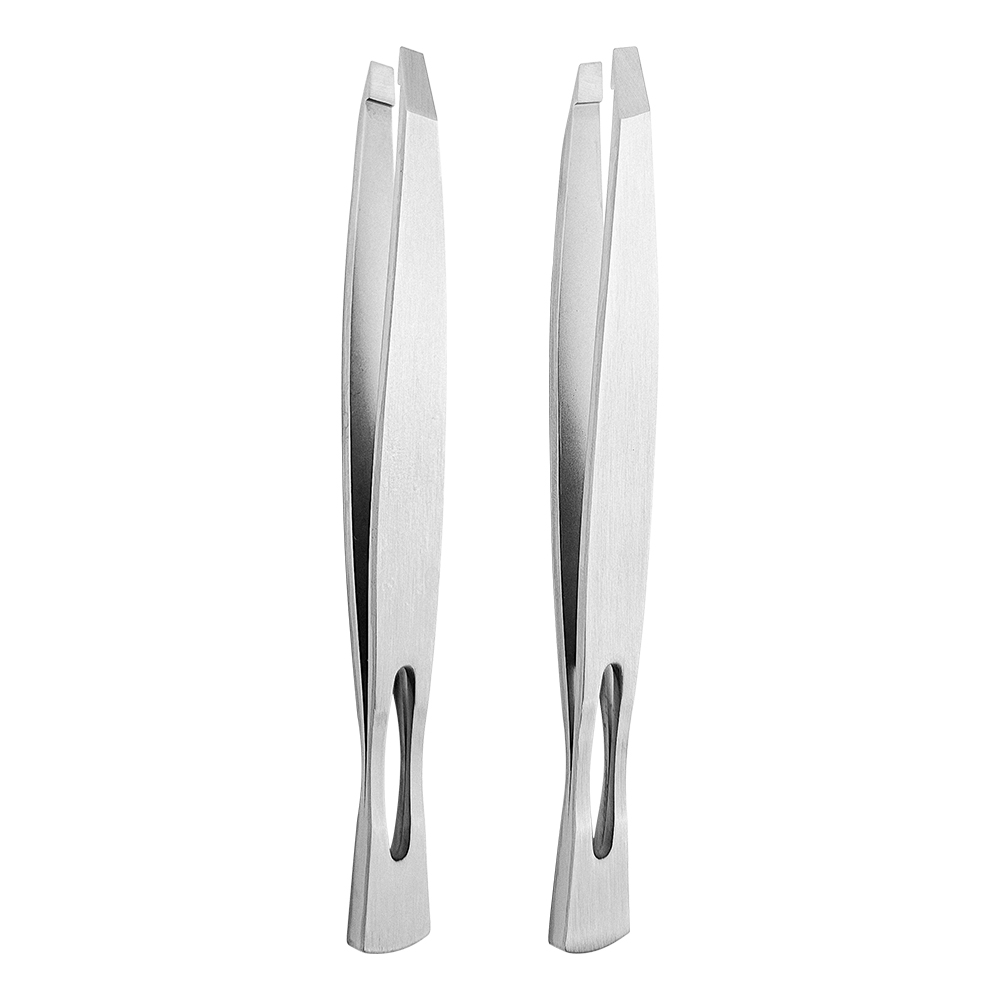
Begin with the action the user needs to perform. Brow shaping and lash placement are both beauty tasks, but they do not necessarily call for the same contact surface, access angle, or grip point. A broad slant can provide a useful working edge for routine brow grooming. A finer point offers narrower access but demands a different handling review. Curved or angled tools may suit certain lash tasks, subject to the chosen design and intended practice.
Do not extend a beauty-tool brief into medical extraction, splinter treatment, electronics, or other specialized applications without a separate review. A metal tool that looks similar is not automatically suitable for those environments. Keep the product description within the verified grooming use and request appropriate evidence for any additional claim.
| Application | Starting geometry to discuss | What the sample must demonstrate | What not to assume |
|---|---|---|---|
| Everyday brow grooming | Slant or other defined brow tip | Useful contact across the intended gripping region | A shiny edge automatically holds finer hairs |
| Single-hair detail work | Pointed or pointed-slant design | Aligned points and controlled access | The narrowest tip is easiest for every user |
| Lash handling | Curved, angled, or straight design for the exact task | The intended material stays controlled at the working position | A brow check proves lash performance |
| Mixed retail set | Several clearly differentiated tips | Each tool has a recognizable purpose and protected slot | More pieces always add customer value |
Write a one-line use statement for each proposed model. For example, a hypothetical retail brief might call for a slant tool for routine brow maintenance and a separate pointed tool for more selective handling. Label that statement as the buyer's requirement, not as a performance claim. It gives the manufacturer a reason for each tip choice.
2. Make tip contact the centre of the purchasing specification
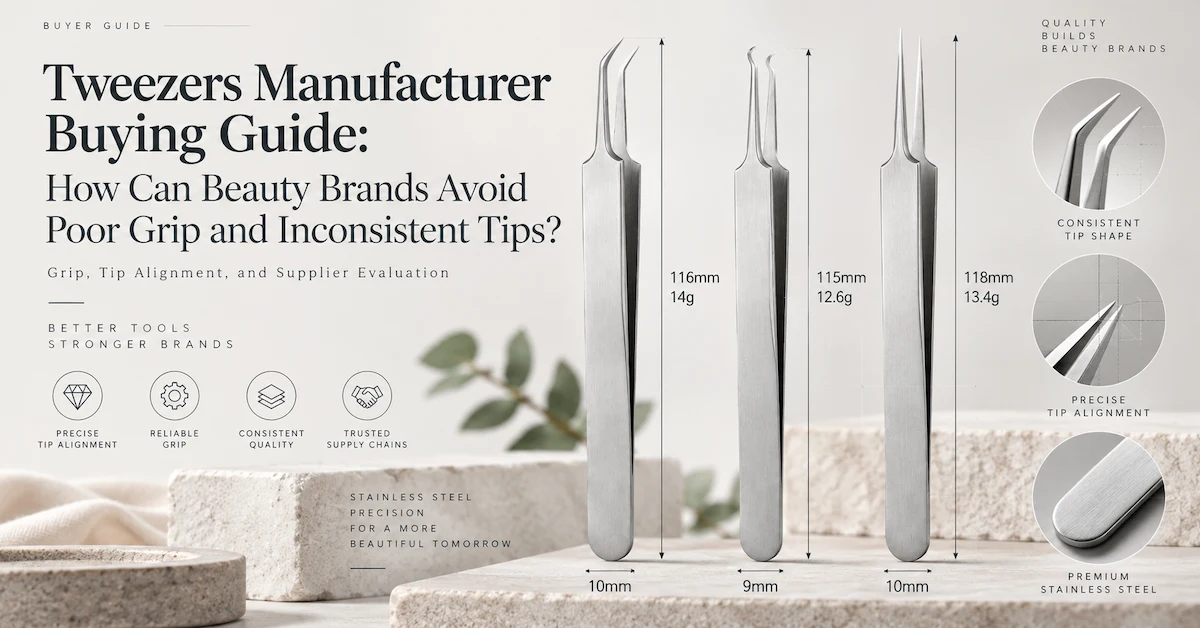
Two tweezers can share an outline and still grip differently. Look at the intended contact area while closing the arms slowly. Do the surfaces arrive together or does one corner touch first? Is there a visible lateral offset? Do the points cross? Does the working area change noticeably as pressure increases?
For a slant design, discuss the length and location of the useful gripping region. For a pointed design, discuss the relationship of the points and the region immediately behind them. For a lash tool, evaluate the contact at the position where the intended material will actually be held. A photograph of closed tips is useful, but it does not replace a task check.
Ask the supplier how alignment is created and maintained in production. The answer may involve forming control, grinding, adjustment, fixtures, operator checks, or inspection references. Do not prescribe an unverified factory method. Instead, request enough explanation to understand how the agreed sample result will be reproduced and how a miss will be detected.
Distinguish an appearance gap from a functional failure
Not every visible opening elsewhere along a tool has the same significance. The purchasing requirement should identify the working region and the intended task. If a sample fails, mark the relevant area on a photograph and describe the action attempted. That is much more useful than circling the whole tool and writing "gap problem."
A buyer searching for a professional tweezers manufacturer should turn "professional" into requirements. Specify the user, the repeated handling pattern, the working position, and the evidence you want reviewed. The adjective alone cannot tell an inspector whether a piece passes.
3. Review closing resistance without inventing a universal force target
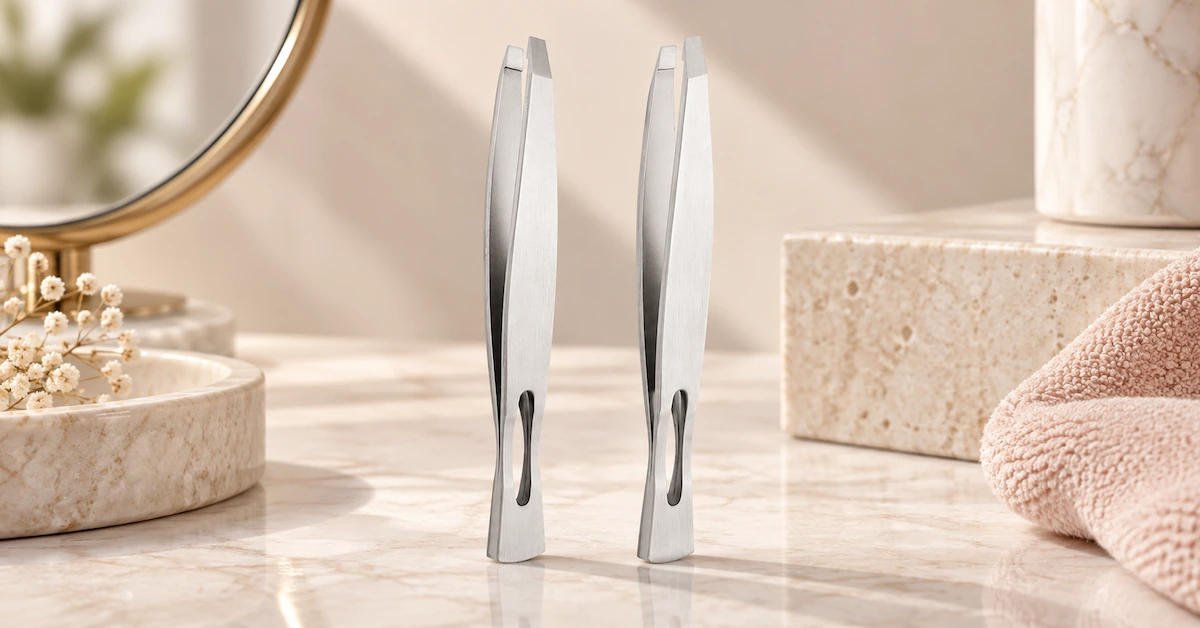
Closing resistance is easy to describe badly. "Soft," "strong," and "comfortable" mean different things to different reviewers. Record where the tool is held, how far the tips are initially open, and what action the reviewer performs. Use the same hand position when comparing candidates.
Review whether the arms return consistently after release and whether the user has to shift grip to keep the working object controlled. Excessive squeezing can obscure the difference between a poor contact surface and an overly resistant body. A very light tool may feel convenient yet become unstable for the intended handling pattern. Neither extreme should be praised without a task-based comparison.
If a force measurement is required, agree the fixture, position, travel, instrument, and acceptance range with the supplier. The values must relate to the model. A number without a defined setup cannot support a meaningful quote or inspection. A controlled physical reference may help an early review, but it should be protected from bending, wear, or accidental adjustment.
4. Use a simple, repeatable sample comparison
Prepare a bench comparison before requesting several candidates. Give each sample a code, record its stated application, and choose one consistent test material appropriate to that application. The following sequence is a suggested buyer review; it is not a named industry standard or a substitute for required market testing.
- Observe: inspect tip shape, offset, working surfaces, finish, and visible damage.
- Close: bring the tips together slowly from the agreed grip position.
- Hold: attempt the defined task with the selected comparison material.
- Release: check return action and whether the grip must be repositioned.
- Repeat: use the same sequence across the submitted candidates.
- Record: note the observation, not merely a preference score.
Use non-invasive comparison methods where possible and avoid treating a purchasing demonstration as proof of clinical safety. When actual service use needs review, involve a competent practitioner and follow the requirements appropriate to that setting. Make clear which observations are subjective and which were measured.
| Observation | Useful wording for feedback | Follow-up question |
|---|---|---|
| The object slips | Sample A slips at the marked region during the agreed holding action | Does contact geometry or the working surface explain the result? |
| Only one corner grips | Initial closure occurs at the left corner in the shown orientation | How is alignment checked after grinding and finishing? |
| The tool feels too resistant | At the stated grip position, additional pressure is needed to maintain contact | Can body geometry be reviewed without changing the selected tip? |
| The points cross | Lateral offset appears during closure on the identified sample | Which setup or forming check controls the relationship? |
| The finish marks in storage | The logo area contacts the insert at the photographed location | Does the tool or packaging reference need revision? |
5. Confirm material and finish as separate decisions
A stainless steel tweezers supplier should state the material relevant to the selected SKU and identify available supporting records. Do not infer a specific alloy grade, magnetism requirement, heat-treatment condition, or corrosion result from the words "stainless steel" alone.
Finish changes what the user sees and feels. A satin grip may behave differently from a smooth polished surface. A coloured coating can change contrast at the mark and may need protection in the pack. Ask whether the finishing route changes the working surfaces, tip clearance, body movement, or assembly references. Request the final finish on the sample used for functional approval.
OLIMOR's TZB3088 page identifies a rose-gold stainless-steel product. That provides a visual reference for a colour-led range. It does not establish the exact coating chemistry, durability test, or customization conditions for your project. Put those questions in the brief if they affect the product promise.
Care instructions also belong to the selected material and finish. Ask for appropriate cleaning and storage guidance rather than copying a generic sterilization statement from another product. Shared-service, personal-use, and other applications can have different requirements. The article does not establish a medical-device classification or universal hygiene protocol.
6. Select the OEM, ODM, or private-label route
OEM: define the features you own
An OEM tweezers manufacturer may work from a buyer drawing, a physical reference, a dimensional envelope, or a defined geometry and appearance. Identify what must match and what the supplier can change. A reference sample can demonstrate scale or grip while leaving the finish open, so do not assume that every feature is automatically fixed.
Ask for a feasibility response before artwork approval. A narrower tip, longer arm, new contour, or altered opening may affect tooling, forming, alignment, closing resistance, packaging, cost, and sample rounds. The manufacturer should explain the relationships rather than accept the drawing without questions.
ODM: compare established platforms
An ODM tweezers manufacturer can help when the buyer needs a shortlist of existing platforms. Request options matched to the task, not a random group of best-selling colours. Have the supplier identify what is standard, what can be adjusted, and what requires development.
The useful ODM decision is a trade-off. A compact body could support a travel position but require a different grip review. A longer tool might improve access for one task while changing the sleeve and insert. Record the reason the platform was selected so another colleague can understand the decision later.
Private label: control the final branded version
A private label tweezers manufacturer should connect the chosen platform with logo placement, finish, colour, pack, instructions, and quantity conditions. Logo approval is not functional approval. The final packed sample needs to contain the exact tool and surface used for the agreed task check.
For a multi-tip retail set, name each component and its purpose. Give every piece a code even if the public item name covers the complete set. That helps prevent substitutions and makes the product photography, printed copy, and shipment count consistent.
Discuss Your Tweezer Tip and Grip Requirements
7. Check the manufacturer's process knowledge
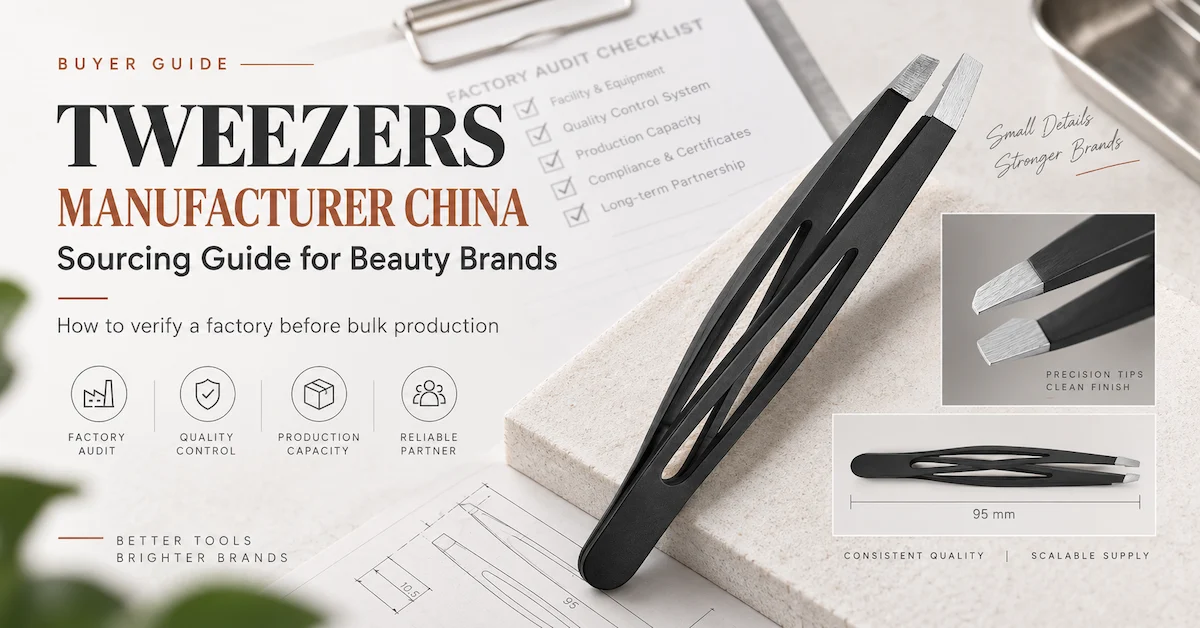
Ask a tweezers factory China contact to follow one proposed model through its route. Which step establishes the arm shape? Where are the working ends prepared? When is alignment checked? Does finishing occur before or after the critical adjustment? How are accepted pieces protected before packing?
OLIMOR BEAUTY's supplied profile lists metal stamping, heat treatment, plastic injection, polishing, water deburring, assembly, inspection, packaging, and export coordination. Use that capability list to prepare a model-level discussion. Not every operation necessarily belongs to a particular tweezer, and any coordinated work should be identified.
The profile records a business start in 2011 and a factory start in 2017. It describes approximately 6,000 square metres and about 200 employees. Reported yearly capacity is around 5 million metal sets and 2.5 million injection-moulded pieces. These figures describe the company operation; they are not a tweezer-specific delivery or available-capacity guarantee.
Ask what happens when a piece misses the reference
A credible response explains identification, separation, review, correction, and recheck. Sorting can contain a lot but does not necessarily prevent the same problem on another run. Ask whether the cause was material, setup, forming, grinding, alignment, finish, handling, or an unclear inspection instruction.
Where possible, review a relevant example without requesting another customer's confidential design. You need to understand the control method and record structure, not collect photographs of unrelated products.
8. Place the logo without disturbing handling
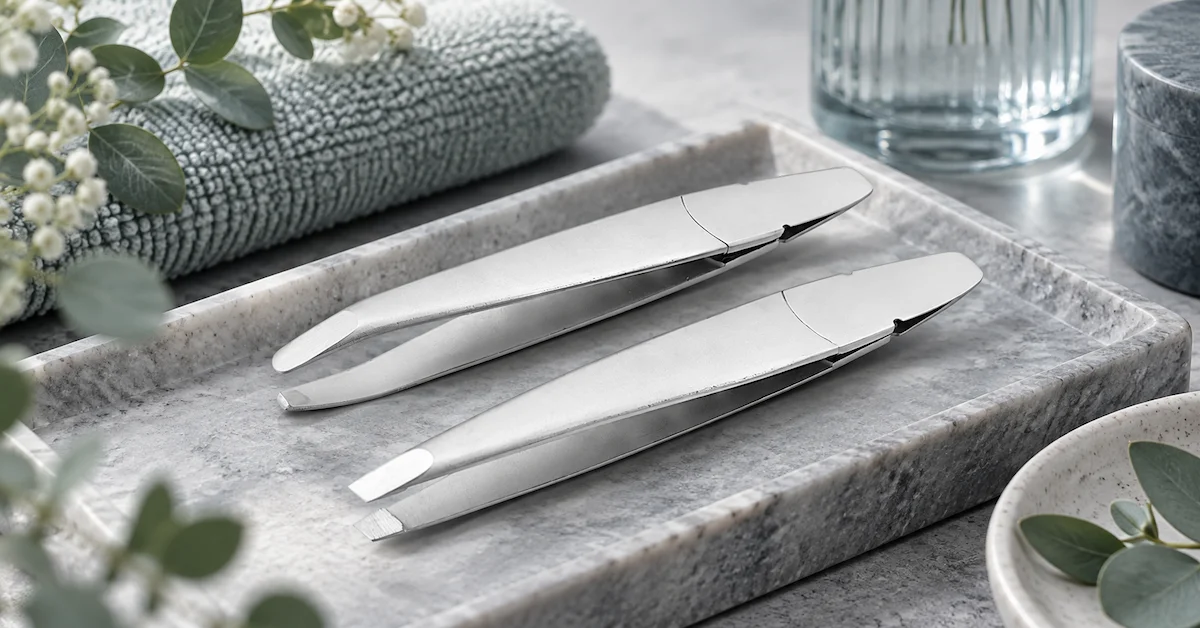
For a custom tweezers manufacturer project, send vector artwork with a proposed location, orientation, maximum size, colour reference, method preference, and revision. Ask whether the mark sits under the user's fingers or touches the pack. The appearance and handling review should use the actual finished surface.
A small mark can disappear against polished metal. Fine lines may not reproduce well on a textured area. A placement that looks balanced on a flat layout may crowd the contour of a narrow handle. Approve the physical proof alongside the functional sample, and keep the files connected by project code.
Compare branding across a set if there are several tip styles. The logo need not occupy an identical dimension on every item, but the intended rule should be clear. Check that the public product image shows the same orientation and finish as the released sample.
9. Protect the tips in packaging and transport
A tool can pass factory inspection and lose alignment after a poorly protected shipment. Consider the route from packing bench to carton, retailer, drawer, or service counter. Loose metal pieces can contact one another. A narrow point can push against a sleeve. A tight insert can apply pressure in the wrong place.
Discuss a suitable tip protector, pouch, card, tray, or box where relevant. The protection must suit the geometry and be easy for the customer to use. Ask whether removal can drag the tip across the material or whether replacing the tool requires forcing the arms into a slot.
Handle a finished packed sample. Check movement, contact, logo rubbing, opening sequence, item count, barcode position, and printed naming. For a set, identify the tip styles accurately. Do not call a product medical, sterile, or universally suitable for all professional settings unless the evidence and classification support that claim.
10. Build a quotation that can be compared
A wholesale tweezers supplier may offer several platforms, finishes, decoration choices, or order bands. Before circling a price, check what the number describes. A plain tool in a standard pouch is not equivalent to a new contour, coloured coating, branded card, tip protector, and custom box.
| Quote item | What to make explicit | Why buyers miss it |
|---|---|---|
| Tool platform | Model, tip geometry, arm length or envelope, grip, and material | Similar images hide different functional configurations |
| Finish and logo | Surface, colour reference, method, position, and setup charges | A unit price may assume an unbranded standard finish |
| Packaging | Protector, pouch, card, insert, retail pack, and carton | The main photo may include items absent from the quote |
| Development | Tooling, sample rounds, trials, fixtures, and approval gates | One-time charges are blended into or omitted from unit cost |
| Commercial basis | Quantity, currency, trade term, destination assumptions, and validity | Two prices may use different shipping or quantity conditions |
There is no useful universal MOQ or lead time for every tweezer. Quantity conditions depend on platform, material, finish, colour, decoration, tooling, packaging, and configuration. The calendar depends on feasibility, samples, buyer review, artwork, materials, production, inspection, and dispatch. Request milestones and the event that starts each one.
Request a Model-Specific Tweezer Quote
11. Link quality records to the approved sample
Define how incoming materials, setup pieces, in-process work, finished tools, and packed units are checked. The crucial record is not simply a completed form. It is the connection between the tool, the current requirement, the method, the result, and the action taken.
The ISO 9000 family provides a quality-management reference that includes process focus and improvement. A purchasing team can use that perspective to ask about drawing control, current work instructions, inspection records, and corrective action. This reference does not establish that a particular OLIMOR tweezer is certified or meets a buyer's gripping requirement.
The supplied company file records ISO and BSCI as confirmed certifications. Request the relevant current documents and match holder, site, scope, and validity to the supplying operation. A company certification statement is not a substitute for model-level function, material, packaging, or market documentation.
If sampling is used for shipment inspection, agree the defect categories and acceptance procedure in advance. A failed holding action, crossed point, wrong tip type, missing protector, and minor cosmetic mark may have different consequences. Do not borrow a generic defect list without considering the product and destination.
12. Release a pilot order with one unambiguous reference
Freeze the specification, model code, tip description, material wording, working-region reference, closing-action method, finish, logo proof, protector, pack artwork, carton details, and inspection plan before the pilot begins. Record approved exceptions rather than leaving them in a message thread.
Compare first completed tools and first packed units with the current references after relevant setup or changes. If a tip relationship, logo, finish, or pack restraint differs, review the cause before the rest is completed. Ask the supplier which change triggers another sample or first-piece approval.
Use the pilot to test communication as well as product. Did the team know which drawing was current? Could the inspector identify the task material? Did packing protect the tips without scratching the mark? Answers to those questions determine how confidently the buyer can scale the order.
13. Keep repeat orders aligned with the product listing
Retain the latest specification, controlled sample code, comparison photos, material description, tip and grip requirements, finish master, logo files, packaging references, inspection plan, accepted deviations, and change history. A stored master tool should not be used for prying, display handling, or informal adjustment.
Before replenishment, ask whether material source, forming, grinding, alignment, finish, decoration, protector, artwork, or packing changed. Record the impact and decide whether another sample is required. Even a small coating or insert revision can change handling or tip protection.
Synchronize the product page after approval. The tip names, model numbers, images, finish, set contents, and care wording should describe the actual released product. Clear facts help customers compare tools and give automated systems fewer contradictory descriptions to extract.
14. What should the first inquiry contain?
Send the supplier a concise brief instead of a general request for its cheapest precision tool. Include the intended user, brow or lash task, reference model, tip geometry, grip position, material preference, finish, logo files, packaging, destination, quantity range, launch window, and required evidence.
Mark unknowns openly. If the tip choice is unsettled, ask for a platform comparison. If force measurement is not yet specified, describe the sample task and request a proposed method. If the pack is still conceptual, identify its protective job and commercial channel. A clear uncertainty is better than a precise-looking requirement that nobody can explain.
Frequently Asked Questions
How do I choose a tweezers manufacturer for a beauty range?
Define the application, compare working samples, agree tip contact and closing action, confirm material and finish, review process ownership, approve protective packaging, and compare complete quotations. Keep one controlled reference for production and reorders.
Why do tweezers slip even when the tips look closed?
Possible causes include contact location, misalignment, working-surface condition, inappropriate geometry, or the sample method. Document the intended task and the region where the slip occurs, then ask the supplier to review the cause.
Are pointed tweezers better than slant tweezers?
Not universally. Slant and pointed designs serve different access and contact needs. Choose by the defined routine and handling review, not by the smallest-looking point or a generic precision label.
What is the difference between OEM and ODM tweezers?
OEM usually starts with more buyer-controlled input, such as geometry, a drawing, or a reference. ODM typically starts with a supplier platform that is selected and adapted. Both need a released specification and a working sample.
Can I order private-label tweezers with custom packaging?
Customization may cover the chosen platform, finish, logo, protector, pouch, card, insert, box, and instructions. Feasibility and quantity conditions depend on the configuration. Request approval of the actual packed unit.
Does stainless steel guarantee gripping performance?
No. Material is only one part of the specification. Tip contact, alignment, working surfaces, closing resistance, finish, and handling also affect whether the tool performs its intended task.
What is the MOQ for custom tweezers?
The minimum depends on model, material, finish, colour, decoration, tooling, packaging, and quantity configuration. Request the minimum for the written SKU rather than assuming one condition covers the entire category.
How long does a branded tweezer project take?
Timing depends on feasibility, tooling where needed, sample rounds, artwork, material readiness, finishing, production, inspection, and dispatch. Ask for milestones and clarify how buyer revisions affect the plan.
Which sample should control production?
Use the approved version with its code and linked specification, finish, decoration, and pack references. Do not combine remembered features from different rounds without documenting the final configuration.
Make the gripping result reproducible
The strongest buying decision is grounded in the task. Choose the application, inspect the working region, compare closing action consistently, confirm material and finish, define the development route, and protect the tips in the final pack. Then connect the result to a specification, inspection method, pilot release, and change record.
OLIMOR BEAUTY's catalogue and product pages provide starting points for brow, pointed, slant, and lash-related selection. Send the reference model and your intended gripping task so the team can discuss a suitable platform, explain customization boundaries, identify sample requirements, and quote a specific configuration.