

Tweezers for False Lash Application: How to Choose a Precise, Brand-Ready Tool
False lash tweezers should do one job exceptionally well: hold a delicate lash band securely, place it close to the natural lash line, and release it cleanly without pulling the strip out of position. For beauty brands, salon buyers, distributors, and makeup professionals, the right tweezer is not only a small accessory. It is a working tool that affects application control, hygiene practices, retail presentation, and customer satisfaction.
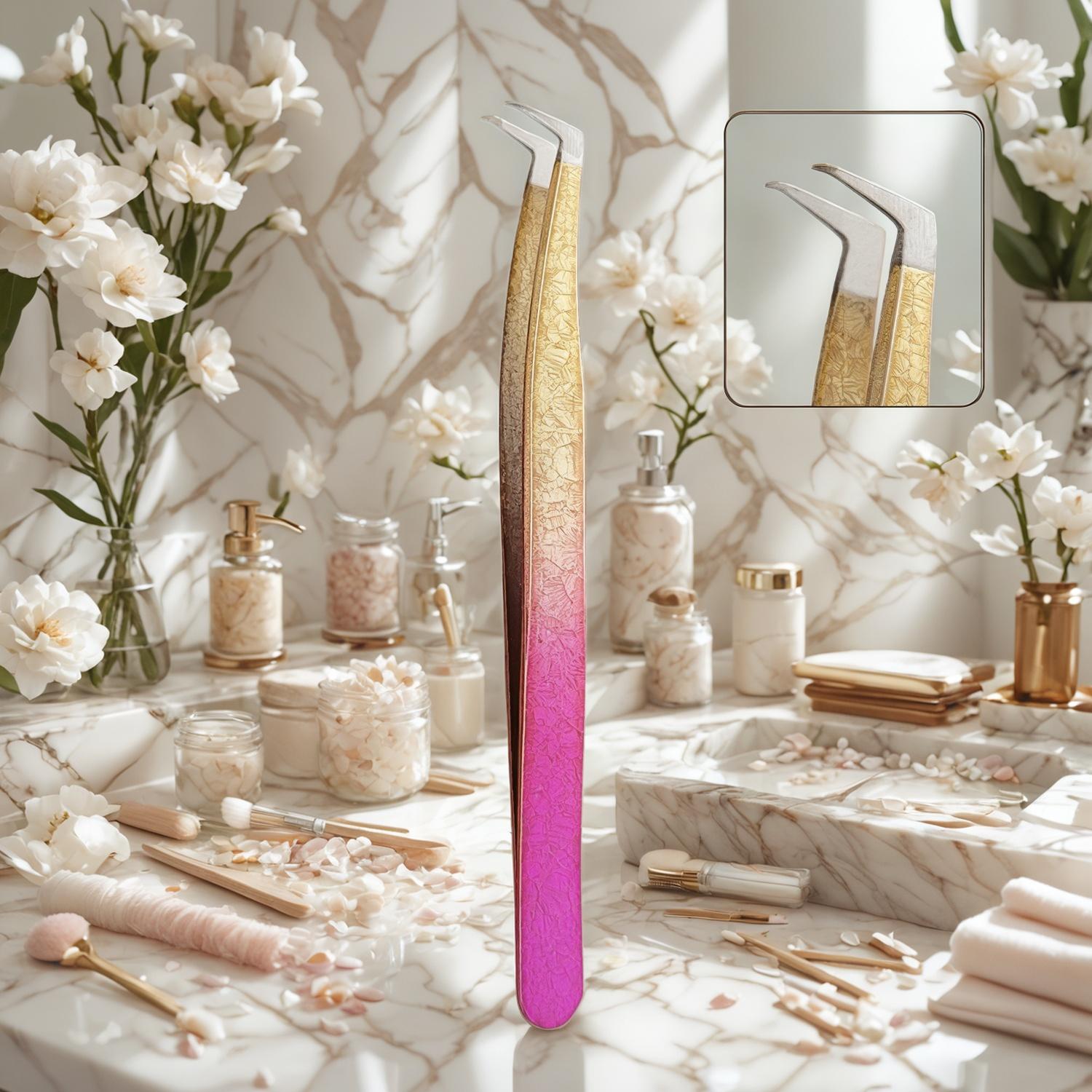
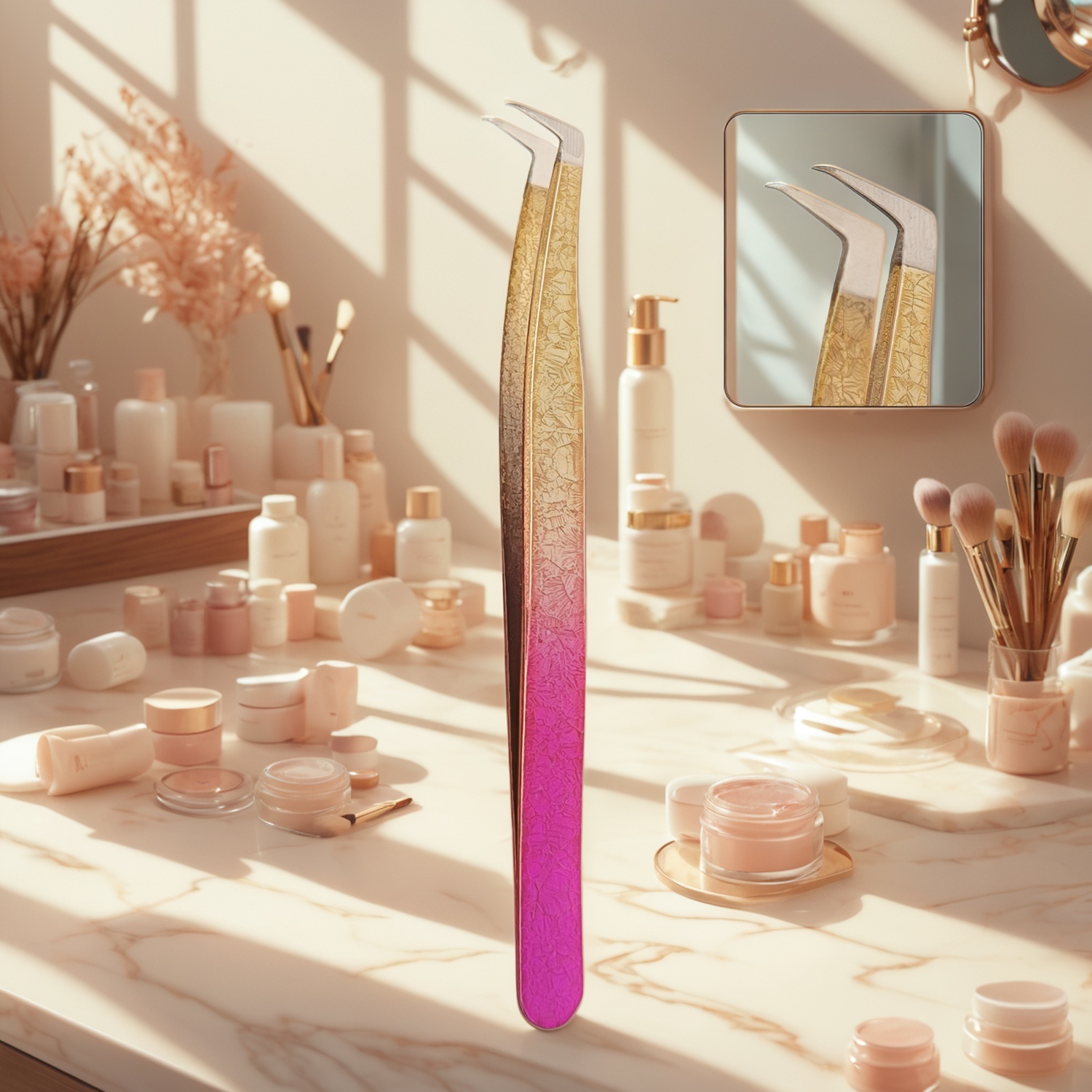
Olimor Beauty’s Dual-Tone Gradient Eyelash Tweezers are designed for false lash handling with stainless steel construction, precision slanted tips, an ergonomic curve, etched detailing for grip, and a fuchsia-to-gold gradient finish. Those features make the tool relevant for professional kits, salon retail, online beauty assortments, and private label accessory programs where both performance and appearance matter.
What Makes False Lash Tweezers Different from General Tweezers?
General cosmetic tweezers are often selected for brow grooming or small hair removal. False lash application has different demands. The tool must approach the eyelid at a controlled angle, support a flexible lash strip, avoid blocking the user’s view, and release the lash band once adhesive placement is correct. A tweezer that works well for plucking may be too pointed, too stiff, too slippery, or too narrow for lash placement.
The main buying question is simple: can the tweezer help the user place lashes accurately and repeatably? For a professional makeup artist, this affects service flow and confidence. For a salon retailer, it affects whether customers feel the product is useful after purchase. For a beauty brand, it affects repeat orders, reviews, and whether the tool fits the promise of the lash range.
When sourcing beauty tool products, evaluate lash tweezers as a functional item first and a visual item second. A striking finish can attract attention, but reliable tip contact, comfortable handling, and easy cleaning determine whether the tool works in real use.
Tip Shape and Alignment: The Core of Placement Control
The Dual-Tone Gradient Eyelash Tweezers use precision slanted tips. A slanted tip is useful for false lash application because it gives the user a broader approach angle than a sharp needle-like point. The user can pick up a strip lash near the center, nudge an inner or outer corner, or press the band closer to the lash line while still seeing the placement area.
Tip alignment is one of the most important inspection points for B2B buyers. The two sides should meet evenly at the intended contact point. If only one edge touches, the lash band may twist or slide. If the tips are too thick, the user may struggle near the inner corner. If the tips are overly sharp for beginner-oriented retail use, the tool may feel less forgiving close to the eye area.
Practical tip checks before approval
- Pickup control: Check whether the tweezers can lift a fine lash band without crushing, bending, or slipping.
- Release behavior: Place the lash on a practice surface and confirm that it releases without dragging the band away.
- Viewing angle: Hold the tool naturally and check whether the user can see the lash line during placement.
- Corner adjustment: Test both inner and outer corner positioning, not only center pickup.
- Batch consistency: Compare several pieces to confirm similar tension, closure feel, and tip alignment.
For commercial purchasing, do not rely only on static photos. Request samples where possible, test them with the type of strip lashes your customers use, and compare the tool with the actual application workflow. A tweezer may look precise in packaging but still feel unstable when adhesive, lighting, mirror angle, and hand position are involved.
Grip, Finish, and Ergonomics for Repeated Use
False lash application is a fine-motor task. The user often works close to a mirror or client, with small finger and wrist movements. Grip and comfort therefore matter as much as the tip design. Olimor Beauty’s Dual-Tone Gradient Eyelash Tweezers combine an ergonomic curve with etched detailing for a more secure contact area. The fuchsia-to-gold gradient finish gives the tool a distinctive beauty appearance, while the etched texture supports handling.
A smooth tweezer can look elegant but may become harder to control when users handle skin-care residue, lash adhesive, moisturizer, or other cosmetic products nearby. On the other hand, an overly aggressive surface texture may feel uncomfortable during repeated use. Etched detailing offers a practical balance because it gives the fingers more contact without making the tool feel rough.
Ergonomic curve and tension should also be checked. If the tweezer requires excessive squeezing, users may experience hand fatigue during multiple applications. If tension is too loose, the tool may feel uncertain and fail to hold the lash band firmly. Professional makeup artists, lash technicians, salon teams, and frequent home users all benefit from a tool that feels stable without forcing the hand into an awkward angle.
Material, Hygiene, and Care Expectations
These lash tweezers are made from stainless steel, a common material for beauty tools because it supports durability and hygienic care when handled correctly. Since false lash tweezers are used close to the eye area, buyers should consider how the tool will be cleaned, dried, stored, and explained to end users.
Hygiene expectations differ by market and use case. A personal-use tweezer may require simple after-use cleaning and protected storage. A salon or makeup service environment needs a stricter procedure that fits local rules and the business’s hygiene policy. Retail demonstrations may require separate handling controls. Buyers should verify current requirements from relevant authorities in their target market, such as the U.S. Consumer Product Safety Commission for consumer product safety considerations or EU REACH requirements for chemical restrictions where applicable. Always confirm current versions and supplier documents instead of assuming compliance from appearance or material alone.
Care guidance to include with lash tweezers
- Remove adhesive or cosmetic residue after use, especially around the tips.
- Clean according to the appropriate process for personal, salon, or demonstration use.
- Dry thoroughly before storage to help maintain the surface condition.
- Protect the tips in a pouch, sleeve, tray, or packaging insert to reduce bending and misalignment.
- Do not use lash tweezers for unrelated tasks such as opening cartons, scraping dried product, or prying packaging.
Clear care instructions help reduce avoidable complaints. Even a well-made tweezer can lose precision if its tips are dropped, bent, or used as a general utility tool. For beauty brands, adding concise care guidance to packaging or product pages is a low-effort way to improve the user experience.
Comparison Checklist for B2B Sourcing
Beauty buyers often compare lash tweezers across multiple factors: performance, finish, packaging compatibility, customization potential, cost structure, and supplier communication. The table below can be used during sample review, supplier discussions, or internal product selection meetings.
| Evaluation Area | What to Check | Why It Matters |
|---|---|---|
| Tip style | Slanted tips suitable for strip lash handling and corner adjustment | Supports controlled approach to the lash line without blocking the view |
| Tip alignment | Even closure and consistent contact across sample pieces | Helps the lash band stay stable during pickup and placement |
| Material | Stainless steel construction and supplier material documentation | Supports durability and hygienic care expectations |
| Grip surface | Etched detailing and comfortable finger contact | Reduces slipping during precise work |
| Comfort | Ergonomic curve, suitable tension, and natural hand position | Helps reduce fatigue during repeated applications |
| Finish | Fuchsia-to-gold gradient appearance and consistency | Improves shelf appeal and supports a beauty-focused brand image |
| Packaging fit | Tip protection, retail display needs, and instruction space | Protects the tool and communicates correct use |
| Supplier support | Sample process, customization discussion, inspection approach, and documents | Helps buyers reduce uncertainty before placing commercial orders |
When comparing beauty tool collections, test each tweezer in the same way. Use the same lash style, the same practice surface, and the same evaluator if possible. This makes the comparison more meaningful than judging each sample in a different environment.
Cost Factors Without Guesswork
False lash tweezer pricing can vary for reasons that are not always visible at first glance. Buyers should avoid choosing only by the lowest quote because small differences in tip precision, finish consistency, packaging, inspection, and customization can affect the final commercial value of the tool.
Common cost factors include material choice, forming and finishing steps, surface treatment, logo or branding method, packaging structure, order volume, inspection requirements, and shipping arrangement. A gradient finish and etched detailing may require different production considerations than a plain tweezer. Custom packaging or private label presentation may also influence cost even when the tweezer body remains the same.
Instead of asking only for a unit price, provide the supplier with the intended sales channel and usage scenario. A professional salon tool, a retail add-on, and a promotional lash kit component may need different packaging, finishing, and instruction decisions. Buyers can send a sourcing inquiry with the target market, expected branding needs, and application scenario to receive more relevant guidance.
Custom Made Tweezers for Beauty Brands
Custom made tweezers can help a lash or beauty accessory range feel more complete. Olimor Beauty’s Dual-Tone Gradient Eyelash Tweezers already have a strong visual direction through the fuchsia-to-gold gradient finish and etched detailing. For brand owners, customization may focus on logo placement, packaging concept, finish direction, assortment planning, or bundling with false lashes and other beauty tools.
A clear customization brief helps keep the project practical. Define who will use the tool, where it will be sold, how it will be packaged, and what claims or instructions will appear with it. If the tool is aimed at professional makeup artists, emphasize repeat handling, kit storage, and cleaning guidance. If it is aimed at consumer retail, emphasize ease of use, tip protection, and simple instructions. If it is part of a gift set or promotional bundle, consider how the gradient finish will coordinate with the rest of the assortment.
Branding should not interfere with handling. A large logo, heavy coating, or unsuitable surface change may look attractive but reduce grip or comfort. Keep the working areas of the tool functional and confirm samples before final approval.
Quality Inspection Points Buyers Should Ask About
Quality control for lash tweezers should focus on the details users feel immediately. A buyer does not need invented performance numbers to make a good decision; practical inspection can reveal whether the tool is suitable for its intended market.
Key inspection points include tip alignment, closure feel, surface smoothness, grip texture, finish consistency, cleanliness, packaging protection, and whether the tool matches the approved sample. For slanted false lash tweezers, tip condition is especially important because minor misalignment can affect pickup and release. Packaging should protect the tips during transport and storage, not only display the product attractively.
Ask suppliers how they check the product before shipment and what documents can be provided for the order. If your market requires specific chemical, safety, labeling, or consumer product documentation, verify the current requirements and request appropriate supplier records. Do not assume that stainless steel construction alone resolves every regulatory or retail requirement.
Best Use Cases for Dual-Tone Gradient Eyelash Tweezers
The Dual-Tone Gradient Eyelash Tweezers are suitable for several commercial beauty settings. In a professional makeup kit, the slanted tips support placement during appointments, bridal makeup, events, photo work, and styling sessions. In salon retail, the tool can be presented as a practical companion for strip lashes. In online beauty shops, the gradient finish helps visual merchandising while the stainless steel construction and slanted tip design communicate function.
For home users, the main advantage is control. Fingers are often too large to place a lash band neatly, especially near the inner corner. A slanted tweezer gives the user a narrower contact point while keeping the hand away from the eye area. This can make application feel more manageable for customers who already use false lashes and want a cleaner placement experience.
For B2B buyers, the broader value is versatility. One well-positioned lash tweezer can serve professional kits, retail add-ons, private label programs, and lash accessory bundles, provided that packaging and instructions are matched to the intended audience.
Buying Guidance: How to Choose with Confidence
The best false lash tweezers combine precise slanted tips, even alignment, stable grip, comfortable tension, stainless steel construction, practical care instructions, and packaging that protects the tips. Olimor Beauty’s Dual-Tone Gradient Eyelash Tweezers bring together these key elements with an ergonomic curve, etched detailing, and a fuchsia-to-gold gradient finish for a tool that is both functional and retail-ready.
Before placing a commercial order, test samples in a realistic application workflow. Pick up a lash band, adjust the corners, position it on a practice surface, release it, clean the tips, and store the tool as an end user would. Review how the product will be described online, displayed in retail, packed for shipment, and supported with care guidance.
For sourcing support, custom branding discussion, or product selection help, contact Olimor Beauty with your intended use case and brand requirements. A focused brief will make the selection process faster and more useful.
FAQ
Can buyers request samples before ordering false lash tweezers?
Sample availability depends on the product and project requirements. Buyers should ask about current sample options and use samples to check tip alignment, grip, finish, comfort, and packaging suitability before confirming a commercial order.
Is there a fixed MOQ for custom made tweezers?
MOQ can vary based on customization, packaging, finish, and order requirements. Confirm the current MOQ directly with Olimor Beauty for the specific tweezer style and branding plan.
What customization options should a beauty brand prepare?
Prepare details such as logo placement, preferred finish direction, packaging style, sales channel, target customer, and whether the tweezers will be sold alone or bundled with other lash products. Clear requirements help avoid unnecessary revisions.
How should quality be checked before shipment?
Buyers should agree on checks for tip alignment, closure feel, surface finish, grip texture, cleanliness, packaging protection, and consistency with approved samples. Any required market documents should be discussed before production.
How can lead time be confirmed?
Lead time depends on order details, customization, packaging, and production schedule. Request the current estimated timeline during inquiry and confirm it again when artwork, samples, and order requirements are finalized.
Tag: