How to Choose Tweezers Exporters for ODM Beauty Tool Programs
For a beauty brand, a pair of tweezers is a small product with a large influence on customer trust. If the tips do not meet evenly, if the grip feels unstable, or if the finish wears too quickly, buyers notice immediately. That is why selecting among tweezers exporters should be treated as a quality decision, not only a purchasing decision. The right export partner helps you control product consistency, private label presentation, packaging details, and repeat order reliability across your B2B beauty supplies program.
This guide is written for brand owners, importers, distributors, salon suppliers, and ecommerce teams comparing tweezers ODM options. It focuses on practical evaluation points: how to judge tweezer construction, what to clarify before customization, how to reduce shipment variation, and which questions help you choose a manufacturing partner with a serious approach to beauty tools.

Why Tweezers Require More Careful Sourcing Than They Seem
Tweezers are often viewed as simple accessories, but their performance depends on small mechanical details. The two arms must be balanced, the tension must feel controlled, and the tips must align closely enough to grip fine hairs without cutting, slipping, or scraping the skin. A polished appearance alone does not prove that the tool will perform well after repeated use.
In beauty retail, tweezers also sit in a competitive category. Many products look similar in photos, so the difference is felt when the customer uses the tool. A strong exporter understands that the product must satisfy both visual expectations and functional requirements. This includes material selection, edge finishing, surface treatment, tip protection, and packaging that prevents damage during transit.
For ODM and private label buyers, consistency matters even more. A first order may pass an internal review, but the real test is whether the third, fourth, and fifth shipments feel the same. Your supplier should be able to discuss how quality is monitored from raw materials through final packaging, and how visible defects or alignment issues are controlled before goods leave the factory.
Core Quality Checks for B2B Beauty Supplies Buyers
When comparing tweezers exporters, build your review around measurable product traits rather than general promises. Stainless steel is commonly used for durability and rust resistance, but buyers should still evaluate finish quality, tip precision, tension, and packaging protection. A high-quality tool should look clean, feel balanced, and perform consistently across multiple samples.
- Tip alignment: The two tips should meet cleanly and evenly. Misalignment reduces grip and can create an uncomfortable user experience.
- Grip performance: Test on fine and medium hair-like fibers. A tweezer should hold without repeated attempts or excessive squeezing.
- Hand feel: Tension should not be too loose or too stiff. Comfortable resistance is important for salon users and frequent grooming routines.
- Surface finish: Check for burrs, rough edges, discoloration, uneven coating, or marks that could affect perceived value.
- Tip protection: Caps, inserts, or secure packaging help preserve alignment during storage and international shipping.
- Lot consistency: Review several samples, not just one. Variation across pieces is often more important than the best single sample.
Olimor Beauty emphasizes internal quality control across production stages, including inspection from raw materials to final packaging. For buyers, this kind of process focus is important because tweezers cannot be judged by appearance alone. The product must remain reliable after branding, packing, handling, and distribution.
Understanding ODM Options Without Overcomplicating the Product
Tweezers ODM services allow a brand to source an existing or refined product design and adapt it for its own market presentation. This can reduce development time compared with building a new tool from the beginning. However, ODM should not be treated as only adding a logo. The best results come from aligning the product design, packaging, retail positioning, and customer expectations.
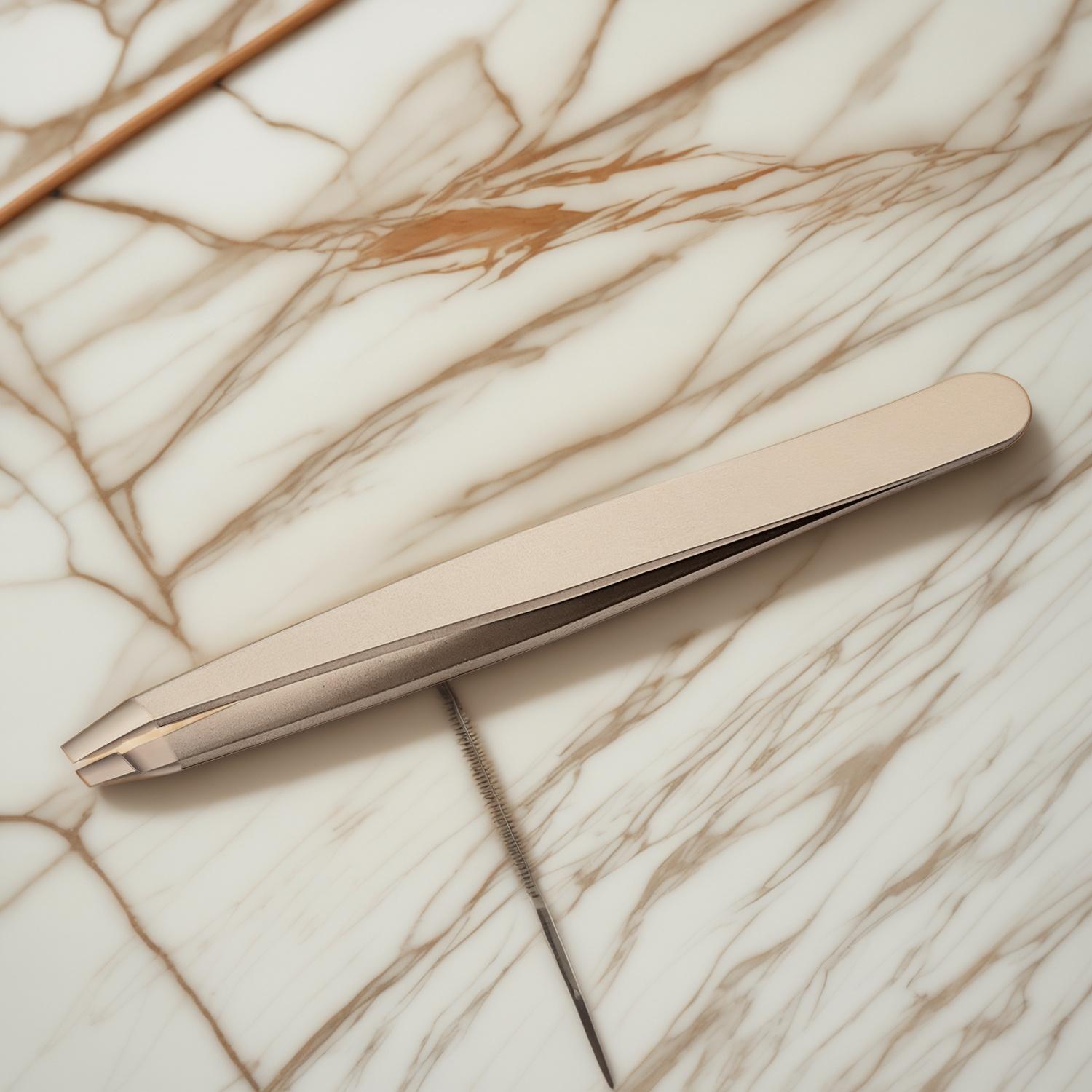
For tweezers, ODM decisions may include the tip type, finish, color direction, grip texture, packaging format, logo placement, and carton requirements. A slant tip is a common choice for brow grooming because it offers a practical angle for targeting individual hairs. If a supplied design includes a meticulously aligned slant tip, review that alignment across multiple samples and confirm that the protective packaging supports the tip during transit.
Before approving an ODM program, define the product role in your range. Is it an entry-level grooming tool, a salon-focused item, a travel kit component, or part of a broader eyebrow care set? This positioning affects the finish, packaging investment, and inspection priorities. You can also review related beauty tool products to understand how tweezers may fit within a wider sourcing plan.
Practical Selection Criteria for Tweezers Exporters
A good exporter should be able to support both the physical product and the export process. Buyers often focus on the sample first, but long-term sourcing depends on repeatability, communication, documentation, packaging control, and readiness for customized orders. When comparing suppliers, use a structured checklist so that decisions are not based only on price or a single attractive sample.
- Confirm the product scope: Identify available tweezer designs, tip styles, finishes, and packaging choices without assuming that every option is suitable for your target market.
- Request representative samples: Samples should reflect the intended material, finish, tip type, and packaging as closely as possible.
- Evaluate repeat performance: Test several units for grip, comfort, alignment, and visible finish quality.
- Review branding areas: Confirm where a logo or private label element can be placed without affecting appearance or usability.
- Check packaging durability: A tweezer that leaves the factory aligned can still be damaged if packaging does not protect the tips.
- Clarify inspection points: Document which defects are unacceptable, such as misaligned tips, rough edges, loose tension, stains, or packaging errors.
- Plan for reorder consistency: Keep approved samples and packaging references so later production can be compared against the agreed standard.
This process is especially useful for importers managing multiple SKUs. Tweezers may be one piece in a broader beauty accessories program, but a weak tool can affect the perceived quality of the whole assortment. If you are building a coordinated range, Olimor’s product collections can help you consider how grooming tools, mirrors, brushes, and related items may work together.
Packaging, Branding, and Retail Presentation
Packaging is not only decorative for tweezers. It protects the product, communicates quality, and reduces the chance of bent or damaged tips. For ecommerce, the package must also survive handling before it reaches the end user. For retail, it needs to display the tool clearly while keeping the tips secure and clean.
Private label buyers should think about packaging hierarchy. The tweezer itself may carry subtle branding, while the card, box, pouch, or insert communicates product benefits and usage guidance. Avoid overpromising. Simple statements about precision, brow grooming, stainless steel construction, or slant tip use are often more credible than broad beauty claims.
When reviewing packaging samples, check whether the product shifts inside the package, whether the tip area is protected, and whether printed information remains readable. Also consider barcode placement, warning text, recycling marks where relevant, and country-specific labeling needs. These details are not glamorous, but they reduce friction when a product moves from factory packing to warehouse receiving, retail shelf, or online fulfillment.
Maintenance Guidance Your Customers Will Value
Useful customer guidance can reduce complaints and improve product satisfaction. Even a well-made tweezer performs better when it is cared for properly. Brands should consider adding concise maintenance instructions to packaging or product pages.
- Wipe the tips clean after use to remove oils, makeup, and residue.
- Dry the tool before storing it, especially in humid bathroom environments.
- Use a protective cap or case to prevent the tips from being bent in a bag or drawer.
- Avoid dropping the tweezer on hard surfaces, because impact can affect alignment.
- Use the correct angle and light pressure instead of squeezing excessively.
These instructions are practical for both at-home users and professional environments. They also show that your brand understands the product beyond its appearance. For B2B buyers, adding clear care guidance is a low-cost way to support repeat purchases and reduce avoidable dissatisfaction.
Questions to Settle Before Placing an ODM Order
Before you confirm a tweezer order, bring together product, branding, packaging, and quality expectations in one review. This reduces misunderstandings and makes approval easier for both sides. The goal is not to create unnecessary complexity; it is to make sure that the product your team approves is the product your customers receive.
- Which tweezer design and tip style will be used for the final product?
- What finish, color, or surface appearance is required?
- Where will branding appear, and how will it be checked before production?
- What packaging will protect the tips during shipping and storage?
- Which defects should trigger rejection or rework during inspection?
- How will approved samples and packaging references be stored for reorders?
If you are comparing suppliers or preparing a private label sourcing brief, you can send an inquiry with your target market, desired packaging style, and expected product role. For broader questions about ODM beauty tools and export support, you may also contact Olimor directly.
Choosing a Tweezers Exporter for Long-Term Brand Value
The best tweezers exporters do more than ship a small metal tool. They help protect your brand reputation by supporting precision, consistency, packaging care, and practical customization. For ODM buyers, this means selecting a partner that understands both manufacturing details and the expectations of beauty consumers.
When you evaluate a supplier, look beyond the lowest quote. Focus on whether the tweezer grips cleanly, whether the finish supports your positioning, whether the packaging protects the tips, and whether the inspection process is clear enough for repeat orders. A dependable ODM program gives your customers a tool that feels accurate from the first use and gives your team a product that can be reordered with confidence.
Tag: