How to Choose Nail Clipper Exporters for Reliable Supply and Custom Nail Clipper Orders
For beauty-tool wholesalers, retailers, private-label buyers, and grooming accessory distributors, nail clippers are small products with a large impact on customer satisfaction. A clipper that cuts cleanly, feels stable in the hand, and keeps its finish through regular use is more likely to earn repeat orders than a low-cost item that bends, dulls, or arrives with inconsistent packaging. That is why choosing among nail clipper exporters should be treated as a sourcing decision, not only a price comparison.
Olimor Beauty supplies beauty tools for businesses that need dependable products and practical customization options. When evaluating stainless steel nail clippers, buyers should look closely at material choice, edge consistency, ergonomics, finish quality, packaging control, and communication before placing a bulk order. This guide explains what to review so your nail clipper program can meet market expectations while reducing avoidable quality problems.
What Makes a Nail Clipper Exporter Worth Shortlisting?
A good exporter is not simply a company that can ship products overseas. For nail clippers, export capability should include product consistency, order coordination, packaging discipline, and a clear understanding of buyer requirements. This matters because nail clippers are often sold in competitive retail environments where customers compare finish, sharpness, comfort, and perceived value within seconds.
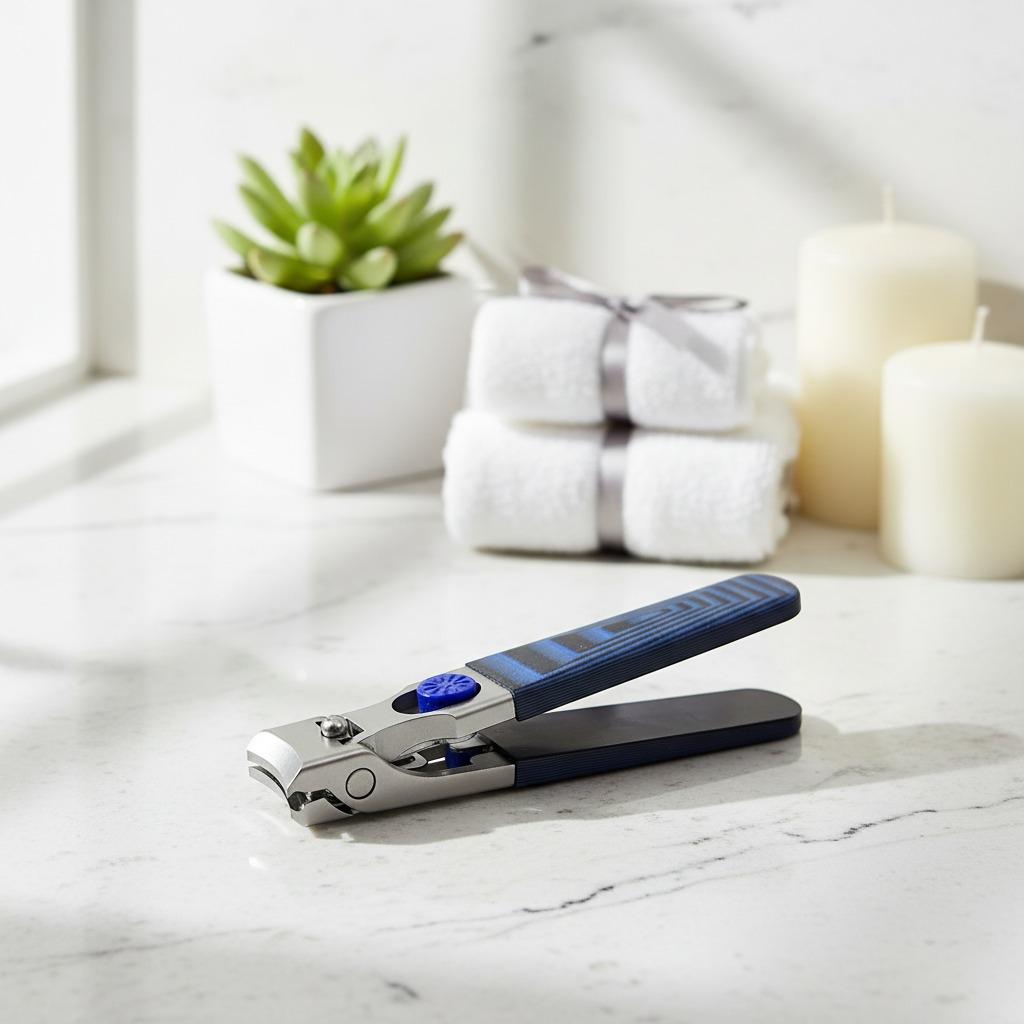
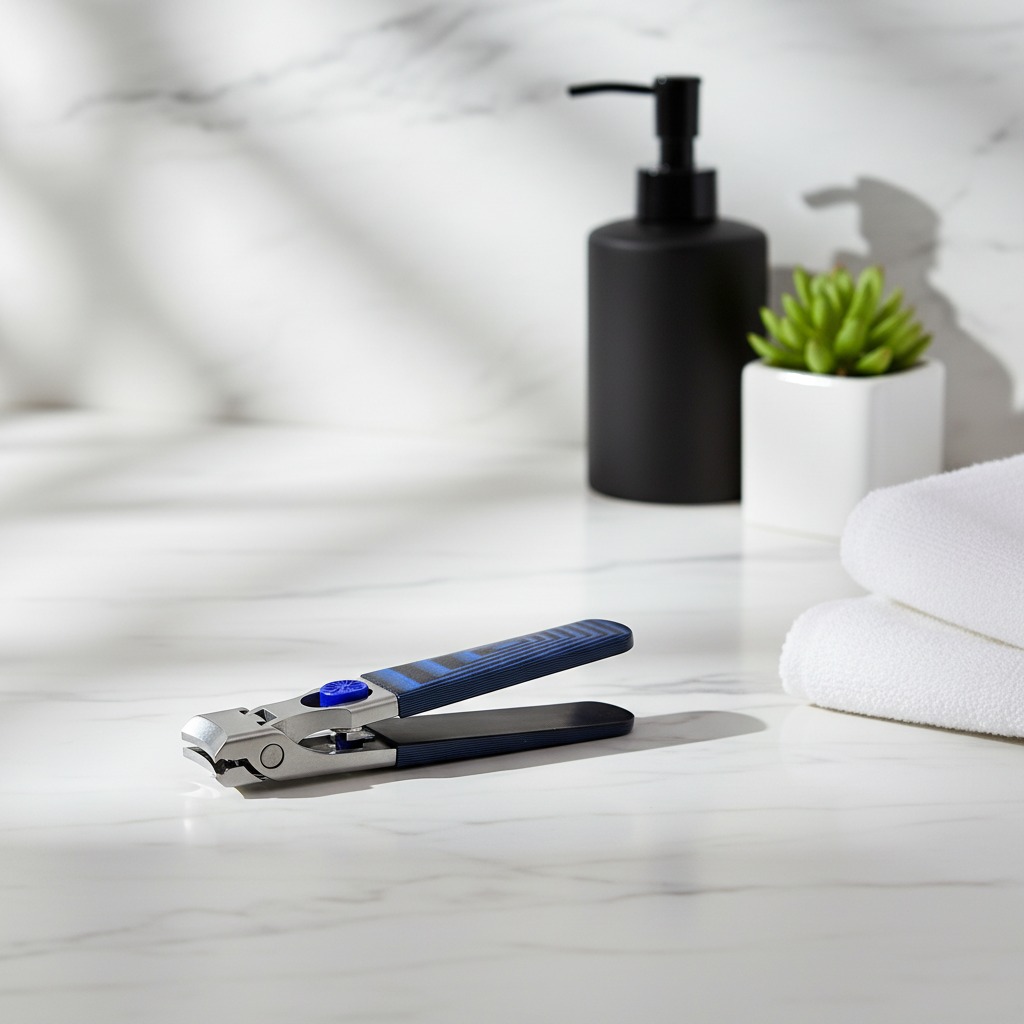
Start by reviewing whether the supplier can support the type of nail clipper you intend to sell. Some buyers need simple, practical grooming tools for everyday use. Others want a more distinctive appearance, such as an ergonomic handle with modern geometric patterns in blue shades or a compact, travel-friendly format. If decoration or color is important to your sales channel, confirm early whether the design can be produced consistently across the full order, not just on one presentation sample.
It is also important to evaluate how the exporter communicates during the development stage. A reliable nail clipper supplier should be able to discuss product use, packaging needs, inspection points, and delivery documentation in a structured way. Clear communication reduces errors when the product moves from sample approval to mass production.
Stainless Steel Construction and Cutting Performance
The original product focus is stainless steel nail clippers, which remain popular because they are durable, clean-looking, and suitable for frequent grooming use. However, stainless steel alone does not automatically guarantee a good clipper. Buyers should assess how the finished tool performs in the hand and how cleanly it cuts.
The cutting edges are the most important functional area. They should align evenly when pressed, without visible gaps or twisting. A poorly aligned clipper can tear the nail rather than trimming it cleanly. The lever should move smoothly and provide enough pressure without feeling loose or unstable. If the design includes an accent button or decorative handle area, that feature should not interfere with grip, leverage, or cleaning.
For retail buyers, finish quality is also part of performance. Scratches, uneven color, weak decoration, sharp non-cutting edges, and loose parts can all lead to returns even if the clipper technically cuts. Before ordering, compare samples from the same production type you plan to purchase, not only polished showroom examples.
Buyer Checklist for Comparing Nail Clipper Suppliers
When several exporters offer similar-looking nail clippers, a structured checklist helps separate reliable suppliers from risky choices. Use the following points during sample review, quotation comparison, and order confirmation:
- Material and build: Confirm the product is stainless steel if that is required for your assortment, and check whether the body feels rigid under normal pressure.
- Blade alignment: Inspect whether the cutting edges meet evenly from side to side and whether the clipper trims without tearing.
- Handle comfort: Review the grip shape, lever pressure, and ergonomic feel for both occasional users and frequent grooming use.
- Surface finish: Look for scratches, burrs, uneven color, dull spots, or decorative areas that may wear too quickly.
- Portability: If the product is promoted as compact or travel-friendly, make sure the size, weight, and packaging support that positioning.
- Packaging fit: Check whether the clipper is held securely in its packaging and whether the presentation matches your retail or wholesale channel.
- Inspection process: Discuss what quality checks are used from raw materials through finished goods and packing.
- Custom readiness: If you need custom color, pattern, logo placement, or packaging, confirm the artwork and sample approval steps before production.
This checklist is especially useful for buyers building a long-term grooming tool range. If you are comparing multiple beauty tool products, applying the same review method across nail clippers, tweezers, scissors, and other tools can make supplier selection more objective.
Custom Made Nail Clippers: What Can Be Customized?
Custom made nail clipper projects can help a brand stand out, but customization should be planned around practical use. A distinctive visual design has value only if the clipper still cuts well, feels comfortable, and can be produced consistently.
Common customization discussions include handle appearance, color direction, surface pattern, packaging style, and brand presentation. The supplied product description highlights ergonomic handles with modern geometric patterns in vibrant blue shades and a deep blue accent button for easy operation. Those details show how visual design can make a standard grooming tool more recognizable on the shelf or in an online listing. For your own order, treat decorative elements as part of the product specification: define the color target, artwork placement, acceptable variation, and packaging display method.
Buyers should also consider the sales channel. A travel retail item may benefit from compact packaging and a clean product story around portability. A salon or professional grooming assortment may place more emphasis on precision, grip, and durability. A gift set may require coordinated colors across several tools. Customization works best when it supports the buyer’s market position rather than adding decoration without a purpose.
Questions to Resolve Before Confirming a Bulk Order
Before moving from sample approval to a purchase order, align the details that affect production and delivery. Many quality disputes happen because the buyer and supplier approved a general idea but did not define measurable expectations.
- Which sample is the production reference? Keep an approved sample or detailed sample record so cutting feel, finish, and decoration can be compared later.
- What packaging is required? Decide whether the clipper will be sold individually, as part of a grooming set, or in wholesale-ready packaging.
- What visual defects are unacceptable? Define limits for scratches, color variation, printing position, burrs, and loose components.
- How will the product be inspected? Clarify the checks for blade alignment, lever function, appearance, packaging, and carton labeling.
- What documents and shipping details are needed? Export orders often require correct product descriptions, packing information, and delivery coordination.
If you are developing a full assortment, browse Olimor Beauty’s product collections to think about how nail clippers can fit with other grooming and beauty tools. A consistent assortment can make ordering, packaging, and merchandising easier for retailers.
Quality Control Points That Matter for Nail Clippers
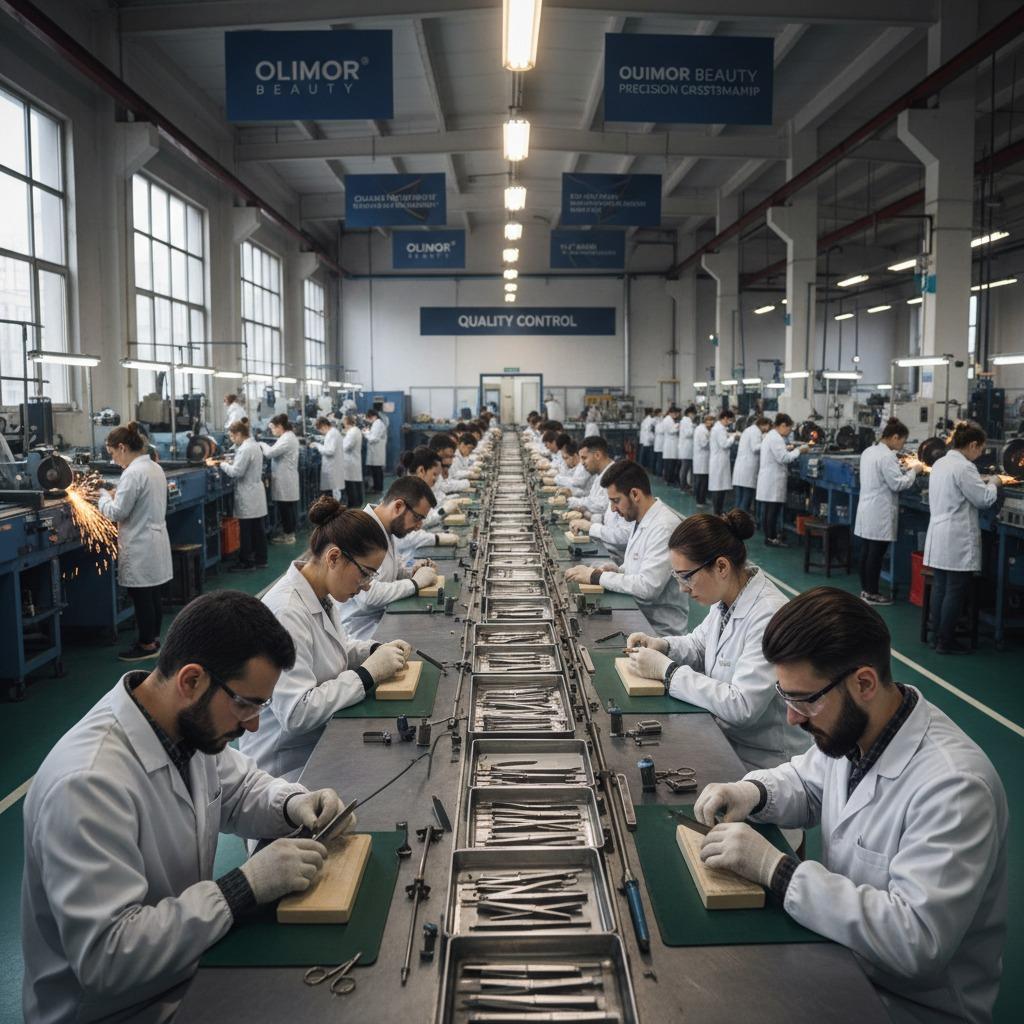
Quality control for nail clippers should focus on both function and appearance. Function includes sharpness, edge alignment, lever movement, and structural stability. Appearance includes the stainless steel finish, decorative pattern, color consistency, and packaging cleanliness. Both are important because customers judge grooming tools by how they look before purchase and how they perform after purchase.
Olimor Beauty emphasizes internal control through stages from raw materials to packaging. For buyers, the practical takeaway is to define the most important checkpoints in writing. A nail clipper may pass a quick visual review but still fail if the cutting edge is misaligned. Conversely, a tool may cut well but be unsuitable for retail if the surface has visible scratches or the color decoration is inconsistent. A balanced inspection plan should include sample cutting checks, hand-feel review, surface inspection, and final packaging verification.
Choosing the Right Supplier for Long-Term Supply
The best nail clipper exporter for your business is the one that matches your order style, quality expectations, customization needs, and communication habits. A low price may be attractive for a single shipment, but predictable quality and clear production coordination often matter more for repeat business. Retailers and distributors need products that arrive as approved, match the promised appearance, and perform reliably for end users.
When comparing suppliers, review more than the quotation. Look at sample quality, responsiveness, packaging understanding, willingness to clarify specifications, and ability to support custom made nail clipper projects without sacrificing basic performance. Stainless steel construction, ergonomic design, compact portability, and decorative details can all add value when they are backed by consistent manufacturing control.
For buyers planning a new nail clipper order or updating an existing grooming tool line, Olimor Beauty can help review product direction and sourcing priorities. To discuss specifications, customization, or packaging requirements, contact Olimor or send an inquiry with your target product type, sales channel, and any sample references you want to match.
Tag: