How to Choose Nail Clipper Exporters for Quality, Customization and Reliable Supply
For wholesalers, importers, beauty retailers and grooming-tool distributors, choosing a nail clipper exporter is not only a matter of comparing prices. A nail clipper is a small item, but it carries a high expectation from the end user: it should cut cleanly, feel safe in the hand, resist everyday wear and look consistent across every carton. When a product is inexpensive but frequently returned, difficult to package, or inconsistent from batch to batch, the total sourcing cost becomes much higher than the unit price suggests.
This guide explains how to evaluate top nail clipper exporters with a practical buyer mindset. It covers product quality, supplier reliability, custom made nail clipper options, packaging considerations and basic maintenance information you can pass along to customers. Olimor Beauty supplies beauty and grooming tools for buyers who need dependable sourcing support, and you can browse related beauty tool products or review broader product collections when planning a range.
What separates a strong nail clipper exporter from a basic supplier?
A strong exporter understands that nail clippers are judged by repeated use, not by first appearance alone. Buyers should look for suppliers that can explain how they control blade alignment, surface finishing, assembly consistency and final inspection. Even when a nail clipper has an attractive handle or a decorative finish, the functional parts still matter most: the lever should move smoothly, the jaws should meet correctly and the cutting edge should trim the nail without tearing.
Export experience also matters because nail clippers often ship in mixed grooming assortments, retail blister packs, travel kits or private-label cartons. A reliable nail clipper supplier should be comfortable discussing packaging fit, carton protection, labeling requirements and the type of documentation needed for international shipment. This does not mean every supplier must offer the same service level, but the exporter should communicate clearly and avoid vague answers when the buyer asks about quality, lead-time planning or product consistency.
For overseas buyers, it is useful to separate three questions before choosing a supplier: Is the product mechanically sound? Can the supplier repeat the same result in quantity? Can the exporter support the packaging, customization and communication needs of your sales channel? The best choice is the one that can satisfy all three, not simply the one with the lowest initial quotation.
Core quality checks for stainless steel nail clippers
The original product focus includes stainless steel nail clipper construction, sharp blades, comfortable grips and the possibility of an ergonomic design. Stainless steel is widely used for grooming tools because it is suitable for items that require a firm cutting edge and regular handling. However, buyers should still inspect samples carefully rather than relying on material wording alone.
When sample nail clippers arrive, evaluate them in a consistent way. Use the same checklist for every supplier so the comparison is fair:
- Blade meeting line: Close the clipper slowly and check whether the two cutting edges meet evenly from side to side.
- Cutting feel: Test on suitable nail samples and look for a clean cut rather than splitting, bending or crushing.
- Lever action: The lever should press down with controlled resistance and return without looseness or scraping.
- Edge safety: Corners and handle edges should not feel sharp where the user’s fingers rest.
- Surface finish: Inspect for scratches, uneven coating, visible burrs, stains or inconsistent polishing.
- Grip comfort: If the design includes an ergonomic or non-slip handle, test whether it helps control the tool with dry hands and typical grooming pressure.
- Built-in file function: If a nail file is included, confirm that it is positioned securely and is useful without interfering with the clipper mechanism.
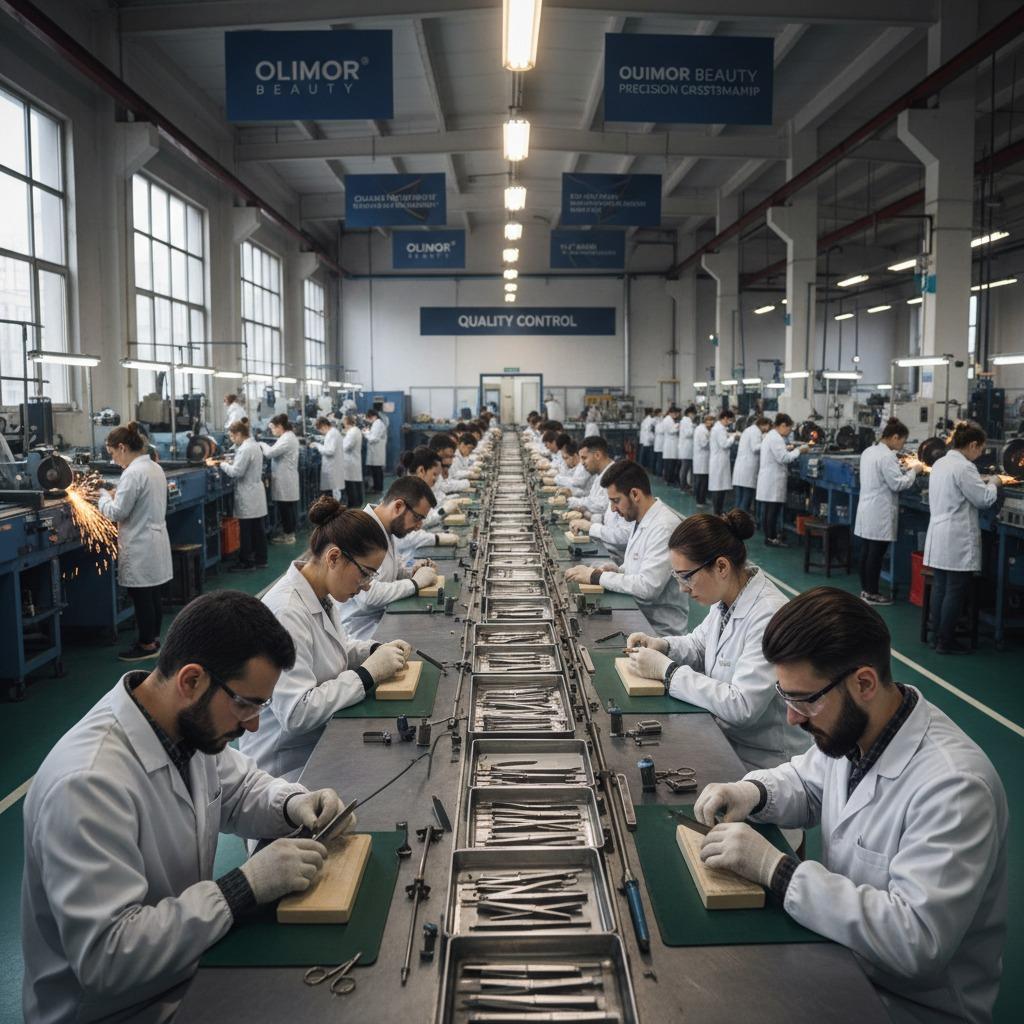
Good quality control should cover raw materials, assembly and final inspection. Olimor Beauty emphasizes internal quality control for exported stainless steel tools, including inspection steps intended to support reliability and customer satisfaction. For buyers, the key is to confirm that the supplier’s inspection approach matches the selling channel. A retail brand may need more cosmetic consistency than a bulk economy range, while a salon-oriented buyer may focus more heavily on blade performance and hand feel.
Custom made nail clipper options that actually matter
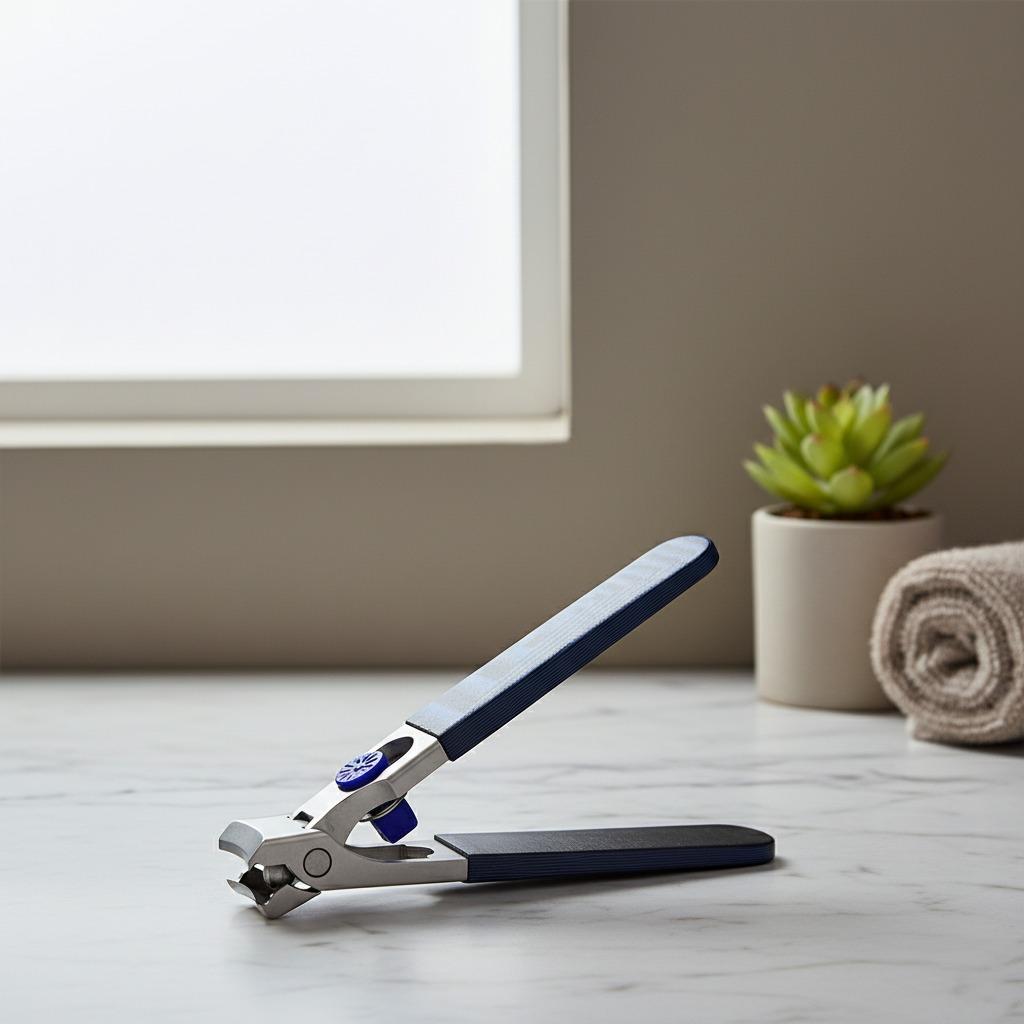
Customization is valuable when it helps the product fit a brand, a retail display or a specific user preference. It becomes less useful when decoration is added without improving sellability. Leading nail clipper exporters may offer custom made nail clipper variations such as handle patterns, color choices, logo placement, packaging formats or functional details like an integrated nail file. The supplied product example refers to a blue geometric pattern, non-slip comfort and a built-in nail file for on-the-go use, which are all features that can support a more distinctive retail presentation when executed consistently.
Before requesting customization, define the reason for it. A distributor selling to pharmacies may prioritize clean packaging, easy barcode placement and broad user appeal. A beauty retailer may want a color or pattern that fits a seasonal display. A travel-accessory buyer may value compact size, a protective package and a file function. A private label buyer may need logo space and consistent carton labeling more than complex product decoration.
Use this simple decision table when comparing customization choices:
| Customization area | Why it matters | Buyer check |
|---|---|---|
| Handle color or pattern | Helps the item stand out in retail or match a brand range | Review color consistency across samples and packaging photos |
| Logo or brand mark | Supports private label and repeat recognition | Confirm position, size and durability of the marking method |
| Grip texture | Improves control during use | Test comfort with different hand sizes and pressure levels |
| Built-in nail file | Adds convenience for travel and daily grooming | Check file usability, secure placement and packaging clearance |
| Retail packaging | Affects shelf impact, barcode use and damage prevention | Review mockups, carton fit and labeling requirements before production |
How to evaluate exporter reliability before placing an order
Supplier reliability is built through communication and evidence. A dependable exporter should be able to provide clear product photos, sample availability, packaging discussion and a realistic process for confirming order details. Buyers should prepare a written specification sheet even for a simple nail clipper. This reduces misunderstanding and makes it easier to compare quotations from different exporters.
A useful specification sheet may include the intended market, product size preference, finish, handle color, logo needs, packaging type, carton labeling, inspection expectations and shipment requirements. If exact technical specifications are not yet decided, list performance expectations instead: clean trimming, comfortable grip, smooth lever movement and consistent appearance. This gives the supplier a practical target without forcing unsupported claims.
Communication style is another important signal. If an exporter answers only with generic promises, it may be difficult to solve issues later. Look for responses that address the actual product, acknowledge open questions and offer practical next steps. When you are ready to discuss a nail clipper program, you can send an inquiry with your target channel, packaging concept and customization requirements.
Product image and visual inspection reference
Images are useful at the first sourcing stage, but they should be treated as a starting point rather than final proof of quality. A product photo can show the general handle shape, pattern, color direction and built-in features, while samples confirm hand feel, lever strength and cutting performance.
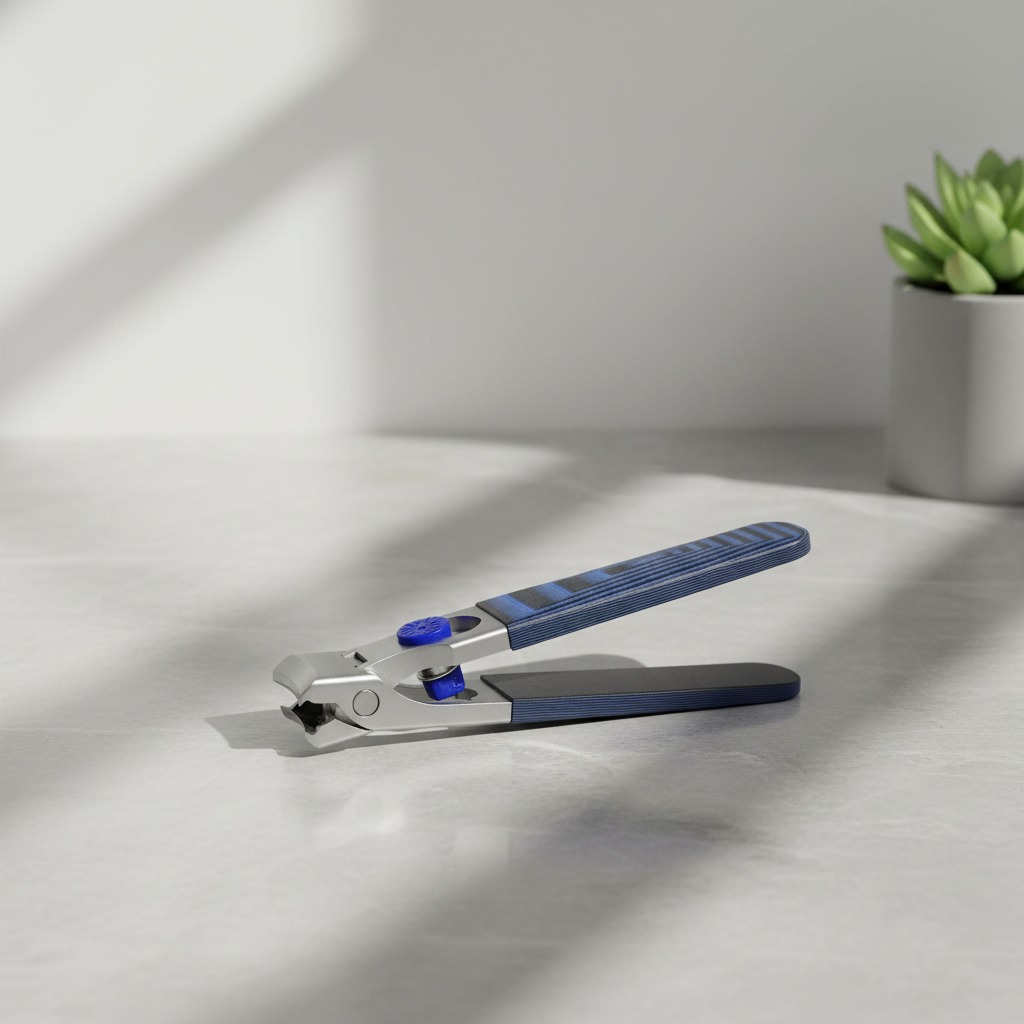
When reviewing images from an exporter, zoom in on the lever, jaw alignment, hinge area and handle surface. Ask for more angles if the product has a textured or patterned grip. For a custom made nail clipper, request a layout or mockup that shows logo position and packaging front view before confirming mass production details. This helps prevent problems such as a logo hidden by the lever, a pattern that looks different under retail lighting, or packaging that does not show the product advantage clearly.
Maintenance information buyers can share with customers
Clear use and care guidance can reduce complaints and improve customer satisfaction. Nail clippers should be kept clean and dry after use. Users should avoid forcing the blades through material that is not appropriate for a grooming tool, and they should store the clipper away from damp conditions when possible. If the tool includes a built-in file, users should fold or position it properly after use to prevent snagging in a pouch or travel bag.
For retail packaging or online listings, keep care instructions short and practical. A simple message such as “Clean after use, dry before storage and keep away from children” is easier for customers to follow than long technical text. If the clipper has a decorative handle or special surface finish, avoid promising resistance levels unless those details are confirmed for the exact product and order.
Building a nail clipper range for wholesale or retail
A nail clipper can be sold as a single grooming essential, part of a manicure set, a travel item or an add-on in a beauty tool display. Before choosing styles, consider how the product will be presented. A low-visibility bulk item may require simple durability and price discipline. A retail carded product may need stronger visual identity, cleaner finishing and packaging that communicates the feature quickly. A private-label program may need repeatable branding and stable supply across future orders.
It is often better to start with a focused range instead of too many similar designs. For example, a buyer may compare one classic stainless steel option, one ergonomic grip design and one custom colored or patterned version. This makes it easier to measure which feature your customers value most. If you need help narrowing options or preparing product details for a sourcing discussion, you can contact Olimor with your target market and channel requirements.
Top nail clipper exporters earn long-term business by combining functional quality, consistent inspection, sensible customization and export-ready communication. By checking blade performance, grip comfort, finishing, packaging and supplier responsiveness before ordering, buyers can build a grooming tool range that performs reliably and supports their brand goals.
Tag: