How to Choose a Nail Clipper Exporter for Private Label and Wholesale Supply
Finding the right nail clipper exporter is not only about locating a factory that can ship grooming tools. For wholesalers, retailers, beauty brands and promotional product buyers, the real goal is to build a stable supply of clippers that feel sharp, safe and consistent in the hands of end users. A nail clipper is a small product, but customers judge it immediately: the blades either meet cleanly or they do not, the lever either feels secure or it wobbles, and the finish either looks refined or it scratches too easily during handling.
Olimor Beauty works with buyers who need dependable beauty tools for retail assortments, private label projects and customized sourcing plans. This guide explains what to review when comparing top nail clipper exporters, how to think about ODM opportunities, and which practical questions help you reduce risk before committing to a purchase.
What Separates Strong Nail Clipper Exporters from Basic Suppliers
A reliable nail clipper supplier should be able to support more than a single transaction. Strong exporters understand that nail clippers are purchased for different channels: value retail, pharmacy and personal care shelves, travel kits, manicure sets, online bundles, gift packs and branded grooming lines. Each channel has a different balance of price, finish, packaging and quality expectations.
When reviewing potential exporters, look at the supplier’s ability to keep product quality repeatable. A sample that cuts well is useful, but consistency across a production batch matters more. Nail clippers should have aligned cutting edges, a stable lever, a smooth surface finish and no sharp burrs on areas that touch the fingers. Stainless steel cutting edges are a common expectation for durability and performance, but buyers should still evaluate how the edge is formed, finished and protected during packaging.
Export capability also involves communication, documentation and packaging discipline. If a supplier cannot clearly confirm the product structure, finish options, packing method and production timeline, the order may become difficult to manage as it moves from sample approval to mass production. The best sourcing relationships are built on clear standards before production starts.
Product Details Buyers Should Inspect Before Ordering
Because nail clippers are compact, small defects are easy to overlook during a quick review. A more structured inspection helps buyers compare suppliers fairly. Use the same evaluation method for each sample, and record findings so decisions are not based only on appearance.
- Cutting alignment: Close the clipper slowly and check whether the upper and lower cutting edges meet evenly from one side to the other.
- Cutting feel: Test on an appropriate sample material and note whether the cut is clean or leaves tearing, bending or uneven edges.
- Lever stability: The lever should press smoothly without excessive looseness, scraping or unexpected side movement.
- Finger comfort: Edges around the handle and body should feel smooth. Burrs or rough corners can make an otherwise attractive clipper unpleasant to use.
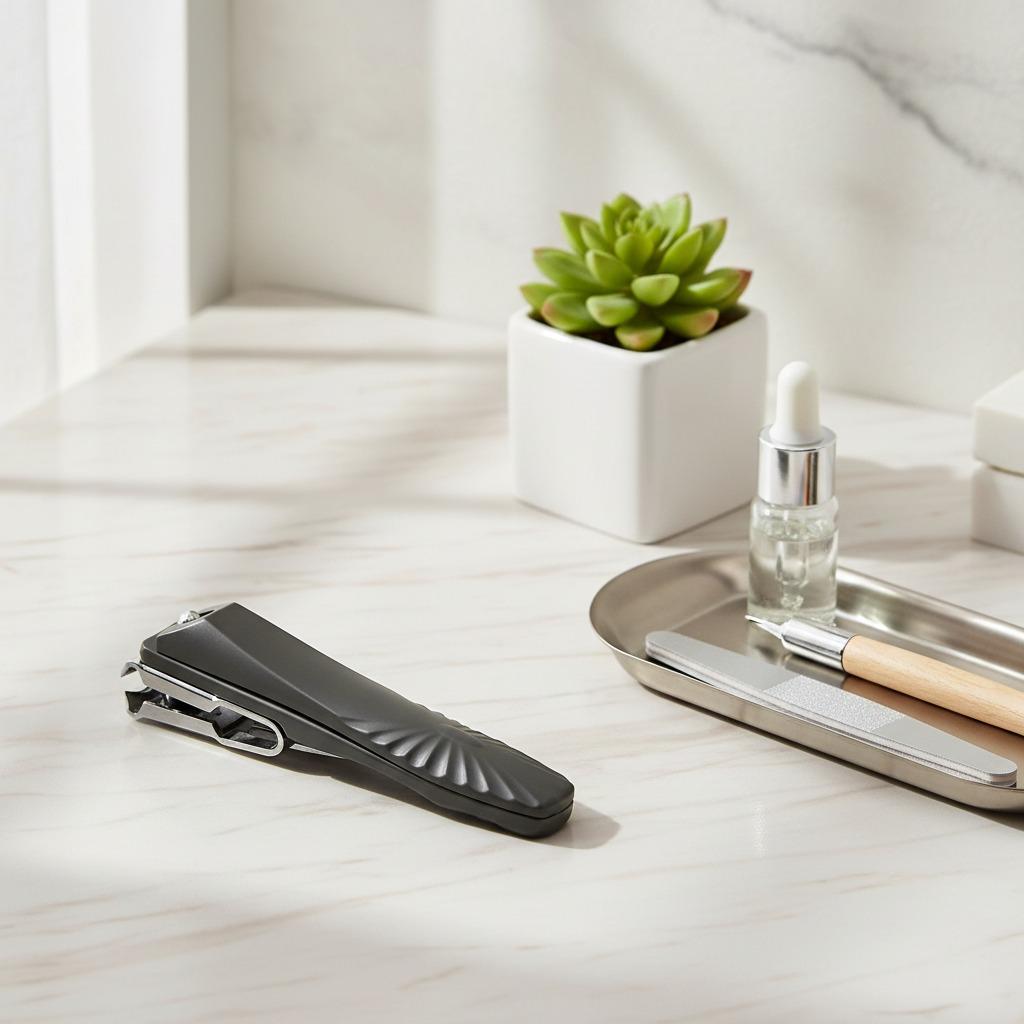
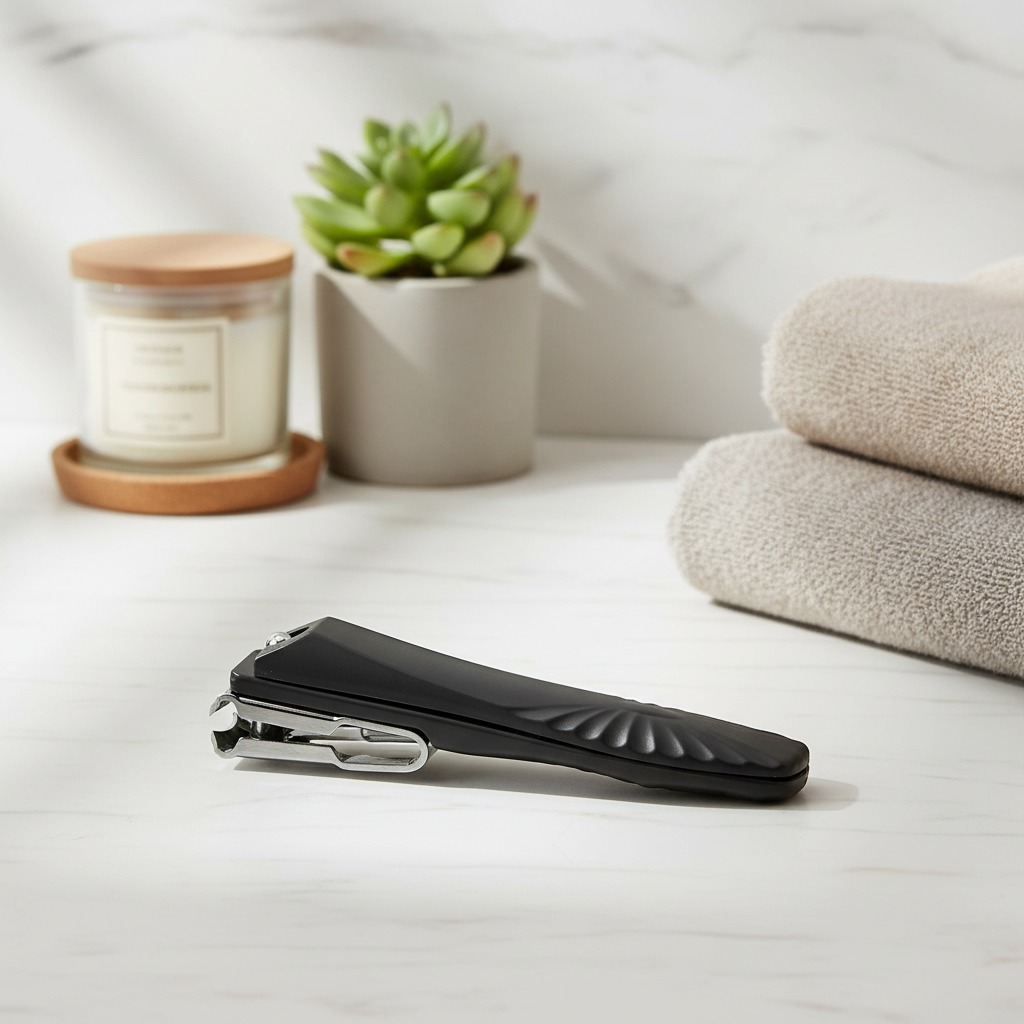
- Surface finish: Review the finish under normal retail lighting. Matte black finishes and subtle geometric patterns can look refined, but the coating or decoration should be assessed for consistency.
- Portability: For travel kits or compact retail packs, check whether the clipper is lightweight, easy to store and protected from rubbing against other items.
- Packaging fit: The product should sit securely in its package so the finish is not damaged before the customer opens it.
For buyers building broader grooming assortments, it can also help to compare nail clippers with related beauty tool products to ensure the design language and packaging direction are consistent across the line.
ODM Nail Clipper Projects: Where Customization Adds Value
Nail clipper ODM is useful when a buyer wants more than a standard item with a logo. ODM cooperation can include discussion of appearance, grip comfort, finish direction, packaging concept and how the clipper fits into a wider personal care collection. The goal should not be customization for its own sake. The strongest ODM choices solve a real market need: better handling, clearer shelf appeal, a more suitable travel format, or a design that matches an existing brand range.
For example, a matte black finish with subtle geometric patterning can create a more contemporary look for men’s grooming, unisex travel kits or minimalist beauty assortments. Ergonomic handle considerations can help customers grip the clipper more comfortably. Compact, lightweight construction can be valuable for travel sets, promotional kits and small-format e-commerce bundles. These design directions should be tested against cost, durability and packaging requirements before approval.
ODM buyers should prepare a clear brief before contacting exporters. The brief does not need to be complicated, but it should define the intended user, sales channel, target packaging style, preferred finish, branding areas and any restrictions related to size or assortment compatibility. A focused brief helps the exporter respond with practical options instead of generic suggestions.
A Practical Supplier Evaluation Checklist
Many sourcing mistakes happen because buyers focus on unit price before confirming the product standard. Price is important, but it only has meaning when the compared products are equivalent. A lower quote may reflect a different finish, looser quality control, thinner packaging or fewer customization steps. Before selecting a nail clipper exporter, review the following areas.
| Evaluation area | Why it matters | What to confirm |
|---|---|---|
| Sample quality | Shows the expected cutting feel and appearance | Blade alignment, lever movement, surface finishing and comfort |
| Material and finish | Affects durability, appearance and customer satisfaction | Cutting edge material, coating or polishing direction, decoration method |
| Packaging | Protects the clipper and supports retail presentation | Individual packing, insert fit, barcode or label needs, carton protection |
| Branding options | Supports private label and ODM differentiation | Logo placement, artwork requirements and approval process |
| Quality control | Reduces batch variation and returns | Inspection points from raw materials through final packing |
| Export readiness | Helps avoid shipping and documentation delays | Order details, packing information and communication timeline |
This checklist is especially useful when comparing multiple exporters. It keeps the discussion practical and prevents decisions based only on attractive photos or broad claims.
How Quality Control Should Be Discussed
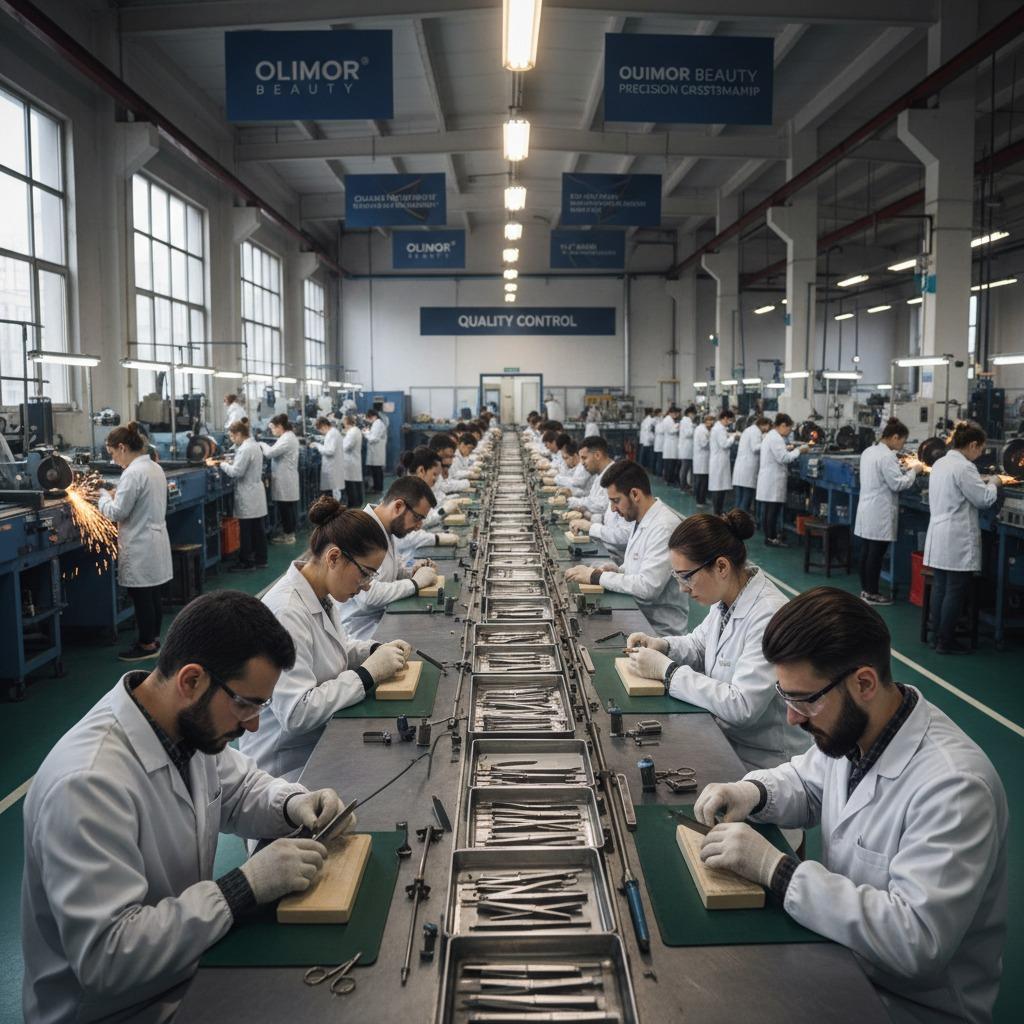
A nail clipper supplier should be prepared to discuss internal quality control in concrete terms. Buyers do not need to demand unnecessary technical language, but they should understand how a supplier checks raw materials, semi-finished pieces, assembled clippers and final packaging. The main concern is whether the exporter has repeatable checkpoints that catch problems before shipment.
Important inspection points include blade alignment, lever function, visible scratches, coating uniformity, logo placement and package cleanliness. For a retail buyer, even a small percentage of poorly finished items can create customer complaints. For a private label buyer, defects also affect brand trust. If the clipper is part of a set, each tool should be checked for both individual function and how it fits within the final package.
Buyers should keep an approved sample and written product description as the reference. This helps avoid confusion if production adjustments are needed. Clear references are also helpful when planning repeat orders, because the goal is to receive the same product standard again, not a similar item that varies in feel or finish.
Matching Nail Clippers to Sales Channels
The best nail clipper choice depends on where and how it will be sold. A pharmacy item may prioritize straightforward function and clear packaging. A beauty boutique may require a more refined finish and presentation. An e-commerce bundle may need packaging that protects the product during parcel shipping. A travel kit may place more importance on compact size and low weight.
Before choosing a design, define the customer’s buying reason. Are they replacing a basic household clipper, buying a grooming set as a gift, adding a compact tool to a travel pouch, or purchasing a branded beauty accessory? The answer will influence finish, shape, packaging and price position. Buyers exploring coordinated assortments can review Olimor product collections for broader planning ideas across beauty and personal care tools.
Working with Olimor Beauty on Nail Clipper Supply
Olimor Beauty supports buyers looking for nail clipper export supply, private label direction and ODM development. The focus is on practical grooming tools that combine reliable cutting function with considered appearance, including options such as stainless steel cutting edges, ergonomic handling concepts, sleek finishes and compact formats suitable for travel or retail sets.
To start a productive discussion, prepare your target market, expected sales channel, packaging preference, branding needs and any sample references you want to compare. If you are sourcing for a retail program, include the intended shelf presentation and any labeling requirements. If you are developing a custom line, include the desired finish, grip direction and brand positioning. You can contact Olimor for general sourcing communication or send an inquiry with project details.
Choosing among top nail clipper exporters is ultimately a decision about consistency, communication and fit for your market. A well-made clipper may be small, but it carries your brand promise every time a customer uses it. By evaluating samples carefully, clarifying ODM goals and confirming quality expectations in advance, buyers can build a stronger supply relationship and offer grooming tools that customers trust.
Tag: