China Tweezers Exporter for OEM Custom Beauty Tool Programs
Choosing a China tweezers exporter is not only a price comparison exercise. For beauty brands, salon suppliers, private-label distributors and professional tool buyers, tweezers must work reliably in daily use: the tips need to meet cleanly, the body should feel controlled in the hand, and the finish should support both hygiene-focused handling and retail presentation.
A small alignment issue can turn an attractive product into a customer complaint. A surface defect can make a retail item look lower value than intended. Poor packaging can damage fine tips before the product reaches the user. The best sourcing decision is therefore based on function, manufacturability, packaging protection and inspection discipline, not appearance alone.
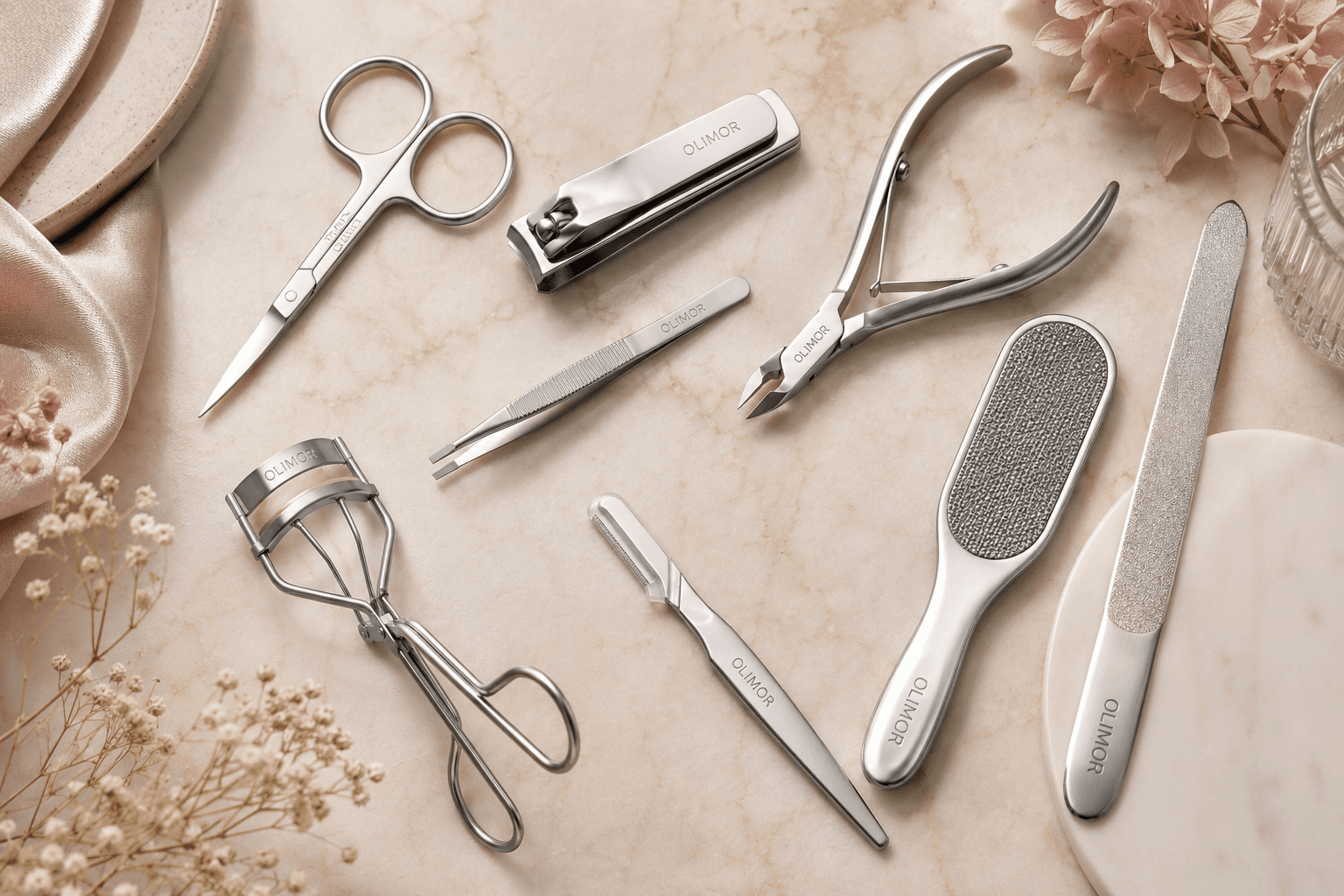
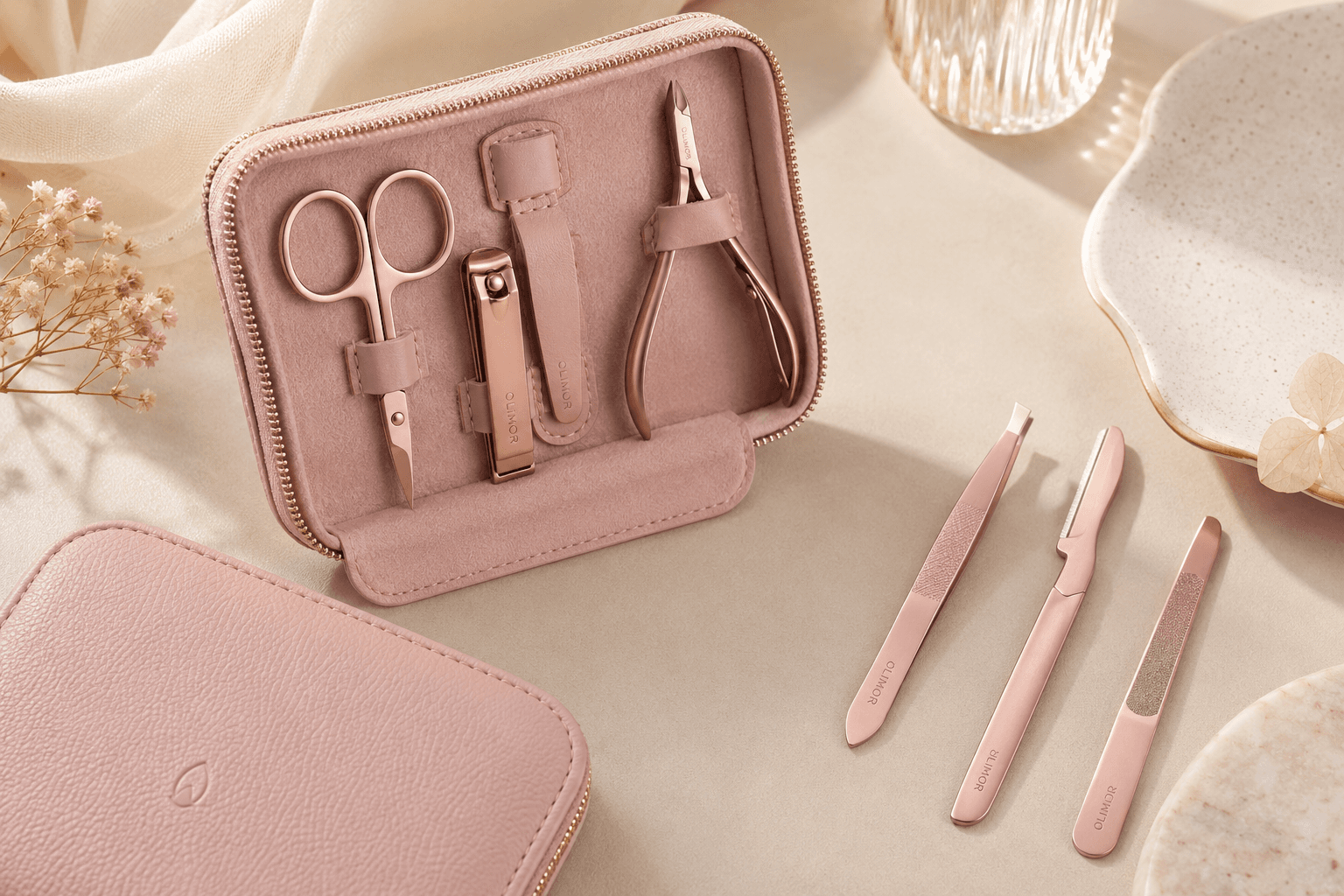
Olimor Beauty supports buyers developing OEM custom tweezers and coordinated beauty tool programs. Whether the project is a professional brow tweezer, a retail grooming item, a lash or nail art tool, or a branded set, the most dependable result comes from defining the product brief early and checking the tool at each key stage. Buyers can review wider beauty tool products when planning how tweezers fit into a broader line.
What a China Tweezers Exporter Should Help You Decide
A useful tweezers export partner should do more than receive a logo file and ship finished goods. The supplier should help clarify the intended use, target customer, material direction, finish, packaging format and inspection expectations before production starts. Tweezers look simple, but their performance depends on small details such as tip symmetry, spring tension, edge finishing and surface treatment.
The first sourcing conversation should focus on the user. Tweezers for eyebrow shaping, general grooming, lash application, nail art, crafting or precision handling can require different tip forms and comfort priorities. A tool designed for salon use should feel stable during repeated use. A retail-focused item may also need strong shelf appeal, clear packaging and a finish that matches the buyer's brand position.
For B2B buyers, the right supplier discussion should answer practical commercial questions as well: Can the design be manufactured consistently? Can samples be reviewed before bulk production? Can branding and packaging be aligned with the rest of the range? Can quality checks be agreed in writing before shipment? These questions are often more important than chasing the lowest quotation.
OEM Custom Tweezers: Key Design Choices
Custom tweezer development works best when visual choices and functional requirements are reviewed together. A sleek shape may look premium but fail if the closing pressure is uncomfortable. A colorful finish may attract attention at retail but still needs suitable handling, cleaning and packaging protection. Before confirming a sample, create a simple specification sheet that records the intended use, target customer and selling channel.
Tip Style and Use Case
The tip is the working part of the tweezer, so it should be selected according to the task. Slanted tips are widely used for eyebrow shaping because they provide visibility and controlled contact. Pointed tips can support detailed work such as precision placement or fine grooming tasks. Straight, flat or angled variations may suit broader gripping applications, general grooming or kit-based tools.
Buyers should avoid selecting a tip shape only because it looks attractive in photographs. The better question is what the user needs to grip, how often the tool will be used and whether the tip must provide fine accuracy or more forgiving contact.
Body Length, Proportion and Hand Feel
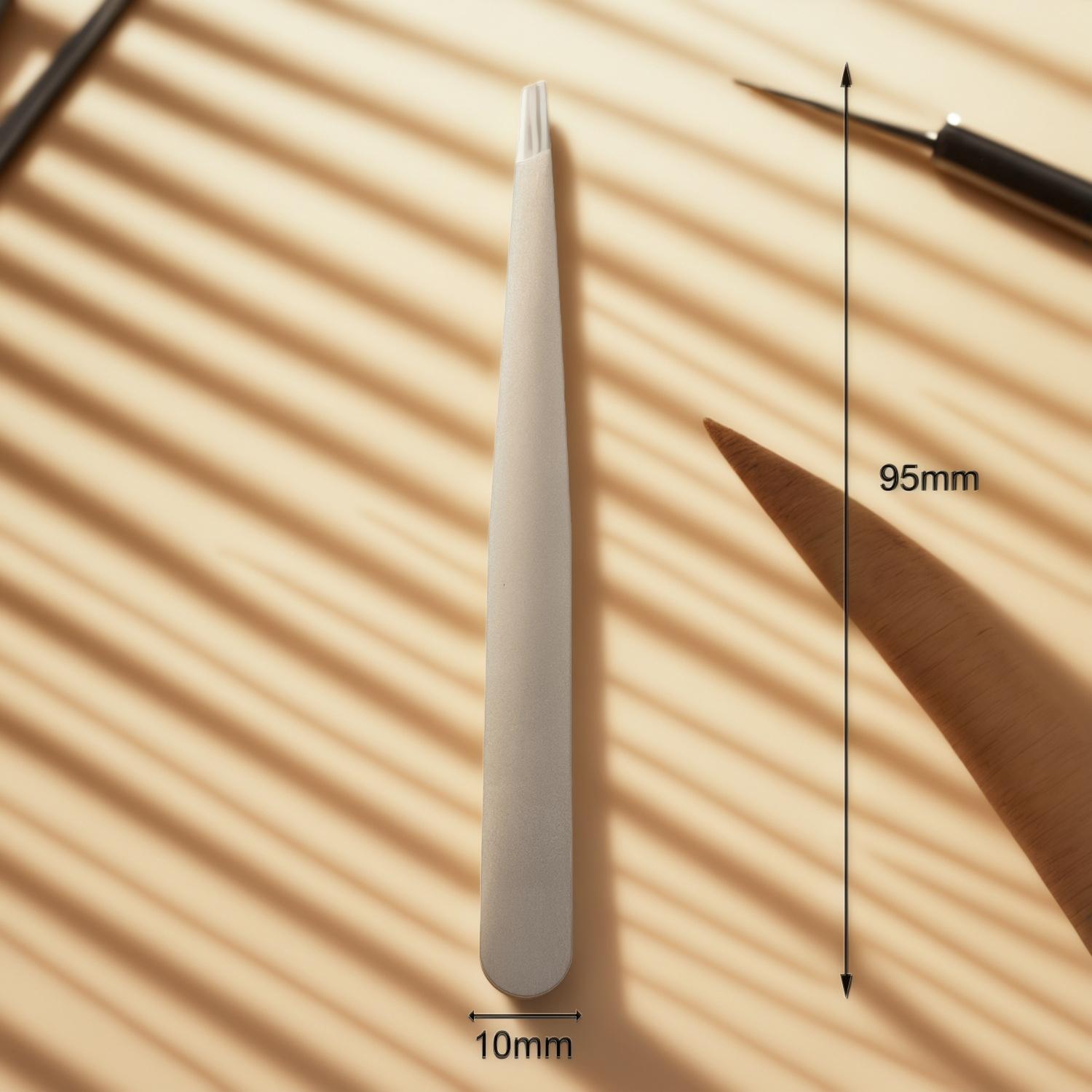
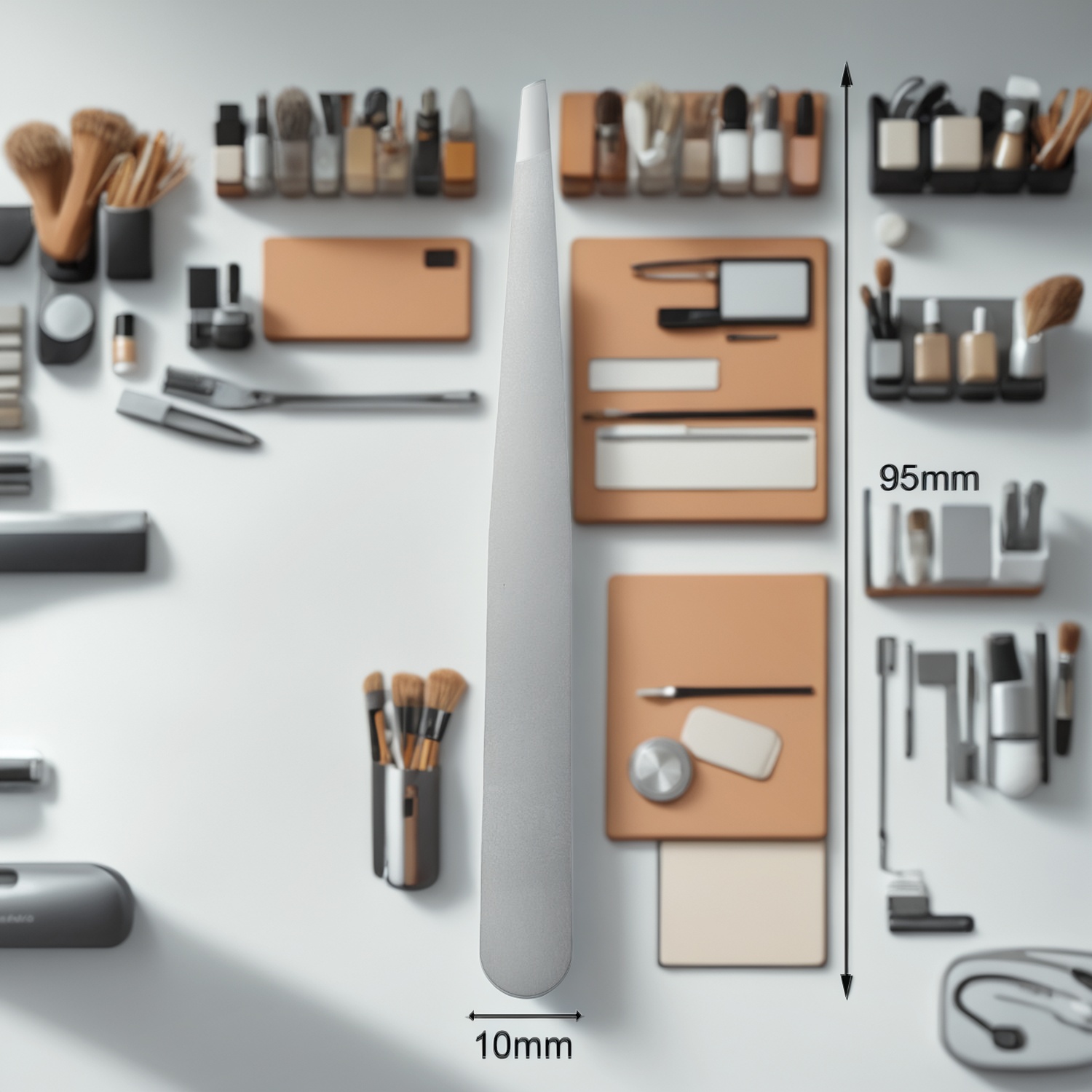
Length and proportion affect comfort, control and packaging. Source information references a 95mm professional model as a practical discussion point when considering hand feel, portability and retail package size. This does not mean every custom project should use that length. A compact tweezer may suit travel kits, while a longer form may feel more controlled for some professional users.
Handle width, weight perception and balance should be reviewed in the sample stage. A slim body can look elegant, while a wider or shaped grip may feel easier to control. If the tool is intended for repeated salon use, comfort should be treated as a performance requirement, not only a style choice.
Spring Tension and Closing Feel
Spring tension determines how the tweezer opens and closes. The tool should close smoothly without requiring excessive force. Too much tension can fatigue the hand, while too little can reduce control. Consistency across samples is also important because end users expect the same feel from piece to piece.
During evaluation, buyers should test several samples rather than judging only one. Check whether the tool closes evenly, whether the tips meet in the intended position and whether the closing feel remains comfortable after repeated use.
Stainless Steel, Finish and Surface Appearance
Stainless steel is commonly used for beauty tweezers because it supports strength, durability and a clean surface when properly finished and cared for. However, stainless steel alone does not define product quality. Buyers still need to confirm polishing, edge finishing, surface consistency and packaging protection.
Finish options such as polished, matte, colored or coated appearances create different brand impressions. A polished finish may communicate classic professional styling. A matte or colored finish may support retail differentiation. The selected finish should be compatible with the expected handling, cleaning habits and price position of the product.
Logo Placement and Branding
OEM branding should be visible but should not interfere with grip, cleaning or the premium feel of the tool. Logo engraving or printing should be checked for clarity, position and consistency. If the tweezer is part of a coordinated beauty range, brand marks, color direction and packaging language should match related items in the buyer's assortment.
Buyers developing a multi-item line can compare formats across Olimor product collections to consider whether tweezers, nail tools, lash tools and grooming tools should share a common finish or packaging style.
How to Prepare a Custom Tweezers Brief
A clear product brief reduces sampling rounds and prevents misunderstandings. It does not need to be complicated, but it should be specific enough for the exporter to understand the market, price position and performance goal. If you already have a reference item, describe which functional features you like and what should be changed. If you are creating a new item, describe the end user and sales channel.
- Define the primary use. State whether the tool is for brow grooming, lash work, nail art, general beauty, crafting, salon supply or retail gift sets.
- Choose the tip style. Confirm whether you need slanted, pointed, straight, flat or another tip form based on the user's task.
- Describe size and feel. Use practical references, such as a 95mm professional-style model where relevant, to discuss length, balance and portability.
- Select finish and brand direction. Provide logo files, preferred colors, finish requirements and any brand guideline restrictions.
- Plan packaging early. Decide whether the product needs a sleeve, box, pouch, blister card or set packaging, and consider how the tips will be protected.
- Set inspection expectations. List checks for tip alignment, closing feel, edge finish, surface appearance, logo clarity and packaging condition.
This approach keeps customization focused. Designing your own tweezers does not always mean starting from zero. Many buyers adapt proven forms by changing the tip style, grip feel, finish, logo and packaging. This can help keep the project practical while still creating a product that fits the buyer's brand.
Quality Checks That Matter for Stainless Steel Tweezers
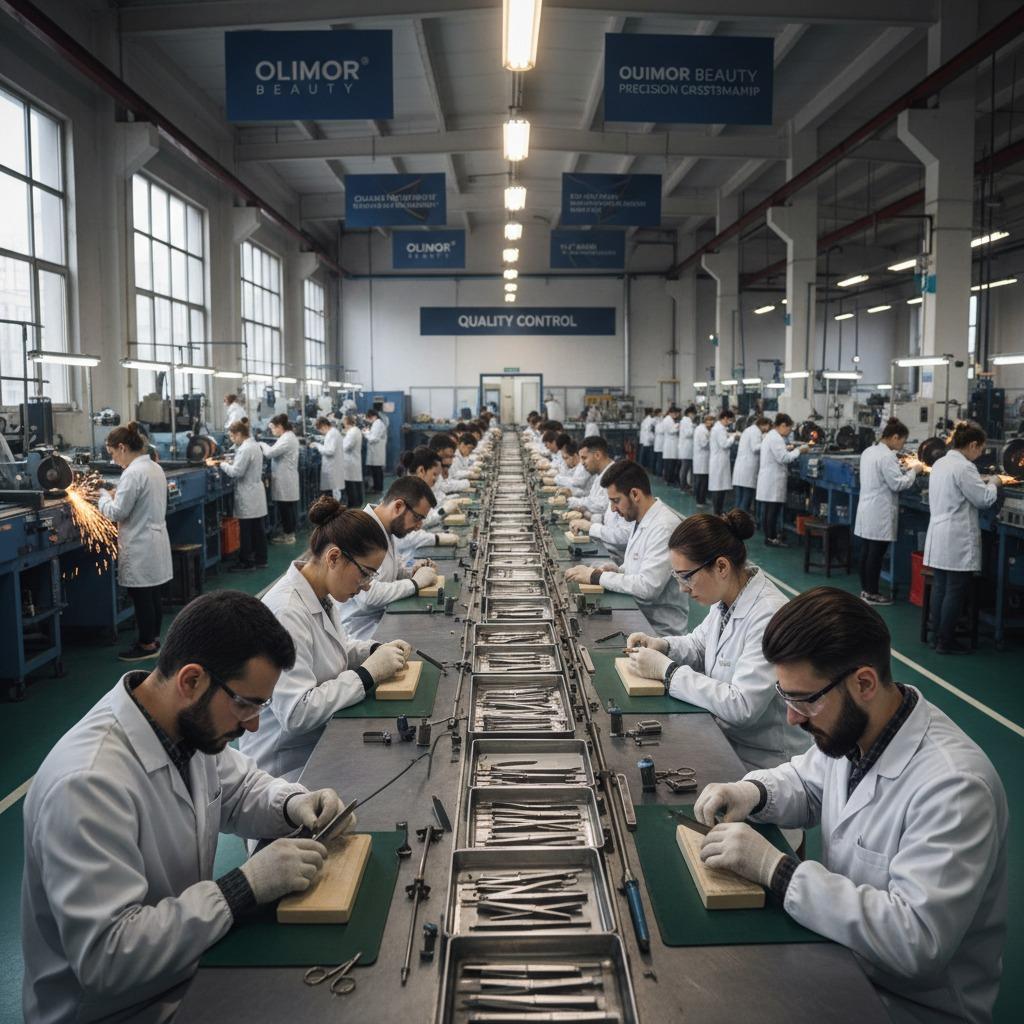
Because tweezers are precision beauty tools, small defects can be obvious to end users. A narrow gap between the tips may prevent the tool from gripping fine hairs. Rough edges can feel uncomfortable. Uneven surface treatment can reduce perceived value. Inspection should begin before final packing, not after goods are already sealed.
Tip protection is especially important because a small knock during storage or transportation can affect alignment. If the product will be sold online, packaging must also survive handling while presenting the item clearly in photographs and unboxing.
| Inspection point | Why it matters | What buyers should check |
|---|---|---|
| Tip alignment | Determines whether the tweezer can grip accurately. | Tips should meet evenly without visible gaps, twisting or mismatch against the intended shape. |
| Closing feel | Influences user control and hand fatigue. | Tension should feel smooth and consistent across reviewed samples. |
| Edge finishing | Affects comfort and perceived safety during use. | Body, grip area and tip edges should be free from sharp burrs or rough areas. |
| Surface finish | Impacts retail appearance and quality perception. | Look for scratches, stains, uneven color, poor polishing or inconsistent coating appearance. |
| Logo clarity | Supports brand presentation and consistency. | Branding should be legible, correctly positioned and consistent from piece to piece. |
| Packaging protection | Helps prevent tip damage before the product reaches the user. | Tweezers should not shift excessively, and tips should be protected in storage and shipment. |
For buyers building internal quality procedures, public standards such as ISO 9001 for quality management systems and ISO 2859 sampling procedures may be useful reference points when discussing inspection structure. Buyers should verify the applicable version, scope and supplier documentation for their own market and purchase agreement. These references should not be treated as proof that any supplier holds a certification unless documentation is provided and verified.
Packaging and Retail Presentation
Packaging for OEM custom tweezers has two jobs: it protects the tool and communicates the product's value. A fine pointed tip can be damaged if it moves inside weak packaging. A professional brow tweezer may need a clean, practical presentation that reinforces precision. A retail gift set may need coordinated colors, clear usage information and secure placement alongside other tools.
Common packaging discussions include sleeves, boxes, pouches, blister cards and kit packaging. The right choice depends on sales channel, price position and how much protection the tips require. For online sales, packaging strength and product visibility matter. For salon or distributor programs, efficient storage and clear labeling may be just as important.
Packaging should be considered early because it can affect logo placement, product orientation, barcode or label areas, and how the item fits within a set. Waiting until after the tweezer sample is finalized can create avoidable changes later.
How to Evaluate a Tweezers Export Partner
Supplier evaluation should combine commercial questions with product development questions. A dependable partner should be able to discuss manufacturability, sample review, branding, packaging and inspection in a practical way. Buyers should look for clear communication rather than vague promises.
- Product understanding: Can the supplier explain how tip shape, tension, finish and packaging affect the final user experience?
- OEM support: Can the team work from a brief, reference sample, logo file and packaging direction?
- Sample process: Can samples be reviewed for alignment, comfort, appearance and packaging before bulk production decisions?
- Inspection planning: Are functional and appearance checks agreed before shipment preparation?
- Range consistency: Can the tweezer design align with other beauty tools in finish, style and packaging?
- Documentation: Can the supplier provide relevant production, material or quality documents for buyer review where applicable?
Cost should still be reviewed carefully, but the lowest unit price is not always the lowest total sourcing cost. Rework, returns, weak packaging, unclear artwork and inconsistent inspection can all add hidden expense. Useful cost-factor discussions include finish complexity, packaging structure, logo method, customization level, sample rounds and order planning. Buyers should request project-specific quotations instead of assuming a standard price applies to every design.
When to Choose Custom Tweezers for a Beauty Tool Line
Custom tweezers are a strong fit when a buyer needs brand consistency, a defined user experience or a coordinated retail story. A private-label brow line may require a slanted tweezer with a finish that matches scissors or grooming tools. A nail art range may need a finer tip and packaging that explains precision placement. A distributor may prefer a balanced general grooming tweezer that works across several customer types.
The project should remain focused on one primary job for the tool. Trying to make one tweezer perfect for every use can create compromises. It is usually better to define the main task first, then choose tip shape, body feel, finish and packaging around that task.
Olimor Beauty works with buyers who need practical custom design support for stainless steel beauty tools, including tweezers as part of single-item or range-based programs. To discuss a specific product brief, buyers can send details through the custom product inquiry page or contact the team through Olimor Beauty contact support.
Practical Pre-Purchase Checklist
Before placing an OEM custom tweezers order, buyers should confirm the following points internally and with the supplier. This checklist helps keep the project aligned from sampling through shipment preparation.
- Primary use case and target customer are clearly defined.
- Tip style is selected according to the task, not only appearance.
- Size, hand feel and closing tension have been reviewed with samples where possible.
- Stainless steel finish, surface appearance and edge finishing expectations are documented.
- Logo method and placement do not interfere with grip or function.
- Packaging protects the tips and matches the retail or professional channel.
- Inspection checks are agreed before production and before final packing.
- Any applicable standards, documents or buyer requirements are verified for the current project.
FAQ
Can I request samples before confirming a custom tweezers order?
Sample review is a practical step for OEM tweezers because buyers need to check tip alignment, closing feel, finish, logo position and packaging fit. Share your brief with Olimor Beauty so the team can advise what sample information is needed for your project.
What MOQ applies to custom tweezers?
MOQ can depend on the design, finish, branding method, packaging format and production planning. Olimor Beauty should confirm project-specific requirements after reviewing the product brief rather than using a generic answer for every custom tweezer.
Can tweezers be customized with logo, color and packaging?
Yes, OEM custom tweezers can be developed with brand direction such as logo placement, surface finish and packaging style. The choices should be reviewed together to protect function, appearance and retail presentation.
What quality checks should buyers request?
Key checks include tip alignment, grip performance, spring tension, smooth edge finishing, surface consistency, logo clarity and packaging protection. Buyers should agree these inspection points before shipment preparation.
How should lead time be discussed?
Lead time depends on sampling, artwork confirmation, customization complexity, packaging decisions and production scheduling. Buyers should provide complete specifications early so the supplier can give a project-specific timeline without guesswork.
Tag: