Stainless Steel Nail Tools Wholesale: A Practical B2B Buying Guide
Buying stainless steel nail tools wholesale is not only a price comparison exercise. For salons, beauty retailers, online sellers and sourcing teams, the real question is whether the tools fit the intended customer, perform consistently, present well in a kit and are practical to inspect, clean, store and reorder.
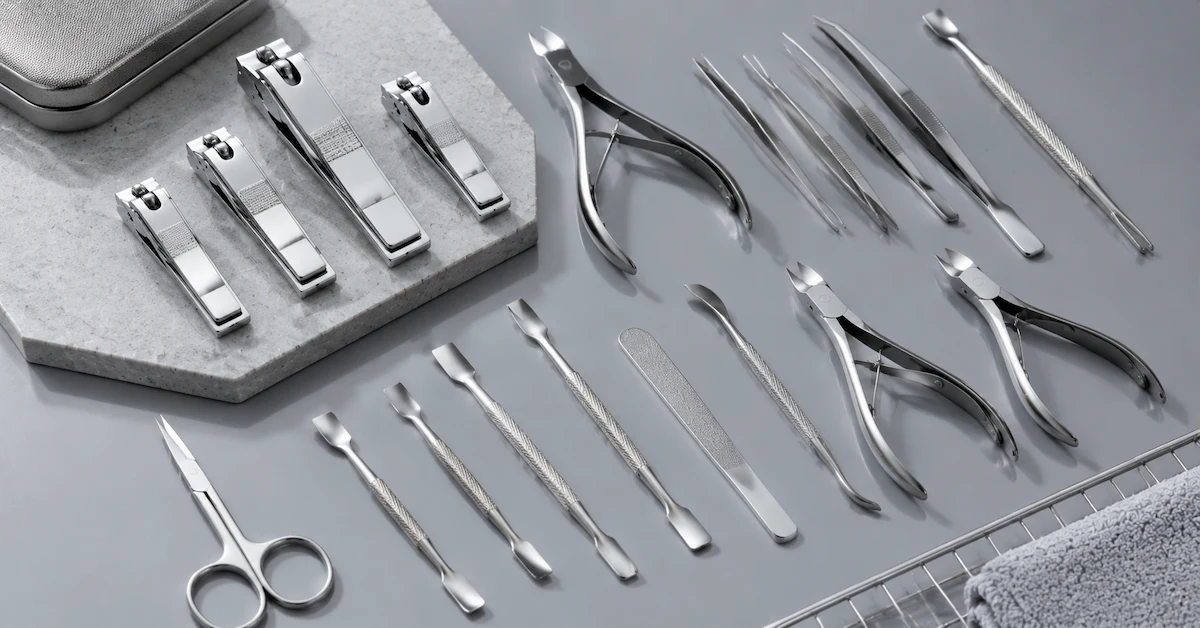
Stainless steel nail tools can include nail clippers, cuticle nippers, nail scissors, tweezers, cuticle pushers, spatulas, files and buffers. They look simple, but small differences in edge shape, hinge movement, grip texture, polish and packaging can change how the set feels in daily use or how easily it sells at retail. This guide explains what to evaluate before placing a wholesale order and how to discuss samples, customization and quality control with a supplier.
What B2B Buyers Need From Stainless Steel Nail Tool Sets
The best wholesale nail tool set is the one matched to its selling channel. A salon buyer may care most about cutting control and repeated handling. A beauty supply retailer may prioritize a complete-looking assortment and packaging appeal. A travel grooming brand may need compact tools arranged neatly in a case. A distributor may need stable assortment options that are easy for downstream customers to understand.
Before comparing stainless steel nail tools bulk offers, define the use case. Ask whether the set is intended for professional manicure and pedicure support, personal grooming, retail resale, promotional gifting or travel. This decision affects the mix of tools, the expected finish, the packaging format and the amount of inspection needed before approval.
A useful wholesale set should do four things: cover common nail care tasks, feel secure in the hand, look consistent across all pieces and arrive in packaging suitable for your sales channel. A low-cost set that includes too many weak or redundant pieces may create returns, complaints or slow-moving stock. A slightly more focused set can be easier to explain, easier to merchandise and easier for the end user to keep organized.
Common Tools Included in a Stainless Steel Nail Kit
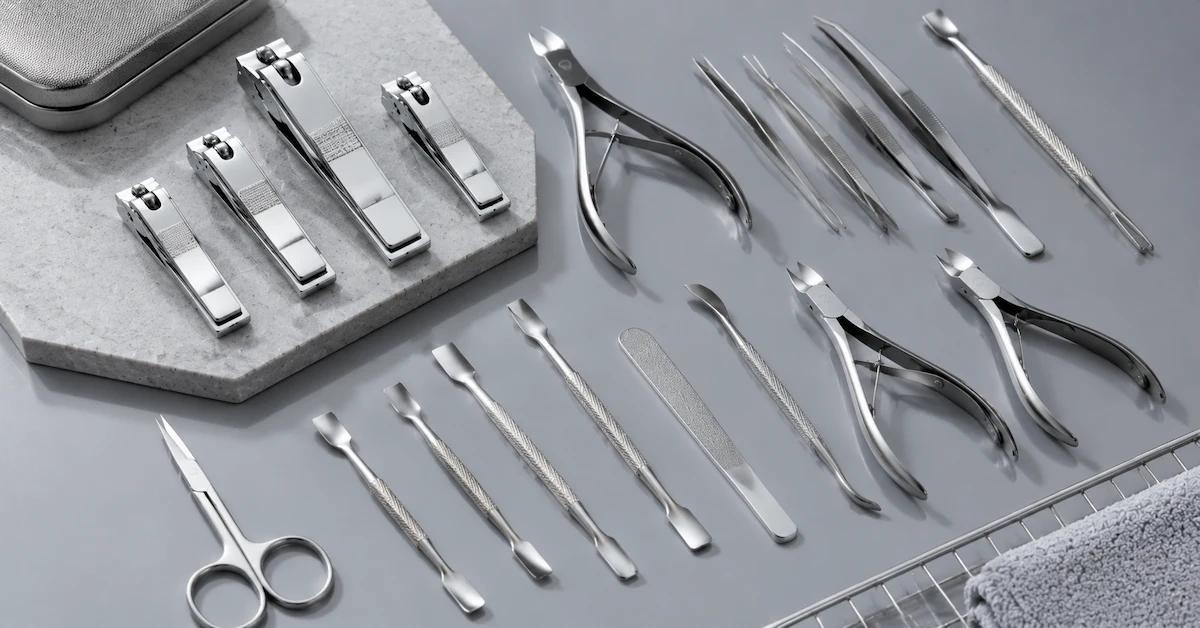
Most stainless steel nail tool assortments combine several handheld grooming tools. The exact mix varies, but buyers commonly see nail clippers in different sizes, cuticle nippers or pliers, tweezers, nail scissors, metal cuticle pushers or spatulas and a nail file or buffer. Each piece should have a clear reason to be in the kit.
Nail clippers
Nail clippers are usually the most familiar item in the assortment. Smaller clippers are generally suited to fingernails, while larger clippers are more practical for toenails or thicker nails. Buyers should inspect alignment, jaw opening, lever movement and whether the cutting edge meets evenly.
Cuticle nippers and pliers
Cuticle nippers are used for controlled trimming of loose cuticle or hangnails. The tip must feel precise, and the hinge should open and close smoothly without wobble. A poor nipper can make the whole set feel low quality because users notice unstable movement immediately.
Tweezers, scissors and pushers
Tweezers add grooming value beyond nail care and can make a retail kit feel more complete. Nail scissors are useful for detail work and traditional manicure routines. Cuticle pushers and spatulas help lift and guide the cuticle area before trimming or finishing. Dual-ended tools are common because they give the user more function without adding much bulk.
Files and buffers
A file or buffer completes the process by smoothing edges after clipping. Without this step, even a clean trim can feel unfinished. If a kit includes a file, check whether it is appropriate for the target user and whether it fits securely in the case or packaging.
Why Stainless Steel Remains a Popular Choice
Stainless steel is widely used for nail care tools because it offers a practical balance of strength, polishability and reusable service life. It can be formed, ground, sharpened and polished into compact tools that feel substantial in the hand. Polished or satin finishes also support a professional appearance, which matters for both salon trays and retail displays.
However, the phrase stainless steel is not enough by itself. It does not automatically confirm corrosion resistance, edge retention, surface finish quality or suitability for professional sanitation routines. Those details depend on the actual material specification, production process, finishing quality and care instructions. If a supplier describes every tool only as stainless steel without further explanation, buyers should request clarification and inspect samples carefully.
For professional or repeated-use environments, buyers should also think about cleaning and storage. Public bodies such as the U.S. Environmental Protection Agency regulate disinfectant products in the United States, and local cosmetology boards or similar regulators may publish sanitation rules for salons. Requirements vary by market, so buyers should verify current versions of applicable rules and ask suppliers for product documents and care guidance. Do not assume that every retail grooming set is designed for the same cleaning routine as a professional salon tool.
How Stainless Steel Nail Tools Are Typically Made
The visible construction of these tools points to a straightforward metalworking process. Bodies may be stamped or formed, cutting edges are ground and sharpened, surfaces are polished or finished, and hinged items are assembled with pins, springs or lever mechanisms. This is where quality differences appear.
Grinding affects how cleanly a blade or clipper cuts. Sharpening affects the pressure required by the user. Polishing affects how the tool looks and how smooth it feels at contact points. Assembly affects whether the tool moves securely or feels loose. A kit can look attractive in product photos but still disappoint if the hinge is unstable or the edges are poorly aligned.
When reviewing samples, do not rely on appearance alone. Open and close each clipper and nipper several times. Check for wobble, scraping, uneven pressure and inconsistent spring return. Inspect the tips under bright light to see whether they meet evenly. Feel the handles for rough edges. Compare all pieces in the set to see whether the finish looks consistent or mixed. These simple checks often reveal whether a wholesale assortment is suitable for repeat purchasing.
Choosing the Right Set for Your Sales Channel
A wholesale nail tool assortment should be selected by channel, not only by piece count. More tools do not always create more value. If the end user will never use several items, those pieces add cost, weight and complexity without improving satisfaction.
| Channel | Best-fit assortment focus | Key buyer checks |
|---|---|---|
| Professional nail salons | Core working tools such as clippers, nippers, pushers and scissors | Hinge stability, edge alignment, grip comfort, cleaning guidance and reorder consistency |
| Beauty supply retail | Complete-looking sets with clear consumer value | Packaging appearance, tool variety, finish consistency and easy product explanation |
| Online resale | Photogenic kits with practical functions and secure packaging | Accurate product descriptions, stable assortment, visible quality points and damage-resistant packing |
| Travel and personal grooming | Compact tools arranged in a case or pouch | Portability, secure storage, rounded handling edges and non-bulky tool selection |
| Promotional or gift programs | Simple, attractive sets with broad appeal | Branding options, packaging surface, presentation and sample approval before production |
Salon customers often know exactly which tools they prefer and may buy by function rather than by large kit. Retail customers often respond to a set that feels complete and giftable. Online customers depend heavily on clear photos and descriptions, so the product must match the listing closely. Travel kits need compactness and organization more than a large number of tools.
Olimor buyers can review current beauty tool options through the product range or compare broader assortment ideas in the collection section before requesting a sample discussion.
Inspection Checklist Before Placing a Wholesale Order
Wholesale buyers should inspect samples in a repeatable way. A simple checklist helps different team members reach consistent conclusions and avoids approval based only on catalog images.
- Assortment fit: Confirm every tool has a clear use for the target customer.
- Cutting alignment: Check nail clippers, scissors and nippers for even contact and clean movement.
- Hinge and spring action: Open and close moving parts several times to detect wobble, stiffness or scraping.
- Grip and handling: Look for useful texture, balanced weight and no sharp unfinished edges on handles.
- Tip precision: Inspect cuticle nipper and tweezer tips for symmetry and stable contact.
- Finish consistency: Compare polish, satin finish or other visible treatments across the entire set.
- Packaging suitability: Check whether the package protects the tools and supports your retail or professional positioning.
- Care information: Ask what cleaning, drying and storage guidance is recommended for the tools.
- Customization limits: Confirm what can realistically be customized, such as assortment, case style or branding, without assuming unavailable options.
- Documentation: Request current product information and verify any regulatory or compliance claims before ordering.
Cost Factors Without Chasing the Cheapest Offer
Stainless steel nail tools wholesale pricing can be affected by many factors, including number of pieces, tool complexity, finishing process, packaging, customization, order volume, inspection requirements and shipping arrangement. Because these variables differ by project, buyers should avoid comparing only a headline unit price.
A kit with more pieces may appear cheaper per item, but the value depends on whether the tools are useful and consistent. A set with better packaging may cost more but be easier to sell at retail. A simpler assortment may reduce waste if it focuses on tools the customer actually needs. For professional channels, the cost of poor cutting performance or inconsistent hinges can be higher than the initial savings.
When requesting a quotation, provide the intended market, sales channel, preferred assortment, packaging expectations and any customization needs. This gives the supplier enough context to recommend a practical option instead of quoting a generic stainless steel kit that may not fit your program.
Supplier Evaluation Questions for Wholesale Buyers
A dependable supplier should be able to discuss the product beyond a photo and a price. The goal is not to demand confidential production details, but to confirm that the supplier understands materials, finishing, assembly, packaging and inspection.
Useful questions include:
- Which tools are included in the set, and can the assortment be adjusted?
- How is the finish described, such as polished, satin or mixed?
- What material information can be provided for the stainless steel claim?
- Are samples available for physical inspection before a larger order?
- What packaging options are available for retail, salon or travel positioning?
- What inspection steps are used for cutting edges, hinges, finish and complete sets?
- What customization options are practical for the tool set or packaging?
- What product documents, care guidance or compliance information can be reviewed?
For broader sourcing discussions, buyers can contact Olimor through contact us or send project details through the inquiry form. A clear brief helps the supplier respond with relevant options rather than a general catalog recommendation.
Common Problems and How to Avoid Them
One common problem is treating all stainless steel nail tool sets as interchangeable. They are not. Two kits can appear similar online but differ in edge grinding, nipper tension, clipper alignment and polish quality. Always approve physical samples when the order will support a retail line or repeated professional use.
Another problem is overbuying by piece count. A ten-piece set is not automatically better than a five-piece set if several tools are redundant. Instead, judge whether the assortment maps to real manicure, pedicure or grooming steps. A focused kit can feel more professional than a crowded one.
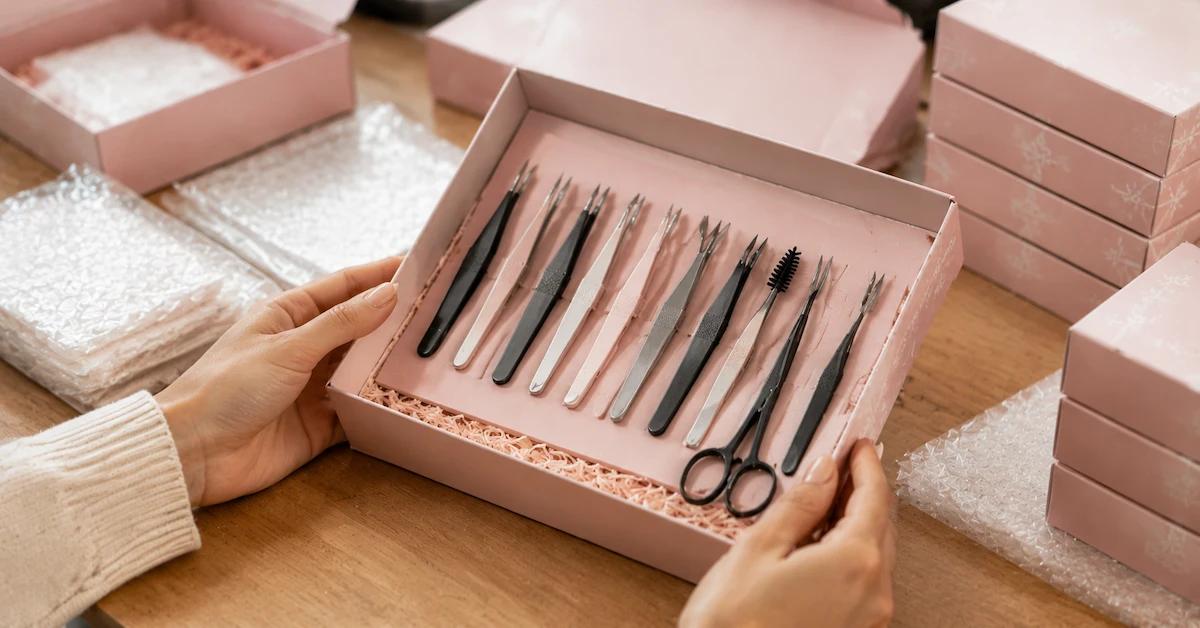
Packaging is also often underestimated. For retail resale, the case, insert, pouch or box is part of the product experience. It must protect the tools, display them clearly and match the channel. For salon supply, packaging may be less decorative but still needs to keep tools organized and protected during shipping and storage.
Finally, buyers sometimes ignore maintenance communication. Even stainless steel tools should be cleaned, dried and stored properly. If tools are used in a professional setting, buyers should verify current sanitation requirements in the market where the tools will be used and review supplier guidance. Recognized bodies and regulators can update requirements, so current documents matter more than assumptions.
FAQ: Stainless Steel Nail Tools Wholesale
Can I request samples before placing a wholesale order?
Sample availability should be confirmed with the supplier. For nail tools, samples are especially useful because buyers need to feel hinge action, grip texture, edge alignment and finish quality before approving a larger order.
Is there a fixed MOQ for stainless steel nail tool sets?
MOQ depends on the selected assortment, packaging and customization requirements. Buyers should share the target channel and project scope so the supplier can provide the applicable order conditions without guesswork.
Can the tool mix or packaging be customized?
Customization may be possible for assortment, case, packaging or branding, depending on the product and order plan. Confirm what can be changed early, and approve samples or artwork before production.
How should buyers evaluate quality before ordering in bulk?
Inspect samples for cutting alignment, nipper tip precision, hinge stability, smooth movement, consistent finish, safe handling edges and packaging protection. Ask what inspection steps the supplier uses for complete sets.
How are lead time and delivery confirmed?
Lead time depends on product availability, customization, packaging approval and order quantity. Request a current production and delivery estimate from the supplier after the specification is confirmed.
Final Buying Advice
Start with the customer, not the catalog. Decide whether the set is for salons, retail shelves, online resale, travel kits or gifting. Then select the assortment, finish and packaging that support that use. Review samples carefully, ask practical supplier questions and verify any regulatory or material claims with current documents.
A good stainless steel nail tool wholesale program should be easy to explain, easy to inspect and suitable for the real end user. When the tools function cleanly, look consistent and fit the sales channel, the purchase becomes more than a bulk order; it becomes a stable beauty-tool product line.
Tag: