Precision Tweezers for Eyebrow Shaping: A Practical Buyer’s Guide
Eyebrow shaping depends on a small tool doing a very exact job. A good pair of tweezers should grip a single fine hair close to the root, remove it cleanly, and give the user enough control to work around the brow line without pinching skin. When the tips do not meet evenly, when the tension is too stiff, or when the surface is difficult to clean, eyebrow grooming becomes slower and more uncomfortable than it needs to be.
For personal care users, salon professionals, beauty retailers, and sourcing teams, the best tweezers are not chosen by appearance alone. The important questions are practical: Do the tips align? Is the metal suitable for repeated cleaning? Does the tool feel stable in the hand? Will the finish hold up after regular use? This guide explains how to evaluate tweezers for eyebrow shaping and what to consider when selecting products for a beauty toolkit or product range.
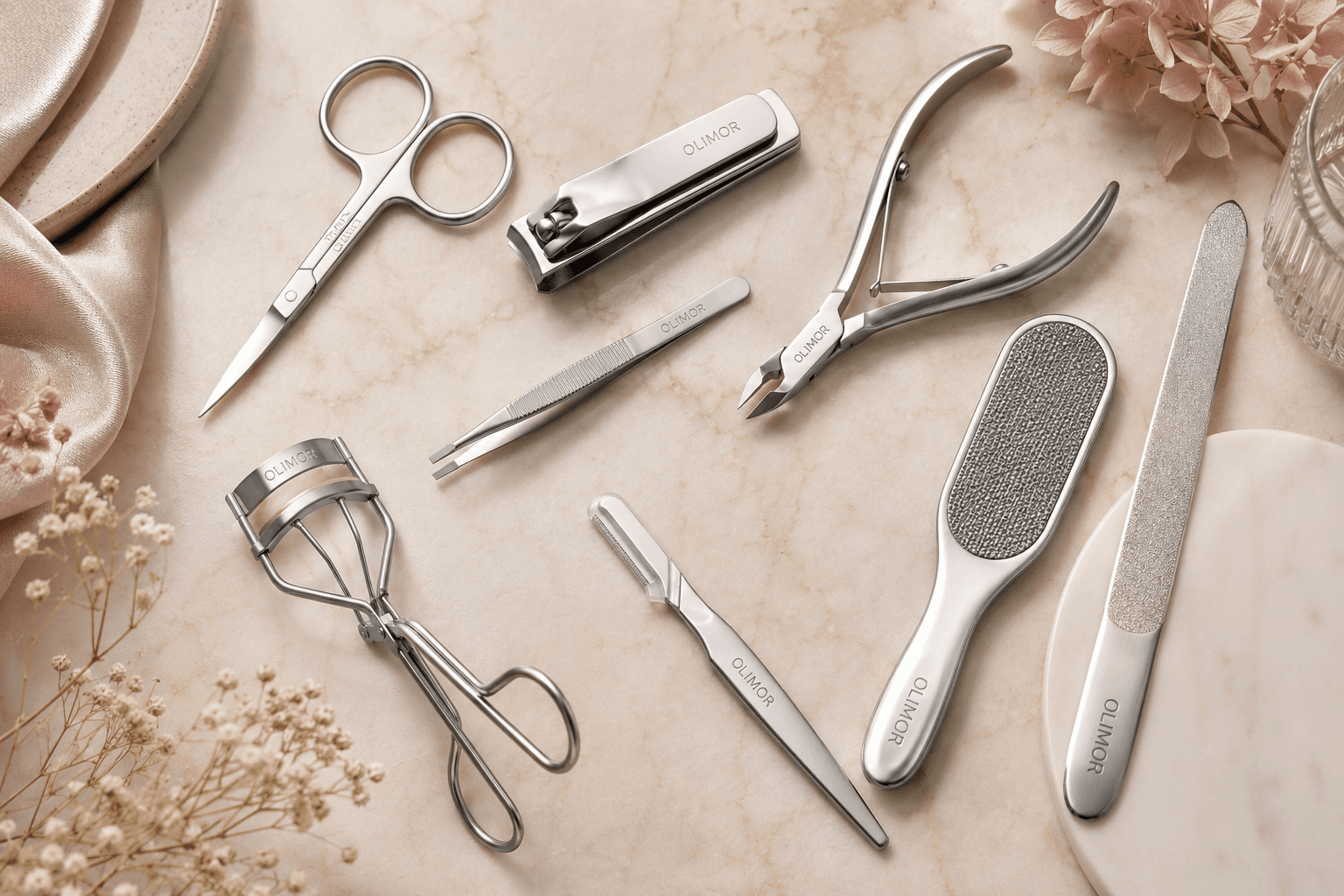
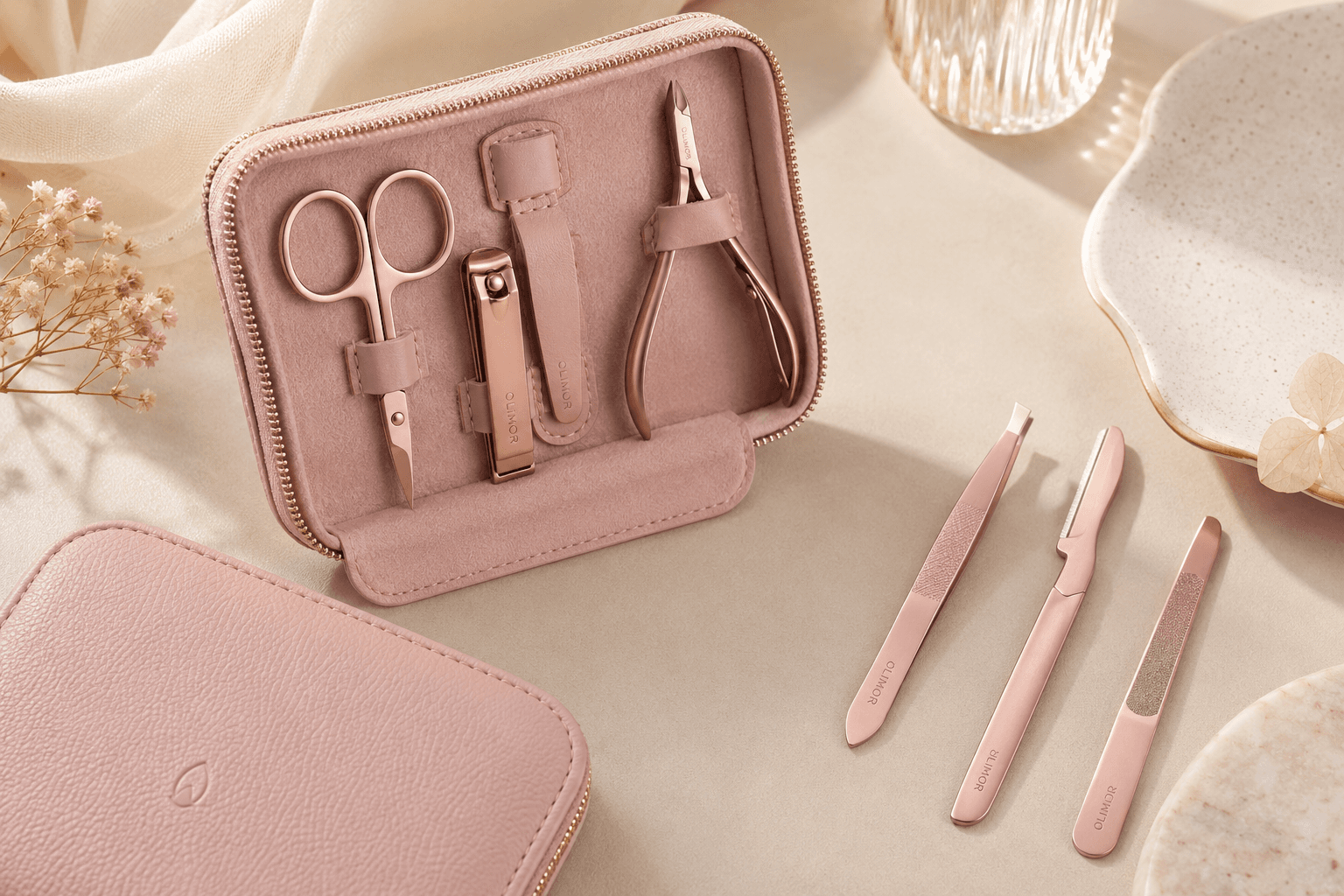
If you are comparing broader grooming items, Olimor’s beauty tool products page is a useful place to review related categories and understand how tweezers fit into a complete beauty tool lineup.
Why Tip Precision Matters Most
The working end of an eyebrow tweezer is its most important feature. Even when the body looks polished and the packaging is attractive, poor tip alignment will limit performance. The two tips should meet cleanly across the contact area, not only at one corner. When the edges align properly, the user can grip fine or short hairs without applying excessive pressure.
For eyebrow grooming, control is especially important because brow hairs grow in different directions and vary in thickness. A cleanly aligned tip helps isolate one hair at a time, which reduces the chance of removing hairs that should remain in the brow shape. This matters for both at-home users who maintain their arches weekly and professionals who need consistent performance during repeated appointments.
Tip finishing also affects comfort. Tips that are too sharp can scratch or pinch the skin, while tips that are too blunt may slide off the hair. A well-finished tweezer balances grip with smoothness. When evaluating a sample, test it on a very fine hair or thread and check whether it holds without cutting, breaking, or slipping.
Common Tweezer Tip Styles for Eyebrow Work
Different tip shapes support different grooming tasks. A retailer or buyer may choose one main style for general use, while a salon or professional kit may include several. The table below summarizes common options without assuming that one style is right for every user.
| Tip style | Best use | What to check |
|---|---|---|
| Slant tip | General eyebrow shaping and routine cleanup | Even edge contact and comfortable angle against the skin |
| Point tip | Very fine, short, or ingrown hairs | Accurate point alignment and safe, controlled handling |
| Flat tip | Gripping multiple longer hairs or broader cleanup | Full surface contact and no visible gap between tips |
| Curved or angled tip | Working around the brow arch with improved visibility | Smooth curve, balanced tension, and reliable grip at the edge |
For many everyday eyebrow routines, a slant tip is the easiest to control because it can be used at different angles. More specialized tips can be helpful, but they require careful handling and may not be the best first choice for every consumer. If you are building a product assortment, consider the likely user: beginners usually value stability and safety, while professionals may look for finer control.
Material, Finish, and Hygiene Considerations
The original product information highlights stainless steel as a preferred material because it is durable, rust-resistant, and easy to clean. Those qualities are particularly relevant for tweezers, which come into close contact with skin and may be used near freshly removed hair follicles. A material that tolerates routine cleaning helps support better hygiene and longer service life.
When comparing stainless steel tweezers, look beyond the material name. Surface finishing matters because rough edges, uneven coating, or poorly polished areas can trap residue and make the tool harder to wipe down. The arms should feel smooth in the hand, and the tips should not show burrs or jagged edges under close inspection.
Good hygiene practice is simple but important. Before and after use, wipe the tips with an appropriate cleaning method for the product and setting. For personal use, this helps keep the tool ready for brow maintenance. For professional environments, cleaning procedures should follow local hygiene expectations and the salon’s internal process. The tweezer should also be stored in a dry place and protected from impact, especially at the tips.
Ergonomics: Tension, Grip, and Control
A tweezer can have accurate tips and still feel tiring if the body design is uncomfortable. Ergonomics affect how steadily the user can work along the brow line. The arms should offer enough spring to reopen easily, but not so much resistance that the fingers tire quickly. If the tweezer requires excessive force, users are more likely to squeeze too hard and pinch skin.
The width and shape of the arms also influence control. A slightly textured or easy-to-hold surface can help prevent slipping, especially when hands are freshly washed or when the tool is used in a salon environment. The tool should feel balanced, not overly heavy at one end. For travel or retail kits, the design should also protect the tips from being bent in a bag or drawer.
For sourcing teams, it is worth testing tweezers with several users rather than relying on a single opinion. Hand size, grooming habits, and experience level can all affect how a tweezer feels. A product that seems firm and precise to one person may feel too stiff to another. A balanced evaluation should include comfort, control, and actual hair-gripping performance.
A Simple Checklist for Evaluating Eyebrow Tweezers
Whether you are choosing one tool for personal use or reviewing samples for a product line, a structured checklist helps avoid decisions based only on appearance. Use the following points during inspection and testing:
- Tip alignment: The tips should meet evenly with no obvious gap or twisting.
- Grip performance: The tweezer should hold fine hairs without cutting them or slipping off.
- Edge finish: The tips should be smooth enough for skin contact while still gripping securely.
- Material suitability: Stainless steel is preferred for durability, rust resistance, and cleaning convenience.
- Tension: The arms should close with controlled pressure and reopen smoothly.
- Hand comfort: The body should feel stable and not become tiring during repeated use.
- Cleanability: The surface should be easy to wipe, with no rough areas that collect residue.
- Packaging protection: The tips should be protected during storage and shipping to prevent misalignment.
This checklist is also useful when comparing products across different suppliers or price points. A cheaper tweezer that fails alignment checks can create returns and poor user experience, while a well-made tool can become a dependable part of a beauty routine for years.
What Beauty Buyers Should Consider When Sourcing
For distributors, private-label buyers, and retailers, tweezers are small products with high expectations. Customers may judge the entire grooming tool range by the first time the tips fail to grip a fine brow hair. That means sourcing decisions should include both visible presentation and functional quality checks.
Review how the manufacturer manages raw material inspection, tip finishing, assembly consistency, and final packaging checks. The original product information notes Olimor Beauty’s focus on internal quality control from raw material inspection to final packaging. In practice, buyers can support their own decisions by requesting representative samples, checking multiple pieces from the same batch, and confirming whether packaging protects the tips during transit.
It is also useful to define the product’s intended customer before confirming details. A budget-friendly retail tweezer, a salon-focused tool, and a travel grooming accessory may require different finishes, packaging, and tip styles. Instead of starting only with a target price, clarify the performance standard: who will use it, how often, and in what setting?
To compare related beauty accessories or discuss a sourcing project, you can review Olimor product collections or send an inquiry with your intended use, market, and preferred tool style.
Care Tips to Keep Tweezers Performing Well
Even a well-made pair of tweezers can lose accuracy if the tips are damaged. The most common issue is impact: dropping tweezers on a hard floor can bend the tips just enough to reduce grip. Storage matters, especially for point or fine-tip styles. Keeping tweezers in a sleeve, case, or protected compartment helps preserve alignment.
Cleaning should be routine, but harsh handling should be avoided. Wipe the tips after use, dry the tool before storage, and avoid leaving it in damp environments. Do not use the tweezer as a general household tool for tasks such as opening containers, scraping residue, or gripping hard objects. Those uses can deform the tips and shorten the tool’s working life.
For personal eyebrow shaping, it is best to tweeze after cleansing the skin and to work in good light. Pull hairs in the direction of growth and remove a few at a time, checking symmetry frequently. The right tweezer supports precision, but the best results still come from careful shaping and restraint.
Choosing a Better Eyebrow Tweezer
Precision eyebrow tweezers should be judged by how well they perform in real grooming situations. Look for aligned, well-finished tips; stainless steel construction; comfortable tension; and packaging that protects the tool. For buyers, add consistent sample testing and clear use-case planning to the process. For individual users, focus on grip, comfort, and easy cleaning rather than decorative appearance alone.
A reliable tweezer makes eyebrow maintenance cleaner, faster, and more controlled. When the tool grips accurately and feels steady in the hand, shaping the brow line becomes less frustrating and more predictable. For help reviewing beauty tool options or discussing product requirements, you can contact Olimor directly.
Tag: