











Precision Tweezers for False Lash Application: What Buyers and Lash Users Should Check
False lash application depends on small, controlled movements. A lash band must be lifted without crushing it, guided close to the lash line, adjusted before adhesive sets, and released cleanly. Fingers alone often block the view or place uneven pressure on the lash strip. That is why the right tweezers for false lash work are more than a simple accessory; they are the control point between the hand and the finished lash placement.
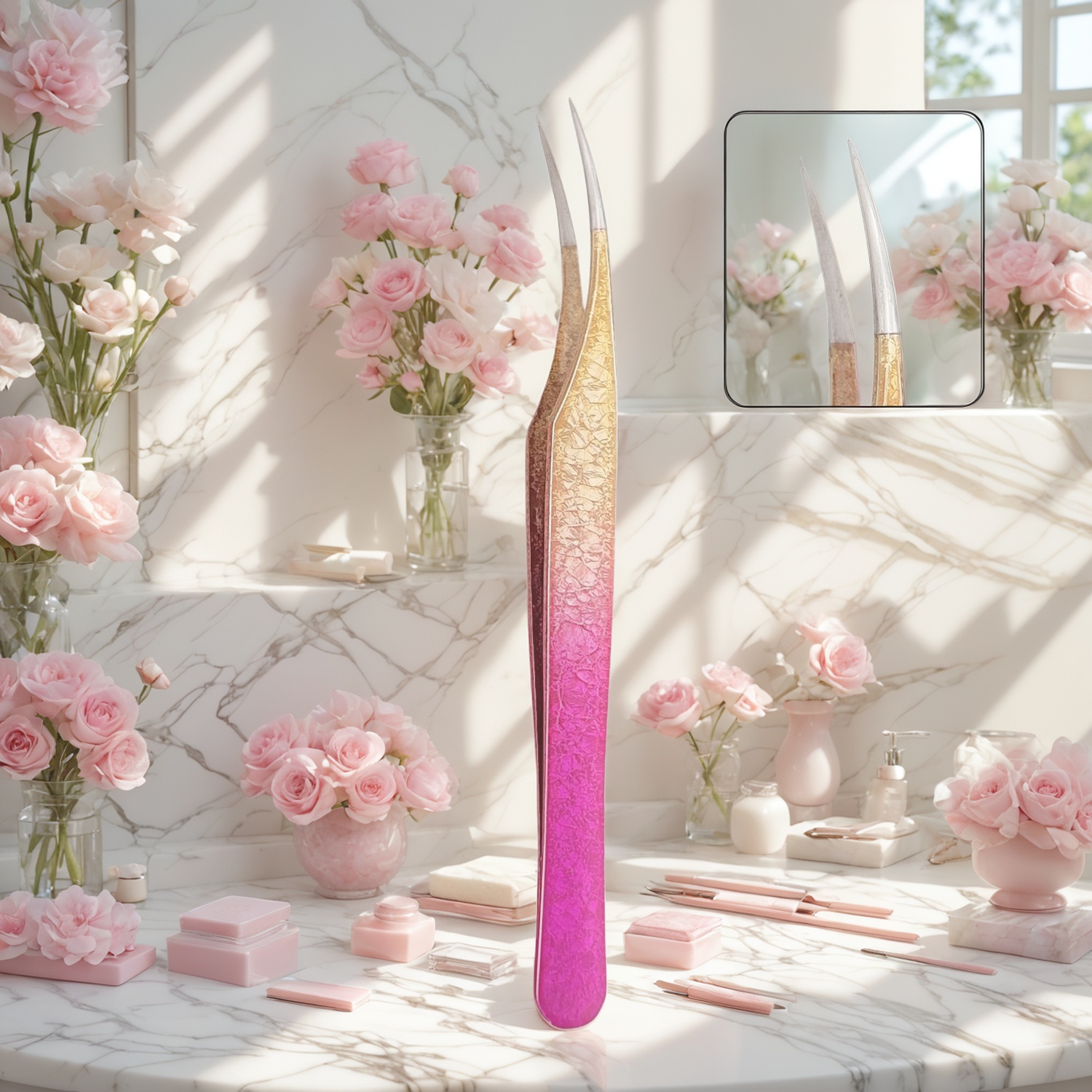
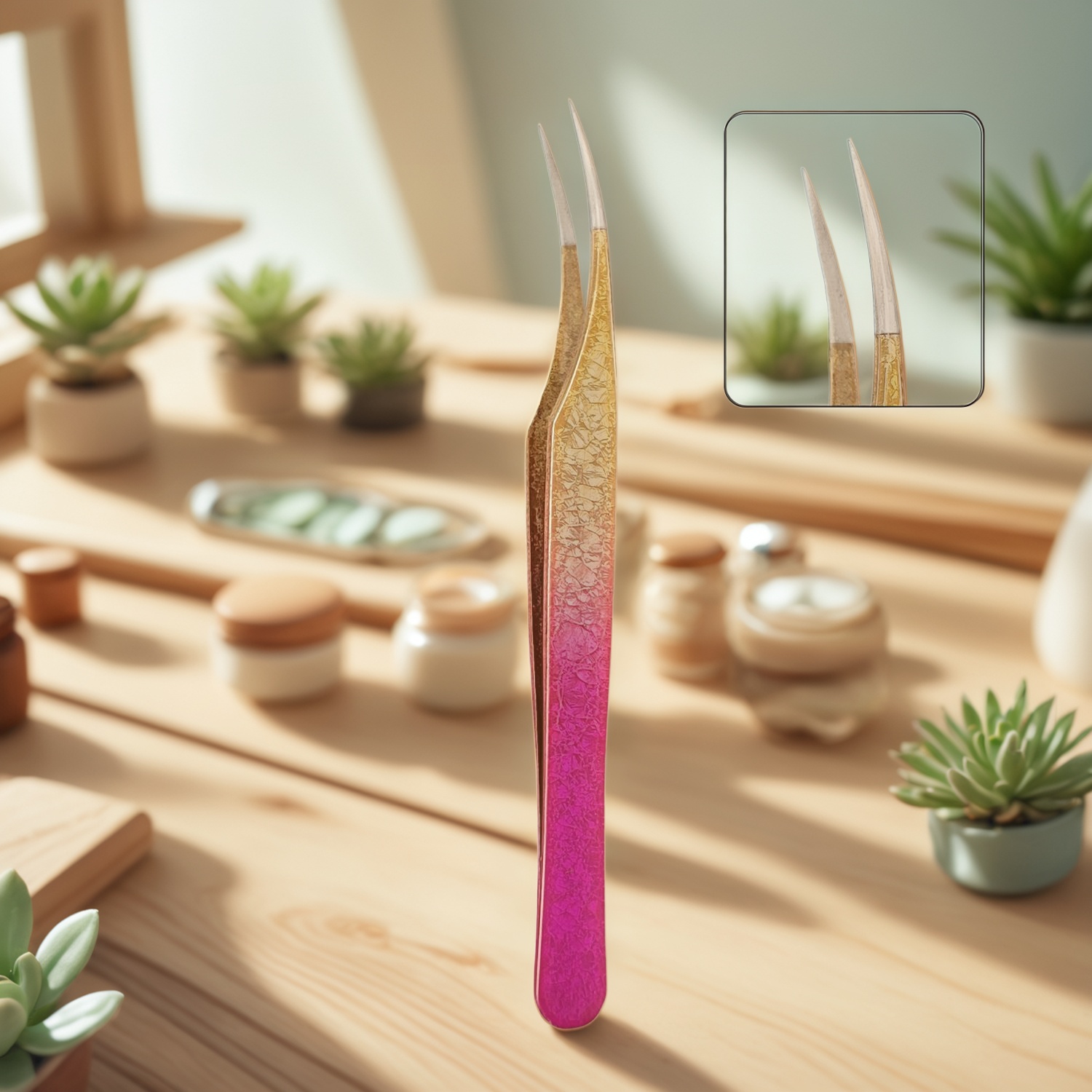
The Radiant Bloom Tweezers from Olimor Beauty are presented as precision tweezers for handling delicate lash bands. The original product description highlights dual-curved stainless steel tips, a textured handle for a non-slip grip, and a gradient finish blending gold into fuchsia. For beauty retailers, salons, lash technicians and private label buyers, those details are worth evaluating not only for appearance, but also for comfort, consistency and practical daily use.
This guide explains what to look for when selecting lash application tweezers, how curved tips affect placement, how to inspect grip and finishing quality, and how to maintain tweezers so they remain useful over repeated applications.
Why Precision Matters in False Lash Application
Applying false lashes is a close-range task. The difference between a clean lash line and an uneven result can be a few millimeters. A precise tweezer helps the user control three key steps: picking up the lash, positioning the center, and adjusting the inner and outer corners.
With strip lashes, the lash band should be held firmly enough that it does not twist, but gently enough that the fibers are not bent or pulled out of alignment. With smaller lash sections or accent lashes, the need for control is even greater because the working area is narrow and adhesive can transfer easily to the tool.
Precision also supports hygiene. When the hand is not directly pressing near the eye, there is less contact with the lash fibers, adhesive area and eyelid. For salons, retail demonstrations and beauty professionals, that control helps create a cleaner workflow and a more consistent client experience.
How Dual-Curved Stainless Steel Tips Help With Placement
The supplied product information describes the Radiant Bloom Tweezers as having expertly crafted dual-curved stainless steel tips. For lash application, tip geometry is one of the most important buying criteria. A curved tip can improve the approach angle to the eyelid, allowing the user to see the lash line instead of covering it with fingers or a straight tool.
Dual-curved tips are especially useful when the user needs to hold the lash band from above or slightly in front while lowering it into position. This shape can help support the curve of the strip lash and reduce the need to bend the wrist. A more natural hand position matters during repeated applications, especially for lash artists or sales staff demonstrating products throughout the day.
Stainless steel is commonly used in beauty tools because it can provide a firm structure and is easier to clean than porous materials. However, buyers should still evaluate the finishing quality carefully. The tip edges should feel smooth, align evenly, and close with controlled pressure. Any roughness at the contact points can snag lash fibers or leave marks on delicate bands.
Grip, Handle Texture and Hand Control
The Radiant Bloom Tweezers are described with a meticulously textured handle intended to provide a non-slip grip. This feature is practical because lash application often happens after skincare or makeup steps, when fingers may have traces of cream, primer or cosmetic residue. A smooth, slippery handle can force the user to squeeze harder, which may reduce control at the tip.
Good handle texture should improve stability without feeling sharp or uncomfortable. For buyers comparing options, the best test is not only how the tweezers look in packaging, but how they behave during the motion of applying lashes. The tool should remain steady when held lightly. If the user must apply too much hand pressure to maintain grip, fatigue can become a problem.
Handle balance also matters. Tweezers that feel too heavy at one end may be harder to guide close to the lash line. Tweezers that are too light may lack the steady feel many users prefer. Retail buyers may want to test sample pieces with different hand sizes to ensure the handle shape is suitable for both beginners and professional users.
Selection Checklist for Lash Tweezers
When evaluating tweezers for false lash use, avoid focusing only on color or packaging. A beautiful finish can attract attention, but the tool must still perform well at the tip. Use the following checklist when comparing products for retail, salon use, kits or promotional beauty sets.
- Tip alignment: The tips should meet evenly when closed, with no visible gap or crossing.
- Tip smoothness: Contact edges should not scratch, snag or cut into a lash band.
- Curve suitability: The angle should help the user approach the lash line without blocking visibility.
- Grip texture: The handle should feel stable in the hand without requiring excessive force.
- Spring tension: Opening and closing should feel controlled, not stiff or loose.
- Surface finish: Decorative coating or coloring should appear even, clean and consistent.
- Cleaning access: The shape should allow adhesive residue to be removed from the tips after use.
- Packaging fit: If sold in beauty kits, the tweezers should be protected so the tips do not bend during shipping.
For a broader view of available beauty tools, buyers can browse Olimor beauty tool products or compare related product collections before deciding which tweezer style best fits their market.
Using Precision Tweezers for Cleaner False Lash Results
Even a well-made tool works best with a careful application process. The goal is to hold the lash securely while keeping the adhesive area clean and visible. A controlled process also reduces the chance of placing the lash too high, too low or too far from the inner corner.
- Measure before applying adhesive. Place the lash strip against the eye to check length and trim only if needed.
- Hold the lash at the band. Grip near the center of the band rather than the lash fibers to avoid bending the style.
- Apply adhesive evenly. Use a thin line along the band and allow it to become tacky according to the adhesive instructions.
- Place the center first. Use the curved tips to guide the middle of the lash close to the natural lash line.
- Set the outer and inner corners. Adjust each corner carefully before the adhesive fully sets.
- Release gently. Open the tweezers slowly so the band stays in position instead of lifting with the tool.
- Check symmetry. Compare both eyes from the front and slightly downward to confirm the lash angle matches.
For beginners, the most common mistake is rushing the adhesive stage. If adhesive is too wet, the lash slides. If it is too dry, repositioning becomes difficult. Precision tweezers help, but timing and hand stability still determine the final result.
Maintenance and Hygiene for Repeated Use
Lash tweezers come into contact with adhesive, cosmetics and the area around the eye, so cleaning habits are important. Adhesive buildup on the tip can reduce precision, create uneven pressure and transfer residue to the next lash. After each use, remove visible residue from the tips according to the adhesive manufacturer’s cleaning guidance and the tool’s care requirements.
Avoid scraping the tip aggressively with hard objects, as this can damage the smooth contact area. After cleaning, dry the tweezers completely before storage. Moisture left on metal tools can affect appearance and long-term usability. Store the tweezers with tip protection when possible, especially during shipping, travel or kit assembly.
For salon or shared-use settings, hygiene procedures should follow local professional standards. Tools used around the eye require a more careful routine than general cosmetic accessories. If a tweezer becomes bent, misaligned or rough at the tip, it should not be used for delicate lash placement until it is inspected or replaced.
Sourcing Questions for Retailers, Salons and Beauty Brands
For business buyers, sourcing lash tweezers is not only about selecting a design. It is also about ensuring consistency from sample to order, because small differences in tip alignment can affect user experience. The Radiant Bloom Tweezers have a distinctive gradient design, but buyers should also review functional details such as tip closure, handle texture and packaging protection.
Useful sourcing questions include whether samples can be evaluated for tip alignment, how cosmetic finishing is checked, how products are protected during transport, and what packaging options suit the intended sales channel. Retailers may prioritize visual appeal and shelf presentation, while salons may put more weight on grip comfort and repeated cleaning.
If you are developing a beauty tool range or comparing lash accessory options, you can contact Olimor to discuss product details or send an inquiry with your preferred tool type, packaging needs and target market.
A Practical Tool for Better Lash Control
Precision tweezers for false lash application should make a difficult task easier without adding unnecessary complexity. The most useful pair offers steady grip, clean tip alignment, a practical curve and a finish that suits the buyer’s audience. The Radiant Bloom Tweezers combine a gold-to-fuchsia gradient appearance with dual-curved stainless steel tips and a textured handle, making them relevant for users who want both visual appeal and functional control.
For beauty brands, salons and retailers, the smartest approach is to evaluate lash tweezers the way users experience them: in the hand, near the lash line, and under real application conditions. When the tips grip cleanly, the handle stays stable and the tool is easy to clean, false lash placement becomes more consistent for beginners and professionals alike.