Precision Tweezers for Eyebrow Shaping: A Practical Buyer’s Guide
Eyebrow shaping is a small task that demands a highly accurate tool. A tweezer that looks acceptable in packaging can still miss fine hairs, cut hairs instead of pulling them, pinch skin, or feel unstable in the hand. For consumers, this means irritation and uneven brows. For beauty retailers, salons, and private-label buyers, it can mean product complaints, returns, and a weaker impression of the brand.
Precision tweezers for eyebrow grooming should be assessed as working instruments, not simple accessories. The most important performance details are the way the tips meet, how firmly the tool grips, whether the body is comfortable to control, and how consistent the finish is across production. This guide explains what to look for when selecting eyebrow tweezers for personal care, professional use, or beauty tool sourcing.

Why Precision Matters in Eyebrow Tweezers
Eyebrow hairs are not all the same. Some are thick and easy to catch, while others are short, fine, newly grown, or positioned close to the skin. A low-quality tweezer may slide over these hairs, forcing the user to try repeatedly. That repeated pressure can irritate the skin and make it harder to maintain a clean brow line.
A well-made eyebrow tweezer helps remove hair from the root with fewer attempts. This is especially important when cleaning the area under the brow arch, removing stray hairs between appointments, or maintaining a defined brow shape at home. For salon technicians, precision also supports speed and consistency. The less time spent chasing individual hairs, the easier it is to deliver a neat result without unnecessary discomfort.
For brands and distributors, the search intent behind “tweezers for eyebrow” is usually practical: buyers want a tool that grips reliably, lasts through repeated use, and feels worth keeping. Appearance matters, but performance determines whether the product is reordered.
Tip Alignment Is the Core Quality Check
The tweezer tips are the working edge of the tool. For eyebrow shaping, angled tips are widely valued because they provide a useful balance of visibility, control, and access to different brow areas. However, the angle alone is not enough. The tips must meet evenly along the gripping surface. If one side is slightly higher, twisted, or unevenly finished, the tweezer can fail to hold fine hairs.
When evaluating samples or comparing product options, inspect the tips carefully under good lighting. Open and close the tweezer several times. The movement should feel stable, and the tips should come together cleanly without a gap. A small misalignment can make a visible difference during use, especially on short hairs.
- Full contact: The gripping edges should meet evenly, not only at one corner.
- Clean finish: The tip edges should be precise without sharp burrs that scratch skin.
- Consistent tension: The tweezer should close with controlled pressure, not feel weak or overly stiff.
- Hair grip test: A good sample should catch fine hairs or similar test fibers without slipping.
- Repeatability: Several pieces from the same batch should perform similarly, not just one perfect sample.
Material, Finish, and Comfortable Handling
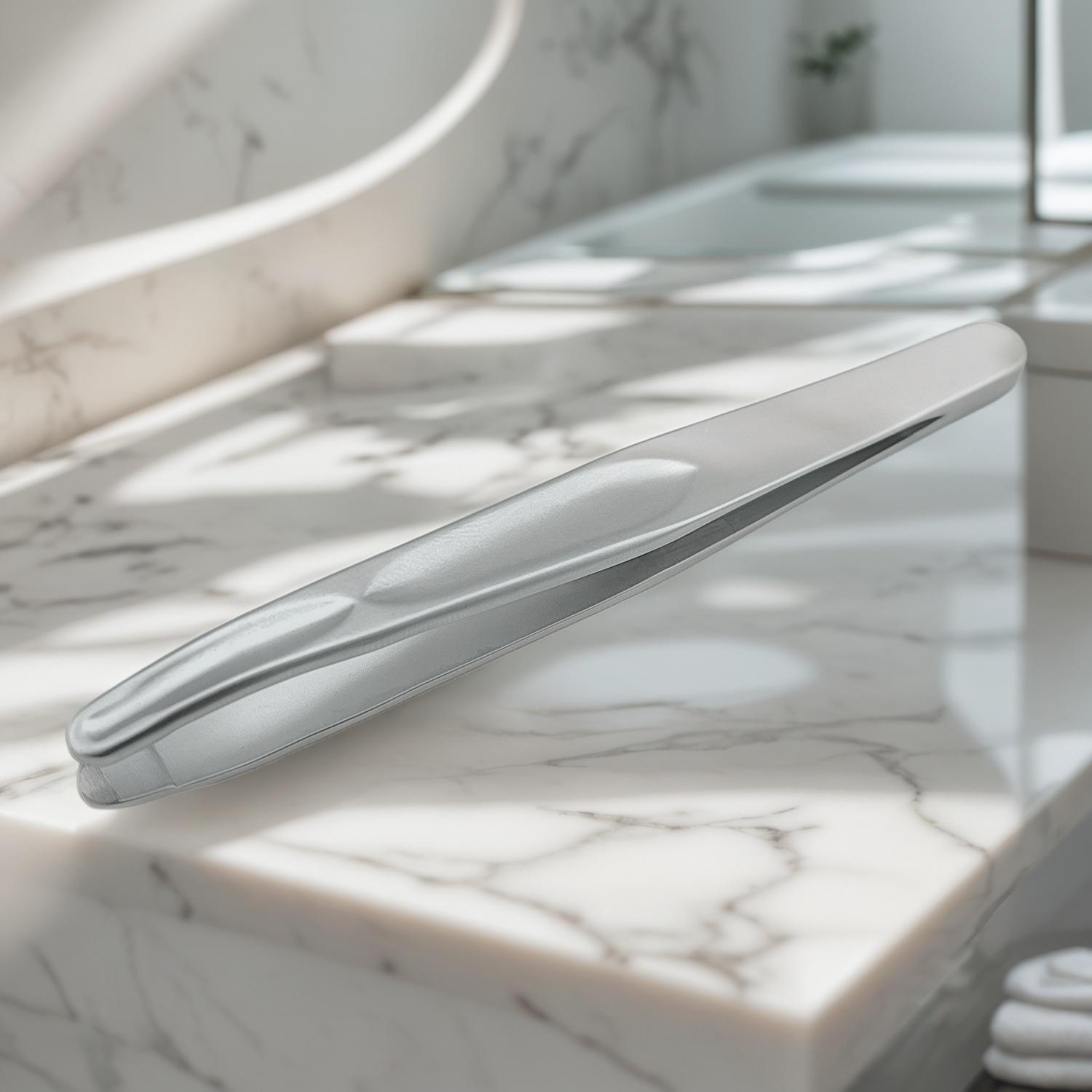
The original product focus highlights stainless steel, an ergonomic contoured body, and precision-aligned angled tips. These are important because an eyebrow tweezer is often used in humid bathroom or salon environments, handled frequently, and cleaned after use. Stainless steel is a practical material choice for beauty tools because it supports durability and helps resist corrosion when properly cared for.
Comfort is not a minor detail. If the tweezer body is too slippery, too narrow, or uncomfortable to squeeze, the user may apply uneven pressure. That can cause the tips to twist during use and reduce gripping accuracy. A contoured body can make the tweezer easier to steady between the fingers, especially when working close to the brow line.
Finish also affects buyer perception. A smooth surface, clean edges, and consistent appearance suggest controlled production. For retail products, the finish should align with the intended market position. A professional grooming kit may call for a clean, understated look, while a consumer beauty line may prioritize a finish that photographs well and fits the brand’s packaging style. Regardless of style, the finish should not interfere with grip or cleaning.
Choosing Tweezers for Different Brow Grooming Uses
Not every eyebrow grooming situation needs the same balance of features. A salon technician may prioritize long-session comfort and consistent tip performance. A consumer buying for home use may want an easy-to-control tool that removes occasional stray hairs without pinching. A brand buyer may need a design that works across a broad customer base and can be presented clearly in retail packaging.
| Use case | What matters most | Buyer notes |
|---|---|---|
| Home eyebrow maintenance | Easy grip, comfortable tension, accurate angled tips | Choose a tweezer that feels stable and does not require excessive squeezing. |
| Salon or brow service use | Reliable alignment, durable finish, easy cleaning | Check multiple samples for consistent performance, not only visual appearance. |
| Retail beauty tool line | Balanced performance, attractive finish, clear packaging message | Product claims should match actual grip and comfort testing. |
| Private-label sourcing | Repeatable production quality, packaging compatibility, inspection process | Define acceptable tip alignment, surface finish, and functional testing before order confirmation. |
Quality Control Questions for Sourcing
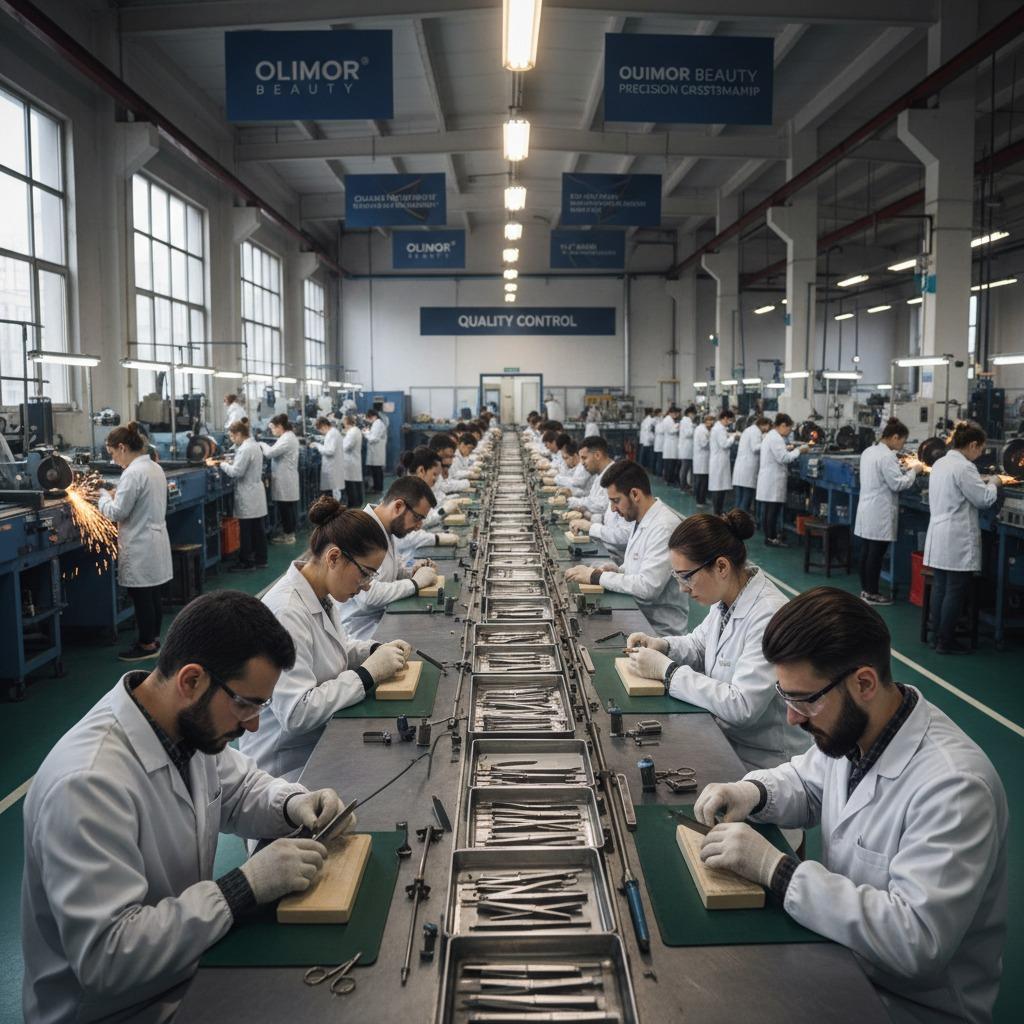
When sourcing eyebrow tweezers, quality control should focus on functional details. A product can look acceptable in bulk photos but still fail when tested on fine hair. Olimor Beauty’s role as a beauty tool supplier makes it important to discuss the product from both user and manufacturing perspectives. Buyers reviewing beauty tool products should compare not only design options but also the inspection points behind the design.
Useful sourcing questions include:
- How is tip alignment checked? Confirm whether the tips are inspected visually and functionally, and whether checks are applied across production rather than only to pre-production samples.
- What material and finish options are available? Stainless steel is a common choice, but the final selection should consider durability, appearance, cleaning needs, and the target market.
- How consistent is tweezer tension? Tension that varies widely from piece to piece can create an uneven customer experience.
- What packaging protects the tips? Tip protection matters because aligned tips can be damaged during transport or retail handling if packaging is poorly designed.
- What customization is realistic? For custom made tweezers, clarify which elements can be adjusted, such as finish, logo placement, packaging, or shape, without compromising function.
These questions help buyers avoid vague approval standards. Instead of approving a tweezer only because it looks good, define what “acceptable” means for grip, alignment, finish, and packaging condition.
Care and Maintenance for Longer Tool Life
Even a well-made tweezer needs proper care. Eyebrow tweezers work best when the tips stay clean, dry, and protected. Residue from cosmetics, skin care products, or disinfectants can reduce grip if left on the tips. After use, wipe the tweezer clean and dry it before storage. If the tool is used in a professional setting, follow the hygiene practices required for that environment.
Storage is also important. Dropping a tweezer on a hard surface can damage the tip alignment. A protective sleeve, pouch, or packaging insert helps keep the tips from being bent or dulled. Users should avoid using eyebrow tweezers for unrelated tasks, such as opening packaging or gripping hard objects, because that can deform the precision edges.
- Clean the tips after use to remove oils and cosmetic residue.
- Dry the tool before storing it, especially in humid areas.
- Protect the angled tips from impact during travel or retail display.
- Do not use brow tweezers as general-purpose pliers or craft tools.
- Replace the tweezer if the tips no longer meet evenly or hair slips repeatedly.
How to Evaluate a Supplier for Eyebrow Tweezer Programs
For beauty brands, wholesalers, and distributors, a tweezer program should be built around consistent product performance. A supplier conversation should cover materials, finishing, packaging, customization, and inspection standards. It is also useful to review related product collections to understand whether the tweezer can fit into a wider grooming set or retail display strategy.
A dependable sourcing process usually starts with clear requirements: intended customer, expected finish, packaging format, logo needs, and functional acceptance criteria. Samples should be tested by people who will use the product in realistic conditions, not only reviewed on a desk. If the tweezer is intended for professional brow work, have a technician assess comfort, grip, and tip control. If it is intended for retail, also check the unboxing experience and whether the product explanation is easy for customers to understand.
Olimor Beauty supports buyers who need practical beauty tools for grooming and personal care markets. If you are comparing eyebrow tweezer options, preparing a private-label project, or building a broader tool range, you can send an inquiry with your target use, preferred finish, packaging direction, and quality priorities. For broader sourcing questions, you may also contact Olimor to discuss suitable beauty tool solutions.
Final Selection Checklist
The best eyebrow tweezer is the one that performs reliably in the user’s hand. Before choosing a product for retail, salon use, or brand sourcing, confirm the fundamentals: aligned angled tips, controlled tension, comfortable handling, stainless steel construction, clean finishing, and packaging that protects the precision edge. These practical details are what turn a simple grooming tool into a product customers continue to use.
Precision tweezers do not need exaggerated claims to stand out. They need to grip fine hairs cleanly, support accurate brow shaping, and maintain consistent quality from sample to shipment. By focusing on the working details of the tool, buyers can select eyebrow tweezers that meet real grooming needs and support long-term confidence in the product line.
Tag: