Personalized Tweezers for Salons, Retailers and Bulk Beauty Tool Buyers
Personalized tweezers are a compact beauty tool with a direct effect on user confidence. A salon professional expects clean grip and predictable control. A retailer expects consistent appearance, safe presentation and a product that customers understand quickly. A distributor or private-label buyer needs branding, packaging and bulk production choices that do not weaken the tool’s working function.
This guide explains how to evaluate personalized stainless steel tweezers for professional beauty, grooming, retail, gift set and practical care applications. It focuses on the questions B2B buyers usually need answered before ordering: which tip style to choose, how to place a logo, what affects cost, how to inspect samples, and how to compare suppliers without relying only on appearance.
Olimor Beauty supplies personalized tweezers for beauty, grooming and practical care uses. The important purchasing principle is simple: customization should support the product, not hide weak performance. A good personalized tweezer must still align correctly, close smoothly, grip fine hairs or small items reliably, and arrive protected enough for the intended sales channel.
What Personalized Tweezers Should Do Well
A personalized tweezer is worth buying only if it works as a tweezer first. The two tips should meet evenly and hold the target hair or object without slipping, excessive force or twisting. The body should open and close with controlled tension, and the user should feel secure during repeated small movements.
For a salon or brow service, poor alignment is immediately noticeable. A technician may need to grip individual fine hairs repeatedly, so a weak or uneven tip increases service time and hand fatigue. For retail buyers, poor alignment often becomes a return, complaint or negative review. For promotional kits, weak performance reduces the value of the entire set even if the logo and packaging look attractive.
Stainless steel is a practical material for tweezers because it supports durability, regular cleaning and a range of surface finishes. However, buyers should not assume that all stainless steel tweezers perform the same. The final result depends on tip finishing, alignment, tension, surface handling, packaging protection and production consistency.
Match the Tweezer Style to the End User
The best personalized tweezer style depends on the customer and use case. A professional brow artist, a general grooming customer and a gift set buyer may all need different balances of precision, comfort, appearance and cost. Start with the intended user before choosing color, logo or packaging.
Slanted tip tweezers
Slanted tips are widely used for brow shaping and daily grooming because the angled edge gives a clear working surface while still allowing targeted control. They are often the most familiar choice for retail customers and salon users who want an all-purpose brow tool.
Pointed or fine tip tweezers
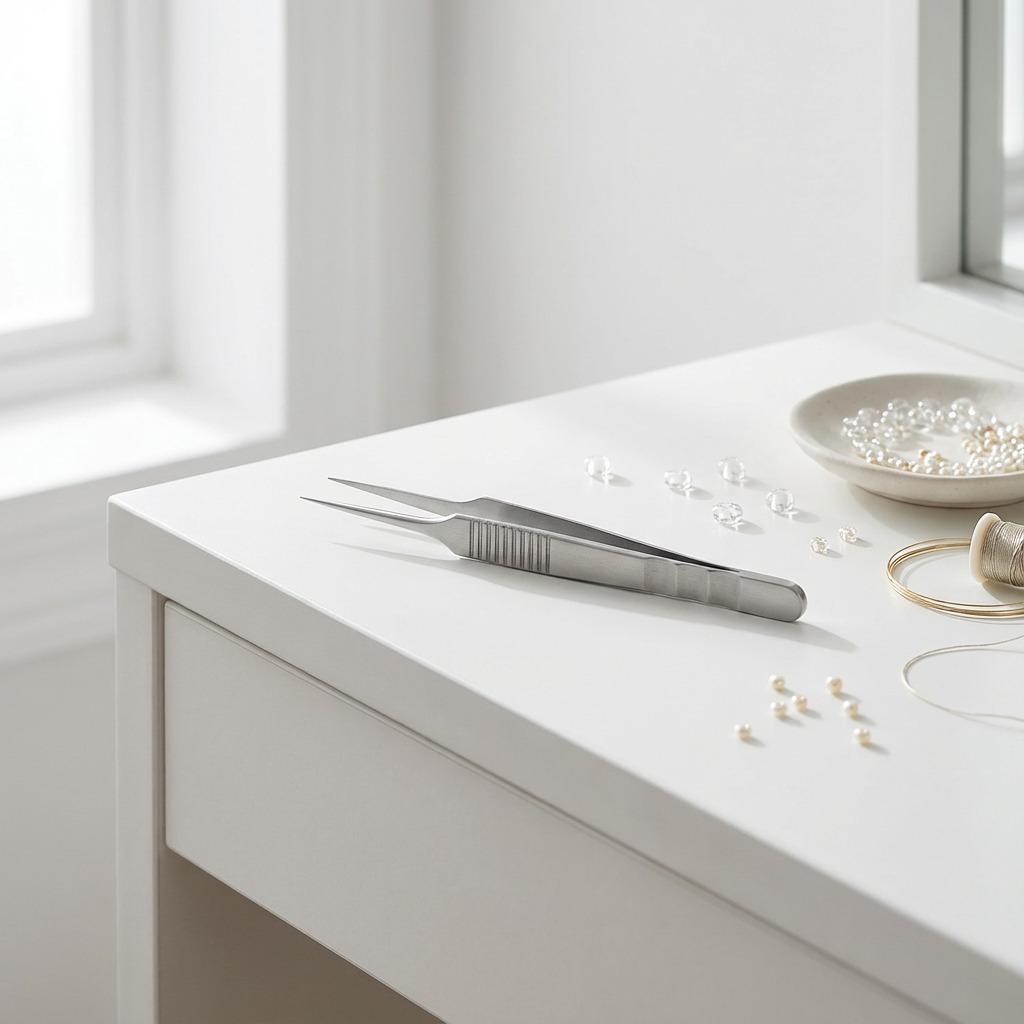
Pointed or fine tips can suit precision tasks where the user needs access to a very small area. They may be appropriate for detailed grooming or practical care kits, but they require careful tip protection because the working end can be more vulnerable to damage if dropped or stored loosely.
Flat or broader grip tweezers
Flat or broader gripping surfaces may be useful for holding small cosmetic items, false lash segments or other practical objects. They are less focused on fine hair removal and more focused on stable holding. When selecting these styles, check the closing surface carefully so the tips do not gap at one side.
Retail and gift set positioning
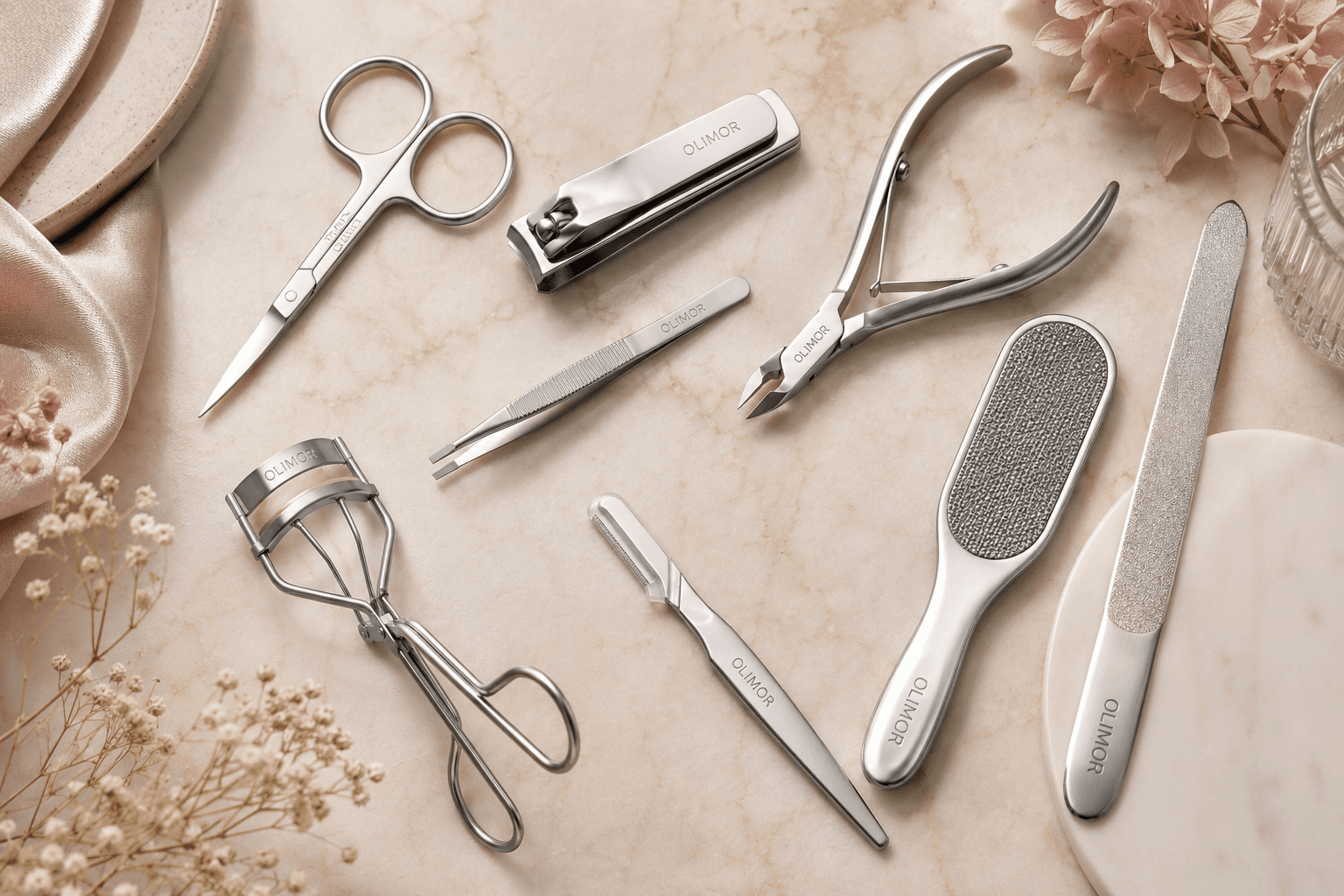
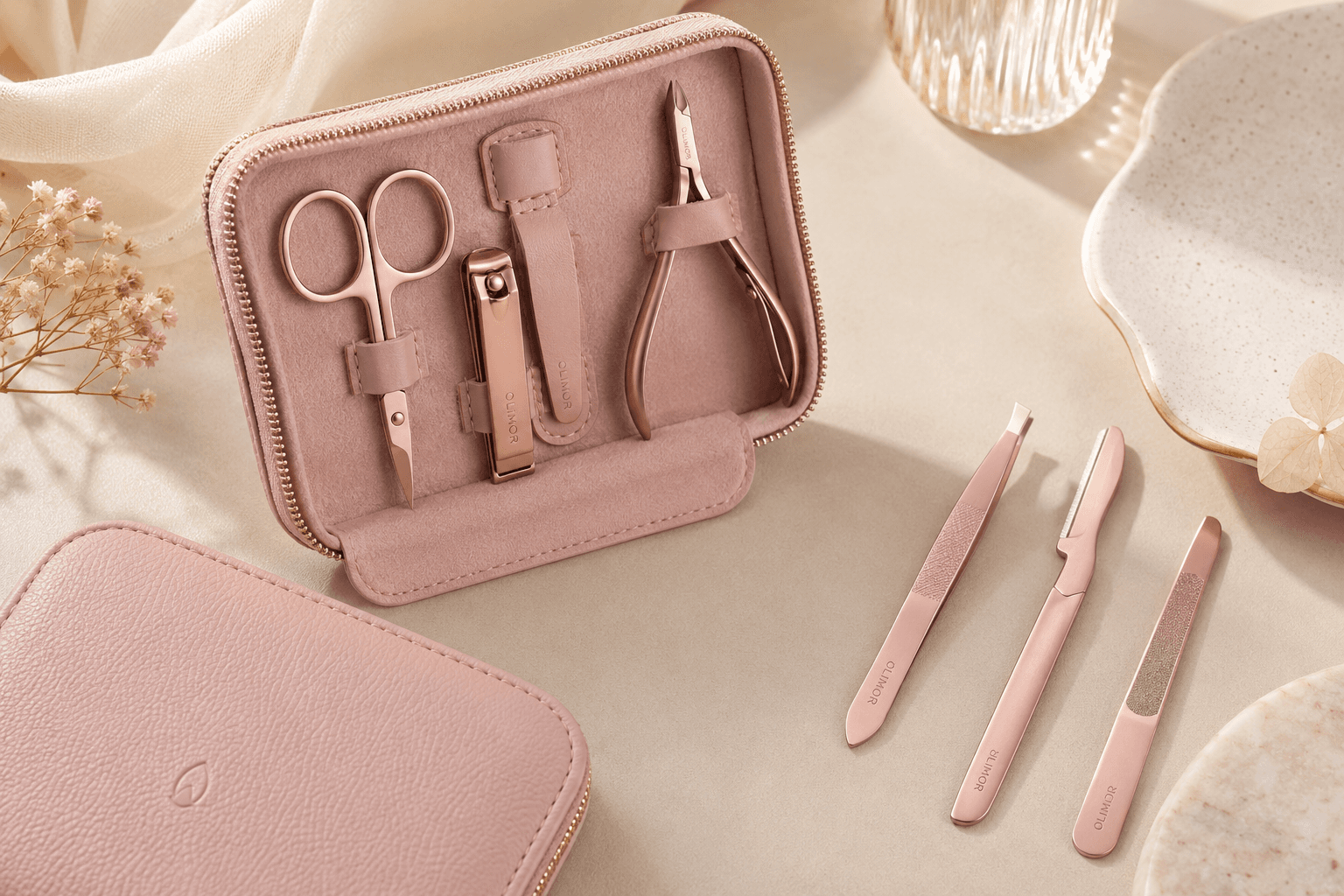
For consumer retail, the shape should be easy to understand at a glance. Slanted tweezers often work well as a main grooming item, while more specialized tips can be positioned as precision tools. In gift sets, the tweezer should match the rest of the beauty tool range in finish, handle style and packaging presentation. Buyers comparing related beauty tool products should think about whether the tweezers will stand alone or complete a coordinated set.
Personalization Choices That Affect Performance
Personalization can include logo marking, color finish, surface texture, packaging and set presentation. These choices influence the buyer’s brand image, but they also affect handling, durability expectations and inspection requirements. A narrow tweezer body leaves limited room for artwork, so simple branding usually performs better than complex graphics.
Logo placement should avoid the working tips and any grip area where the user relies on texture or finger contact. A mark that is too close to the tip can look crowded, while a mark in a high-friction handling area may wear faster depending on the decoration method and actual use. Before bulk confirmation, review the physical sample, not only a digital mockup.
Color and surface treatment should match the sales environment. A clean stainless finish may suit professional salon supply or practical grooming ranges. A colored or decorative finish may work better for retail beauty sets, promotional kits or gift packaging. The key is to confirm that the finish still feels controlled in the hand and that the final surface does not make the tool slippery or uncomfortable.
Packaging is also part of personalization. A basic sleeve, pouch, card or kit box can change both perceived value and protection. Tweezers should be packed so the tips are not bent during storage, warehouse handling or transport. If the product is sold in retail, packaging should make the tip type, use case and care guidance easy to understand.
Bulk Buying Checklist for Personalized Tweezers
Bulk tweezer orders require more than sample approval. A sample shows the target, but the purchase succeeds only when the same grip, finish, logo position and packaging are repeated consistently across the order. Use a written checklist before production so the supplier and buyer are aligned.
| Check Area | What to Confirm | Why It Matters |
|---|---|---|
| Tip alignment | Tips meet evenly without crossing, visible gaps or twisting | Directly affects grip, hair removal and user satisfaction |
| Closing feel | Tension is controlled and comfortable for repeated use | Helps reduce hand fatigue in salon and grooming use |
| Tip finish | Working edges are suitable for the intended task | Rough, uneven or damaged tips can scratch, slip or fail to hold |
| Stainless steel body | Material choice, surface appearance and cleaning expectations are documented | Supports durability and consistent buyer communication |
| Logo and artwork | Size, location, color and readability are approved on a physical sample | Prevents branding that looks unclear or interferes with handling |
| Packaging protection | Tip covers, sleeves, cards, pouches or boxes are suitable for the channel | Reduces tip damage before the user opens the product |
| Inspection criteria | Acceptable appearance and functional limits are agreed in writing | Creates a common standard for bulk delivery review |
For importers and brand owners, a written specification is especially useful. It should identify the tweezer style, finish, artwork file, logo position, packaging structure, labeling needs, and any market-specific compliance documents the buyer requires. If tweezers will be part of a wider range, reviewing a coordinated beauty tool collection can help align finish, packaging and product positioning.
Cost Factors Without Sacrificing Quality
Tweezer cost is influenced by more than the metal body. Tip style, finishing difficulty, surface treatment, branding method, packaging, inspection level and order complexity can all affect the final quotation. A lower unit price may not be the best value if it results in inconsistent alignment, weak packaging or a finish that does not suit the target customer.
When comparing quotations, ask what is included. A price may or may not reflect customized packaging, tip protection, artwork setup, sample development, special labeling or additional inspection. The most useful comparison is not simply unit price; it is the delivered product specification at the quality level your channel expects.
For professional supply, the priority is usually working precision and repeatable hand feel. For mass retail, clarity of use, appearance consistency and packaging protection may carry more weight. For promotional kits, the buyer may emphasize branding and set presentation, but the tweezer must still function well enough to reflect positively on the campaign.
A practical way to manage cost is to separate essential features from optional presentation features. Tip alignment, safe edges, comfortable tension and protective packaging are essential. Decorative colors, premium packaging structures or more complex artwork may be optional depending on the target segment. This approach helps buyers reduce unnecessary cost without weakening the user experience.
Sample Review and Inspection Before Bulk Production
Sample approval should include hands-on use, visual review and packaging checks. Do not approve a personalized tweezer only from photos. A tweezer is judged by touch, closing feel and tip contact, which are difficult to evaluate from images alone.
When testing samples, use the tool in the way the customer will use it. For brow tweezers, check whether it can grip fine hair cleanly. For practical care or kit use, check whether it holds small objects steadily. Open and close the tweezer repeatedly to assess spring tension and comfort. Look closely at the tip line from multiple angles to identify gaps or uneven contact.
For bulk orders, buyers may use recognized sampling approaches such as ISO 2859-1 for acceptance sampling planning, when appropriate for their quality system. This does not replace the buyer’s product specification, and users should verify the current version of any standard and agree the inspection plan with the supplier. Consumer product rules may also apply depending on the destination market; for example, buyers selling into the European Union should review current obligations under the EU General Product Safety Regulation and request relevant supplier documents for their specific product and channel.
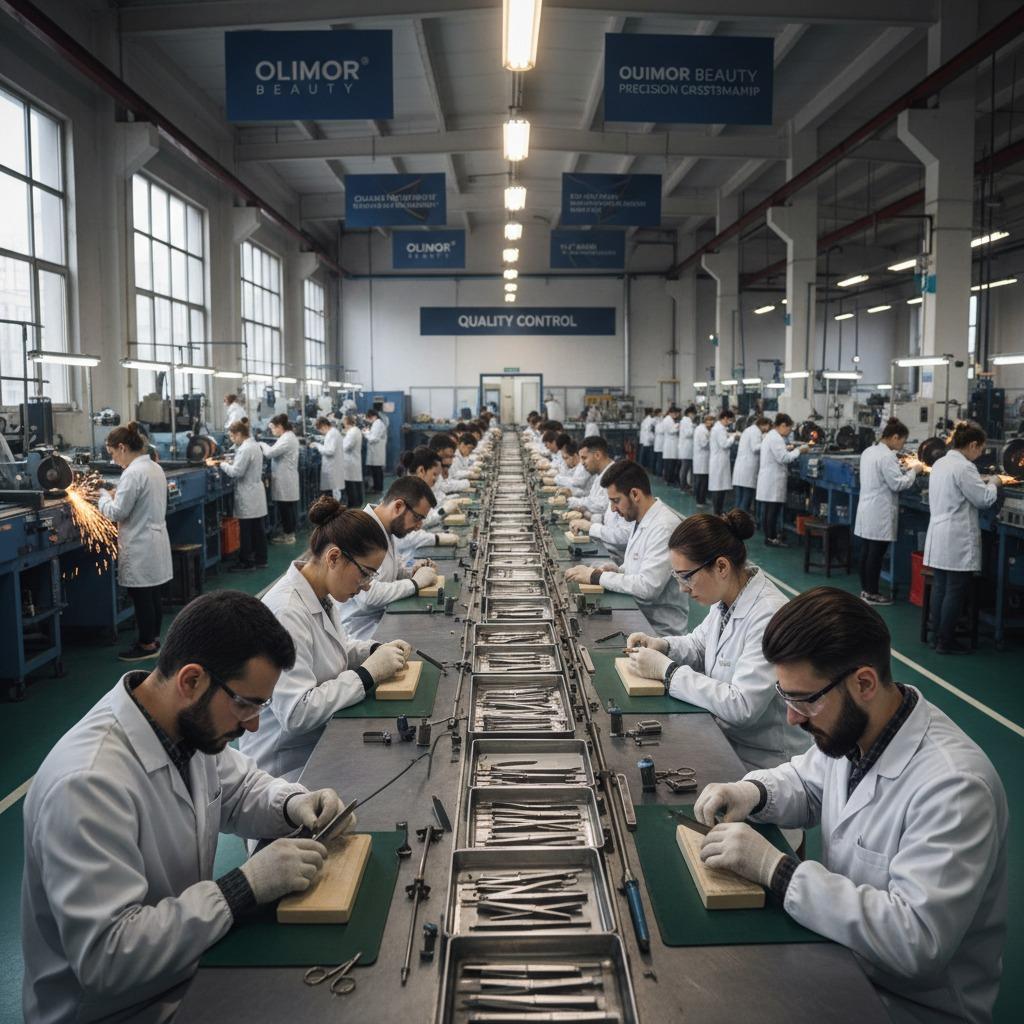
Inspection should cover both function and appearance. Functional checks include tip alignment, closing tension, grip and obvious deformation. Appearance checks include surface finish, logo placement, color consistency, scratches, stains and packaging condition. If the order includes multiple colors or styles, each variation should be checked against its own approved sample.
Care, Maintenance and User Instructions
Even well-made stainless steel tweezers can be damaged by poor handling. The most common problems are bent tips from dropping, dull or misaligned tips from misuse, and surface issues caused by improper storage after cleaning. Simple instructions reduce complaints and help users understand that precision tools need protection.
- Store tweezers with the tips protected, especially in travel bags, retail kits or salon drawers.
- Clean the tool after use according to the hygiene requirements of the setting.
- Dry the tweezers before storage to help maintain the surface condition.
- Do not use precision tweezers to pry, cut, scrape or open packaging.
- Check tip alignment regularly in professional settings where tools are used frequently.
- Keep pointed or fine tip tweezers separated from heavier tools that could bend the working end.
For retail packaging, include brief care guidance on the back card, insert or product page. For salons and spas, care steps can be added to staff tool handling procedures. Clear care information is especially useful when personalized tweezers are sold as part of a branded home-maintenance kit after a brow service.
How to Evaluate a Personalized Tweezer Supplier
A good supplier should help translate your sales idea into a workable product specification. For personalized tweezers, supplier evaluation should include product knowledge, communication clarity, sample consistency, packaging support and willingness to define inspection requirements before production.
Ask how the supplier handles tip protection, artwork confirmation and pre-production sample approval. Confirm whether they can support the tweezer style, finish and packaging format you need. Share the end use clearly: professional salon service, daily retail grooming, gift set, distributor stock or promotional beauty kit. The more specific your use case, the easier it is to select the right tool.
Olimor Beauty focuses on practical beauty tools with customization options for business buyers. For personalized tweezers, the goal is to balance stainless steel construction, working precision, hand feel, branding and suitable packaging. Buyers can prepare the intended use, preferred tip style, artwork, packaging concept and market requirements before requesting a sample or quotation. To start a project discussion, send details through the custom product inquiry page or contact Olimor Beauty for sourcing support.
FAQ for Bulk Personalized Tweezers
Can I request samples before placing a bulk order?
Yes. Sample review is recommended so you can check the tip alignment, closing feel, finish, logo placement and packaging direction before confirming bulk production. Provide your intended use and artwork requirements when requesting samples.
Is there a minimum order quantity for personalized tweezers?
MOQ depends on the selected tweezer style, finish, customization method and packaging requirements. Buyers should confirm the current MOQ during quotation instead of assuming one quantity applies to every design.
What customization options can be discussed?
Common project details include tip style, stainless steel finish, logo placement, color direction, packaging format and set coordination. The final options should be confirmed against the actual product sample and supplier capability.
How should quality requirements be communicated?
Send written requirements covering tip alignment, working function, appearance, logo position, packaging and inspection expectations. If your company uses a specific sampling standard or market compliance checklist, share it early and verify current requirements.
What affects lead time?
Lead time can be affected by sample approval, artwork confirmation, finish selection, packaging complexity, order quantity and inspection needs. Confirm timing for your exact specification during the inquiry stage.
Personalized tweezers perform best when beauty, branding and practical function are planned together. By choosing the right tip style, confirming stainless steel construction and finish, protecting the working tips, and defining inspection requirements before production, salons, retailers and bulk buyers can source tweezers that look professional and remain useful in daily handling.
Tag: